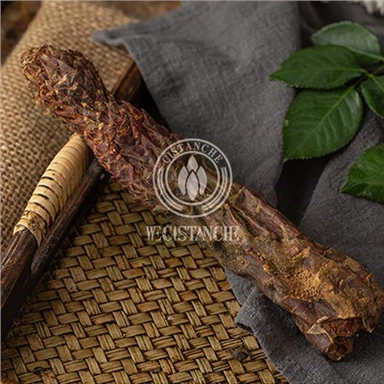
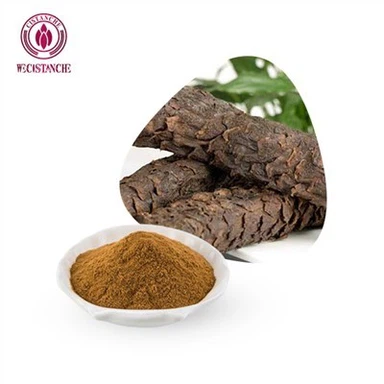
Exploring Desert Ginseng - Cistanche Deserticola
Dec 25, 2024
1, The miraculous effects of Cistanche deserticola
(1) Tonifying kidney and promoting yang, improving kidney function
Cistanche deserticola has significant effects in supplementing kidney yang. Traditional medicine believes that its medicinal properties are sweet, salty, and warm, and it belongs to the kidney and colon meridians. It has a good regulating effect on many diseases caused by kidney yang deficiency. For example, in men, common symptoms such as erectile dysfunction, soreness and weakness of the waist and knees, coldness of the limbs, and premature ejaculation can all be improved by Cistanche deserticola. This is because it is sweet, salty, warm, and moist, warm but not dry, and nourishing but not greasy. It can not only tonify the kidneys and strengthen yang, but also benefit the essence and blood, fundamentally nourishing kidney yang.

The efficacy of Cistanche deserticola - enhancing sexual function
Click here to view Improve Sexual Function Cistanche products
【Ask for more】 Email:cindy.xue@wecistanche.com / Whats App: 0086 18599088692 / Wechat: 18599088692
For women, Cistanche deserticola also has many benefits, such as menstrual disorders, uterine coldness, infertility, etc., which can also be regulated through Cistanche deserticola. From the perspective of modern pharmacology, Cistanche deserticola has sex hormone like effects, and is widely used in kidney tonifying medicines such as Changchun Medicinal Wine, Zhuangyao Bushen Pills, and Shenrong Pills. It can be seen that it has scientific basis support in tonifying kidney yang and improving kidney function, and is a rare traditional Chinese medicine for regulating kidney yang.
(2) Nourish essence and blood, improve body quality
As a traditional Chinese medicine that nourishes essence and blood, Cistanche deserticola has a positive impact on the overall physical fitness of the human body. It can make the circulation of qi and blood more smooth. When qi and blood flow smoothly, various organs and organs in the body can receive better nourishment, and their functions will also be enhanced accordingly.
Of particular note is that Cistanche deserticola is also helpful in improving sperm quality. It is rich in various nutrients, such as protein, amino acids, vitamins, and trace elements, which can provide sufficient nutrients for the human body, enhance the immune system, and promote sperm production while fighting fatigue, thereby improving sperm quality. It also has certain therapeutic effects on diseases such as waist and knee soreness, nocturnal emission, and slippery sperm caused by kidney essence deficiency, allowing people to have a healthier body.

Cistanche deserticola-improve immunity
(3) Moisturize the intestines and promote bowel movements, helping to promote intestinal health
Cistanche deserticola is rich in dietary fiber, which is the key to its ability to moisten the intestines, promote bowel movements, and aid in intestinal health. After entering the human gastrointestinal tract, these dietary fibers can effectively promote gastrointestinal peristalsis, enhancing the digestive and excretory functions of the intestine.
At the same time, Cistanche deserticola can also reduce the absorption of water in food by the intestines, allowing stool to maintain a moderate degree of moisture, thereby softening stool, accelerating the rate of stool excretion from the body, and effectively relieving constipation problems. It is especially suitable for elderly people with kidney yang deficiency and deficiency of essence and blood, who suffer from constipation caused by fluid and intestinal dryness. In digestive system medication, drugs such as Xiao'er Mitong Oral Liquid and Cistanche Tongbian Oral Liquid also use Cistanche deserticola, demonstrating its important role in regulating gastrointestinal function.
2, Various edible methods of Cistanche deserticola
(1) Brewing wine for drinking
Soaking Cistanche deserticola in wine is a common way of consumption. Firstly, prepare an appropriate amount of Cistanche deserticola and clean its surface. If the Cistanche deserticola is whole, it needs to be cut into thin slices to better dissolve its active ingredients. Then, put the processed Cistanche deserticola into a clean glass jar and pour it into Baijiu. Generally, the ratio of Cistanche deserticola deserticola to Baijiu should be controlled at about 1:30, for example, 30g Cistanche deserticola deserticola with 1000ml Baijiu. After sealing the glass jar, soak it in a cool and ventilated place for about two weeks before opening and drinking. However, it should be noted that the amount consumed each time should be controlled according to medical advice and should not be excessive. Pregnant women, children, patients with hypertension, heart disease, and other special populations should avoid drinking Cistanche deserticola infused liquor.
(2) Take decocted soup
Boiling soup and taking Cistanche deserticola is also a relatively traditional method. Take an appropriate amount of Cistanche deserticola, usually around 15 grams, put it in a clay pot, add an appropriate amount of water, first boil the water over high heat, then turn to low heat and simmer for about 15 minutes, pour out the soup and drink. If necessary, other Chinese medicinal herbs can be decocted together according to the doctor's advice to achieve different conditioning effects, but it is important to follow the doctor's advice to determine the specific combination and dosage.
(3) Cook Congee and taste
When Congee is cooked, cistanche can make Congee more nutritious and nourishing. First, wash an appropriate amount of millet, and then add an appropriate amount of cistanche according to personal preference. For example, about 10 grams can be added, and then add an appropriate amount of clear water into the pot. Cook it for about 40 minutes with low heat, and when the Congee becomes thick, millet blossoms, and the effective ingredients of cistanche are integrated into the Congee, it can be eaten. Like Cistanche deserticola and medlar Congee, the Cistanche deserticola and medlar are cooked together with rice, which not only tastes good, but also can improve memory and enhance resistance.
(4) Other ways of consumption
There are many other ways to consume Cistanche deserticola. For example, stewed soup, which can be stewed with bird's nest, sea cucumber, etc., can nourish the body, moisturize and beautify, and is very suitable for beauty lovers and those who need to take care of their weak bodies; When boiling sugar water, add honey dates, red dates, and Cistanche deserticola together. The cooked sugar water has a clear and sweet taste, and also has a good nourishing effect on the body; If brewing tea, clean the Cistanche deserticola, cut it into thin slices, and brew it with boiling water. The brewed tea has the effects of moistening the lungs, relieving cough, calming the mind, and aiding sleep; In addition, Cistanche deserticola can also be mixed with Tonic Diet, such as stewing with astragalus, medlar, etc., which can integrate the effects of a variety of medicinal materials and play a very good role in nourishing the human body. However, regardless of the method of consumption, it is important to consume in moderation, and it is best for special populations to do so under the guidance of a doctor.
3, The growth habits of Cistanche deserticola
(1) Growing environment
Cistanche deserticola is a parasitic plant that adapts to desert environments and has unique requirements for its growth environment. It is mostly found in saline alkali land, dry river ditch sandy land, and Gobi desert areas. These areas often have extremely dry climates, strong sunshine, annual precipitation of less than 250mm, drastic changes in temperature and heat, strong winds and more sand, poor soil development, and present the characteristics of medium fine sandy land, thin soil layer, and coarse texture. Its soil is neutral or slightly alkaline, with high salt content, but lacks organic matter.

Local children in Hotan, Xinjiang holding Cistanche deserticola in their hands
The host range of Cistanche deserticola mainly includes plants such as red willow and white shuttle. It relies on parasitizing on the roots of these plants to obtain nutrients and lives underground for most of the year. It only extends its spike like inflorescence to the ground around May to complete the process of flowering and fruiting, and it only takes more than 30 days from excavation to seed maturity. Cistanche deserticola has a large number of seeds, small size, and light weight, with a thousand seed weight of only 0.086-0.091g, but the seed life is relatively long.
(2) Breeding and cultivation
Cistanche deserticola is mainly propagated through seed propagation. In terms of planting area selection, sandy or semi sandy desert areas are more suitable because they are suitable for parasitic red willow growth. This can be achieved by utilizing desert areas with concentrated natural red willow forests or cultivating artificial red willow forests for planting.
When breeding, seedbeds are usually dug about 50-80cm to the east or southeast of the red willow forest. The size of the seedbeds varies, with a length of 1-2m, a width of about 1m, and a depth of 50-80cm; If there are dense parasitic areas, a large seedling bed ditch can also be dug around many parasitic plants. Sow the seeds in the seedbed, apply camel manure, cow and sheep manure and other fertilizers, cover with soil for 30-40cm, and leave a ditch or seedbed pit on top for easy watering in the future. After sowing, it is necessary to keep the seedbed moist to induce the extension of the host roots to the seedbed. Sowing in spring and autumn can be done in both seasons. Within 2 years, some seedbeds will be parasitized by Cistanche deserticola, with a few able to emerge and grow, and most able to emerge, flower, and bear fruit within 2-4 years.
Due to the strong sandstorms in the desert, it is important to cultivate soil around the exposed roots or wrap branches around them to prevent wind damage. The seedbed also needs to be watered regularly to maintain moisture, and other plants should be removed to avoid affecting the growth of Cistanche deserticola. In addition, artificial pollination should be carried out during the flowering of Cistanche deserticola in May to improve the fruiting rate.
(3) Disease and pest control
During the growth process of Cistanche deserticola, it will face some troubles from pests and diseases. Common diseases include powdery mildew, root rot, etc. Powdery mildew mostly occurs from July to October, and can be controlled by 300 times Bo-10 biological agent or 4000 times 25% triadimefon spray; During the occurrence period, root rot can be prevented and controlled by loosening the soil and irrigating the roots with 50% carbendazim 1000 times solution.
In terms of insect pests, species flies are common, and their larvae will harm the tender stems and underground rhizomes of Cistanche deserticola. For this, 90% trichlorfon 800 times solution or 40% dimethoate 1000 times solution can be used for spray or watering the roots. There is also the Great Sandrat, which gnaws on the branches or roots of its host and can cause death in severe cases. Generally, it can be controlled by using zinc phosphide or Dalong poison bait to lure and kill outside the cave.
4, Tips for selecting Cistanche deserticola
(1) Origin selection
When choosing Cistanche deserticola, the place of origin is an important consideration factor, and it is better to prioritize selecting Cistanche deserticola from Xinjiang region. The unique natural environment in Xinjiang, such as arid climate and special soil conditions, endows Cistanche deserticola with excellent quality. The Cistanche produced here has thick meat, high oil content, and excellent texture. It has significant effects in nourishing essence and blood, nourishing kidneys and strengthening yang, and is known as the "Desert Ginseng". Its overall quality is superior to other regions of Cistanche. Therefore, when purchasing, you can pay more attention to Cistanche products from Xinjiang.
(2) Quality judgment
There are many methods to judge the quality of Cistanche deserticola that can be used for reference. Firstly, in terms of source, wild Cistanche deserticola is usually superior to artificially cultivated ones. During its growth process, it absorbs nutrients from the natural environment and accumulates more abundant active ingredients. And it is recommended to choose Cistanche deserticola with a minimum age of five years, as the longer the age, the better its medicinal effects will generally be.
In terms of appearance, high-quality Cistanche deserticola often presents a slender shape with certain standards for length and diameter. For example, high-quality Xinjiang Cistanche deserticola generally has a length of not less than 20 centimeters and a diameter of not less than 1.5 centimeters. Its surface is covered with dense scales, and when touched by hand, it can be felt to be soft and resilient, rather than the hard texture. Looking at the cut surface again, a good cut surface of Cistanche deserticola will show chrysanthemum patterns. These appearance characteristics are small tips for judging the quality of Cistanche deserticola, and you can carefully observe and distinguish them when purchasing.
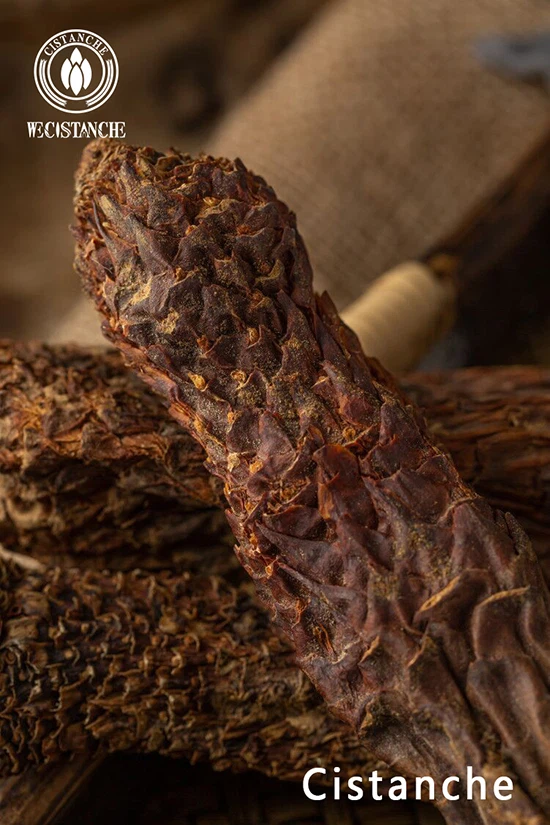
cistanche body building
(3) True and False Identification
Identifying the authenticity of Cistanche deserticola requires mastering some practical skills. For example, when identifying the authenticity of Cistanche deserticola, heating can be used to observe its changes in softness and hardness. Genuine Cistanche deserticola will exhibit corresponding characteristics after heating, while fake ones will be different.
At the same time, multiple appearance features can also be taken into account. The real Cistanche deserticola has scales on its surface, which are long cylindrical or slightly flattened and curved at the bottom, while the fake one may be short and thick with a smoother appearance; The real cut surface of Cistanche deserticola has chrysanthemum patterns, while the fake ones are dotted; From the price perspective, it can also assist in judgment. The real price of Cistanche deserticola is usually not less than 300 yuan per kilogram. If the price is too low, such as tens or tens of yuan per kilogram, it is highly likely to be fake.
In addition, online shopping is very convenient nowadays, but when shopping for Cistanche deserticola online, it is important to choose a reputable and reliable store to avoid buying counterfeit and inferior products to the greatest extent possible, ensuring the quality and efficacy of the purchased Cistanche deserticola.
5, The current status of protection of Cistanche deserticola
(1) Endangered situation
As a precious traditional Chinese medicine, Cistanche deserticola is known as the "desert ginseng" and has extremely high medicinal value. However, precisely because of this, it has been extensively excavated. At the same time, its host Red Willow is facing overgrazing, logging, and other situations, which have damaged the living environment of Cistanche deserticola and led to a sharp decrease in its population, making it endangered.
At present, Cistanche deserticola has been listed in Appendix II of the Convention on International Trade in Endangered Species of Wild Fauna and Flora (CITES) for protection. In 2021, it was also listed as a second-class key protected wild plant in China. For example, Guangzhou Customs seized three batches of illegally carried Cistanche deserticola, totaling 10.87 kilograms, from passengers within three days at the entry channel of Guangzhou Baiyun Airport; Chongqing Jiangbei Airport Customs also seized three passengers carrying undeclared endangered plant Cistanche deserticola, with a total of 12 kilograms counted on site; Shenzhen Bay Customs also seized three batches of plants totaling 24.3 kilograms through the entry channel for travel inspection, all of which were identified as Cistanche deserticola, indicating the urgency of protecting Cistanche deserticola.

The villagers of Hetian Village in Xinjiang are digging and harvesting Cistanche deserticola
(2) Protective measures
In order to protect the precious wild plant resource of Cistanche deserticola, many effective protection measures have been taken.
On the one hand, establishing a red willow conservation area with a focus on protecting Cistanche deserticola is one of the important measures. For example, the Hotan Special Zone in Xinjiang has established a conservation area of 2 million acres of farmland converted to forests and 400000 acres of artificial forest land. It is strictly prohibited to cut down red willows within the protected area, in order to protect the host of Cistanche deserticola from the root and ensure its growth environment. At the same time, it is strictly prohibited to harvest Cistanche deserticola and curb illegal acquisition.
On the other hand, actively carry out artificial breeding work to expand the distribution area of Cistanche deserticola. For example, after three years of implementation, the Forestry Technology Promotion Station in Haixi Prefecture, Qinghai Province, artificially inoculated 3400 acres of Cistanche deserticola in the natural red willow forests of Huaitoutala in Delingha City and Nankeke in Ulan County, and passed the acceptance of the National Forestry Administration; Xinjiang Hotan Left Banner has fully launched the construction of a million acre red willow and Cistanche deserticola industrial base, with large-scale planting of red willow forests and inoculation of Cistanche deserticola; Hotan Right Banner in Xinjiang is exploring the path of "natural+artificial" cultivation of Cistanche deserticola, and has built two 10000 acre artificial inoculation bases for Cistanche deserticola. The entire banner has completed a total of 113800 acres of artificial Cistanche deserticola cultivation.
In addition, there is also guidance for herders to obtain economic benefits from protecting the red willow forest through scientific and reasonable methods. For example, in some areas, herders carry out protective mining to preserve the root systems of Cistanche deserticola and Cynomorium songaricum. This can ensure continued growth in the coming year, prevent ecological damage, and bring good economic income to themselves, achieving a win-win situation between ecological protection and economic benefits, gradually paving the way for ecological prosperity by greening the desert and increasing the income of herders.