From Desert Ginseng To Dressing Table: Panoramic View Of The Development And Application Of Cistanche Tubulosa in The Cosmetics Industry
Aug 26, 2026
Driven by the rise of the "ingredient party" and the resurgence of "Chinese herbal skincare", an old friend from the desert, Cistanche tubulosa, is quietly emerging in the cosmetics ingredient pool. It is no longer the "big cloud" that needs to be decocted for a long time in the traditional Chinese medicine room, but the Cistanche tubulosa EXTRACT that is extracted, purified, and wrapped in essence liquid and face cream. From the serial number 05569 in the "Catalogue of Used Cosmetics Raw Materials (2021 Edition)" to the patented compatibility in the "Hengyan San Cui Fang" of Baicaoji, Cistanche tubulosa is completing its industrial transition from "oral medicinal materials" to "external raw materials".

Benefits of Cistanche tubulosa: inhibit tyrosinase expression
Raw material identity: Why can it be included in cosmetic formulas
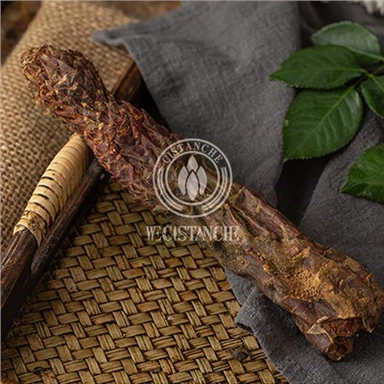
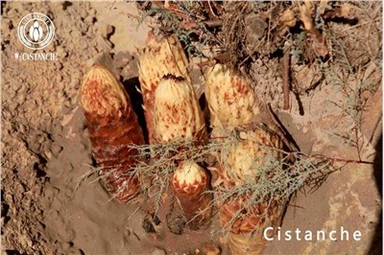
Cistanche is a dry fleshy stem of the Cistanche genus in the family Liliaceae, mainly produced in desert areas of Xinjiang, Inner Mongolia, and Gansu. As a cosmetic ingredient, its INCI name is Cistanche tubulosa EXTRACT (Cistanche tubulosa extract), and its intended use is usually registered as a "skin protectant". It has been included in the "Catalogue of Used Cosmetic Ingredients (2021 Edition)" and is not a prohibited substance.
The historical usage reference provided by the regulatory authorities is very restrained: the highest for whole-body retention is about 0.0075%, the highest for rinsing is about 0.1%, and the highest for eye retention is about 0.000075%. This means that it currently appears in formulations as an "auxiliary efficacy ingredient" rather than a "main active ingredient", and its development needs to balance efficacy within the safety margin.

Cistanche tubulosa extract
The raw material forms are also being subdivided: crude extract (water/alcohol extract), enriched phenylethanolic total glycosides (with a proportion of more than 80% of echinacroside and verbascoside), Cistanche polysaccharide segments, fermentation filtrate, microemulsion/delivery body inclusions, etc., corresponding to different formulation requirements and transdermal strategies.
Functional chassis: which molecules "work" on the skin
The development of cosmetics does not focus on the traditional Chinese medicine narrative of "tonifying kidney yang", but only on quantifiable, transdermal, and declarative molecular behaviors. The exploitable activity of Cistanche tubulosa mainly falls on three groups of molecules:
Phenylethanoid glycosides (PhGs): Represented by echinacoside and verbascoside, PhGs are core targets for antioxidant, whitening, and anti-aging properties. The densely packed phenolic hydroxyl groups and conjugated benzene rings in the molecule are both free radical "electron donors" and can absorb ultraviolet radiation in the 280-380 nm range.

Phenylethanol glycoside is the main active component of Cistanche
Cistanche polysaccharides: The hydroxyl groups on the sugar chain capture water through hydrogen bonds and can form a moisturizing film in the stratum corneum; At the same time, polysaccharide segments have immune-regulating and soothing properties, suitable for sensitive muscle lines.
Associated components: betaine, mannitol, amino acids, trace flavonoids, and organic acids, contributing to basic moisturizing, osmotic regulation, and mild antibacterial effects.
It should be noted that the crude extract has a dark color, glycosides are water-soluble but have weak transdermal properties, and polysaccharides have high viscosity. Directly pouring them into the formula often results in "data but no physical sensation". So the development of cosmetics is essentially the process of translating the activity of medicinal herbs into perceptible skincare benefits.
Effect map: What can be done on the skin and at which layer of evidence
1. Antioxidant and anti-wrinkle: eliminate free radicals+preserve collagen
In vitro studies have shown that extracts of Cistanche tubulosa have scavenging effects on DPPH, hydroxyl radicals, and ABTS cationic radicals; Pinecone chrysanthemum glycoside can upregulate the activities of SOD, CAT, and GSH Px, lower MDA and ROS, and reduce UV-induced DNA fragmentation and fibroblast apoptosis. At the same time, the extract can downregulate the expression of collagenase, elastase, and hyaluronidase, slowing down the degradation of the "supporting structure" of the dermis layer - this is the mechanism basis for it to be labeled as "anti wrinkle/firming".


Desert living cistanche-Antioxidant
2. Whitening and brightening: tyrosinase inhibition+melanin transport blockade
Phenylethanol total glycosides exhibit competitive reversible inhibition of tyrosinase, with an inhibition rate of approximately 31.43% on B16 cell melanin production at 400 µ g/mL, and an IC50 better than that of arbutin at the same concentration; The extract of Cistanche tubulosa can reduce the transport of melanosomes to around 12.77% at a concentration of 100 mg/mL. It does not follow the "false whitening of vigorously peeling keratin", but instead follows the slow path of "antioxidant and anti-yellowing+anti-blackening", adapting to the uniform and clean demands of Eastern skin tone.

desert living cistanche-whitening
3. Natural sunscreen and light damage repair
Phenylethanolic acid has absorption at the UVA/UVB boundary, and adding 1% -2% to the sunscreen system can assist in improving photoprotective stability; A deeper layer is "post-sun repair" - echinacin promotes DNA repair by regulating the ATR/Chk1/p53 pathway, which allows it not only to stay in sunscreen, but also to enter the "night repair essence".
4. Moisturizing and Barrier: Polysaccharide Water Locking+Upregulation of AQP3
The water holding capacity of polysaccharides from Cistanche tubulosa has been validated in vitro; Partial extracts of bulbs/fleshy stems can also increase the expression of AQP3 aquaporin protein and CD44 hyaluronic acid receptor in keratinocytes, transitioning from "surface water sealing" to "epidermal self storage". This is a friendly selling point for dry skin and barrier-damaged skin after acid brushing.
5. Anti-inflammatory, Soothing, and Light Antibacterial
Glycosides such as verbascoside can suppress inflammatory factors such as TNF - α and IL-6 in cell models; Polysaccharides have mild inhibition on Staphylococcus aureus, Escherichia coli, Penicillium orange, etc., and can assist in reducing the pressure of formula anti-corrosion, which is in line with the trend of "reducing anti-corrosion".

Effects of cistanche-anti-inflammatory
Objective boundary: Currently, most evidence remains at the level of in vitro cells, ex vivo skin, or animal models; Most of the human efficacy data comes from brand-commissioned trials and patent implementation examples, and there are still few publicly available large-scale clinical trials. Claiming to avoid "treatment" and "medicinal use", it falls under cosmetic rhetoric such as "helping resist oxidation", "improving dullness", and "enhancing skin radiance/elasticity".
Formula Development: Four Engineering Passes from Medicinal Herbs to Bottles
1. Selection of source and extraction process
l anti-aging/whitening line: Cistanche tubulosa, 70% ethanol ultrasonic/microwave extraction of phenylethanoid glycosides, resin purification to total glycosides ≥ 80%, echinacin ≥ 25%, piloside ≥ 55%, HPLC content.
Moisturizing/Soothing Thread: Select water-extracted polysaccharides from Cistanche tubulosa, remove protein, grade alcohol precipitation, and maintain the water-holding capacity of neutral polysaccharides.
High-end line: using brewing yeast/lactobacilli to ferment raw materials, cutting down large molecular glycosides, reducing color change, reducing sensitization, and enhancing transdermal and skin feel.

cistanche extract powder
Click here to view Organic Cistanche Extract Powder products
【Ask for more】 Email:cindy.xue@wecistanche.com / WhatsApp: 0086 18599088692 / WeChat: 18599088692
2. Transdermal and stability challenges
Phenylethanolic acid is water-soluble but has poor transdermal permeability. The industry commonly uses three methods: ① Microemulsion/Nanoemulsion solubilization; ② Carrier and liposome encapsulation; ③ Compound with niacinamide, VC derivatives, and ceramide to promote permeability. In terms of stability, glycosides are most stable when stored at pH < 8.5, away from light, and at low temperatures. The formula should avoid color depth and activity attenuation caused by strong alkali, high-energy UV irradiation, and metal ion chelation.

Cistanche facial mask
3. Formulation landing point
l essence/ampoule: glycoside enrichment section+small molecule alcohol, focusing on anti-oxidation and brightening, and the dosage is usually controlled at 0.5% – 5% (depending on the purity);
l face cream/milk: polysaccharide segment+glycoside microcapsule, anti-wrinkle and moisturizing;
l facial mask: water extract+fermentation filtrate, replenish water and fade red in a short time;
Sunscreen/Isolation: Glycosides are used as auxiliary sunscreen agents, combined with physical ZnO/TiO2 ₂ to reduce irritation;
Washing and care: Rinsing products can be used up to a historical usage limit of nearly 0.1% for scalp antioxidant and hair moisturizing purposes.
4. Compatibility logic
Chinese compound medicine is the battlefield of differentiation for Cistanche tubulosa: it is paired with Astragalus membranaceus (promoting collagen), Snow Lotus Flower (antioxidant), Dendrobium officinale (moisturizing), and Portulaca oleracea (soothing), using the modern version of "Jun Chen Zuo Shi" - mainly antioxidant (Cistanche tubulosa)+mainly repairing (Dendrobium officinale)+mainly soothing (Portulaca oleracea) - to supplement the insufficient physical sensation of each prescription.