From Desert To Hope: The Symbiotic Miracle Of Red Willow And Cistanche Deserticola in Hotan, Xinjiang
Sep 11, 2025
When I stepped into the vast and mysterious land of Hotan, Xinjiang, the scorching sun poured unreservedly on the golden gravel, and the distant dunes undulated, outlining the magnificent picture of nature. On the seemingly barren edge of this desert, I encountered a green miracle - the artificial inoculation of red willows with Cistanche deserticola.
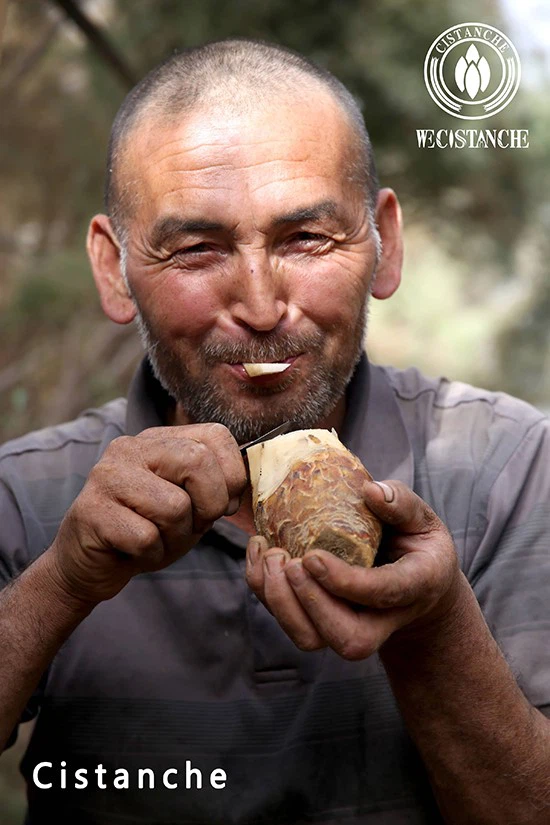
That is a sea of red willows, with slender branches swaying gently in the breeze, like playing the melody of life in the desert. And at the roots of this red willow, there is a hidden herb called "desert ginseng," Cistanche deserticola. When I first saw people carefully digging out Cistanche deserticola from the sand, I was deeply shocked. The thick and fleshy stems, like treasures nurtured in the depths of the desert, emitted a unique light in the sunlight.

The villagers of Hetian Village in Xinjiang are digging and harvesting Cistanche deserticola 2
This Cistanche deserticola is very precious, its whole body is a treasure, "a local uncle warmly introduced to me. His face was filled with a simple smile, and his eyes were filled with love and pride for this land and these plants. From his account, I learned that Cistanche deserticola is not only a precious traditional Chinese medicine with extremely high medicinal value, but also renowned in the field of nourishing and health preservation. In recent years, with the deepening of research, it has also emerged in the fields of health products, skincare products, etc., and its market prospects are very broad. Red willows, as the host of Cistanche deserticola, not only have strong vitality and can root and grow in harsh desert environments, playing an important role in windbreak, sand fixation, and improving the ecological environment, but also provide the necessary conditions for the growth of Cistanche deserticola. The two are interdependent and form a unique and wonderful symbiotic relationship.
Uncle's words made me curious about the seemingly ordinary red willow forest and the hidden Cistanche under the sand in front of me. What technical secrets are hidden behind the artificial inoculation of Cistanche deserticola into red willows? What unexpected changes has it brought to the local ecology and economic development? With these questions in mind, I decided to delve deeper into the green code in this desert.
Desert Guardian "Red Willow

Host of Desert Ginseng and Cistanche deserticola - Red Willow
In Hotan, Xinjiang, the red willow is undoubtedly the "guardian of the desert". Its presence can be seen everywhere in this vast desert area, whether it is on sand dunes ravaged by sandstorms or on dry riverbeds, the red willow can firmly root and grow. Its root system is extremely developed, like a huge and tough net, deeply penetrating into the sand. Some roots can even penetrate more than ten meters underground, firmly fixing the surrounding sand and effectively preventing soil erosion and desertification. According to research, red willow forests can reduce near-ground wind speeds by 40% -60%, greatly reducing the destructive power of sandstorms.
Red willows also have excellent salt alkali tolerance, which is particularly important in Hotan areas where salt alkali land is widely distributed. It can eliminate excess salt from its body through its unique physiological mechanism, forming a thin layer of salt crystals on its surface to maintain its salt balance and thrive in soils with high salt and alkali content. Meanwhile, as the red willow grows, its fallen leaves and residual branches gradually decompose, increasing the organic matter content in the soil, improving soil structure, and making the soil more fertile, creating favorable conditions for the growth of other plants.
It is precisely the tenacious vitality and strong adaptability to harsh environments of red willows that make them an ideal host for Cistanche deserticola. Cistanche deserticola is a parasitic plant that cannot carry out photosynthesis on its own and must rely on host plants to provide nutrients and water for growth. The well-developed root system of red willow can penetrate deep into the ground and absorb water and nutrients from the deep soil, providing a stable source of material for the growth of Cistanche deserticola. Moreover, red willows are widely distributed in the desert, providing ample parasitic habitats for Cistanche deserticola, and the two have formed a close symbiotic relationship through long-term natural selection.

Dragon Herbs Cistanche
Cistanche deserticola: a golden treasure in the desert
Cistanche deserticola, a magical plant known as the "desert ginseng", has a long history of application in the field of traditional Chinese medicine, and its medicinal value has been highly praised by medical practitioners throughout history. As early as in the "Shennong Bencao Jing", Cistanche deserticola was listed as a top-grade herb, known for its "main damage, nourishing the five organs, nourishing essence and qi, strong strength, and long-lasting lightness without aging". The Compendium of Materia Medica also records that Cistanche deserticola has the effects of "tonifying the kidneys and nourishing essence, strengthening yang and tendons, dispelling wind and dampness, stopping bleeding and dysentery, and improving vision and hair". In modern medical research, Cistanche deserticola is rich in various bioactive ingredients, such as phenylethanolic glycosides, polysaccharides, alkaloids, etc., which endow Cistanche deserticola with many medicinal effects.
Cistanche deserticola can nourish the kidneys and promote yang, and has a significant regulating effect on symptoms such as impotence, premature ejaculation, infertility, and lower back and knee pain caused by kidney yang deficiency and insufficient blood and essence. The phenylethanolic glycosides it contains can regulate the human endocrine system, promote the secretion of sex hormones, and enhance reproductive function. Cistanche deserticola also has the effects of nourishing yin, moistening dryness, and promoting bowel movements. It can effectively alleviate intestinal dryness and constipation caused by yin deficiency and fluid deficiency, and is particularly suitable for elderly people, postpartum women, and other populations. This is because the polysaccharides in Cistanche deserticola can increase intestinal water content, promote intestinal peristalsis, and improve intestinal function. Cistanche deserticola also has antioxidant, immune-regulating, and anti-fatigue effects, which can eliminate free radicals in the body, enhance the body's immunity, improve the body's ability to resist stress, help people relieve fatigue, and maintain energy.

cistanche deserticola ma
With the continuous improvement of people's health awareness and the increasing demand for natural health products, the application of Cistanche deserticola in the field of health products is also becoming more and more widespread. Various health products of Cistanche deserticola have emerged in the market, such as Cistanche deserticola soft capsules, oral liquids, tablets, etc. These products are favored by consumers for their unique nourishing effects. In some high-end health product markets, Cistanche deserticola has become one of the important raw materials. When combined with other precious Chinese medicinal herbs, it can be made into compound products with multiple health functions, meeting the needs of different consumers.
Cistanche deserticola has also shown great potential in the field of cosmetics. Due to its rich content of various active ingredients beneficial to the skin, Cistanche deserticola extract is widely used in skincare products, with effects such as whitening, anti-aging, moisturizing, and spot removal. The phenylethanolic glycosides and polysaccharides in Cistanche deserticola can inhibit the activity of tyrosinase, reduce the formation of melanin, and achieve the effect of whitening and spot removal. At the same time, these ingredients also have strong antioxidant effects, which can eliminate free radicals in the skin, delay skin aging, and keep the skin elastic and radiant. Some famous cosmetics brands have launched face cream, lotion, essence, and other products containing cistanche extract, which have been loved by many consumers, and the market sales continue to grow.

Main Chemical Constituents of Cistanche deserticola
From the perspective of market demand and economic value, the prospects of Cistanche deserticola are very broad. In recent years, with the continuous development and improvement of artificial planting technology for Cistanche deserticola, its yield has gradually increased, but it is still in short supply. According to relevant data, the global market size of Cistanche deserticola has reached billions of dollars and is continuously expanding at a high annual growth rate. In China, the market demand for Cistanche deserticola is also showing a rapid growth trend, especially in some economically developed areas where consumers' awareness and acceptance of Cistanche deserticola products are increasing, and the market potential is enormous.
The price of Cistanche deserticola is relatively high, and high-quality dried Cistanche deserticola can cost hundreds or even thousands of yuan per kilogram, making the Cistanche deserticola industry a highly profitable industry. For the main production areas of Cistanche deserticol, such as Hotan in Xinjiang, the Cistanche deserticola industry not only provides a way for local farmers to increase their income and become prosperous, but also drives the development of related industries such as planting, processing, sales, logistics, etc., forming a complete industrial chain and making important contributions to local economic development.
The Wonderful Symbiosis between Red Willow and Cistanche deserticola: Analysis of Artificial Inoculation Technology
(1) Unveiling the Technical Principles
The core of artificial inoculation technology for Cistanche deserticola lies in simulating the process of establishing parasitic relationships between Cistanche deserticola seeds and Salix root systems under natural conditions. The seeds of Cistanche deserticola are extremely small, like dust. In the natural environment, they require suitable temperature, humidity, and special chemical signals to germinate. When the seeds of Cistanche deserticola come into contact with the root system of Salix matsudana, the root system secretes some special substances, which are like a magical key that can open the door for the germination of Cistanche deserticola seeds. After seed germination, a special structure called the haustorium gradually forms. The suction device is like a connecting link between Cistanche deserticola and Salix matsudana. It can penetrate deep into the root tissues of Salix matsudana, absorb water and nutrients from its roots, and provide a continuous supply of material support for the growth of Cistanche deserticola.

Cistanche deserticola flower
During this parasitic process, the physiological activities of the red willow itself will also undergo some subtle changes. In order to adapt to the parasitism of Cistanche deserticola, red willows will adjust their metabolic pathways, increase their absorption efficiency of water and nutrients, and meet the dual needs of themselves and Cistanche deserticola growth. This wonderful symbiotic relationship not only embodies the magical wisdom of nature but also provides an important theoretical basis for the development of artificial inoculation technology.
(2) Complete Guide to Vaccination Steps
The timing of artificial inoculation of red willow with Cistanche deserticola is crucial. In the Hotan region of Xinjiang, spring and autumn are the golden periods for vaccination. In spring, as the earth warms up, the red willow begins to enter an active growth period. At this time, inoculation of Cistanche deserticola seeds can better utilize the growth vitality of the red willow root system and quickly establish parasitic relationships. In autumn, the temperature gradually decreases, and the soil moisture is relatively stable, which is conducive to the dormancy and germination of Cistanche deserticola seeds, laying a good foundation for the growth of the following year.
At present, the common inoculation methods mainly include seed paper inoculation and pit digging inoculation. The seed paper inoculation method is to evenly attach the seeds of Cistanche deserticola to a specially made seed paper, and then bury the seed paper in the soil near the roots of Salix matsudana. When burying seed paper, it is important to ensure that the seed paper is in full contact with the root system of the red willow and that the side with the seeds is facing upwards, so that the seeds can smoothly absorb water and nutrients from the soil. The method of digging a pit for inoculation is to dig a pit of moderate depth and width around the red willow plant, usually 60-80 centimeters deep and 30-40 centimeters wide. Sprinkle the seeds of Cistanche deserticola directly into the bottom of the pit, then gently cover it with a thin layer of soil, about 5-10 centimeters thick. When sowing, pay attention to even distribution to avoid seeds being too concentrated and affecting the parasitic effect.
The management work after vaccination cannot be ignored. Watering is one of the key steps, and it should be done in a timely and appropriate manner according to the soil moisture. Neither should the soil be too dry, which would prevent seed germination and limit the growth of Cistanche deserticola, nor should excessive watering cause soil waterlogging and root diseases. Generally speaking, in the initial stage after vaccination, water 1-2 times a week, and gradually reduce the frequency of watering as the Cistanche deserticola grows. In terms of fertilization, organic fertilizers should be the main source, such as cow and sheep manure, camel manure, etc. These organic fertilizers not only provide abundant nutrients for Salix and Cistanche, but also improve soil structure, increase soil permeability, and water retention. When fertilizing, it is important to avoid direct contact with the seeds and roots of Cistanche deserticola to prevent root burning. Fertilize once a year in spring and autumn, and adjust the amount of fertilizer appropriately according to the growth of the plants and soil fertility.
(3) Technological breakthroughs and innovations
In the process of exploring the technology of artificially inoculating Cistanche deserticola with red willows, local researchers and growers have gone through hardships, constantly trying and innovating. In the early days, due to a lack of experience and technical guidance, the success rate of vaccination was consistently low, and the yield of Cistanche deserticola was also not satisfactory. Faced with these challenges, the Hotan region actively collaborates with major scientific research institutions and invites experts for technical guidance and training. Through in-depth research on the biological characteristics and parasitic mechanisms of Cistanche deserticola, researchers have identified key factors affecting the success rate of vaccination and proposed a series of targeted improvement measures.

cistanche powder
Click here to view Cistanche Tubulosa Extract Natural Supplement Powder
【Ask for more】 Email:cindy.xue@wecistanche.com / WhatsApp: 0086 18599088692 / Wechat: 18599088692
In terms of seed treatment, a new type of seed pretreatment technology has been developed. By subjecting seeds to special chemical treatment and physical stimulation, the dormant state of seeds can be broken, and the vitality and germination rate of seeds can be improved. This technology has shortened the germination time of Cistanche deserticola seeds by nearly one-third and increased the success rate of inoculation by more than 20%. In terms of vaccination methods, an innovative "stratified vaccination method" has been developed. This method is based on digging pits for inoculation, scattering the seeds of Cistanche deserticola into the soil in multiple layers, with a certain distance between each layer, and adding an appropriate amount of water-retaining agent and nutrient soil between each layer of seeds. The advantage of doing so is that it can increase the opportunity for seeds to come into contact with the root system of red willow, improve the success rate of parasitism, and also provide more abundant water and nutrients for the growth of Cistanche deserticola. After adopting the layered inoculation method, the yield of Cistanche deserticola increased by 30% -50% compared to traditional inoculation methods.
The local area is also actively promoting intelligent planting management technology. By utilizing advanced technologies such as sensors and the Internet of Things, real-time monitoring of environmental parameters such as soil temperature, humidity, and nutrient content can be achieved, and management measures such as watering and fertilization can be automatically adjusted based on this data. The application of intelligent planting management technology not only improves the efficiency and accuracy of planting management but also greatly reduces labor costs, providing strong support for the large-scale development of the Cistanche deserticola industry.
The Story Behind Technology: Struggle and Growth
(1) The steadfastness of desertification control personnel
On the land of Hotan, there is a group of desertification control workers who have composed touching green hymns with their perseverance and sweat. Aizezi Maiti Rouzi is one of them. He lives in Tawuhazi Village, Aoyigelak Township, Yutian County, which has been ravaged by sandstorms, and the phenomenon of "sand advancing and people retreating" is not uncommon. In 2009, Ai Zezi contracted 8 acres of sandy land with her father, determined to plant hope on this sandy land. They chose to plant red willows and inoculate them with Cistanche deserticola at the roots. However, the environment in the desert is far worse than they imagined. Due to strong sandstorms, newly planted red willow seedlings are often buried or blown down overnight. In the first year, the survival rate of red willows was less than 30%, and the inoculated Cistanche deserticola was almost completely harvested. Faced with such setbacks, Aizezi did not give up. He secretly made up his mind to carve out a path in the desert.
In order to improve the survival rate of red willows and Cistanche deserticola, Ai Zezi began to explore her experience bit by bit. He followed the technicians in the village to learn techniques, carefully studying the best timing for inoculation of Cistanche deserticola, as well as the planting and maintenance methods of red willows. After continuous efforts, he finally mastered a set of scientific planting techniques, and the survival rate of Cistanche deserticola has increased from 30% to over 95% now. In 2014, Ai Zezi led the establishment of the Tawuhazi Farmers' Professional Cooperative in Yutian County, leading more villagers to plant red willows and Cistanche deserticola together. Under his leadership, the planting scale of the cooperative continued to expand, from the initial 8 acres of sandy land to the current 1800 acres, and the number of members also grew from a few households at the beginning to 59 households. Not only that, the cooperative has also formed an industrial chain of red willow planting, Cistanche deserticola cultivation, and sales, driving 27 people to achieve stable employment. During the harvesting season of Cistanche deserticola, it can also attract more than 200 villagers from the surrounding area to work, with an average annual income increase of about 20000 yuan per person.
There are still many sand control workers like Ai Zezi in Hotan. They are not afraid of difficulties, not afraid of sandstorms, day after day sticking to the edge of the desert, using their own hands to cover the desert with green clothes, laying a solid foundation for the development of the Cistanche deserticola industry.
(2) The Road of Industrial Development
The development of artificial inoculation technology for red willow and Cistanche deserticola has not been achieved overnight, but has gone through a process from scratch and from small to large. At first, people were relatively unfamiliar with this technology, and the scale of cultivation was also very small. Some farmers have attempted to plant red willows and Cistanche deserticola on their own sandy land, but due to a lack of technology and experience, the yield is not high. With the continuous improvement and promotion of technology, more and more people are beginning to realize the enormous potential of artificially inoculating red willow with Cistanche deserticola. The government has also increased its support for this industry and introduced a series of preferential policies to encourage farmers and enterprises to participate in the cultivation of Cistanche deserticola.
Under the guidance of policies, the cultivation scale of Cistanche deserticola in the Hotan area has rapidly expanded. From sporadic planting at the beginning, to the formation of large-scale planting bases today. According to statistics, the planting area of red willows in the Hotan region has reached hundreds of thousands of acres, and the inoculation area of Cistanche deserticola has also increased year by year. The expansion of planting scale has also driven the extension of the industrial chain. In addition to the planting process, the processing and sales of Cistanche deserticola have also developed rapidly. A group of enterprises specializing in the processing of Cistanche deserticola has emerged in the local area. They process Cistanche deserticola into various products, such as Cistanche deserticola dried slices, Cistanche deserticola wine, Cistanche deserticola health products, etc., which not only increase the added value of Cistanche deserticola but also broaden its sales channels.
In order to enhance the market awareness and competitiveness of Cistanche deserticola, the Ota region actively builds the Cistanche deserticola brand. By organizing various agricultural product exhibitions, e-commerce live broadcasts, and other activities, we will increase the promotion and publicity of Cistanche deserticola products. Nowadays, Hetian Cistanche has become a local specialty business card, with products sold well throughout the country and even exported overseas. With the continuous development of the Cistanche deserticola industry, its positive impact on the local economy and ecology is becoming increasingly prominent. In terms of the economy, the Cistanche deserticola industry provides a new way for local farmers to increase their income and become prosperous. Many farmers have achieved poverty alleviation and significant improvement in their living standards by planting Cistanche deserticola. The Cistanche deserticola industry has also driven the development of related industries, created a large number of employment opportunities, and promoted the prosperity of the local economy. In terms of ecology, the large-scale planting of red willows has effectively improved the local ecological environment, reduced the harm of sandstorms, and added a touch of green to the desert.
Cistanche male benefits
Green Hope in the Desert
The technology of artificially inoculating Cistanche deserticola with red willows is like a magical key, opening a door to the coordinated development of desert ecology and economy for us. It not only shows us the possibility of the desert transitioning from desolation to vitality, but also injects new vitality into the local economic development, becoming a shining green hope in the desert.
From the perspective of ecological protection, with the continuous promotion and application of artificial inoculation of Cistanche deserticola with red willows, more and more red willows will take root and grow in the desert, forming a wider green barrier. This will further enhance the ability to resist sandstorms, effectively curb the process of desertification, and improve the local ecological environment. The expansion of the red willow forest will also provide habitat and food sources for numerous wild animals, promoting the restoration and development of biodiversity. Imagine one day in the future, on the edge of a desert once covered in sandstorms, there will be a harmonious scene of red willows providing shade and birds chirping, and beasts walking. This is undoubtedly our most beautiful feedback to nature.
In terms of economic development, the prospects of the Cistanche deserticola industry are bright. As people's attention to health and wellness continues to increase, the market demand for Cistanche deserticola, as a precious traditional Chinese medicine and health product raw material, will continue to grow. We have reason to believe that in the future, the Cistanche deserticola industry will continue to maintain a good development trend, continuously expand domestic and international markets, and bring more considerable economic benefits to the local area. In addition to traditional medicinal and health fields, the application of Cistanche deserticola in food, cosmetics, and other fields will continue to innovate and expand, developing more high-value-added products and further enhancing the competitiveness and influence of the Cistanche deserticola industry.
To achieve this beautiful vision, we need all parties to work together. Researchers should continue to increase their research and innovation efforts on the artificial inoculation technology of red willow with Cistanche deserticola, continuously improving the success rate of inoculation and the yield and quality of Cistanche deserticola. The government should further strengthen policy support and guidance, improve relevant industrial policies, and increase support for the cultivation, processing, and sales of Cistanche deserticola. At the same time, it is necessary to strengthen market supervision, regulate market order, and ensure the healthy development of the Cistanche deserticola industry. Enterprises and farmers should also actively participate, strengthen cooperation, and form a large-scale and industrialized development pattern. Strengthen brand building, enhance the brand awareness and reputation of Hetian Cistanche, and enable this treasure in the desert to enter a broader market.