From Fresh Herb To Extract: How Are The Active Ingredients Of Cistanche Retained?
Sep 03, 2026
Abstract: Cistanche, known as the 'Desert Ginseng,' is a precious traditional medicinal material. Among its varieties, Cistanche tubulosa stands out for its high content of phenylethanoid glycosides (PhGs). However, the active ingredients in fresh Cistanche are highly susceptible to degradation by endogenous enzymes and external environmental factors. This article systematically reviews the retention mechanisms and key technical points of the active ingredients of C. tubulosa throughout the entire process-from harvesting fresh materials, drying, extraction, to purification-aiming to provide a reference for industrial production and quality control.

Fresh Cistanche
1. Introduction: The Preciousness and Vulnerability of C. tubulosa
Cistanche is a perennial parasitic herb belonging to the Orobanchaceae family. It primarily grows in arid desert regions, with Cistanche deserticola and Cistanche tubulosa being the two main species recorded in the Chinese Pharmacopoeia. C. tubulosa is mainly distributed in the Taklamakan Desert region of Xinjiang, China. Compared to C. deserticola, C. tubulosa has stronger stress resistance, larger yields, and a higher content of active ingredients, making it the main source for commercial cultivation and deep processing in recent years.

Host of Desert Ginseng and Cistanche tubulosa- Red Willow
The core active ingredients of Cistanche include phenylethanoid glycosides (PhGs), polysaccharides, and lignans. Among these, PhGs are the most representative, with echinacoside and acteoside (verbascoside) being the most important. Modern pharmacological studies have shown that these ingredients possess significant effects such as neuroprotection, anti-oxidation, anti-fatigue, and immune regulation. However, these ingredients are extremely 'delicate': after the plant is harvested, the cell walls rupture and endogenous enzymes (such as β-glucosidase) are released, rapidly hydrolyzing the glycosidic bonds of PhGs and causing a sharp decline in activity. Therefore, how to 'lock in' the activity of fresh materials and minimize the loss of ingredients during processing is the core challenge in the Cistanche industry.

Phenylethanol glycoside is the main active component of Cistanche tubulosa
2. Harvesting and Preliminary Treatment of Fresh Materials: The First Line of Defense for Retention
2.1 Timely Harvesting
The harvesting period of Cistanche is usually in spring (March to May). At this time, the above-ground spikes have not yet fully emerged, and the accumulation of active ingredients is at its peak. If harvesting is delayed, the plant bolts and flowers, and a large amount of nutrients is consumed for reproduction, resulting in a significant decrease in the content of PhGs.
2.2 Fresh Cutting and Enzyme Inactivation
Fresh C. tubulosa has extremely high moisture content (up to 80%). If it is dried whole, the drying time is long, and the endogenous enzymes continue to be active, causing severe ingredient loss. Therefore, the industry generally adopts the process of 'fresh cutting and immediate drying.'

The villagers of Hotan Village in Xinjiang are digging and harvesting Cistanche tubulosa
Fresh Cutting: The fresh material is washed and cut into slices or sections of about 3–4 mm. This increases the surface area, facilitates rapid moisture evaporation, and shortens the drying cycle.
Enzyme Inactivation (Blanching): To prevent enzymatic hydrolysis, fresh materials are often subjected to short-term high-temperature treatment (e.g., 70 °C hot water or steam for a few minutes) to inactivate enzymes. Studies have shown that proper blanching can retain PhGs to the greatest extent without causing thermal degradation.
3. Drying Process: The 'Turning Point' of Ingredient Retention
The drying stage is a critical period determining the final quality of Cistanche. Different drying methods have significant effects on the retention rate of active ingredients.
|
Drying Method |
Temp. Range |
Active Ingredient Retention |
Characteristics |
|
Sun Drying |
Ambient |
Low (severe oxidation & enzymatic hydrolysis) |
Low cost; long duration; poor color; high loss |
|
Hot-air Drying |
50–80 °C |
Medium to High |
Most common industrial method; temperature must be controlled to avoid overheating |
|
Vacuum Drying |
50–60 °C |
High |
Low oxygen reduces oxidation; higher equipment cost |
|
Freeze Drying |
−40 °C (sublimation) |
Highest |
Best for heat-sensitive ingredients; very high cost, mostly for high-end products |
Key Points for C. tubulosa: Due to its high PhGs content, it is recommended to use rapid drying (e.g., 80 °C hot air or vacuum drying) to quickly pass through the high-moisture stage, reducing the time for microbial growth and enzymatic hydrolysis.
4. Extraction Process: Efficient Release and Protection

Cistanche tubulosa experiment
The purpose of extraction is to transfer the active ingredients from the plant matrix into the solvent. The choice of extraction method directly affects the yield and purity of PhGs.
4.1 Traditional Solvent Extraction
Water Extraction: Cistanche is traditionally used as a decoction. Water is a good solvent for PhGs, but the high temperature can cause partial degradation.
Ethanol Extraction: Sixty to seventy percent ethanol is often used, which can precipitate proteins and polysaccharides, making it easier to retain small-molecule PhGs. Ethanol also has a certain sterilization and enzyme-inactivation effect.
4.2 Modern Auxiliary Extraction Techniques
To reduce thermal damage, modern technology widely uses low-temperature, high-efficiency extraction methods:
Ultrasonic-assisted Extraction (UAE): Uses cavitation to break cell walls, allowing ingredients to dissolve out quickly at lower temperatures, with short time and high efficiency.
Enzyme-assisted Extraction (EAE): Uses cellulase or pectinase to break down the cell wall matrix, improving the release rate of PhGs. However, the enzyme-inactivation step must be strictly controlled to avoid enzyme hydrolysis of the target ingredients.
Microwave-assisted Extraction (MAE): Heats the solvent quickly through molecular friction, but the temperature control must be precise to prevent local overheating.

cistanche powder
Click here to view Cistanche Tubulosa Extract Natural Supplement Powder
【Ask for more】 Email:cindy.xue@wecistanche.com / WhatsApp: 0086 18599088692 / WeChat: 18599088692
5. Separation and Purification: From Crude Extract to High Purity
The crude extract contains not only PhGs but also impurities such as polysaccharides, pigments, and inorganic salts. To obtain a high-purity Cistanche extract, the following steps are required:
Filtration and Centrifugation: Remove plant residues and suspended matter.
Macroporous Resin Adsorption: This is the most widely used purification method in industry. Using resins like D101 or AB-8, PhGs are adsorbed and then eluted with ethanol. This can increase the PhGs content from a few percent in the crude extract to over 30%–50%.
Membrane Separation Technology: Uses ultrafiltration (UF) and nanofiltration (NF) membranes to remove macromolecular impurities and small-molecule salts, further concentrating and refining the extract.
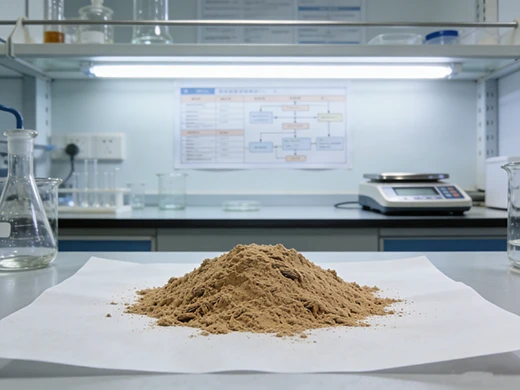
Cistanche tubulosa extract
6. The 'Retention' Mechanism of C. tubulosa Ingredients: A Molecular Perspective
Why do the aforementioned processes retain ingredients? The core lies in blocking two major degradation pathways:
Enzymatic Hydrolysis Pathway: Endogenous β-glucosidase in fresh Cistanche specifically cleaves the glycosidic bonds of PhGs, converting echinacoside into inactive aglycones. Enzyme inactivation by blanching and high-temperature drying is used to denature these enzymes and terminate this reaction.
Thermal Degradation Pathway: PhGs are unstable at high temperatures for extended periods. For example, under strongly acidic or high-temperature conditions, acteoside may undergo isomerization or oxidation. Therefore, low-temperature extraction and rapid drying are used to avoid this type of chemical decomposition.