Research Progress On Chemical Composition And Pharmacological Effects Of Jichuan Decoction And Prediction Of Quality Markers Ⅲ
Oct 16, 2024
4 Q-Marker prediction analysis of Jichuanjian
The composition of Chinese medicinal materials is complex. Due to different sources and origins, the same medicinal materials contain different active ingredients and different efficacy. In the macro environment, due to regional differences and differences in local medicinal material standards, the phenomenon of different names for the same substance and different names for the same substance is common. Based on this phenomenon, Academician Liu Changxiao proposed the new concept of Q-Marker to solve the current difficulties in quality evaluation and standard setting [68]. Q-Marker mainly analyzes from 5 aspects to facilitate quality control of compound preparations.

HERB CISTANCHE SUPPLEMENTS FOR RELIEF CONSTIPATION
Supportive Service Of Wecistanche
Email:wallence.suen@wecistanche.com
Whatsapp/Tel:+86 15292862950
4.1 Prediction analysis based on transfer and traceability
The compound ingredients of Jichuan Jian were queried in the Traditional Chinese Medicine System Pharmacology (TCSMP) database using the ingredients of Jichuan Jian, including Angelica sinensis, Achyranthes bidentata, Cistanche deserticola, Alisma orientalis, Cimicifuga heracleifolia and Fructus aurantii as keywords. According to OB≥30% and DL≥0.18, 57 active ingredients were screened in Jichuan Jian, including 6 active ingredients in Cistanche deserticola (arachidonate, β-sitosterol, etc.), 2 active ingredients in Angelica Sinensis (stigmasterol, β-sitosterol), 20 active ingredients in Achyranthes bidentata (coptisine, epi berberine, quercetin, etc.), 5 active ingredients in Fructus aurantii (β-sitosterol, nobiletin, etc.), 14 active ingredients in Cimicifuga heracleifolia (methanol, 7,8-dihydroxycimethanol, etc.), 10 active ingredients in Alisma orientalis (also B, also C, sitosterol, etc. The ingredients of traditional Chinese medicine compounds are complex. Generally, only the components that enter the blood can exert their medicinal effects. The analysis of the original components that enter the blood and their metabolites of Jichuan Jian can be used as the quality marker of Jichuan Jian. Lu Lina et al. [69] studied the metabolism of Angelica sinensis decoction in the body and found that chuanxiong lactone I and chuanxiong lactone II were detected in the intestinal fluid and blood. It can be inferred that they enter the blood in the original form during intestinal absorption. Yan Yu [70] studied the pharmacokinetics of Cistanche deserticola in the body and found that the components that enter the blood are mainly Cistanche alcohol glycosides, including echinacoside, verbascoside, isoverbascoside, Cistanche glycoside F, etc., and inferred that phenylethanol glycosides are the main active ingredients. Yan Lin et al. [71] used ultra-high liquid chromatography-quadrupole time-of-flight mass spectrometry to analyze the blood serum of rats gavaged with Alisma orientalis and salt Alisma orientalis. The analysis obtained 13 common components, including 5 original components and 8 metabolites, of which 5 prototype components are 16-oxoalismol A, alismol A, alismol C, 24-acetylalismol A, and alismol B. It can be inferred that the components of alismol are triterpenoid compounds. Wang YK et al. [72] used in vitro acetylcholinesterase assay and molecular docking technology to find that neohesperidin, naringin, and hesperidin can effectively regulate gastrointestinal motility, indicating that these three are bioactive markers of Citrus aurantium.
In summary, based on mass transfer and traceability, 57 active ingredients in Jichuan Jian can be traced, and then combined with the blood components for comprehensive analysis, the possible Q-Marker of Jichuan Jian can be determined.

4.2 Predictive analysis based on component specificity
4.2.1 Angelica
Angelica, also known as Yungui and Qingui, is a plant of the Umbelliferae family Angelica Sinensis (Oliv.) Diels The dried root of Angelica sinensis[73] is sweet and pungent in taste and warm in nature. Its chemical components mainly include volatile oils, organic acids, polysaccharides, and flavonoids. It has the effects of nourishing blood and activating blood circulation, regulating menstruation and relieving pain, moistening the intestines, and relieving constipation. It is often used for gynecological blood deficiency[74].
The characteristic components of Angelica sinensis include ferulic acid, coniferyl ferulate, ibutilide, chlorogenic acid, ibutilide A, ibutilide H, and other components[75]. Some researchers have pointed out that the volatile oils of Angelica sinensis, ligustilide, and butenyl peptide lactone, can be used as quality markers of Angelica sinensis[76].
4.2.2 Achyranthes bidentate
Achyranthes bidentata is the dried root of Achyranthes bidentata Bl., a plant of the Amaranthaceae family. It is neutral and tastes bitter, sweet, and sour. It has the effects of removing blood stasis and promoting menstruation, nourishing the liver and kidneys, strengthening tendons and bones, promoting diuresis and relieving stranguria, and guiding blood downward[77]. Its main chemical components include triterpenoid saponins, sterols, and polysaccharides[78]. The characteristic components of Achyranthes bidentata include β-ecdysterone, 25R-acetosterone, and 25S-acetosterone[79].
4.2.3 Cistanche deserticola
Cistanche deserticola is the dried fleshy stem with scaly leaves of the perennial herbaceous parasitic plants Cistanche deserticola
Y.C.Ma and Cistanche tubulosa (Schenk.) Wight of the Orobanchaceae family. It contains chemical components such as phenyl glycosides, iridoid ether terpenes and their glycosides, lignans and their glycosides, alkaloids, and sugars. It has the effects of tonifying kidney yang, benefiting essence and blood, moistening the intestines, and facilitating bowel movements[80]. The characteristic components of Cistanche deserticola include verbascoside, caffeic acid, isovalascoside, and echinacoside[81].
4.2.4 Alisma orientale
Alisma orientale is the dried tuber of Alisma orientale (Sam .) Julep.Orr Alisma planting-aquatica Linn, a plant of the Alismataceae family. It is cold, sweet, and light in taste, and enters the kidney and bladder meridians. Its main chemical components are terpenoid compounds, which have the effects of promoting diuresis and dispelling dampness, purging heat, clearing turbidity,y and regulating lipids[82]. The main characteristic components of Alisma orientale are alismatol A, alismatol F, 24-acetyl alismatol,A, and 23-acetyl alismatol B[83].
Table The active ingredient common to all single herbs of Jichuan decoction
Here is the table converted to English:
| Chinese Name | English Name | Source Compounds |
|---|---|---|
| β-酒醇 | Beta-sitosterol | Meat, egg, dairy, vegetables |
| 槲皮素 | Quercetin | Vegetables, fruits, grains, tea |
| 豆醇醇 | Stigmasterol | Vegetables, soybeans, grains |
| 谷醇醇 | Stigmast-5-en-3-ol | Vegetables, grains |
| 山苍酚 | Kaempferol | Vegetables, fruits, tea |
| 汉黄芩素 | Wogonin | Scutellaria baicalensis (Chinese Skullcap) |
4.2.5 Cimicifuga heracleifolia
Cimicifuga heracleifolia Kom., Cimicifuga dahurica (Turcz.) Maxim. or Cimicifuga foetida L. of the Ranunculaceae family[84], which has the effects of relieving rash, clearing away heat detoxifying, and raising yang energy[85]. Its main chemical components are triterpenoid compounds. Its main characteristic components are ferulic acid, isoferulic acid, cimicifuga B, cimicifuga F, etc.[86].
4.2.6 Citrus aurantium
Cimicifuga heracleifolia is the dried immature fruit of Citrus aurantium L. of the Rutaceae family and its cultivated varieties. It tastes bitter, pungent,t and sour[87], is slightly cole,and enters the spleen and stomach meridians. It has the pharmacological effects of regulating gastrointestinal function, promoting bile secretion and expelling stones, lowering blood lipids, and anti-tumor[88]. The chemical components of Citrus aurantium mainly include flavonoids, coumarins, alkaloids, volatile oils, etc. The main characteristic components are umbelliferone, naringin, naringin, hesperidin, etc. [89].
4.3 Predictive analysis based on ingredient effectiveness
"Effectiveness" is the core of compound quality markers and the guarantee of Chinese medicine quality. Lithuanian has the effects of warming the kidney and benefiting the essence, moistening the intestines, and relieving constipation. It can treat constipation caused by kidney yang deficiency and insufficient essence. Gao Yunjia et al. [90] found through research that total oligosaccharides and galactitol from Cistanche deserticola had a significant effect on the small intestinal propulsion of constipated mice. It can be considered that the active substances of Cistanche deserticola that moisten the intestines and relieve constipation are total oligosaccharides and galactitol. Chu Yifei et al. [91] explored the mechanism of action of Jichuan decoction in treating constipation based on network pharmacology. The results showed that quercetin, kaempferol, wogonin, β-gastrointestinal steroids, naringenin, baicalin and other ingredients in Jichuan decoction can treat constipation by regulating drug metabolism-cytochrome P450, cytochrome P450 metabolism of xenobiotics, and retinol metabolism, which may be related to core proteins such as PTGS2, PTGS1, NCOA2, and AR6. Song Tianyu et al. [92] used bioinformatics to study the mechanism of action of Jichuan decoction in treating slow-transmission constipation. The main active ingredients were nobiletin, quercetin, baicalin, kaempferol, and wogonin. According to the results of protein interaction network research, the important targets of Jichuan decoction in treating STC are AKt1, JUN, MAPK3, MAPK1, IL6, etc. In summary, quercetin, nobiletin, baicalein, kaempferol, wogonin, β-glucosterol, and naringenin can be used as the main active ingredients of Jichuan Jian.
4.4 Prediction analysis based on compound compatibility environment
In clinical practice, Chinese medicine is often used in compound prescriptions. Due to the large number of Chinese medicines in the compound prescriptions and the complex ingredients, the compatibility of different medicines may produce different effects. The Q-Marker of Jichuan Jian is predicted by the compatibility environment.
In the Chinese medicine compound Jichuan Jian, Cistanche deserticola is the main medicine, Angelica sinensis, and Achyranthes bidentata are the ministerial medicines, and Citrus aurantium, Alisma orientalis, and Cimicifuga heracleifolia are the adjuvant medicines. The combination of these medicines can warm the kidney and benefit the essence to treat the root cause, and can also moisten the intestines and relieve constipation to treat the symptoms. The compatibility characteristics of Jichuan Jian are purgation in tonification and ascent in descent. Alisma promotes urination and relieves turbidity, while Cimicifuga raises the clear yang. When the clear yang rises, the turbid yin falls. The opposites complement each other and help to promote defecation.[93] Chen Guifen et al.[94] analyzed the effects of warming kidney and moistening intestine drugs (Cistanche deserticola, Achyranthes bidentata, Angelica sinensis), turbidity-reducing drugs (Fructus aurantii, Alisma), and clear-raising drugs (Cimicifuga) based on the compatibility characteristics of Jichuan decoction by using the "factorial design method". The warming kidney and moistening intestine drugs mainly affect the water content of the small intestine, while the turbidity-reducing drugs mainly affect the propulsion rate of the small intestine. The two work together and complement each other, thereby promoting defecation. Yu Qinghua et al. [95] explored the role of the monarch, minister, assistant, and envoy combination of Jichuan Decoction in the treatment of constipation based on network pharmacology. The study found that there are 21 potential core active ingredients in the Jichuan Decoction compound, as shown in Table 2. The top five Degree values are quercetin, β-sitosterol, stigmasterol, kaempferol and wogonin. The core effective active ingredients conform to the characteristics of the monarch, minister, assistant,t and envoy combination. In addition, the potential core target genes of Jichuan Decoction also conform to the distribution law of the monarch, minister, assistant, and envoy combination.
4.5 Prediction analysis based on component measurability
The 2020 edition of the Chinese Pharmacopoeia stipulates that the content determination items of Cistanche deserticola, Angelica sinensis, Achyranthes bidentata, Alisma orientalis, Cimicifuga heracleifoli,a and Fructus Aurantii Immaturus include ferulic acid, echinacoside, verbascoside, β-ecdysterone,is ferulicc acid, 23-acetyl alismatol B, 23-acetyl alismatol C, naringin and neohesperidin, etc. [96]. We know from the physicochemical properties that β-ecdysterone, 23-acetyl alismatol B, and 23-acetyl alismatol C have poor water solubility, are not easy to decoct out, and cannot exert their medicinal effects, so they are not used as quality markers for Jichuan Decoction. Li Wenjun et al. [97] used high-performance liquid chromatography to determine the content of naringin. The results showed that the determination effect was good, and the durability, repeatability, and recovery rate all met the requirements of content determination. Liu Jingjing et al. [98] simultaneously determined echinacoside, β-ecdysterone, naringin, and neohesperidin in Jichuan Jian and found that the characteristic peak had good separation, strongcharacteristicsc, and good representativeness.
Cai Nan et al. [99] established an HPLC method to simultaneously determine echinacoside, verbascoside, ligustilide, naringin, neohesperidin, and isoferulic acid in Jichuan Jian and found that the components were stable and highly reproducible, and could be used as the signature components for quality control of Jichuan Jian.
In summary, based on the five-principle analysis and prediction of Q-Marker, ferulic acid, echinacoside, verbascoside, is ferulic acid, naringin, neohesperidin, ibutilide, caffeic acid, and butenyl peptide lactone in Jichuan Jian can be used as quality markers of Jichuan Jian, as shown in the table and figure.
| Compound Name | Formula | CAS Number | Molecular Weight | Source Compounds |
|---|---|---|---|---|
| Arachidonic Acid | C10H10O4 | 1135-24-6 | 194.5 | Meat, eggs, dairy |
| Rutin | C35H46O20 | 82854-37-3 | 786.73 | Fruits, vegetables |
| Maltose | C29H36O15 | 61276-17-3 | 624.59 | Grains, fruits |
| Linoleic Acid | C10H10O4 | 537-73-5 | 194.18 | Vegetable oils |
| Lupeol | C27H32O14 | 10236-47-2 | 580.53 | Fruits, vegetables |
| Ursolic Acid | C28H34O15 | 13241-33-3 | 610.56 | Fruits, herbs |
| Menthol | C12H14O2 | 4431-01-0 | 190.24 | Mint |
| Caffeine | C9H8O4 | 331-39-5 | 180.16 | Coffee, tea, cocoa |
| Triacontanol | C12H12O2 | 551-08-6 | 188.22 | Beeswax, plants |
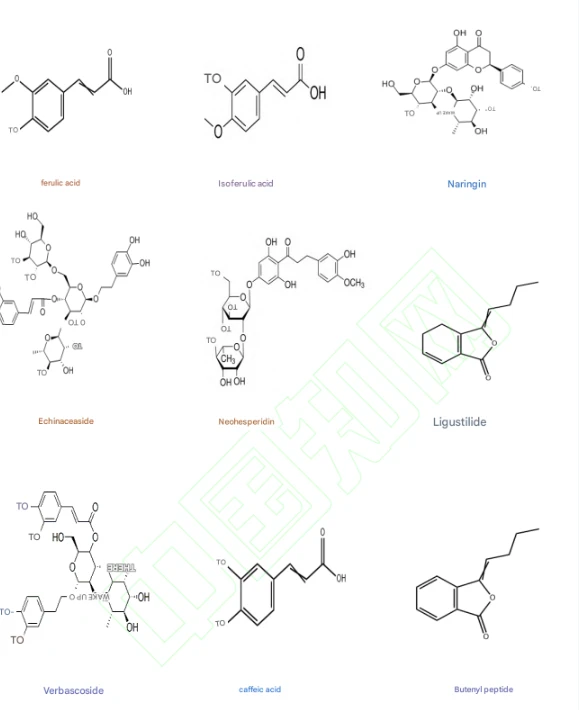
Fig.2 Molecular structures of Q-Marker in Ji-Chuan decoction
5 Conclusion
As a classic prescription for treating constipation, Jichuan Decoction has many pharmacological effects on treating constipation. It is mainly used to treat weak kidney yang and insufficient essence and fluid. It is mainly used to treat slow-transmission type and functional constipation in the elderly. In recent years, modern analytical techniques have been continuously improved, and the chemical components in the prescription have been gradually separated and identified, laying the foundation for subsequent mechanism research. This paper predicts and analyzes the transmission and traceability, component specificity, component effectiveness, compound compatibility environment, and component measurability of Jichuan Decoction. It is recommended that chemical components such as ferulic acid, echinacoside, verbascoside, is ferulic acid, naringin, neohesperidin, ibutilide, caffeic acid, and butenyl peptide lactone be used as quality markers of Jichuan Decoction. The quality markers of Jichuan Decoction were predicted and analyzed to provide a theoretical basis for the screening and determination of Q-Markers of Jichuan Decoction. However, there are few studies on the blood-entering components and chemical components of the Jichuanjian compound. In-depth research on Jichuanjian is needed to provide a reference for the research and development of the classic prescription Jichuanjian and establish relevant preparation quality standards.
functional constipation hERB CISTANCHE in the elderly
References:
[1] (Qing Dynasty) Yu Genchu. Revision of Popular Treatise on Febrile Diseases[M]. Beijing: China Traditional Chinese Medicine Press, 2011.01.
[2] Niu Linqiang, Wu Lilin, Yi Tengda, et al. Analysis of ancient and modern literature on the classic prescription Jichuanjian[J]. Journal of Traditional Chinese Medicine, 2022, 50(05):48-54.
[3] Sun Yongjun, et al. GC-MS analysis of the chemical composition of volatile oil from dried roots of Angelica sinensis - a case study of Angelica sinensis from Zhadi Village, Sigou Township, Minxian County, Gansu Province[J]. China Food Industry, 2021(16):52-53.22,50(05):48-54.
[4] Zhang Qingqing, Feng Yuan, Yang Guiya, et al. Study on the chemical composition of Angelica sinensis extracts based on gas chromatography-mass spectrometry[J]. Guangdong Chemical Industry, 2021, 48(05):175-178.
[5] Ma JP, Guo ZB, Jin L, Li YD. Phytochemical progress made in investigations of Angelica sinensis (Oliv.) Diels. Chin J Nat Med. 2015 Apr;13(4):241-9.
[6] Meng Ying, Chi Yumei, Yan Guojun, et al. Study on the HPLC characteristic spectrum of Angelica sinensis and Angelica sinensis slices[J]. World Chinese Medicine, 2021,16(04):539-545.
[7] Lu Chenna, Ye Xiao, Liu Xiaoqian, et al. Determination of the content of 7 components in AngelicaSinensiss and its slices and their substance transfer law[J]. China Journal of Traditional Chinese Medicine, 2021,46(23):6196-6203.
[8] Huang Y, Wang S, Liu L, Peng W, Wang J, Song Y, Yuan Q, Yuan X, Wu C. Review of traditional uses, botany, chemistry, pharmacology, pharmacokinetics, and Toxicology of Radix