/STAT3-Modulating Herbal Prostate Support: Efficacy Of YQWS-TLD With Cistanche Integration
Dec 04, 2025
Purpose: To evaluate the efficacy of the traditional herbal formula Yi‑Qi‑Wen‑Shen Tong‑Long Decoction (YQWS‑TLD) on benign prostatic hyperplasia (BPH) and clarify whether it acts by downregulating the pro‑inflammatory IL‑6/STAT3 pathway.
Key Findings: In a validated rat model of BPH, YQWS‑TLD dose‑dependently reduced prostate enlargement, epithelial hyperplasia, and fibrosis; lowered pro‑inflammatory cytokines (IL‑6, IL‑1β) in prostate tissue and serum; suppressed IL‑6 protein expression and STAT3 phosphorylation; reduced proliferation marker Ki‑67; decreased Collagen I/III; and favorably shifted the estradiol/testosterone (E2/T) ratio. Pharmacological activation of STAT3 (Colivelin) aggravated disease and partially reversed YQWS‑TLD's benefits, supporting a mechanism centered on IL‑6/STAT3 inhibition.
Commercial Relevance: The data support positioning YQWS‑TLD-or a modernized prostate formula based on its core actives-as an inflammation‑modulating solution for lower urinary tract symptoms (LUTS) associated with BPH. Incorporating cistanche as a supportive botanical aligns with the anti‑inflammatory and androgen‑modulating concept and offers additional male vitality and urinary benefits.
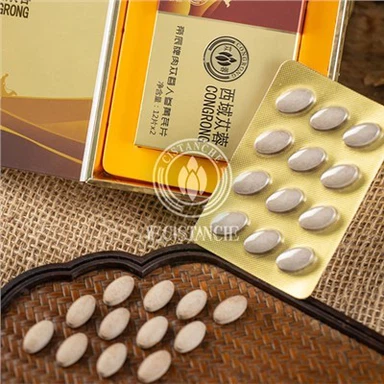
Cistanche Extract Supplements


Background and Rationale
Benign prostatic hyperplasia (BPH) is a common condition in aging men characterized by epithelial and stromal overgrowth leading to urinary frequency, urgency, nocturia, and weak stream. Chronic inflammation is a recognized driver of hyperplasia and fibrosis. IL‑6–mediated activation of STAT3 amplifies inflammatory cascades and promotes cellular proliferation and extracellular matrix deposition. Targeting IL‑6/STAT3 is therefore a rational strategy for BPH management.
YQWS‑TLD is a classical multi‑herb formula with traditional actions of tonifying qi and kidney, warming yang, promoting blood flow, and resolving dampness. Preclinical and systems‑pharmacology evidence implicates anti‑inflammatory, anti‑proliferative, and pro‑apoptotic effects, with predicted targets including AKT1, IL‑6, and VEGFA. To validate a core mechanism, we interrogated the IL‑6/STAT3 axis in vivo.
TCM HERB SUPPLEMENT CISTANCHE EXTRACT HEAL BPH SIGNIFICANTLY

Methods
Animals and Model: Male SPF SD rats (200–230 g) underwent bilateral orchiectomy under pentobarbital anesthesia. After 3 days, BPH was induced by daily subcutaneous testosterone propionate (5 mg/kg in olive oil) for 21 days. Sham rats received vehicle only.
Groups (n=12/group):
Sham
BPH model
YQWS‑TLD low dose (15 g/kg, gavage)
YQWS‑TLD high dose (30 g/kg)
STAT3 activator Colivelin (1 mg/kg, i.p.)
YQWS‑TLD high dose + Colivelin
Herbal Preparation: YQWS‑TLD comprised Anemarrhena, Phellodendron, Cinnamomum, Rehmannia (prepared), Cornus, Dioscorea, Poria, Moutan, Achyranthes, Aconitum (processed), Sparganium, Curcuma zedoaria, Persica, Vaccaria, and Alisma. Two decoctions were combined and concentrated to 1.5 or 3.0 g/mL; doses administered at 10 mL/kg once daily for 21 days.
Outcomes:
Prostate index (PI = prostate wet weight/body weight) and serum E2/T by ELISA.
Histology: H&E for hyperplasia; Masson's trichrome for fibrosis.
Immunohistochemistry: Ki‑67 in prostate tissue with ImageJ quantification.
Inflammation: IL‑6 and IL‑1β in prostate homogenate and serum by ELISA.
Western blot: Collagen I/III, IL‑6, STAT3, and p‑STAT3; β‑actin as loading control.
Statistics: One‑way ANOVA with SNK‑q post hoc testing.

Results
Disease Validation: Versus sham, BPH rats showed marked prostate enlargement, epithelial thickening, increased fibrosis, elevated PI, higher Ki‑67 optical density, increased IL‑6/IL‑1β in tissue and serum, upregulated IL‑6 protein, elevated p‑STAT3/STAT3 ratio, and reduced E2/T (all P<0.05).
Efficacy of YQWS‑TLD:
Both doses alleviated hyperplasia and fibrosis, lowered PI, Ki‑67, tissue and serum IL‑6/IL‑1β, Collagen I/III, IL‑6 protein, and p‑STAT3/STAT3, while increasing E2/T (all P<0.05).
The high dose was superior to the low dose across structural, biochemical, and signaling endpoints (P<0.05).
Mechanism Specificity:
Colivelin (STAT3 activator) worsened hyperplasia/fibrosis and increased PI, Ki‑67, cytokines, collagen, IL‑6 expression, and p‑STAT3/STAT3, while decreasing E2/T (P<0.05 vs. model).
Co‑administration of Colivelin attenuated the benefits of high‑dose YQWS‑TLD (P<0.05), indicating that suppression of STAT3 activation is central to YQWS‑TLD action.
Conclusion
YQWS‑TLD improved prostate enlargement and fibrosis in a rat BPH model by suppressing IL‑6 expression and STAT3 phosphorylation, thereby dampening inflammatory and proliferative signaling. The data support development of herbal prostate formulations centered on IL‑6/STAT3 modulation for men with LUTS due to BPH.
Commercial Positioning Notes
Unique value proposition: Targets a validated inflammatory‑proliferative pathway (IL‑6/STAT3), not just androgen conversion, offering a complementary approach to 5‑α‑reductase inhibitors.
Evidence package: In vivo efficacy, dose‑response, histological and biochemical confirmation, and pharmacological reversal with a pathway agonist.
Regulatory‑savvy messaging (where allowed): "Supports a healthy inflammatory response in the prostate," "Helps maintain normal urinary flow and frequency," "Modulates IL‑6/STAT3 signaling in preclinical research."
Strategic Integration of Cistanche (Cistanche deserticola)
Rationale: Cistanche is rich in phenylethanoid glycosides (e.g., echinacoside, acteoside) with documented anti‑inflammatory, antioxidant, and neuroendocrine support properties. Preclinical literature suggests:
Downregulation of pro‑inflammatory mediators (IL‑6, TNF‑α) and attenuation of STAT3/NF‑κB activity in inflammatory models.
Support of androgen balance and spermatogenesis parameters, which may complement a favorable E2/T milieu observed in this study.
Antifibrotic and anti‑oxidative effects that align with reduced Collagen I/III and MDA, and improved SOD/GSH‑Px in related models.
Practical claim framing for brands (as permissible):
"Cistanche supports healthy urinary function and male vitality."
"Standardized cistanche extracts help modulate IL‑6–driven inflammatory pathways that affect prostate tissue."
"Combines with classic prostate botanicals to promote normal prostate size and tissue structure."
Formulation concept: Pair a YQWS‑TLD core (anti‑inflammatory, anti‑proliferative) with standardized cistanche (e.g., ≥10–20% acteoside/echinacoside), saw palmetto (liposterolic extract), and quercetin or pygeum for a differentiated, mechanism‑anchored prostate product.
Suggested Figures and Data Visuals for Marketing/Tech Sheets
Mechanism schematic: IL‑6 → JAK2 → p‑STAT3 (nuclear) → proliferation/fibrosis; herb complex and cistanche positioned as inhibitors at IL‑6 and STAT3 nodes.
Bar charts: PI, Ki‑67, IL‑6, p‑STAT3/STAT3 across groups (Sham, BPH, YQWS‑TLD low/high, Colivelin, Combo).
Histology panels: H&E and Masson comparisons illustrating reduction in epithelial thickness and collagen deposition with high‑dose YQWS‑TLD.
Materials and Methods (Condensed for Dossier Use)
Animals: Male SD rats, SPF; controlled light/dark cycle; temperature 23–25°C; humidity 50–60%.
BPH induction: Orchiectomy + TP 5 mg/kg s.c. daily × 21 d; sham received vehicle.
Dosing: YQWS‑TLD 15 or 30 g/kg (1.5 or 3.0 g/mL, gavage, 10 mL/kg/day × 21 d); Colivelin 1 mg/kg i.p. daily; combinations as above.
Assays: ELISA for E2/T and cytokines; IHC for Ki‑67; WB for Collagen I/III, IL‑6, STAT3, p‑STAT3; histology via H&E and Masson.
Limitations and Next Steps for Commercial Translation
Species and model limitation: Findings are preclinical; human studies are required.
Standardization: Implement HPLC/UPLC fingerprinting and marker‑based standardization for batch consistency; include cistanche marker specs (echinacoside/acteoside).
Clinical roadmap: Pilot, double‑blind, placebo‑controlled trial in men with moderate LUTS/BPH; endpoints: IPSS, Qmax, PVR, PSA (safety), serum cytokines, and urinary symptom questionnaires.
Suggested Compliance Language
Use structure/function claims where legally permitted; avoid disease‑treatment claims.
Include a clear disclaimer: "These statements have not been evaluated by [regulator]. This product is not intended to diagnose, treat, cure, or prevent any disease."
Keywords
IL‑6; STAT3; benign prostatic hyperplasia; herbal formula; Yi‑Qi‑Wen‑Shen Tong‑Long Decoction; inflammation; fibrosis; Ki‑67; collagen; cistanche; men's urinary health