Here Are 4 Things You Need To Know About New Developments in The Diagnosis And Treatment Of CKD
Apr 15, 2024
Chronic kidney disease (CKD) is a common disease in nephrology. Currently, the screening or diagnostic criteria for CKD are related to blood biomarkers (serum creatinine, cystatin C, etc.), urine biomarkers (urinary albumin or protein, etc.), ultrasound, and renal biopsy. The above-mentioned screening or examination methods have low accessibility and low patient compliance in some areas, which has resulted in a low awareness rate of CKD. In addition, new treatment options for CKD have emerged in an endless stream in recent years, such as sodium-glucose cotransporter 2 inhibitors (SGLT-2i), nonsteroidal mineralocorticoid receptor antagonists (n-MRA), etc.

Click to Cistanche for kidney disease
From April 13 to 16, 2024, the 2024 World Congress on Nephrology (WCN) opened in Argentina, the country farthest from our country. At this conference, a total of more than 1,000 abstracts were exhibited. Among these abstracts, there are 4 abstracts involving the progress of new diagnosis and treatment of CKD.
Important information
The eGFR difference can predict the risk of diabetic kidney disease (DKD);
② Zipotentan combined with dapagliflozin can treat CKD and reduce proteinuria in patients;
③ Regardless of whether combined with SGLT-2i, the new aldosterone synthase inhibitor (BI 690517) can significantly reduce proteinuria in CKD patients;
④Pirfenidone can reduce renal fibrosis in CKD models with hypertension
eGFR difference and DKD1
Research background: Currently, the leading cause of CKD worldwide is DKD. About 30% to 40% of diabetic patients will eventually progress to DKD. Therefore, early screening for DKD among high-risk groups has important public health significance. Currently, the estimated glomerular filtration rate (eGFR) is an important indicator in the management of DKD, and cystatin C or serum creatinine levels are usually used to calculate eGFR clinically. However, there is a significant difference in eGFR between cystatin C and creatinine, known as eGFRdiff. Previous studies have shown that eGFRdiff is significantly associated with a range of adverse outcomes, including falls, hospitalization, renal failure, cardiovascular events, and death. So, is there a correlation between eGFRdiff and DKD?
Study design: This is a prospective cohort study with data from the UK biobank. A total of 25,825 participants with diabetes (mean age 59.1 years, 60.4% male) without microvascular complications at baseline (2006-2010) were included in the study. eGFRdiff was assessed based on the absolute difference between cystatin C and creatinine (absolute eGFRdiff) and their ratio (ratio eGFRdiff). Patients were divided into three groups according to their absolute eGFRdiff: absolute eGFRdiff negative (absolute eGFRdiff <-15ml/min/1.73㎡), absolute eGFRdiff neutral (absolute eGFRdiff between -15~15 ml/min/1.73㎡) and absolute eGFRdiff positive (absolute eGFRdiff>15 ml/min/1.73㎡). According to whether the ratio eGFRdiff is ≥0.6, the patients were divided into 2 groups. The incidence of DKD was determined from electronic health system records. The Cox proportional hazards regression model was used to analyze the relationship between eGFRdiff and the risk of DKD.
Study results: At baseline, 38.9% of participants had a negative absolute eGFRdiff. During a median follow-up of 13.6 years, 3,203 participants developed DKD. Compared with patients with absolute eGFRdiff neutral, patients with absolute eGFRdiff negative had an increased risk of DKD, with a multivariable-adjusted hazard ratio of 1.63 (95% CI, 1.50-1.76). For each SD increase in absolute eGFRdiff, the risk of new DKD decreased by 36%. For every 10% increase in the ratio eGFRdiff, the risk of DKD will decrease (the corresponding risk ratio is 0.77 [95% CI, 0.75~0.79]). In all sensitivity analyses, correlations did not change substantially.
Study conclusion: eGFRdiff can indicate the risk of DKD in patients, and can conduct comprehensive DKD screening for high-risk patients. In addition, monitoring of eGFRdiff may provide potential benefits for risk stratification of DKD.
Zipotentan combined with dapagliflozin in the treatment of CKD2
Research background: Previous studies have confirmed that the endothelin receptor antagonist (ERA) zibotentan can treat CKD and reduce proteinuria in patients. In addition, it was also found that the protein-lowering efficacy of nilpotent combined with dapagliflozin seems to be better than that of dapagliflozin alone, but a comprehensive effectiveness and safety analysis has not yet been conducted.
Study design: The ZENITH-CKD study is a randomized, double-blind, placebo-controlled study conducted in 19 countries and 170 clinical centers. In this study, adults with urinary albumin to creatinine ratio (UACR) of 150 to 5000 mg/g and eGFR ≥ 20 ml/min/1.73 m2 were randomly assigned to receive dapagliflozin alone, nilpotent (0.25 mg or 1.5 mg) Combined treatment with dapagliflozin (10mg). The primary endpoint was the change from baseline to week 12 in log-transformed UACR, assessed using a mixed model for repeated measures. This study also evaluated the impact on events of fluid retention, defined as an increase in body weight of >3% from baseline (with an increase in total body water of at least 2.5%) or an increase in BNP of >100% to 200 pg in the absence of atrial fibrillation. /mL or there is atrial fibrillation, and BNP increases by 100% to 400 pg/mL.

Research results: From April 28, 2021, to January 17, 2023, 447 patients were randomized to receive 0.25 mg nilpotent combined with dapagliflozin (n=91), 1.5 mg nilpotent combined with dapagliflozin (n= 179 ) or 10 mg dapagliflozin alone (n=177). Overall, at baseline, 58% of CKD patients had type 2 diabetes, the average baseline eGFR was 47 ml/min/1.73㎡, and the baseline UACR geometric mean was 538 mg/g. Regardless of whether the patient has diabetes or whether the baseline UACR is >700 mg/g, compared with dapagliflozin monotherapy, the nilpotent combination treatment group can reduce the patient's UACR level without causing fluid retention. In the combination treatment group with eGFR≤45ml/min/1.73㎡, the risk of fluid retention was higher than that of patients with eGFR>45ml/min/1.73㎡. However, regardless of the patient's baseline eGFR level, the risk of fluid retention in the 0.25 mg topotecan plus 10 mg dapagliflozin treatment group was not significantly different from that in the dapagliflozin monotherapy group.
Study Conclusions: Zipotentan/dapagliflozin 0.25 mg/10 mg was effective in reducing albuminuria and was well tolerated regardless of baseline diabetes status or renal function.
Aldosterone synthase inhibition (BI 690517) for the treatment of CKD3
Research background: It has been proven in the past that high aldosterone levels accelerate the progression of CKD. So, can aldosterone synthase inhibition (BI 690517) be a safe and effective treatment for CKD?
Study Design: This is a double-blind, dose-finding clinical study (NCT05182840). Adult patients with CKD receiving renin-angiotensin system inhibitors (RASi) were first randomized (R1) to receive 8 weeks of empagliflozin or placebo, followed by a second randomization (R1). (R2), receive 14 weeks of treatment with BI 690517 at doses of 3, 10, or 20 mg or placebo. The primary endpoint was a change in the first-morning proteinuria-to-creatinine ratio at week 14 compared with data at R2 (UACRFMV). The secondary endpoint was the UACRFMV response rate (≥30% change in UACRFMV compared with baseline at R2). Safety was also factored into the assessment.
Research results: 714 patients were enrolled in R1 and 586 patients were enrolled in R2. Baseline information for R2 was a mean (SD) age of 63.8 (11.3) years, 58.4% of patients were Caucasian, 66.6% were male, and 70.6% had type 2 diabetes. The median baseline UACR (interquartile range) was 426.3 (205 ~ 889) mg/g, and the mean (SD) eGFR was 51.9 (17.7) ml/min/1.73㎡. BI 690517 dose-dependently reduced UACR. In the setting of empagliflozin, there was a 39.5% (95% CI, 24 to 51.8) reduction in the BI 690517 10 mg group compared with the placebo group. The UACRFMV response rate was 53.5% in the BI 690517 combined empagliflozin treatment group and 43.2% in the BI 690517 monotherapy group. Adverse events related to BI 690517 (3-20 mg) were reported by 19.2% of patients in the combination treatment group and 18.5% of patients in the placebo group, respectively.

Study conclusion: BI 690517 is well tolerated and dose-dependently reduces UACR in patients with CKD. Treatment with BI 690517 combined with empagliflozin showed additional anti-albuminuric efficacy, which may translate into greater renal protection.
Pirfenidone can reduce renal fibrosis in hypertensive CKD model 4
Research background: The key to the progression of CKD is renal fibrosis. Renal fibrosis can lead to loss of kidney function and a significant increase in proteinuria levels. Pirfenidone is a drug used to treat idiopathic pulmonary fibrosis. Considering the importance of fibrosis in the progression of CKD, how to delay or even reverse renal fibrosis is a concern of doctors. A study was conducted to analyze the potential renoprotective effects of pirfenidone in an experimental model of hypertensive nephrosclerosis.
Research design: A rat model of chronic kidney disease was established by inhibiting nitric oxide synthesis by daily oral administration of 70 mg/kg L-NAME (NAME) combined with a 3% high-sodium diet (HS). The animal model is divided into four groups: control group: only given HS diet without other drugs or treatments; no change group (NAME): continue to receive NAME combined with HS diet; losartan group (LOS): given 50mg/kg/d Losartan; pirfenidone group (PIRF): pirfenidone 750 mg/kg/d was given. After 30 days of intervention, the systolic blood pressure (SBP), 24-hour urinary albumin (UAE), glomerulosclerosis (GS), glomerular ischemia (GI), interstitial fibrosis (INT), and macrophages of the rats in each group were observed. Cell (CD68) and T cell infiltration, cell proliferation (PCNA), renal cortical interstitial α-SMA, type I collagen, and fibronectin accumulation.
Study conclusion: Pirfenidone is as effective as losartan in reducing the progression of CKD. The drug has obvious renal protective effects, significantly reduces the infiltration of renal inflammatory cells, and eliminates renal fibrosis. It is an important treatment option for the treatment of CKD.
How Does Cistanche Treat Kidney Disease?
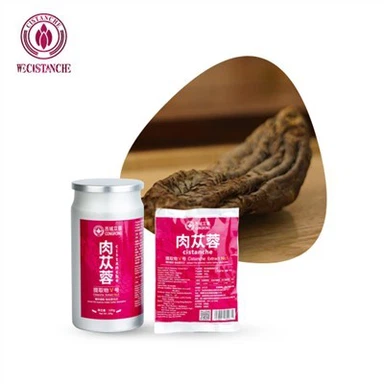
Cistanche is a traditional Chinese herbal medicine used for centuries to treat various health conditions, including kidney disease. It is derived from the dried stems of Cistanche deserticola, a plant native to the deserts of China and Mongolia. The main active components of cistanche are phenylethanoid glycosides, echinacoside, and acteoside, which have been found to have beneficial effects on kidney health.
Kidney disease, also known as renal disease, refers to a condition in which the kidneys are not functioning properly. This can result in a buildup of waste products and toxins in the body, leading to various symptoms and complications. Cistanche may help treat kidney disease ase through several mechanisms.
Firstly, cistanche has been found to have diuretic properties, meaning it can increase urine production and help eliminate waste products from the body. This can help relieve the burden on the kidneys and prevent the buildup of toxins. By promoting diuresis, cistanche may also help Reduce high blood pressure, a common complication of kidney disease.
Moreover, cistanche has been shown to have antioxidant effects. Oxidative stress, caused by an imbalance between the production of free radicals and the body's antioxidant defenses, plays a key role in the progression of kidney disease. ies help neutralize free radicals and reduce Oxidative stress, thereby protecting the kidneys from damage. The phenylethanoid glycosides found in cistanche have been particularly effective in scavenging free radicals and inhibiting lipid peroxidation.
Additionally, cistanche has been found to have anti-inflammatory effects. Inflammation is another key factor in the development and progression of kidney disease. Cistanche's anti-inflammatory properties help reduce the production of pro-inflammatory cytokines and inhibit the activation of inflammation mandatory pathways, thus alleviating inflammation in the kidneys.
Furthermore, cistanche has been shown to have immunomodulatory effects. In kidney disease, the immune system can be dysregulated, leading to excessive inflammation and tissue damage. Cistanche helps regulate the immune response by modulating the production and activity of immune cells, such as T cells and macrophages. This immune regulation helps reduce inflammation and prevent further damage to the kidneys.
Moreover, cistanche has been found to improve renal function by promoting the regeneration of renal tubes with cells. Renal tubular epithelial cells play a crucial role in the filtration and reabsorption of waste products and electrolytes. In kidney disease, these cells can be damaged, leading to damaged renal function. Cistanche's ability to promote the regeneration of these cells helps restore proper renal function and improve overall kidney health.

In addition to these direct effects on the kidneys, cistanche has been found to have beneficial effects on other organs and systems in the body. This holistic approach to health is particularly important in kidney disease, as the condition often affects multiple organs and systems. che has been shown to have protective effects on the liver, heart, and blood vessels, which are commonly affected by kidney disease. By promoting the health of these organs, cistanche helps improve overall kidney function and prevent further complications.
In conclusion, cistanche is a traditional Chinese herbal medicine used for centuries to treat kidney disease. Its active components have diuretic, antioxidant, anti-inflammatory, immunomodulatory, and regenerative effects, which help improve renal function and protect the kidneys from further damage. , cistanche has beneficial effects on other organs and systems, making it a holistic approach to treating kidney disease.