High-fat Diet Exacerbate Kidney Ischemia-reperfusion Injury
Mar 23, 2022
for more information:ali.ma@wecistanche.com
PART Ⅰ:Dietary Modification Alters the Intrarenal Immunologic Micromilieu and Susceptibility to ischemic Acute Kidney Injury
Junseok Jeon'f, Kyungho Leef, Kyeong Eun Yang, Jung Eun Lee, Ghee Young Kwon, Wooseong Huh & et al.
INTRODUCTION
Ischemic acute kidney injury(AKI) is the most common cause of AKI and frequently contributes to the development and progression of chronic kidney disease(CKD) in both native and transplanted kidneys(1,2). Ischemia-reperfusion injury(IRI) induces graft injury, an inevitable consequence of kidney transplantation (3). Substantial roles of immunologic mechanisms, beyond simple hypoxic injury, in the pathogenesis of ischemic AKI have been demonstrated in many studies(4,5).In the post-ischemic kidney following IRI(Ischemia-reperfusion injury), a robust inflammatory response caused by both innate and adaptive immune systems results in kidney damage (6). In addition to infiltration of circulating immune cells, the intrarenal immunologic micro milieu, including resident intrarenal immune cells(7) and Toll-like receptors (TLRs)on renal tubules(8), contributes significantly to renal injury following IRI(Ischemia-reperfusion injury) (6).
Recent studies have reported a relationship between diet and immune function (9). Changes in dietary composition have the potential to exacerbate or alleviate the severity of diseases in which immune mechanisms play an important role in the pathogenesis, such as hypertension in a murine model of salt-sensitive hypertension or obesity-related kidney damage in a high-fat(HF) diet-induced obesity model(10-12). However, it is yet to be determined whether dietary modification can alter the intrarenal immunologic micro milieu and susceptibility to ischemic AKI, although the role of dietary intervention in CKD has been reported (13). Considering the potential for preventive or therapeutic effects of dietary intervention in ischemic AKI, it is important to investigate the effects of dietary modification in normal kidneys.
In this study, we aimed to reveal the effects of HF(high-fat) or high-salt (HS) diet on normal kidneys and the development of ischemic AKI with a focus on the intrarenal immunologic micro milieu.

Click to organic CISTANCHE FOR KIDNEY DISEASE
MATERIALS AND METHODS
Dietary Modification and the Renal IRI(Ischemia-reperfusion injury) Model
This study was approved by the Samsung Medical Center Animal Care and Use Committee and the Institutional Review Board of Samsung Medical Center(IACUC No.20180314002)and was performed in compliance with the animal research:reporting in vivo experiments guidelines(14,15). Male 9-week-old C57BL/6 mice were purchased from Orient Bio Inc. (Seongnam, Kyoungki-do, Korea). All mice were housed in a specific pathogen-free barrier facility.
We investigated the effects of HF(high-fat) or HS diet on normal kidney and post-ischemic kidneys in an ischemic AKI model induced by bilateral IRI(Ischemia-reperfusion injury) surgery. In each model, mice were randomly allocated into four diet regimens; normal diet (0.25%NaCl by weight,10% fat by calories), HF(high-fat) diet(0.25% NaCl by weight,60% fat by calories),HS diet (8% NaCl by weight, 10%fat by calories),and high-fat diet with high-salt(HF(high-fat)+HS)(8%NaCl by weight,60% fat by calories). The composition of the normal and HS diets was 20% protein (main source casein),70%carbohydrate (main source sucrose), and 10% fat (main source soybean oil)(D12450B,Research Diets, New Brunswick, NJ). The composition of the HF(high-fat) diet and the HF(high-fat)+HS diet was 20% protein (main source casein),20% carbohydrate (main source Lodex 10), and 60% fat(main source lard)(D12492, Research Diets). All diet regimens had the same mineral and vitamin concentrations except for NaCl.
As for normal mice, each group was maintained on the allocated diet for 42 days and then switched to a normal diet for 14 days.
Regarding the ischemic AKI model, we used an established murine IRI(Ischemia-reperfusion injury) model with a laparotomy approach(16, 17). Bilateral IRI(Ischemia-reperfusion injury) was induced after 1-week or 6-week durations of dietary modification. Briefly, mice were anesthetized with an intraperitoneal injection of ketamine(100 mg/kg;Yuhan, Seoul, Korea)and xylazine(10 mg/kg; Bayer, Leverkusen, Germany). After an abdominal midline incision, both renal pedicles were isolated and clamped for 27 min with a microvascular clamp (Roboz Surgical Instrument, Gaithersburg, MD). During the operation,anesthetized mice were kept well-hydrated with warm sterile saline and placed on a thermostatically controlled heating table. After 27 min,the microvascular clamps were released from the renal pedicles for reperfusion. After applying sutures, mice were allowed to recover with free access to the allocated diet and water. All mice were sacrificed on day 2 after the IRI(Ischemia-reperfusion injury) operation, and post-ischemic kidneys were harvested after exsanguination.

CISTANCHE EXTRACT CAN PREVENT KIDNEY FROM DAMAGES
Assessment of Renal Function
In normal mice, blood urea nitrogen(BUN;Fujifilm, Bedford, UK) and plasma creatinine(Arbor Assays,Ann Arbor, MI)concentrations were measured in plasma samples collected from tail veins serially on days 0,7,14, 28,42, and 56 after dietary modification. Colorimetric kits were used according to the manufacturer'srecommended methods. In the IRI(Ischemia-reperfusion injury) model, plasma samples were measured on days 0, 1,and 2 after the operation using the same methods.
Tissue Histological Analysis
In the IRI(Ischemia-reperfusion injury) model,post-ischemic kidney tissue sections were fixed with 10% buffered formalin and stained with hematoxylin and eosin.A renal pathologist who was blinded to the diet allocation scored renal tubular necrosis in the cortex and outer medulla of post-ischemic kidneys.
CD45 Immunohistochemistry and Tissue FAXS Analysis
Formalin-fixed renal tissue sections were immunostained for detection of CD45 as follows. Sections(4-μm-thick)were deparaffinized with xylene,rehydrated in a graded alcohol series, and placed in a citrate buffer solution (pH6.0).Slides were placed in a pressure cooker and heated for 10min to enhance antigen retrieval. After cooling, the kidney sections were immersed in a hydrogen peroxide solution (Dako, Carpinteria, CA) for 30min to block endogenous peroxidase activity, followed by overnight incubation at 4°C with serum-free protein block(Dako). The next day, the slides were incubated with a 1:100 dilution of anti-mouse CD45 monoclonal antibody(BD Biosciences, San Jose, CA)for 1h at room temperature. After being rinsed, the CD45-stained sections were incubated for 30 min at room temperature with a secondary antibody using a Dako REAL EnVison kit (Dako).Subsequently,3,3'-diaminobenzidine tetrahydrochloride (Dako) was applied to the slides to produce a brown color, and the slides were counterstained with Mayer's hematoxylin solution (Dako).
A TissueFAXS workstation (Tissue Gnostics,Vienna, Austria)was used to analyze and calculate the percentage of CD45-positive cells in kidney samples, as described previously (18).
Flow Cytometric Analysis of Kidney-Infiltrating Mononuclear Cells
Isolation of kidney mononuclear cells(KMNCs) was based on an established protocol(19).Briefly, decapsulated kidneys were immersed in RPMI buffer(Mediatech, Manassas, VA)containing 5% FBS and disrupted mechanically using a Stomacher 80 Biomaster(Seward, Worthing, UK). Samples were strained, washed, and resuspended in 36% Percoll (Amersham Pharmacia Biotech, Piscataway, NJ) followed by gentle overlaying onto72%Percoll. The samples were centrifuged at 1,000g for 30 min at room temperature. KMNCs were collected from the interface of 36% and 72% Percoll.
Isolated KMNCs were resuspended in FACS buffer and pre-incubated with anti-CD16/CD32 antibodies for 10 min to minimize non-specific binding through Fc-receptors. KMNCs were incubated with anti-mouse anti-CD3,CD4, CD8, CD19, CD21,CD25,CD44,CD45,CD62L,CD69,CD126,CD138,Gr-1, F4/80, FoxP3,and NK1.1(all from BD Biosciences, San Jose, CA) for 25 min at 4°C, washed with FACS buffer, and fixed with 1% paraformaldehyde solution. Samples were acquired using a BD FACSVerse flow cytometer. Data were analyzed using the FACSuite program (BD Biosciences).
Multiplex Cytokine/Chemokine Assay
Multiplex cytokine and chemokine analysis in whole kidney protein extracts was conducted using a Milliplex MAP Mouse Cytokine/Chemokine Kit (Luminex, Austin, TX)following the manufacturer's instructions. Anti-cytokine monoclonal antibodies linked to microspheres incorporating distinct properties of two fluorescent dyes were used in this multiplexed particle-based flow cytometric assay. Our assay was designed to quantify interleukin(I)-2;IL-4; IL-6; I-10;interferon (IFN)-y; monocyte chemoattractant protein(MCP)-1;regulated on activation, normal T cell expressed and secreted (RANTES/CCL5); tumor necrosis factor(TNF)-α; and vascular endothelial growth factor(VEGF).The value of each cytokine or chemokine was normalized by dividing the raw concentration (pg/ml)by the kidney protein concentration (mg/ml, measured by using a Pierce BCA protein assay kit,Thermo Fisher Scientific, Waltham, MA).
Western Blot Analysis of Intrarenal Toll-Like Receptors 2 and 4
Intrarenal Toll-like receptors 2 and 4(TLR-2 and TLR-4)were analyzed by western blot analysis. According to the manufacturer's instructions, equal amounts of whole kidney protein extract (30 μg) were separated by electrophoresis on a NuPAGE Bolt mini gel system(Thermo Fisher Scientific). The gels were transferred onto a nitrocellulose membrane using an iBlot 2 Dry Blotting System (Thermo Fisher Scientific) after electrophoresis. Membranes were blocked with 5% skim milk tris-buffered saline solution with 0.1% Tween20 (TBST)for 1h at room temperature and then incubated overnight at 4°C with one of the following antibodies: mouse monoclonal anti-TLR2 antibody(MyBioSource, San Diego,CA)or anti-TLR4 antibody (Novus Biologicals, Centennial, CO). The horseradish peroxidase-conjugated secondary antibody was applied for 30 min at room temperature after washing with TBST. The signal was visualized using an Amersham ECL detection system (GE Healthcare, Chicago, IL),following the manufacturer's instructions. Bands were densitometrically analyzed using ImageJ 1.8 software (Wayne Rasband, National Institutes of Health, MD)and normalized against correspondingβ-actin band intensity as an internal control.

HK-2 Cell Hypoxia Model and Proliferation Assay
Human kidney-2(HK-2) cell (an immortalized proximal tubule epithelial cll line from a normal adult human kidney)hypoxia model was used for in vitro study to investigate the effects of a HS or HF(high-fat) environment at a cellular level.
Human kidney-2(HK-2)cells were purchased from the American Type Culture Collection(CRL-2190, Manassas, VA)and cultured in keratinocyte serum-free media(Thermo Fisher Scientific) supplemented with bovine pituitary extract and human recombinant epidermal growth factor. Cells were incubated at 37°C in a humidified atmosphere of 5% CO2 with the media changed every 2-3 days. Hypoxia was induced by exposure to 1% O2 and 5% CO2 balanced with nitrogen in a multi-gas incubator(APM-30D,Astec,Fukuoka,Japan)for 48 h.
HK-2 cells were divided into four groups. The first and second groups were controls under normoxia (21% O2)and hypoxia(1% O2), respectively.The third and fourth groups were treated with additional NaCl 25 mM and 1:250 diluted lipid concentrate(Thermo Fisher Scientific), respectively, before and after hypoxic insult.
The degree of HK-2 cell proliferation on days 0,1,and 2 after hypoxia was assessed with a Cell Titer96 aqueous one solution cell proliferation assay (Promega,Madison, WI)according to the manufacturer's instructions.
For quantification of inflammatory signaling molecule expression in the hypoxic HK-2 cells,TLR-2 and TLR-4 were measured with western blot analysis using mouse monoclonal anti-TLR2 (Santa Cruz Biotechnology,Dallas, TX)and anti-TLR4(Novus Biologicals, Centennial, CO) antibodies on days 0 and 2. Briefly, the cells were placed in RIPA buffer(Sigma-Aldrich,St.Louis, MO) containing a protease inhibitor cocktail (Sigma-Aldrich). The homogenate was centrifuged at 13,000g at 4°C for 10 min, and the supernatant was subjected to the aforementioned western blotting procedures.
Statistical Analyses
All data were expressed as mean ± standard error of the mean (SEM).Differences between groups or time points were analyzed using the Mann-Whitney U-test or two-way analysis of variance(ANOVA)followed by Tukey's post-hoc analysis. All statistical analyses were conducted using GraphPad Prism version 8 software(GraphPad Software, La Jolla, CA).P values <0.05 were considered statistically significant.
RESULTS
Effects of Dietary Modification on Physiologic Changes in Normal Mice To investigate the physiologic changes caused by dietary modification in normal mice, body weight, plasma total cholesterol, creatinine, and BUN concentration were measured serially. The total amount of dietary intake in the HE, HF(high-fat)+HS, and control groups was similar, while the HS group tended to consume slightly more chow(Supplemental Figure 1).The body weight of the HF(high-fat) diet group significantly increased from day 7 after starting the HF(high-fat) diet. The HS diet group had a lower body weight than the control group on day 42 and comparable body weight to that of the control group from l week after switching to a normal diet (Figure 1A).Plasma total cholesterol level of the HF(high-fat) diet group was significantly higher compared to that of the control group on day 14 and became comparable to that of the control group at 1 week after switching to a normal diet. Plasma cholesterol level in the control, HS diet, and HF(high-fat)+HS diet groups was comparable during the 6 weeks of dietary modification(Figure 1B).BUN was higher in the HF(high-fat) diet group and the HF(high-fat)+HS diet group on day 7.Overall renal function was comparable among the groups for6 weeks of dietary modification (Figure 1C).


FIGURE 1 | Effects of dietary modifification on physiologic changes of normal mice. (A) HF(high-fat) diet group gained weight signifificantly from day 7 after starting the HF(high-fat) diet and showed stationary body weight after switching to a normal diet. The HS diet group had a lower body weight than the control group on day 42 and returned to a body weight comparable with that of the control group 1 week after switching to a normal diet. (B) HF(high-fat) diet signifificantly increased plasma total cholesterol concentration from day 14 after dietary modifification. The total cholesterol level of the HF(high-fat) diet group returned to a comparable concentration after switching to a normal diet. (C) BUN level on day 7 was signifificantly higher in the HF(high-fat) diet and HS diet groups. Overall renal function measured by plasma creatinine was comparable among groups for the whole study period.*P < 0.05, compared with the control group at each time point. †P < 0.05, compared with day 7 in the same group (n = 5 for each group at each time point). Statistical analyses were performed with two-way ANOVA test followed by Tukey’s test. HF(high-fat), high-fat; HS, high-salt; HF(high-fat)+HS, high-fat with high-salt.
Effects of Dietary Modification on the Intrarenal Leukocytes of Normal Mice Trafficking of total leukocytes into normal kidneys was evaluated by immunohistochemical staining of CD45, followed by semiquantitative analysis with TissueFAXS(Figure 2A).The proportion of intrarenal total leukocytes among total nucleated cells was comparable between groups at each time point (Figure 2B).


FIGURE 2 | Effects of dietary modifification on intrarenal leukocytes of normal mice. Resident leukocytes were analyzed with immunohistochemistry of CD45 and flflow cytometry on normal renal tissue. (A) Representative immunohistochemistry fifindings and semiquantitative analysis of CD45-positive leukocytes in normal kidney of the control group on day 0. Arrows indicate CD45-positive leukocytes (×200). (B) The percentages of total leukocytes expressing CD45 among total nucleated cells were comparable between diet-fed groups.
Major effector cells of both innate and adaptive immune systems trafficked into the kidneys after dietary modification were analyzed with flow cytometry. Regarding T cell subtype, total CD8 T cells,effector memory CD4T cells, and NK T cells increased over time during the diet modification, whereas total CD4 T cells decreased.In terms of intergroup differences at each time point, the HF(high-fat) group and the HF(high-fat)+HSgroup showed a larger proportion of CD8T cells among total T cells on day 42 after dietary modification compared to the control diet group. The HF(high-fat)+HS group also showed larger proportions of the effector memory subsets of CD4 and CD8T cells and activated CD4 and CD8 T cells(Figures 3A,B, Supplemental Figure 2).Regarding non-T cell populations, total B cells decreased and NK cells increased on day 14compared to the day 7 after diet modification. Plasma cells reached peak numbers in the HF(high-fat) diet and HS diet groups on day 42 and decreased to levels comparable with those of the control group after a normal diet for 2 weeks. The proportion of NK cells and activated mature B cells among total B cells were significantly higher in the HF(high-fat) diet and the HF(high-fat)+HS diet groups on day 14 after dietary modification.The HF(high-fat) diet and HS diet groups showed higher intrarenal infiltration of neutrophils on day 14 after dietary modification(Figures 3C,D, Supplemental Figure 2).


FIGURE 3 | Flow cytometry analyses of KMNCs isolated from kidneys of normal mice. (A) Changes in the intrarenal T cell subpopulation by dietary modifification. HF(high-fat) and HF+HS diets increased the proportion of total CD8 T cells among total T cells on day 42 after dietary modifification. HF(high-fat)+HS diet also increased the proportion of effector memory CD4 and CD8 T cells. (B) The representative dot plots analyzing T cells on day 42. Gated cells indicate CD4 T cells and CD8 T cells among total T cells. (C) HF(high-fat) diet and HS diet increased the infifiltration of plasma cells and neutrophils on days 42 and 14 after dietary modifification, respectively. HF(high-fat) diet and HF+HS diet increased the infifiltration of activated mature B cells and NK cells on day 14 after dietary modifification. (D) Representative dot plots analyzing plasma cells on day 42. Gated cells indicate plasma cells expressing CD138 and CD126 among total kidney mononuclear cells. *P < 0.05, compared with the control group at each time point. †P < 0.05, compared with day 7 in the same group (n = 5 for each group at each time point). Statistical analyses were performed with two-way ANOVA test followed by Tukey’s test. HF, high-fat; HS, high-salt; HF(high-fat)+HS, high-fat with high-salt.
Effects of Dietary Modification on Intrarenal Cytokines/Chemokines of Normal Mice
Compared to the normal diet, the HS diet or the HF(high-fat)+HS diet enhanced the intrarenal expression of proinflammatory cytokines/chemokines including TNF-α, INF-y, MCP-1, and RANTES (Figure 4A). Expression of IL-6 was higher in the HF(high-fat)+HS diet group on day 7(Supplemental Figure 3). Conversely, the intrarenal expression of VEGF in mice fed the HS diet and the HF(high-fat)+HS diet was significantly lower than that of the control group (Figure 4B).


FIGURE 4 | Effects of dietary modifification on intrarenal cytokines and chemokines of normal mice. HS and HF(high-fat)+HS diets increased intrarenal expressions of TNF-α, INF-γ, MCP-1, and RANTES on day 42. The HF(high-fat)+HS diet also increased the expression of IL-6 on day 7 after dietary modifification. Although there were no signifificant differences in the expression of IL-10, the intrarenal expression of VEGF was lower in the HS diet group and the HF(high-fat)+HS diet group on day 7 and day 42 after dietary modifification. *P < 0.05, compared with the control group at each time point. †P < 0.05, compared with day 7 in the same group (n = 5 for each group at each time point). Statistical analyses were performed with two-way ANOVA test followed by Tukey’s test. HF, high-fat; HS, high-salt; HF+HS, high-fat with high-salt.
Dietary Modification Affects Susceptibility to lschemic AKI
To investigate the effects of dietary modification on post-ischemic kidneys, bilateral IRI(Ischemia-reperfusion injury) was performed 1 or 6 weeks after dietary modification. Overall, deterioration of renal function following IRI(Ischemia-reperfusion injury) was more prominent in the mice receiving the HS-based diet modification for both 1 week and 6 weeks compared to the control group.Both BUN and plasma creatinine concentrations were significantly higher in the mice fed the HS or HF(high-fat)+HS diet for 1 week compared to the control group on day 2 after IRI(Ischemia-reperfusion injury) (Figure 5A). Plasma creatinine concentration in the mice fed the HF(high-fat)+HS diet for 6 weeks was significantly higher than that in the control group on days 1 and 2 after IRI(Ischemia-reperfusion injury) (Figure 5B).


FIGURE 5 | Effects of dietary modifification on development of acute kidney injury (AKI) after bilateral IRI(Ischemia-reperfusion injury) surgery. (A,B) The renal functional changes following IRI(Ischemia-reperfusion injury) in each diet group. Deterioration of renal function following IRI(Ischemia-reperfusion injury) tended to be aggravated by HF(high-fat) or a HS diet fed for both 1 week and 6 weeks. BUN and plasma creatinine levels were signifificantly higher in the HS and HF(high-fat)+HS diet groups fed for 1 week after IRI(Ischemia-reperfusion injury). Plasma creatinine level in the HF(high-fat)+HS diet group fed for 6 weeks was signifificantly higher than that of the control group on day 2 after IRI(Ischemia-reperfusion injury). *P < 0.05, compared with the control group at each time point (n = 5–10 for each group). Statistical analysis was performed using the Mann-Whitney U-test. HF, high-fat; HS, high-salt; HF + HS, high-fat with high-salt.
The proportions of necrotic tubules tended to be higher in the mice fed the HS or HF(high-fat) diet compared to the control group (Figure 6). The group fed an HF(high-fat)+HS diet for 1 week showed a significantly larger proportion of necrotic tubules than the control group (Figure 6C).


FIGURE 6 | Effects of dietary modifification on structural injury following IRI(Ischemia-reperfusion injury) surgery. (A,B) Hematoxylin and eosin staining of post-ischemic kidneys on day 2 after IRI(Ischemia-reperfusion injury). Arrows indicate damaged or necrotic tubules (×200). (C) The percentages of necrotic tubules tended to be higher in the mice fed an HF(high-fat) or HS diet compared to the control group. The HF(high-fat)+HS diet group fed for 1 week showed a signifificantly higher percentage of necrotic tubules than the control group. *P < 0.05, compared with the control group (n = 5–10 for each group). Statistical analysis was performed using the Mann-Whitney U-test. HF, high-fat; HS, high-salt; HF + HS, high-fat with high-salt.
The percentage of total leukocytes expressing CD45 among total nuclei in the post-ischemic kidneys was significantly higher in the group fed an HF(high-fat)+HS diet for both l week and 6 weeks (Figures7A,B). The group fed an HF(high-fat) diet for 6 weeks also showed a larger proportion of CD45-positive cells than did the control group (Figure 7C).


FIGURE 7 | Effects of dietary modifification on leukocyte traffificking into the post-ischemic kidney. (A,B) Representative immunohistochemistry fifindings and semiquantitative analyses of CD45-positive leukocytes in the post-ischemic kidneys on day 2 after IRI(Ischemia-reperfusion injury). There were more pronounced infifiltrations of leukocytes into the post-ischemic kidneys of mice fed with an HF(high-fat) or HS diet for both 1 week and 6 weeks. Arrows indicate CD45-positive leukocytes (×200). (C) The percentages of total leukocytes expressing CD45 among total nucleated cells were higher in the post-ischemic kidneys of HF(high-fat)-or HS-fed mice compared with that of mice fed a normal diet. *P < 0.05, compared with the control group (n = 5–10 for each group). Statistical analysis was performed using the Mann-Whitney U-test. HF, high-fat; HS, high-salt; HF+HS, high-fat with high-salt.
Intrarenal expression of TLR-2 and TLR-4 on day 2 following IRI(Ischemia-reperfusion injury) was evaluated with western blotting of protein samples extracted from post-ischemic kidneys. The expression of both TLR-2 and TLR-4 tended to increase in mice fed HF(high-fat) or HS diet for l week(Figures 8A,C).Mice fed an HF(high-fat)+HS diet for 6 weeks showed significantly increased expression of both TLR-2 and TLR-4(Figures 8B,C).
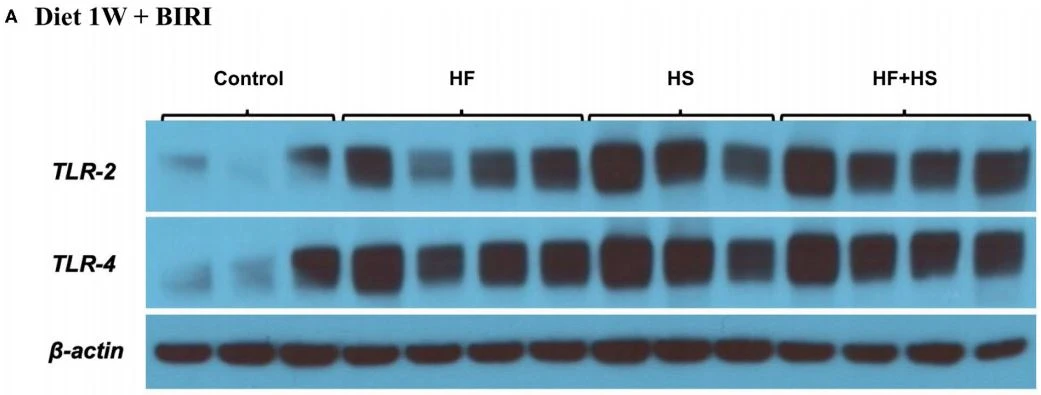


FIGURE 8 | Western blotting of protein samples extracted from post-ischemic kidneys on day 2 after IRI(Ischemia-reperfusion injury). (A) Overall expression of TLR2 and TLR4 tended to be higher in post-ischemic kidneys of mice fed an HF or HS diet for 1 week compared to those of the mice fed a normal diet. (B,C) The expression of TLR-2 and TLR-4 was signifificantly higher in the HF(high-fat), HS, and HF(high-fat)+HS diet groups fed for 6 weeks compared to the control group. *P < 0.05, compared with the control group (n = 3–4 for each group). Statistical analysis was performed using the Mann-Whitney U-test. HF, high-fat; HS, high-salt; HF+HS, high-fat with high-salt.
Effects of High Sodium and Lipid on Hypoxic HK-2 Cells
Figure 9A shows the degree of HK-cell proliferation after hypoxic insult depending on additional NaClandlipid treatment. Day 0, the end of hypoxia, was the day when HK-2 cells were removed from the multi-gas incubator after 48h of hypoxia. Treatment with high salt(additional NaCl 25 mM)suppressed the proliferation of hypoxic HK-2 cells. Conversely, lipid treatment facilitated the proliferation of hypoxic HK-2cells.
Western blot analysis of TLR-2 and TLR-4 in protein extracts of hypoxic HK-2 cells showed that lipid treatment reduced the expression of TLR-2 and enhanced the expression of TLR-4, compared with the hypoxia control group on day 2 after hypoxic insult(Figures 9B,C). The additional NaCl treatment did not significantly change the expression of TLR-2 orTLR-4 compared to those of the hypoxia control group.


FIGURE 9 | Effects of sodium and lipid treatment on hypoxic HK-2 cells. (A) Additional NaCl treatment inhibited the proliferation of HK-2 cells after hypoxic insult compared with the hypoxia control group. Conversely, additional lipid treatment facilitated the proliferation of HK-2 cells after hypoxic insult. (B,C) Western blotting of TLR-2 and TLR-4 showed that lipid treatment reduced the expressions of TLR-2 and enhanced the expression of TLR-4 compared with the hypoxia control group on day 2 after hypoxic insult. Day 0: Day when HK-2 cells were removed from the multi-gas incubator 48 h after hypoxia. *P < 0.05, compared with the normoxia control group. †P < 0.05, compared with the hypoxia control group. Statistical analysis was performed using the Mann-Whitney U-test.

The traditional Chinese medicinal herb: cistanche
Note: The traditional Chinese medicinal herb cistanche (also known as the "dragon herb" and "desert ginseng"), grows only in the arid and warm deserts. As one of the nine immortal herbs, Cistanche (cistanche tubulosa/cistanche deserticola/desertliving cistanche/cistanche salsa)contents with rich effective ingredients such as echinacoside, acteoside, total phenylethanoid glycosides, flavonoids, polysaccharides, etc. these effective ingredients made cistanche a precious nourishing herb and food material for people's immunity, internal organs, and brain cells and neurons, etc. The modern pharmacological studies have confirmed the following effects of cistanche(benefits of cistanche): improve immunity; improve sexual function and kidney function; anti-fatigue; anti-aging; improve memory; anti-Parkinson's disease; anti-Alzheimer's disease; antioxidation; ease-constipation; anti-inflammatory; promote bone growth, whitening skin; protect liver; etc.