History And Development Of “One Root Of Medicine And Food
Feb 17, 2025
Abstract
The concept of "One Root of Medicine and Food" originates from ancient theories based on the discovery of both food and medicine. It emphasizes the dual roles of food as both sustenance and a source of medicinal benefits. Ancient Chinese scholars recognized the overlapping functions and principles of food and medicine, while also acknowledging their distinctions. Medical literature from various dynasties documents a wealth of Chinese Medicated Diets, providing detailed insights into their principles, effects, contraindications, and applications. In modern times, the "List of Substances with Both Food and Medicinal Uses", issued by the National Health and Family Planning Commission of the People's Republic of China, highlights this dual-purpose concept. However, the list only names these substances without offering detailed guidelines, leading to significant challenges in practical application. To address these issues, it is crucial to establish comprehensive standards and regulatory frameworks for the identification, classification, and revision of such substances. These efforts should balance health and safety considerations with both historical insights and contemporary applications.
Keywords: Medicine and Food Unity; Chinese Medicated Diet; food therapy; health preservation; regulatory standards

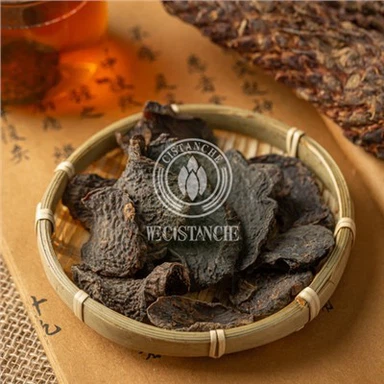
One Root of Medicine and Food Herb Cistanche For Sexual Enhancement In China
In recent years, as living standards have improved, awareness of dietary hygiene and nutrition has spread, and public health consciousness has significantly increased, people are placing greater emphasis on health preservation and wellness, embracing natural approaches. In Western countries, there has been a growing movement advocating to "replace pharmacies with kitchens" and "substitute medicine with food." Similarly, the traditional Chinese concept of "the unity of medicine and food" reflects the idea of using food for health maintenance and treatment. This concept encompasses aspects of Chinese medicine such as food therapy, health preservation, and medicinal cuisine.
Currently, there is no unified definition for "the unity of medicine and food." Literally, it suggests that medicine and food share the same origin. The prevailing view is that there is no clear boundary between medicine and food. Some medicines are inherently foods, such as ginger and red dates, while some foods possess therapeutic properties, such as garlic. The list of "substances traditionally used as both food and medicine," issued by the former Ministry of Health, exemplifies the modern development of this concept.
This article explores the historical origins and evolution of "the unity of medicine and food" through ancient medical texts and classical materia medica works. It aims to provide insights for the development of this concept today and examines the challenges encountered in its current progression.

One Root of Medicine and Food Herb Cistanche
1. The Origins of "The Unity of Medicine and Food"
The exact time when the term "the unity of medicine and food" emerged remains unclear, but it appears to be a relatively modern concept. By the 1930s, China already used the phrase "medicine and food share the same origin" [1]. With the growing popularity of health preservation and wellness, discussions around "the unity of medicine and food" began to emerge in the 1980s. Similarly, Japan, which has been deeply influenced by Chinese medicine, also adopted the saying "medicine and food share the same origin, and medicine and food are one and the same" during modern times [2].
The concept of "the unity of medicine and food" is, in fact, a reflection of the traditional Chinese medical philosophy that incorporates food therapy, medicinal cuisine, and health preservation. It highlights the Chinese traditional understanding of the intrinsic connection between the origins of medicine and food, as demonstrated by the discovery of medicines.
1.1 "Shennong Tasting Hundreds of Herbs" and "The Unity of Medicine and Food"
Many scholars believe that the discovery of medicine is closely linked to human foraging activities. In 1973, at the Taixi Village Shang Dynasty archaeological site in Gaocheng, Hebei, more than 30 plant seeds were discovered, most of which belonged to the Rosaceae family. Among them, peach kernels were the most common, accompanied by seeds of Prunus humilis (wild almond) and apricot kernels [3]. Notably, the five-ingredient pill "Wuren Wan" in traditional Chinese medicine includes peach kernels, Prunus humilis kernels, apricot kernels, pine nuts, and arborvitae seeds. The seeds found at the site seem to represent a combination of medicinal ingredients, yet the fruits of these plants were also sources of food. This suggests that the discovery of these medicines may have been associated with dietary practices.
The connection between the discovery of medicine and food is particularly evident in the story of "Shennong tasting hundreds of herbs". Chinese agricultural culture has a long history, and Shennong, also known as the Yan Emperor, is often considered the ancestor of this culture. Multiple records describe Shennong's contributions. For instance, New Words: The Foundation of the Way by Lu Jia states:
"In ancient times, people ate raw meat, drank blood, and clothed themselves in animal skins. Shennong realized that hunting was not sufficient to sustain the people, so he sought edible plants, tasted hundreds of herbs, evaluated their flavors, and taught the people to eat grains." [4]
This demonstrates that Shennong transitioned ancient Chinese society from a hunting-based lifestyle to an agricultural one centered on plant consumption. Anthropological studies on the structure of human teeth during different historical periods have confirmed that humans initially consumed meat before transitioning to an omnivorous diet [5].
The Medical Remnants records:
"Shennong tasted the flavors of hundreds of herbs and the sweetness and bitterness of water, guiding the people on what to consume and avoid. During this process, he encountered seventy poisons in a single day. His tasting of herbs was to identify which were edible for the people, not to determine medicines." [6]
This story, where Shennong tasted hundreds of herbs and encountered seventy poisons in one day, is often cited as evidence that Shennong was the founder of materia medica (herbal medicine). Early historical records indicate that poison and medicine were not strictly distinguished. For example, The Rites of Zhou: Offices of Heaven states:
"The physician is responsible for medical affairs and gathers poisonous herbs to supply medical practices." [7]
This suggests that poisons, like medicines, could be used for therapeutic purposes. The author also emphasizes that Shennong's intent in tasting herbs was to find food rather than medicine, further illustrating the connection between the discovery of medicines and food.
In the preface of Collected Annotations on the Materia Medica by Tao Hongjing, it is stated:
"Lotus root skin stops bleeding, discovered by cooks; black bindweed expels water, discovered by peasants." [8]
This reflects that the discovery of medicines originated from the practical experiences of daily life, especially those related to dietary activities.

1.2 The Emergence of "Dietary Physicians" and "Food Therapy"
The story of "Shennong tasting hundreds of herbs" illustrates how people discovered medicines while searching for food, highlighting the blurred boundary between food and medicine in early times. This understanding is also reflected in the emergence of the role of "dietary physicians" (shi yi) and the concept of "food therapy" (shi zhi), which demonstrate the ancient recognition of food's therapeutic functions.
The Shuowen Jiezi (Explaining and Analyzing Characters) defines a physician (yi) as "a craftsman who cures diseases" [9]. This role has a long history, and in the Rites of Zhou: Offices of Heaven, physicians were divided into dietary physicians, disease physicians, external wound physicians, and veterinary physicians, with dietary physicians listed first. Dietary physicians were primarily responsible for preparing and managing the flavors of the Zhou king's food, including the "six foods," "six drinks," "grand dishes," "hundred delicacies," and "hundred sauces." This role is somewhat similar to modern nutritionists.
Disease physicians advocated treating illnesses with "the five flavors, five grains, and five medicines" [7]. As noted by Sun Yirang in his annotation of the Rites of Zhou, disease physicians were "similar to today's internal medicine practitioners" [10]. This indicates that, like medicines, food such as the five flavors and five grains also played a therapeutic role. During this period, the boundary between food and medicine remained indistinct.
The establishment of the role of dietary physicians during the Zhou Dynasty contributed to the development of the fields of "food therapy" and medicinal cuisine. In the Eastern Han Dynasty, Zhang Zhongjing's works, Treatise on Cold Damage Disorders (Shang Han Za Bing Lun) and Essential Prescriptions of the Golden Cabinet (Jin Gui Yao Lue), incorporated numerous dietary methods alongside medicinal treatments.
In the Tang Dynasty, Sun Simiao, a staunch advocate of food therapy, dedicated an entire section to "food therapy" in his Prescriptions Worth a Thousand Gold (Qian Jin Yao Fang) [12]. Later, China's first specialized book on food therapy, Food Therapy Materia Medica (Shi Liao Ben Cao), was written. During the Song Dynasty, the government compiled the Imperial Grace Formulary of the Taiping Era (Tai Ping Sheng Hui Fang), which included a dedicated section on "food therapy".
In the Yuan Dynasty, the dietary physician Hu Sihui compiled Proper and Essential Diet Principles (Yinshan Zhengyao), the earliest Chinese monograph on dietary hygiene and nutrition [14]. This comprehensive text documented numerous recipes for medicinal cuisine and food therapies. Medicinal cuisine, which combines food and medicine into therapeutic recipes, represents further development in the field of "food therapy."
2. Ancient and Modern Understanding of the Concept of "The Unity of Medicine and Food"
2.1 Ancient Understanding of the Principles of "The Unity of Medicine and Food"
The understanding of "the unity of medicine and food" and the boundary between medicine and food in Chinese history has evolved from being vague to more defined over time. From the origins of this concept, we can observe the progression of ancient knowledge regarding the functions of food:
First Level: Food was recognized as non-toxic, edible, and capable of providing basic nutrition.
Second Level: The discovery of additional functions of food, such as its therapeutic and health-preserving properties.
The exploration of the principles behind the therapeutic properties of food began at an early stage. Ancient scholars believed that food, like medicine, adhered to the theory of "properties and flavors", which includes concepts such as the four natures (si qi), five tastes (wu wei), channel tropism (gui jing), and directional properties like rising, falling, floating, and sinking.
The four natures refer to cold, hot, warm, and cool. The five tastes include sour, bitter, sweet, pungent, and salty. These classifications likely originated from ancient people's sensory experiences in daily life and were later integrated with the Yin-Yang and Five Elements (Wu Xing) theories, serving as a summary of the functional principles of food.
The Huangdi Neijing (The Yellow Emperor's Inner Canon), the earliest surviving classic of Chinese medicine, consists of two parts: Lingshu (Spiritual Pivot) and Suwen (Plain Questions). This text not only established the foundational theories of Chinese medicine but also introduced traditional Chinese dietary theories, forming a comprehensive theoretical system that integrates food and medicine. It describes concepts such as the four natures, five tastes, rising and falling, thickness and thinness of flavors, and toxicity.
The Huangdi Neijing recognizes that food and medicine share the same five tastes and attributes specific tastes to specific organs. For example, in Spiritual Pivot: Five Flavors, it states:
"I wish to hear about the five flavors of grains and how they enter the five organs" [11].
The Plain Questions: Great Treatise on the Five Constant Policies also mentions several times:
"Food should follow the same principles as medicine," and
"Medicine removes disease, while food assists in recovery" [11].
These statements emphasize the auxiliary role of food in treating diseases. The Huangdi Neijing was the first to classify food based on its properties and align it with the Five Elements. For example, in Spiritual Pivot: Five Flavors, it states:
"The five flavors each go to where they are most needed: sour flavor enters the liver, bitter flavor enters the heart, sweet flavor enters the spleen, pungent flavor enters the lungs, and salty flavor enters the kidneys" [11].
The text also introduces the concept of the five flavor prohibitions, as in Plain Questions: Treatise on the Manifestation of the Five Qi:
"The five flavors have their restrictions: pungent moves qi, so those with qi disorders should not eat too much pungent food; salty moves blood, so those with blood disorders should not eat too much salty food; bitter moves bones, so those with bone disorders should not eat too much bitter food; sweet moves flesh, so those with flesh disorders should not eat too much sweet food; sour moves tendons, so those with tendon disorders should not eat too much sour food. These are the five prohibitions, and one should not consume these excessively" [11].

This emphasizes the need to balance the five flavors.
In the Tang Dynasty, Sun Simiao summarized and developed the dietary theories of earlier physicians and the Huangdi Neijing in his work Prescriptions Worth a Thousand Gold: Food Therapy (Qian Jin Yao Fang: Shi Zhi) [12]. He proposed ideas such as "food has biases," "diet should be moderate," and "the five flavors should not be overly dominant."
Later, the Food Therapy Materia Medica (Shi Liao Ben Cao), China's first monograph on food therapy, included detailed annotations under each food item, specifying its medicinal properties, effects, contraindications, single-use recipes, and applicable body parts [13].
During the Yuan Dynasty, the Proper and Essential Diet Principles (Yinshan Zhengyao) by Hu Sihui included a chapter in its second volume that categorized topics such as "seasonal recommendations," "the tendencies of the five flavors," "dietary contraindications while taking medicine," "benefits and harms of food," "food incompatibilities," and "food poisoning" [14]. It emphasized the biases and contraindications of food.
Thus, ancient explorations of the properties and theories of food reflect the concepts of "the unity of medicine and food," "the shared functions of medicine and food," and "the shared principles of medicine and food."
2.2 Modern Scientific Exploration of "The Unity of Medicine and Food"
Traditional Chinese medicinal materials are primarily derived from plants, which are also known as "materia medica" (ben cao). This section explores the modern scientific understanding of "the unity of medicine and food" from the perspective of plant metabolism.
The fundamental nature of plant-derived medicinal materials is that they are living entities. In the ecological food chain, plants occupy the base level, providing the essential material and energy source for all life through photosynthesis. Metabolism is the basic life activity of plants. In 1891, Kossei classified plant metabolism into primary metabolism and secondary metabolism [15].
Primary metabolism is the core of plant metabolism, responsible for energy production and providing the energy and intermediates necessary for survival, growth, development, and reproduction. The nutrients humans obtain from plants primarily come from primary metabolic products, such as carbohydrates, lipids, proteins, vitamins, and cellulose [16].
Secondary metabolism, in contrast, involves the production of secondary metabolites derived from the intermediates of primary metabolism. It is an energy-decomposition metabolism. Secondary metabolites were long thought to be "waste products" stored in various plant tissues with no further role in metabolism. However, recent studies have revealed their critical importance to plants. These secondary metabolites are adaptations to environmental pressures and the result of interactions between plants and biotic/abiotic factors over long-term evolution. They play significant roles in helping plants adapt to environmental stress, compete with other plants, co-evolve, and defend against threats such as insect predation, herbivory, and microbial pathogens [15].
Secondary metabolites can be categorized into phenylpropanoids, quinones, flavonoids, tannins, terpenoids, steroids and their glycosides, and alkaloids, among others. These substances, often referred to as "natural products," form the primary material foundation for modern research into natural medicines, particularly the pharmacological effects of traditional Chinese medicine.
The "Third Function" of Food
Food, as a basic necessity of life, traditionally fulfills two functions: providing nutrition and offering enjoyment through flavor. In recent years, a third function of food-its ability to regulate physiological functions-has gained increasing attention. This regulatory function of plant-based foods is attributed to their secondary metabolites.
Currently, many common foods have been found to contain secondary metabolites that regulate human bodily functions. For example:
Allicin in garlic (Allium sativum L.), a bulb from the Liliaceae family, has been used as a traditional food flavoring in China for centuries. The Newly Revised Materia Medica (Xin Xiu Ben Cao) records that garlic can "relieve qi stagnation, aid digestion, and stop dysentery." Modern experiments have shown that garlic contains compounds such as allicin and alliin, which have antibacterial and antiviral properties.
Isoflavones in soybeans are major secondary metabolites with functions such as anti-tumor effects, lipid-lowering, and estrogen-like activity.
Lycopene, a terpenoid compound found in tomatoes, exhibits antioxidant properties and helps eliminate free radicals [16].
Similarities and Differences Between Food and Medicine
The secondary metabolites in these foods, which regulate physiological functions, have characteristics similar to those found in medicines, though with some key differences. Secondary metabolites in food are typically present in low concentrations, are non-toxic even with long-term consumption, and primarily function as preventive and health-promoting agents. These substances, often referred to as "natural foods," play a critical role in disease prevention and enhancing immunity.
From the perspective of the physiological functions of plant secondary metabolites, these compounds may form the scientific basis for the therapeutic functions of food (shi liao). The overlap in the regulatory effects of food and medicine, along with the lack of a clear boundary between the two, has further promoted the development of dual-purpose items for both food and medicine.