How To Get Rid Of Chronic Constipation?
Jan 09, 2024
Long-term constipation is the most common digestive tract movement disorder in the elderly, and the incidence rate in the elderly is 2 to 3 times higher than in young adults. The prevalence of chronic constipation among Chinese adults is 4% to 6% and increases with age. The prevalence among people aged ≥60 years can reach 22.5%.
Occasionally constipation will only cause abdominal bloating and discomfort. Long-term constipation can cause dizziness, fatigue, dizziness, insomnia, and even heavy head, and shoulder pain, and headache, and is prone to a series of symptoms such as irritability and poor appetite, and is harmful to the brain and other organs. may cause adverse effects.

Click to best laxative for constipation
Especially for elderly patients with hypertension, coronary heart disease, cerebral arteriosclerosis, and other diseases, there is a risk of cerebral hemorrhage or myocardial infarction when straining to defecate.
Ask a question
Some advertisers recommend that long-term intestinal cleansing can promote health and longevity. Can cleansing the intestines lead to health and longevity?
The answer is no.
Feces remaining in the intestines are not useless. Most feces can produce bacteria that produce various nutrients necessary for human metabolism. It is these beneficial bacteria that maintain our lives. If the large intestine is washed clean every day, a large amount of beneficial bacteria that the human body depends on for survival will be lost, which will inevitably lead to a lack of nutrients in the human body. Generally speaking, it is beneficial for feces consisting mainly of food residues to stay in the intestine for ≤1 day; however if feces is not excreted for more than 1 day, the intestines will absorb toxins and water, which is detrimental to health.
How to get rid of chronic constipation
Most of the Chinese patent medicines for laxatives on the market contain ingredients such as rhubarb, aloe vera, gentian, and senna. These drugs can forcibly absorb water in the intestines and at the same time cause the intestines to contract and promote the discharge of stool. If taken for a long time, the normal function of the intestines will be damaged.
Especially some middle-aged and elderly people who take medicines containing these ingredients for a long time will become dependent on them, and the more they are used, the higher the dosage.
What's even more frightening is that long-term use of these Chinese patent medicines for defecation and laxatives can cause the patient's large intestine to turn black, causing melena. Over time, it may even lead to intestinal cancer.
Therefore, the author suggests that for the treatment of constipation, we should try our best to adjust our lives and use less medication. When medication is particularly necessary, Chinese herbal medicines can be used for syndrome differentiation and treatment. Long-term medication must not be used to aid defecation and extreme treatments such as colon cleansing are not recommended for patients with constipation.
Promote non-drug therapies
The treatment of laxatives is the same as the treatment of other diseases. Non-drug therapies are first advocated.
Defecate regularly and have a regular schedule. Patients should try to go to bed early and get up early to follow the laws of nature. They should also defecate regularly every day. Regardless of whether they feel the urge to defecate or not, it is best to develop the habit of defecating once a day. Patients should remember: "Pooping before going to bed will prevent you from getting bowel cancer." If you develop a good habit of defecating before going to bed every night, you can avoid feces and the toxins contained in the feces from staying with you in the intestines overnight, reducing the risk of bowel cancer overnight. The process of absorbing toxins will naturally greatly reduce the probability of bowel cancer.

Regular defecation can strengthen the defecation reflex, reduce the residence time of feces in the intestines, and gradually form a conditioned reflex for defecation in the body. Once feces is formed, it will be excreted.
Drinking more water is more important than eating more fiber-containing foods, especially for middle-aged and elderly people, whose thirst center is not sensitive, so thirsty or not should be used as the criterion for drinking water.
The standard for patients with constipation to drink water is to urinate 8 to 10 times within 24 hours. It is recommended that patients with constipation drink a glass of warm water on an empty stomach every morning. A spoonful of honey and a spoonful of vinegar can be added to the warm water to facilitate defecation. Honey and vinegar can lubricate the intestines and promote the discharge of feces. Long-term persistence will effectively prevent constipation. However, it is not recommended to drink warm salt water in the morning. To prevent and treat diseases such as hypertension, middle-aged and elderly people should limit their sodium intake. Therefore, unnecessary sodium intake should not be increased.
Diabetic patients don't have to worry too much about honey being too sweet. The sugar contained in honey has very few calories. Moreover, it is a misunderstanding that diabetic patients cannot eat sweet foods. Sweetness is not directly proportional to the glucose content. If diabetic patients drink honey water in the morning, they can accordingly reduce some calories in their breakfast staple food.
Balance your diet and add cellulose. Cellulose has a strong water-holding capacity and is more than 10 times more capable of absorbing water than other substances. After fiber absorbs water, it can increase the volume of intestinal contents and make feces loose and soft. , passing through the intestines more smoothly and with less effort.
At the same time, dietary fiber, as a foreign body, can promote intestinal contraction and peristalsis, speed up stool excretion, and treat constipation.
The key to adding fiber is for patients to understand which foods are high in fiber. The vegetables with the highest fiber content are not celery, cabbage, etc. as people imagine. Patients need to remember that most foods can be divided into four parts: roots, stems, leaves, and fruits. The lower parts contain more cellulose, and the higher the fiber content, the higher the fiber content. The upper part contains less cellulose. Therefore, when choosing laxative foods, you can choose to eat more root foods, such as potatoes, sweet potatoes, yams, radishes, etc.
Some people will say that diabetics cannot eat potatoes and sweet potatoes. This is also a misunderstanding. Diabetic patients can eat any food. Don't mistakenly think that animal protein in lean meat, eggs, and milk will not increase blood sugar. Fat, protein, and carbohydrates can be converted into each other, so, eating potatoes, sweet potatoes or the same amount of protein is the same, the main thing is to control the total calories.

Avoid sitting or lying down for a long time. If you sit or lie down for a long time, it will affect gastrointestinal peristalsis. Coupled with the gravity of the feces, it is especially easy for the feces to stagnate in the intestines, leading to constipation.
Appropriate exercise: Patients should also maintain a certain amount of exercise every day, such as walking briskly for 1 hour every day. Exercise can accelerate the body's metabolism, enhance physical fitness, maintain physical strength and energy, and at the same time promote intestinal peristalsis and make stool go down.
Massage and defecation: The stool follows the shape of the intestine. If you move along the large intestine in a clockwise direction by yourself or with the help of others and perform circular abdominal massage, it can effectively promote the movement of the digestive tract and relieve constipation. Massage is beneficial to blood circulation throughout the abdomen and has no adverse reactions, so it is worth promoting.
Eating beneficial bacteria Most natural bacteria are beneficial to the human body. There are a large number of bacteria in the human intestine, including a large number of beneficial bacteria such as bifidobacteria and lactobacilli. These bacteria can participate in the digestion and absorption of food and synthesize various kinds of bacteria. A vitamin that promotes intestinal peristalsis, inhibits the growth of harmful bacteria and even has a certain connection with the immune system. Therefore, the number of beneficial bacteria should be increased to maintain the normal distribution of intestinal flora.
You can consume beneficial bacteria by purchasing drinks rich in beneficial bacteria such as Lactobacilli. But be careful not to buy drinks that contain preservatives. If there are too many preservatives, the number of beneficial bacteria in the drink cannot be guaranteed. Patients with high blood sugar should reduce their food intake after taking drinks.
Finding the cause of constipation is important
The methods introduced above can be effective for most patients with functional constipation, but the causes of constipation are different, and the treatment still needs to find out the cause according to each person's specific situation.
Generally speaking, constipation can be divided into organic constipation and functional constipation. Organic constipation is often caused by organic diseases outside the intestine, including intestinal tumors, inflammation, congenital surgical scars, and extraintestinal diseases. Diabetes, hyperthyroidism, hypothyroidism, mental illness, etc.; there are also a small number of cases caused by congenital malformations of the intestines, such as the colon being longer than normal.
Functional constipation is mostly caused by food that is too refined, lacks dietary fiber, or is caused by an inability to defecate in time due to stressful work or high pressure in life. It may also be caused by drug dependence, and measures should be taken to target the cause.
Natural Herbal Medicine For Relieving Constipation-Cistanche
Cistanche is a genus of parasitic plants that belongs to the family Orobanchaceae. These plants are known for their medicinal properties and have been used in Traditional Chinese Medicine (TCM) for centuries. Cistanche species are predominantly found in arid and desert regions of China, Mongolia, and other parts of Central Asia. Cistanche plants are characterized by their fleshy, yellowish stems and are highly valued for their potential health benefits. In TCM, Cistanche is believed to have tonic properties and is commonly used to nourish the kidney, enhance vitality, and support sexual function. It is also used to address issues related to aging, fatigue, and overall well-being. While Cistanche has a long history of use in traditional medicine, scientific research on its efficacy and safety is ongoing and limited. However, it is known to contain various bioactive compounds such as phenylethanoid glycosides, iridoids, lignans, and polysaccharides, which may contribute to its medicinal effects.

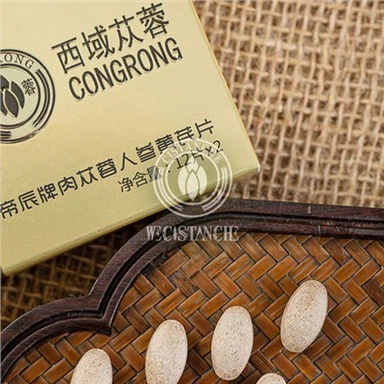
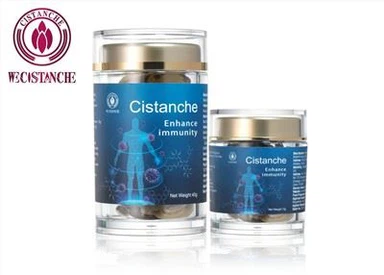
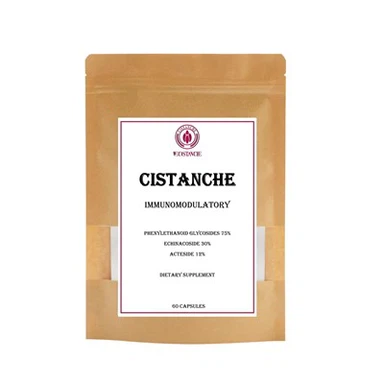
Wecistanche's cistanche powder, cistanche tablets, cistanche capsules, and other products are developed using desert cistanche as raw materials, all of which have a good effect on relieving constipation. The specific mechanism is as follows: Cistanche is believed to have potential benefits for relieving constipation based on its traditional use and certain compounds it contains. While scientific research specifically on Cistanche's effect on constipation is limited, it is thought to have multiple mechanisms that may contribute to its potential to relieve constipation. Laxative Effect: Cistanche has long been used in Traditional Chinese Medicine as a remedy for constipation. It is believed to have a mild laxative effect, which can help promote bowel movements and induce constipation. This effect may be attributed to various compounds found in Cistanche, such as phenylethanoid glycosides and polysaccharides. Moistening the Intestines: Based on traditional use, Cistanche is considered to have moisturizing properties, specifically targeting the Intestines. Promoting hydration and lubrication of the Intestines, may help soften tools and facilitate easier passage, thereby relieving constipation. Anti-inflammatory Effect: Constipation can sometimes be associated with inflammation in the digestive tract. Cistanche contains certain compounds, including phenylethanoid glycosides and lignans, that are believed to have anti-inflammatory properties. By reducing inflammation in the intestines, it may help improve bowel movement regularity and relieve constipation.