why glycoside is not popular as vitamin in terms of antioxidative function
Apr 20, 2023
Glycosides are a class of organic compounds that are commonly found in plants and are important for many biological processes. They have been studied extensively for their potential health benefits, including their ability to act as antioxidants. However, despite their potential, glycosides have not gained as much popularity as vitamins in terms of their antioxidative function. In this article, we will explore some of the reasons why this is the case.

First, it is important to understand what antioxidants are and why they are important for human health. Antioxidants are molecules that can neutralize harmful molecules called free radicals. Free radicals are produced naturally in the body during normal metabolic processes, but they can also be produced by exposure to environmental toxins like cigarette smoke or radiation. When free radicals accumulate in the body, they can cause damage to cells and contribute to the development of chronic diseases like cancer, heart disease, and Alzheimer's disease.

The Echinacosde Play An Antioxditive in Cistanche
Vitamins like E are well-known antioxidants that have gained popularity for their ability to protect against free radical damage. These vitamins are readily available in many foods and can also be taken as supplements. However, there are many other compounds found in plants that also have antioxidant properties, including glycosides.
Glycosides are compounds that contain a sugar molecule attached to a non-sugar molecule. They are found in many plants and are involved in a variety of biological processes. Some glycosides have been studied for their potential health benefits, including their ability to act as antioxidants.
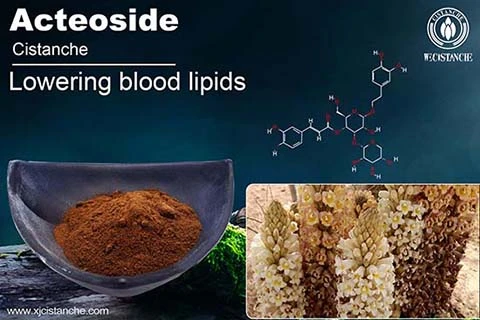
One reason why glycosides are not as popular as vitamins for their antioxidative function is that they are not as well-known or well-researched. Vitamins like vitamins C and E have been studied extensively for their antioxidant properties, and their benefits are well-established. In contrast, glycosides are a relatively new area of research, and there is still much to learn about their potential health benefits.
Another factor that may contribute to the lack of popularity of glycosides as antioxidants is their availability. While some glycosides are found in foods like fruits and vegetables, they are not as ubiquitous as vitamins. It can be difficult to consume enough glycosides to have a significant impact on antioxidant levels in the body.
Additionally, the bioavailability of glycosides may be lower than that of vitamins. Bioavailability refers to the amount of a compound that is absorbed and used by the body. Some glycosides may be less readily absorbed by the body than vitamins, which could limit their effectiveness as antioxidants.

The complexity of glycosides may also be a factor in their lack of popularity. Glycosides are a diverse class of compounds, and there are many different types with different structures and functions. This complexity can make it difficult to study glycosides and understand their potential health benefits.
Finally, there may be less commercial interest in glycosides compared to vitamins. Vitamins like vitamin C and E are widely marketed and sold as supplements, and there is a large industry built around them. In contrast, there is not as much commercial interest in glycosides, which may limit their visibility and popularity.
In conclusion, while glycosides have the potential as antioxidants, they have not gained as much popularity as vitamins in terms of their antioxidative function. This may be due to a lack of research and understanding of glycosides, their availability and bioavailability, their complexity, and a lack of commercial interest in these compounds.
However, as research into glycosides continues, we may learn more about their potential health benefits and their role as antioxidants.