Implications Of Syndrome Differentiation–Based Health Preservation For The Development Of Traditional Chinese Medicine (TCM) Health Foods (China)
Sep 01, 2026
Abstract
With rising living standards, public awareness of health maintenance has steadily increased, and China's health food sector has expanded rapidly. Rooted in longstanding TCM concepts, Chinese consumers are familiar with ideas such as "medicine and food share the same origin" and "dietary nourishment is preferable to medicinal tonics." However, many health foods in China are developed and evaluated mainly under modern biomedical and nutritional frameworks, with insufficient guidance from TCM theory. As a result, products often fail to provide individualized and precise health-maintenance strategies grounded in syndrome differentiation. To promote higher-quality development of China's health food industry, it is necessary to explore practical pathways for incorporating syndrome differentiation–based health preservation into product R&D, thereby fostering the growth of the TCM health food sector.
Keywords: Traditional Chinese Medicine; syndrome differentiation; health preservation; health foods; medicine–food homology; China
1. Overview of TCM Health Foods
Health foods are defined as foods that provide specific health functions or are intended to supplement vitamins and minerals, suitable for particular populations, and not intended to treat diseases [1]. TCM health foods refer to health food products developed under the guidance of TCM theory, typically by incorporating "medicine–food homology" materials into natural foods.
As living standards rise and health concepts become more widespread, the categories of TCM health foods in China have diversified. In recent years, products developed around the "medicine–food homology" concept-such as tablets, granules, oral liquids, and confectionery-have become major items favored by consumers. According to data from relevant national authorities, among registered TCM health foods in China, products containing goji berries (Lycium barbarum) reportedly reach 1,651 items, while those containing propolis or American ginseng exceed 1,000, suggesting that goji berries, American ginseng, and propolis are among the most common materials used in such products [2].
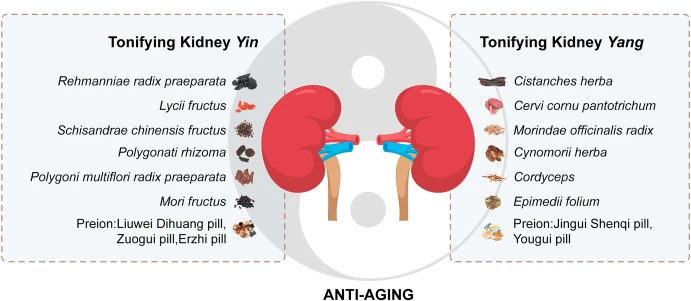
The popularity of TCM health foods is closely related to consumers' expectations that these products may help prevent illness, provide nourishment, and delay aging. In TCM, the zang-fu organs (viscera and bowels) are regarded as functional systems; a balanced diet is believed to help regulate their functions. Long-term dietary imbalance is considered capable of disturbing organ function and contributing to disease. Health foods are commonly described as supporting immune function and supplementing nutrition; for specific populations, appropriate use may help replenish nutrients and strengthen resilience, thereby contributing to preventive health goals. For example, health food products containing materials such as Ejiao (donkey-hide gelatin), ginseng, and Cordyceps have been used in attempts to support chronic-condition management and improve quality of life in certain populations.
Note for international readers: In TCM, "health preservation" (yangsheng) emphasizes prevention and long-term regulation. It does not equate to the biomedical concept of curing disease, and responsible product communication should avoid therapeutic claims.
2. Key Problems in the Development of TCM Health Foods
2.1 Functional evaluation lacks TCM-theory guidance
Functional evaluation of health foods is typically described using modern medical and nutritional terminology. In recent years, China has issued multiple regulatory norms alongside the growth of TCM health foods. In principle, TCM health foods should highlight syndrome differentiation–based health preservation, selecting formulas in accordance with different constitutional types and syndrome patterns. For instance, for patterns associated with yang deficiency, warming materials such as cinnamon bark may be considered; for patterns associated with yin deficiency, yin-nourishing materials such as lily bulb may be considered.
In practice, however, the functional evaluation of many TCM health foods remains similar to that of general health foods. Product development may overlook classical principles of multi-herb formulation compatibility, and thus fails to distinctly reflect syndrome differentiation–based health preservation. For example, modern pharmacological studies suggest that polysaccharides can support immune function. Some enterprises therefore combine polysaccharides from different sources to formulate TCM health foods, yet may neglect how such components interact with TCM compatibility principles. Moreover, safety concerns may arise in specific populations. For example, it has been reported that for individuals with diabetes who consume ginseng-containing health products alongside commonly used medications, certain ginseng constituents may affect enzyme activity and reduce glucose breakdown, potentially elevating blood glucose [3]. This illustrates the need to integrate TCM thinking with modern safety evaluation, including population stratification and risk communication.

2.2 Incomplete quality management standards for raw materials
According to regulatory requirements, registration of health foods should include evidence regarding raw material safety and health functions to ensure qualified quality. Regarding TCM health foods, China has introduced multiple standards and rules, such as the Health Food Raw Material Directory: Nutrient Supplements (2023 Edition) released in 2023 by the State Administration for Market Regulation together with the National Health Commission and the National Administration of Traditional Chinese Medicine, which provides explicit specifications for nutrient supplement raw materials.
Nevertheless, problems remain in raw material quality management during TCM health food development:

An incomplete standard system for TCM health food materials. At present, quality management often cites general food standards or pharmaceutical standards. Dedicated quality management standards tailored to TCM health food raw materials are insufficient, resulting in inconsistent standards and uneven product quality.
Insufficient processing-quality standards for raw materials. Although many TCM food materials are relatively safe when used appropriately, modern TCM health foods frequently employ extraction and purification processes, rather than the traditional decoction method. During processing, risks such as formation of undesirable components and solvent residues may occur, which could harm consumers' health [4]. However, specialized standards focusing on processing quality for TCM health food materials remain inadequate, contributing to variability in manufacturing quality.
2.3 Consumer misconceptions about TCM health foods
As TCM health-maintenance concepts become increasingly popular, TCM health foods are often chosen by consumers seeking prevention-oriented support, immune maintenance, and healthy aging. However, blind consumption has become a major bottleneck that constrains high-quality development.
Exaggerated claims may mislead consumers. TCM health foods are often marketed for immune support. Under the "medicine–food homology" narrative, some products may overstate their functions. For example, ginseng is a common raw material used for qi supplementation, yin nourishment, hemostasis-related indications, and fluid generation in TCM theory. It is often used to support constitution and resilience, but it is not suitable for all individuals; in some cases, strong constitutions may experience adverse reactions such as chest tightness or discomfort.
Some consumers treat health foods as medicines. TCM health foods are not drugs for disease treatment, yet some consumers choose them with therapeutic intent and use them indiscriminately, leading to unsatisfactory outcomes. For example, Chinese yam has been used for cardiovascular risk prevention and for supporting lipid and blood pressure management; however, some individuals with "three highs" (hypertension, hyperlipidemia, and hyperglycemia) may use it long term as a substitute for medical treatment, potentially causing issues such as constipation and interfering with comprehensive management.

3. Development Pathways for TCM Health Foods Inspired by Syndrome Differentiation–Based Health Preservation
TCM syndrome differentiation originated from the Huangdi Neijing (Yellow Emperor's Inner Canon). Its core is a reasoning process that establishes "syndrome patterns" during the understanding of illness. The Shennong Bencao Jing (Divine Farmer's Materia Medica Classic) proposed that "upper-grade herbs…nourish life," emphasizing that different substances have distinct roles [5]. The Huangdi Neijing also states that grains nourish, fruits assist, meats benefit, and vegetables complete the diet-suggesting that balanced flavors and properties can supplement essence and qi.
In the Tang dynasty, Sun Simiao recorded in the Qianjin Fang (Essential Prescriptions Worth a Thousand Gold) that physicians should first understand the cause of illness and treat it with diet; only if dietary therapy fails should medicines be used. Over time, the "medicine–food homology" concept took shape and provided a theoretical foundation for developing TCM health foods.
Gao Xuemin and colleagues first proposed the term "syndrome differentiation–based health preservation" and introduced it into TCM health foods to support the goal of "treating disease before it arises" [6]. The essence of this approach lies in accurate differentiation and appropriate methods; its significance is to reverse the trajectory toward illness and regulate internal and external functional balance-goals that align with the preventive orientation of TCM health foods [7]. Therefore, development of TCM health foods should follow syndrome differentiation–based health preservation principles to optimize R&D pathways.
3.1 Standardize TCM formulation compatibility to enhance efficacy
The bioactive constituents of TCM health food materials are complex; combining different materials may alter chemical profiles. Hence, product development should follow syndrome differentiation–based thinking, selecting appropriate materials and compatibility strategies for different patterns.
Taking hypertension as an example: in TCM, hypertension is often discussed under the category of "dizziness/vertigo," and clinical practice may differentiate multiple patterns:
Yin deficiency with yang hyperactivity. Manifestations may include soreness of the waist and knees, irritability, and heat sensations. The regulation principle emphasizes nourishing yin and tonifying the kidney, calming the liver and subduing yang. Materials such as Polygonum multiflorum (He Shou Wu), Chinese yam, and rehmannia may be considered in product design.
Hyperactive liver fire. Manifestations may include irritability, anger, and distending headache, often discussed with liver yin insufficiency and exuberant heart fire. The regulation principle emphasizes clearing and descending liver fire; materials such as dandelion, honeysuckle, sophora flower, gardenia, Apocynum venetum, and gastrodia may be considered.
Phlegm-dampness obstruction. In TCM, phlegm-dampness is often associated with spleen deficiency. Once formed, it may impair nourishment of the organs and lead to symptoms such as chest oppression, shortness of breath, and insomnia. The regulation principle emphasizes drying dampness, resolving phlegm, strengthening the spleen, and harmonizing the stomach; materials such as pinellia, aged tangerine peel, atractylodes, poria, and cardamom may be considered.
These examples illustrate that different compatibility strategies correspond to different functions. Therefore, development of TCM health foods should adhere to classical theories such as properties and flavors, meridian tropism, and compatibility principles, while also integrating the performance characteristics of each material.
3.2 Improve raw material quality management and establish a materials directory
Manufacturing of TCM health foods commonly involves extraction, concentration, and drying. Because compositions are complex, functional changes can occur during processing. To improve development quality, China should strengthen quality testing and management for raw materials:
Standardize group standards systems for health food raw materials. Because materials vary in sources and attributes, control rules differ. China should establish a robust standards system, including general standards and material-specific standards. For example, during cultivation using modern agricultural techniques, explicit limits should be set for pesticide residues, heavy metals, and mycotoxins.
Promote a filing/record system and build a health food raw materials directory. Given the diversity of TCM health foods and the time-consuming registration process, China should advance filing systems for qualified materials. For example, technical requirements implemented in May 2024 for filing health food products using ginseng, American ginseng, and Ganoderma as raw materials reportedly allow a filing mechanism, improving speed to market [8]. Enterprises should manufacture strictly in accordance with these requirements. In parallel, China should establish a negative list management system, incorporating scarce resources, highly potent materials, or materials with toxicity concerns into a negative list.
3.3 Guide consumers toward evidence-based purchasing and improve public literacy
TCM health foods are designed for specific populations; different constitutions and lifestyles imply different needs. To prevent blind consumption, relevant departments should strengthen communication about proper use and guide consumers toward rational choices:
Improve product labeling and instructions. Instructions are key carriers of product information. While existing rules require indicating suitable populations, TCM health foods differ from general products because different constitutions may have different needs for the same product. Instruction content should therefore provide more actionable guidance to support correct use.
Leverage TCM health education. Through community lectures and thematic public campaigns, authorities can address misconceptions and help the public understand that different formulations correspond to different functions. Consumers should be guided to choose products based on their own conditions and in compliance with regulatory guidance, avoiding substitution of health foods for medical treatment.
TCM Herb Cistanche Factory Located In China

Conclusion
China's TCM health food industry has expanded alongside rising health awareness. However, major challenges persist, including insufficient integration of syndrome differentiation–based theory into functional evaluation, incomplete raw material quality management standards, and consumer misconceptions driven by exaggerated claims and misuse. Incorporating syndrome differentiation–based health preservation into product design, quality management, and public education offers a pathway to more individualized, safer, and higher-quality development. For international audiences, the core message is that TCM-oriented health foods should be communicated as preventive and supportive, grounded in appropriate population targeting and rigorous safety and quality controls-rather than as disease treatments.