Integrative Approaches And Mechanistic Studies On Traditional Chinese Medicine (TCM) Treatment For Erectile Dysfunction (ED)
Feb 25, 2025
2. Challenges and Future Prospects
2.1 Lack of Major Breakthroughs in Clinical Efficacy
Penile erection is a complex physiological process involving the nervous system, endocrine system, vascular system, and corpus cavernosum tissue, all working together in a coordinated manner. This process includes neurotransmitter release, penile arterial filling, corpus cavernosum smooth muscle relaxation, and venous occlusion, with psychological factors also playing a crucial role in erectile function. Due to the complex etiology of ED, treating mixed-type and organic ED remains challenging, and achieving significant breakthroughs in efficacy is still difficult.
Currently, oral phosphodiesterase-5 inhibitors (PDE5i) are the first-line treatment for ED. However, a significant proportion of patients show poor responsiveness to PDE5i therapy and fail to achieve satisfactory results.

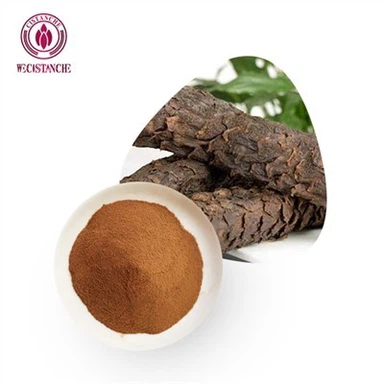
HERB CISTANCHE FOR TREATING ED
2.1.1 Challenges in Treating Refractory ED
The diagnosis and treatment of refractory ED require a holistic, multidisciplinary approach from andrology specialists. It is essential to identify and address psychological factors such as anxiety and depression in ED patients. When necessary, PDE5i therapy can be combined with TCM formulas for soothing the liver and relieving emotional distress, and/or low-dose antidepressants and anxiolytics, alongside physical therapy and psychological counseling.
For ED caused by diabetes, atherosclerosis, or hypertension, treatment should follow the TCM principle of addressing the root cause of disease. This includes:
Actively managing primary conditions
Stabilizing blood glucose, lipid, and blood pressure levels
Preventing further vascular, neural, and smooth muscle damage in the corpus cavernosum
By doing so, the progression of primary diseases can be controlled, reducing treatment difficulty and improving prognosis.
For hypogonadism-related ED, clinicians should be vigilant for symptoms such as fatigue, lethargy, and obesity. After conducting appropriate diagnostic tests and ruling out contraindications, testosterone supplementation can be considered alongside PDE5i therapy and kidney-tonifying and blood-activating TCM treatments.

HERB CISTANCHE FOR TREATING ED
2.1.2 Improving Clinical Efficacy in TCM Treatment for ED
To enhance the clinical efficacy of TCM treatments for ED, several key points should be considered:
Integrating Disease-Based and Syndrome-Based Diagnosis
Relying solely on syndrome differentiation while neglecting the underlying disease can lead to overly simplistic treatment approaches with limited efficacy.
TCM practitioners should develop expertise in Western medical diagnostics related to andrology, including staging, classification, and disease progression.
Integrating Traditional Chinese and Western Medicine for Complementary Treatment
For mixed-type and organic ED, where TCM alone may be insufficient, Western PDE5i drugs such as Sildenafil (Viagra) and Tadalafil (Cialis) should be incorporated under TCM theoretical guidance.
New Drug Development
Current treatment options for ED do not fully meet patient needs.
Further research and development of new therapeutic drugs are necessary to expand treatment options and improve clinical outcomes.

2. Challenges and Future Prospects
2.2 Lack of Standardized Diagnosis and Treatment Models
Currently, authoritative references for TCM diagnosis and treatment of ED include:
Guidelines for Clinical Research on New Chinese Medicines
Traditional Chinese Surgery
Integrated Chinese and Western Medicine Surgery
Traditional Chinese Andrology
Traditional Chinese Urology and Andrology
Practical Traditional Chinese Andrology
New Practical Traditional Chinese Andrology
Wang Qi's Andrology
Xu Fusong's Practical Traditional Chinese Andrology
The syndrome differentiation classifications for ED vary from 5 to 11 types, with deficiency syndromes including kidney-yin deficiency, kidney-yang deficiency (decline of life gate fire), heart deficiency, and spleen deficiency, while excess syndromes include qi stagnation, damp-heat, and blood stasis.
The lack of uniform standards for syndrome differentiation in ED results in unclear diagnostic criteria, inconsistent terminology for syndromes, diseases, and symptoms, and overlapping classifications. This subjectivity and inconsistency have created challenges for clinical research and education. Furthermore, TCM literature on ED syndromes lacks modern scientific research methods, technological support, and statistical validation. Experimental research suffers from poor reproducibility of indicators, lack of specific biomarkers, and insufficient correlation studies.
As TCM advances-particularly through modernization and internationalization-standardizing ED syndrome differentiation is essential. To address this, efforts should focus on:
Conducting epidemiological studies on ED syndromes to determine classification and prevalence.
Establishing industry consensus and developing clinical guidelines.
Creating internationally recognized standardized TCM diagnosis and treatment models for ED.
Developing TCM-specific evaluation standards for clinical treatment.
Standardized TCM diagnosis and treatment will enhance medical education, improve ED treatment outcomes, and facilitate large-scale, multi-center clinical research using big data, ultimately promoting the high-quality development of TCM.

2.3 Elucidation of Treatment Mechanisms and Scientific Foundations
Exploring the scientific significance and underlying mechanisms of TCM treatment for ED is a key priority. TCM research should integrate advances from other disciplines, such as mathematics, chemistry, biology, and computer science, utilizing modern technologies like physicochemical analysis, transcriptomics, and network pharmacology to investigate the mechanisms of TCM treatment for ED [25].
Currently, there is a growing understanding of the role of the NO/cGMP signaling pathway in ED pathogenesis and treatment. However, the mechanisms underlying refractory ED remain unclear, and interactions among different pathways require further exploration. Existing ED research covers multiple aspects, including vascular, neurological, muscular, endocrine, psychological, and inflammatory factors.
2.3.1 Integrating TCM Theory with Modern Scientific Research
TCM research should maintain its distinct characteristics, integrating traditional concepts with modern scientific approaches. Modern technologies should be used to interpret TCM theories, while TCM principles should guide research directions.
Linking TCM "collateral diseases" theory with vascular, muscular, inflammatory, and neurological studies:
Investigate how the "invigorating blood and unblocking collaterals" method improves vascular endothelial function, prevents smooth muscle fibrosis, reduces local inflammation in the corpus cavernosum, and protects against nerve damage in ED.
Connecting liver stagnation with psychogenic ED research:
Elucidate the mechanisms by which liver stagnation and emotional distress contribute to ED and explore how the "soothing the liver and relieving depression" method addresses psychological ED.
Linking kidney deficiency with endocrine research:
Investigate how kidney-tonifying therapies influence the hypothalamic-pituitary-gonadal (HPG) axis and hypothalamic-pituitary-adrenal (HPA) axis, further clarifying the scientific basis of kidney-tonifying treatments.
For refractory ED, such as diabetes-related ED, research should be conducted from multiple perspectives and at different levels to improve clinical efficacy. Additionally, TCM-based disease-syndrome animal and cell models should be established-especially for complex syndrome combinations-to provide a foundation for further studies and help form consensus within the field.
2.3.2 Enhancing Research and Innovation in TCM Treatment for ED
To gain international recognition, efforts should focus on:
Improving the quality of basic and clinical research.
Promoting theoretical and methodological innovations.
Developing new herbal formulations and novel treatment strategies.
Establishing industry-wide consensus on treatment approaches.
Conclusion
In recent years, TCM andrology has made significant progress in research and treatment of ED, leading to an evolving understanding of ED pathogenesis and greater integration of TCM and Western medicine. Mechanistic studies have also expanded, providing deeper insights.
However, several challenges remain:
Limited breakthroughs in treatment efficacy
Inconsistent TCM theories and classification systems
Incomplete understanding of treatment mechanisms
To advance TCM-based ED treatment, further efforts should focus on:
Discovering new active components and developing novel prescriptions and medications to enhance clinical efficacy.
Conducting epidemiological studies on ED syndromes to establish standardized diagnosis and treatment guidelines.
Clarifying the mechanisms of TCM treatments and unveiling the scientific foundations of TCM theories.
By addressing these challenges, TCM modernization and international recognition can be achieved, ultimately improving global acceptance and integration of TCM treatments for ED.