Intravenous Amino Acids Help Protect The Kidneys
Sep 18, 2024
As the saying goes, "the best medicine can cure the disease before it's too late." For some difficult diseases, prevention may be more important than treatment. Acute kidney injury (AKI) is a disease in which prevention is better than treatment. Even if only mild or moderate AKI occurs, the patient's risk of receiving renal replacement therapy will be significantly increased. In addition, AKI is associated with doubling of the patient's hospitalization expenses and life expectancy. Decreased quality is associated with higher long-term mortality.
Click to Cistanche for kidney disease
Insufficient renal perfusion is the main cause of AKI in patients with surgery, blood loss, hypotension, etc. Some animal studies suggest that in the setting of hypoperfusion, infusion of amino acids may increase oxygenation of kidney cells and thus avoid AKI. However, no clinical studies have demonstrated this yet.
The August 2024 issue of NEJM released a blockbuster study, which for the first time confirmed in patients undergoing cardiac surgery that intravenous (IV) amino acids can effectively reduce the risk of AKI, suggesting that for patients with renal hypoperfusion, IV Amino acids are an effective way to reduce AKI, and it also suggests that IV amino acids can effectively protect the kidneys.
research design
The PROTECTION study is a multinational, multi-center, double-blind clinical study. The inclusion criteria for the study were: ① planned to undergo cardiac surgery; ② age ≥ 18 years old; ③ need to stay in the intensive care unit (ICU) for at least 1 night after surgery. Main exclusion criteria: ① Patients who have received renal replacement therapy before surgery; ② Patients with stage 4 to 5 chronic kidney disease (CKD), defined as estimated glomerular filtration rate (eGFR) <30ml/min/1.73㎡ . For eligible patients, serum creatinine will be measured once before surgery as the baseline serum creatinine. All enrolled patients received IV amino acid (10% isopurinamine) and placebo treatment within 72 hours before surgery. The dosage is 2g/kg per day (maximum 100g/d).

The primary endpoint of the study was AKI, and the occurrence and stage of AKI were defined based on the KDIGO guidelines. Secondary endpoints were serum creatinine level, use and duration of renal replacement therapy during hospitalization, duration of mechanical ventilation, transfer from ICU and all-cause death within 30, 90 or 180 days after discharge. Preset subgroups were conducted based on age (≥75 years or <75 years), New York Heart Association cardiac functional class (Class I, II vs Class III, IV) and baseline eGFR >60 or ≤60ml/min/1.73㎡ analyze.
Research results
A total of 3511 patients were enrolled from 22 medical institutions, 1759 patients were assigned to the amino acid group, and 1752 patients were assigned to the placebo group. There were no significant differences in demographic information and baseline characteristics between the two groups.
The median dose of amino acid group IV was 1260ml (IQR: 1000~2592ml), equivalent to 126g of amino acids. The median infusion time of the amino acid group and placebo group was 30h and 31h respectively. The median infusion rate in both groups was 40ml/h.
1 primary endpoint
At discharge, 474 patients (26.9%) in the amino acid group and 555 patients (31.7%) in the placebo group developed AKI, with a relative risk of 0.85. Most of the patients were AKI stage 1 patients, 430 in the amino acid group and 492 in the placebo group. There were 29 patients in AKI stage 3 in the amino acid group and 52 in the placebo group.
2 secondary endpoints
There were no significant differences between the two groups in terms of renal replacement therapy use, risk of death, and length of hospital stay.
3 Security
In terms of safety, there were no significant differences between the two groups
research discussion
The PROTECTION study is the first clinical study to demonstrate that IV amino acids can reduce the risk of AKI in patients. Although there are preclinical studies and some small-scale clinical studies in the past, it has been suggested that IV amino acids can improve patients' eGFR and increase renal function reserve. In previous studies, renal functional reserve is a key indicator that can improve the incidence of AKI and long-term renal outcomes.
This study has the following two important implications for clinical practice:

First, for the 2 million cardiac surgery patients each year, IV amino acids can effectively reduce the risk of AKI. Previous studies have shown that for cardiac surgery patients, the risk of AKI is about 30%. Consistent with this study, if some patients can be prevented from developing AKI, it will have more benefits for the patients. In addition, the occurrence of AKI is an independent risk factor for CKD, so it can effectively protect the patient's kidneys.
Secondly, the main cause of AKI in cardiac surgery patients is related to renal hypoperfusion, suggesting that if the patient is at risk of renal hypoperfusion, IV amino acids may be an effective solution to prevent AKI. Of course, more research is needed to confirm this.
Research summary
In short, this study demonstrates for the first time that IV amino acids can protect patients' renal function and reduce the risk of AKI, and may be a potential preventive measure for patients with renal hypoperfusion.
How Does Cistanche Treat Kidney Disease?
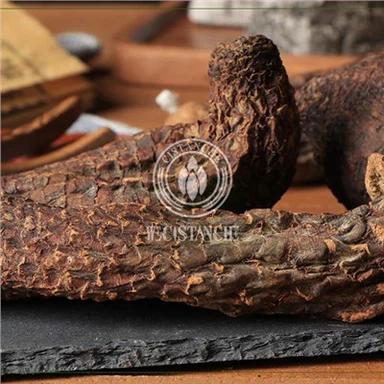
Cistanche is a traditional Chinese herbal medicine used for centuries to treat various health conditions, including kidney disease. It is derived from the dried stems of Cistanche deserticola, a plant native to the deserts of China and Mongolia. The main active components of cistanche are phenylethanoid glycosides, echinacoside, and acteoside, which have been found to have beneficial effects on kidney health.
Kidney disease, also known as renal disease, refers to a condition in which the kidneys are not functioning properly. This can result in a buildup of waste products and toxins in the body, leading to various symptoms and complications. Cistanche may help treat kidney disease ase through several mechanisms.
Firstly, cistanche has been found to have diuretic properties, meaning it can increase urine production and help eliminate waste products from the body. This can help relieve the burden on the kidneys and prevent the buildup of toxins. By promoting diuresis, cistanche may also help Reduce high blood pressure, a common complication of kidney disease.
Moreover, cistanche has been shown to have antioxidant effects. Oxidative stress, caused by an imbalance between the production of free radicals and the body's antioxidant defenses, plays a key role in the progression of kidney disease. ies help neutralize free radicals and reduce Oxidative stress, thereby protecting the kidneys from damage. The phenylethanoid glycosides found in cistanche have been particularly effective in scavenging free radicals and inhibiting lipid peroxidation.

Additionally, cistanche has been found to have anti-inflammatory effects. Inflammation is another key factor in the development and progression of kidney disease. Cistanche's anti-inflammatory properties help reduce the production of pro-inflammatory cytokines and inhibit the activation of inflammation mandatory pathways, thus alleviating inflammation in the kidneys.
Furthermore, cistanche has been shown to have immunomodulatory effects. In kidney disease, the immune system can be dysregulated, leading to excessive inflammation and tissue damage. Cistanche helps regulate the immune response by modulating the production and activity of immune cells, such as T cells and macrophages. This immune regulation helps reduce inflammation and prevent further damage to the kidneys.
Moreover, cistanche has been found to improve renal function by promoting the regeneration of renal tubes with cells. Renal tubular epithelial cells play a crucial role in the filtration and reabsorption of waste products and electrolytes. In kidney disease, these cells can be damaged, leading to damaged renal function. Cistanche's ability to promote the regeneration of these cells helps restore proper renal function and improve overall kidney health.
In addition to these direct effects on the kidneys, cistanche has been found to have beneficial effects on other organs and systems in the body. This holistic approach to health is particularly important in kidney disease, as the condition often affects multiple organs and systems. che has been shown to have protective effects on the liver, heart, and blood vessels, which are commonly affected by kidney disease. By promoting the health of these organs, cistanche helps improve overall kidney function and prevent further complications.
In conclusion, cistanche is a traditional Chinese herbal medicine used for centuries to treat kidney disease. Its active components have diuretic, antioxidant, anti-inflammatory, immunomodulatory, and regenerative effects, which help improve renal function and protect the kidneys from further damage. , cistanche has beneficial effects on other organs and systems, making it a holistic approach to treating kidney disease.