Could Scale in Tap Water Be The Cause Of Kidney Stones?
Sep 18, 2024
How many times have we been troubled by the thick layer of scale at the bottom of the kettle? The white sediment is like an invisible enemy, silently lurking in our drinking water, making people worry: Will drinking this scaled water cause extremely painful kidney stones? Some kidney stone patients are afraid that boiling tap water or mineral water will aggravate the pain of kidney stones and only dare to drink purified water. Today, let's find out whether water with scale will cause us to have kidney stones.

Click To cistanche for kidney disease
Formation of scale: a gathering of minerals
First, let's unveil the mystery of scale. Scale is actually the crystallization of minerals in water, and its main components are calcium carbonate and magnesium hydroxide. When we boil water, the calcium and magnesium ions in the water combine with other acid ions to form this white "coat". Just like a party, the minerals embrace each other in the enthusiasm of high temperature and eventually form scale.
So what are hard water and soft water? Generally speaking, it refers to the content of dissolved salt substances in water, especially calcium and magnesium salts. Soft water refers to water that does not contain or contains a small amount of soluble calcium and magnesium compounds, while hard water refers to water that contains more soluble calcium and magnesium compounds.
According to the latest GB5749-2022 "Sanitary Standards for Drinking Water" released by my country, the total hardness of drinking water shall not exceed 450 mg/L. Generally speaking, if the hardness of water exceeds 200 mg/L, scale will begin to settle in the kettle, so we will see scale in the tap water we drink daily after boiling. Many friends may ask, does such scale pose a threat to our health? The answer is: No!
According to the latest drinking water standards of the World Health Organization (WHO), the mineral concentration in water is safe, and even drinking water containing scale is OK. In contrast to the online rumor that "WHO recommends that the hardness of healthy drinking water is 50-200 mg/L", the WHO "Guidelines for Drinking Water Quality: Fourth Edition" clearly states that "WHO has not proposed a health-based guideline value for hardness in drinking water."
So, what is the relationship between water with scale and kidney stones?

First of all, we must understand that the formation of kidney stones is closely related to the crystallization of minerals in urine. Although the mineral content in tap water is high, under normal circumstances, drinking water will not cause these minerals to precipitate excessively in the kidneys. In other words, the components in tap water are not the same as the main components of kidney stones (such as calcium oxalate). Calcium and magnesium ions in tap water can even help us prevent the formation and recurrence of stones to a certain extent. A large-scale British study found that drinking 2-3L of tap water a day can contribute more than 1/3 of the daily recommended calcium and magnesium intake. Drinking more tap water has potential benefits rather than harm for patients with kidney stones!
The results of a large-scale study in North America showed that there was no significant difference in the incidence of kidney stones between residents in hard water areas and residents in soft water areas. Many other factors, such as eating habits, water intake, lifestyle, etc., are the important reasons that affect kidney stones.
Since there is no direct causal relationship between scale and kidney stones, how should we drink water scientifically? First of all, it is crucial to maintain adequate water intake. Just as plants need sufficient water to thrive, the human body also needs enough water to stay healthy. The daily water intake should meet the appropriate standard, especially in hot weather or after exercise, and you should actively replenish water. The 2022 edition of the "Guidelines for the Diagnosis and Treatment of Urinary Stones" recommends that patients with urinary stones should have a daily fluid intake of more than 2.5~3.0L so that the daily urine volume is maintained at more than 2.0~2.5L.

In addition, we should try to reduce the intake of high-purine and high-oxalic acid foods, such as seafood, animal offal, etc., so as to effectively reduce the risk of stone formation and recurrence.
For patients with kidney stones, drinking purified water is not a necessary choice. In fact, the type of water you drink is not as important as the amount of water you drink. The right amount of mineral water can provide some necessary nutrients for the body. As long as the water quality meets the national drinking water standards, water containing scale can also be safely drunk.
How Does Cistanche Treat Kidney Disease?
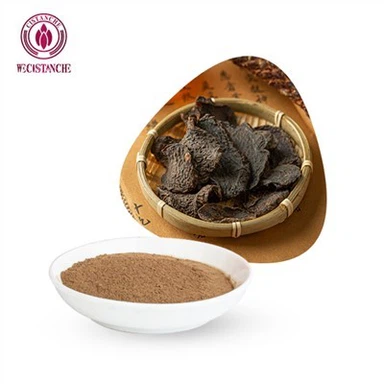
Cistanche is a traditional Chinese herbal medicine used for centuries to treat various health conditions, including kidney disease. It is derived from the dried stems of Cistanche deserticola, a plant native to the deserts of China and Mongolia. The main active components of cistanche are phenylethanoid glycosides, echinacoside, and acteoside, which have been found to have beneficial effects on kidney health.
Kidney disease, also known as renal disease, refers to a condition in which the kidneys are not functioning properly. This can result in a buildup of waste products and toxins in the body, leading to various symptoms and complications. Cistanche may help treat kidney disease ase through several mechanisms.
Firstly, cistanche has been found to have diuretic properties, meaning it can increase urine production and help eliminate waste products from the body. This can help relieve the burden on the kidneys and prevent the buildup of toxins. By promoting diuresis, cistanche may also help Reduce high blood pressure, a common complication of kidney disease.
Moreover, cistanche has been shown to have antioxidant effects. Oxidative stress, caused by an imbalance between the production of free radicals and the body's antioxidant defenses, plays a key role in the progression of kidney disease. ies help neutralize free radicals and reduce Oxidative stress, thereby protecting the kidneys from damage. The phenylethanoid glycosides found in cistanche have been particularly effective in scavenging free radicals and inhibiting lipid peroxidation.
Additionally, cistanche has been found to have anti-inflammatory effects. Inflammation is another key factor in the development and progression of kidney disease. Cistanche's anti-inflammatory properties help reduce the production of pro-inflammatory cytokines and inhibit the activation of inflammation mandatory pathways, thus alleviating inflammation in the kidneys.
Furthermore, cistanche has been shown to have immunomodulatory effects. In kidney disease, the immune system can be dysregulated, leading to excessive inflammation and tissue damage. Cistanche helps regulate the immune response by modulating the production and activity of immune cells, such as T cells and macrophages. This immune regulation helps reduce inflammation and prevent further damage to the kidneys.

Moreover, cistanche has been found to improve renal function by promoting the regeneration of renal tubes with cells. Renal tubular epithelial cells play a crucial role in the filtration and reabsorption of waste products and electrolytes. In kidney disease, these cells can be damaged, leading to damaged renal function. Cistanche's ability to promote the regeneration of these cells helps restore proper renal function and improve overall kidney health.
In addition to these direct effects on the kidneys, cistanche has been found to have beneficial effects on other organs and systems in the body. This holistic approach to health is particularly important in kidney disease, as the condition often affects multiple organs and systems. che has been shown to have protective effects on the liver, heart, and blood vessels, which are commonly affected by kidney disease. By promoting the health of these organs, cistanche helps improve overall kidney function and prevent further complications.
In conclusion, cistanche is a traditional Chinese herbal medicine used for centuries to treat kidney disease. Its active components have diuretic, antioxidant, anti-inflammatory, immunomodulatory, and regenerative effects, which help improve renal function and protect the kidneys from further damage. , cistanche has beneficial effects on other organs and systems, making it a holistic approach to treating kidney disease.