Network Pharmacology And Experimental Validation Of Cistanche-Based Compound in The Treatment Of Benign Prostatic Hyperplasia Via PI3K/AKT Pathway Modulation
Jun 17, 2025
Abstract
Objective:
To explore the preventive and therapeutic effects of Cistanche-based compound granules on benign prostatic hyperplasia (BPH) and elucidate the underlying mechanisms through network pharmacology predictions combined with in vivo animal experiments.

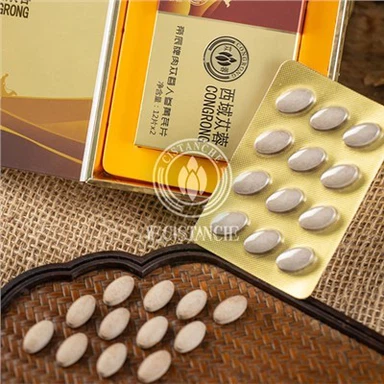
Cistanche-based herbal Pills With High Active Ingredients
Go Product Listing Get More Details
Methods:
(1) Active constituents of Cistanche deserticola and other supportive herbs were screened via the TCMSP database, complemented by literature mining. Targets of these phytochemicals were predicted using PubChem, Swiss Target Prediction, and Comparative Toxicogenomics Database (CTD). BPH-related targets were collected from GeneCards, CTD, DrugBank, and DisGeNET. Intersection analysis identified 125 potential therapeutic targets of Cistanche in treating BPH. A protein-protein interaction (PPI) network was constructed using STRING, and GO and KEGG pathway enrichment analyses were performed via Metascape. A comprehensive "herb-compound-target-pathway" network was visualized using Cytoscape, and key targets were validated through molecular docking using AutoDock Vina.
(2) Sixty male rats were randomly divided into six groups: control, model, positive control (Qianlie Shutong Capsules, 0.324 g/kg), and three dose groups of Cistanche compound granules (high: 3.24 g/kg, medium: 1.62 g/kg, low: 0.81 g/kg). BPH was induced by castration and testosterone propionate injection. Rats received oral treatment daily for 30 days. Prostate wet weight and index were calculated. Serum levels of COX-2, VEGF, and PGE2 were measured via ELISA. Histopathological changes were observed by HE staining, and protein expression of AKT1, p-AKT1, PI3K, p-PI3K, COX-2, and VEGF was assessed via Western blot.
Results:
(1) A total of 260 compound targets, 1,584 BPH-related targets, and 125 overlapping therapeutic targets were identified. Key targets included AKT1, TNF, TP53, IL1β, EGFR, CASP3, and PTGS2. Enrichment analyses indicated that IL-17, HIF-1, TNF, and PI3K-AKT signaling pathways play critical roles. Core active ingredients such as luteolin, apigenin, plantain glycosides, mangiferin, and isovitexin demonstrated strong binding affinities with targets like AKT1, PTGS2, CASP3, and IL6, with binding energies ≤ –6 kcal/mol.
(2) In vivo results showed that Cistanche granules significantly reduced prostate weight and index (P < 0.05 or P < 0.01), improved glandular structure and alleviated epithelial hyperplasia. Serum levels of COX-2, PGE2, and VEGF were significantly lowered. Expression of p-AKT1, p-PI3K, COX-2, and VEGF in prostate tissue was significantly downregulated (P < 0.05 or P < 0.01).
Conclusion:
This study provides preliminary evidence that Cistanche-based herbal therapy exerts preventive and therapeutic effects against BPH, primarily through the modulation of the PI3K/AKT signaling pathway, inhibition of COX-2 and PGE2, and suppression of VEGF-mediated prostatic cell proliferation. Key bioactive components like plantain glycosides, mangiferin, and luteolin may serve as the major pharmacological agents. These findings support the potential of Cistanche extract as a natural remedy for prostate health.
Keywords:
Cistanche deserticola; Cistanche extract; benign prostatic hyperplasia (BPH); network pharmacology; PI3K/AKT pathway; VEGF; COX-2; PGE2; prostate inflammation; natural prostate remedy; herbal treatment for BPH; traditional Chinese medicine; phytotherapy; molecular docking; rat model

Background
Benign prostatic hyperplasia (BPH) is a common urological disorder in middle-aged and elderly men. In its early stages, BPH is characterized by urinary frequency, urgency, hesitancy, and incomplete voiding. As the disease progresses, more severe symptoms such as hematuria, painful urination, bladder stones, and even renal dysfunction may occur [1–2]. Studies [3] have shown that the incidence of BPH increases with age, affecting over 50% of men over 50 years old, thus significantly impairing quality of life.
Current BPH treatments mainly include pharmaceuticals and surgical interventions, which may lead to side effects, complications, and long-term sequelae [4–7]. Therefore, Traditional Chinese Medicine (TCM) formulations that are clinically effective with fewer side effects have gained increasing attention as alternative therapies for BPH.
Cistanche-based herbal granules have demonstrated anti-inflammatory, diuretic, and tissue-protective effects in urinary conditions. Previous studies [9–10] have shown that herbal prescriptions primarily based on Cistanche deserticola exert protective effects against BPH in animal models. Preliminary research from our group [11] suggests that this formula may reduce prostatic inflammation by inhibiting inflammatory mediators such as COX-2, PGE2, IL-6, and TNF-α. Since prostatitis is often a comorbid condition that aggravates BPH, this study aims to evaluate the mechanism of action and therapeutic potential of a Cistanche-based compound using network pharmacology and in vivo validation in a rat model of BPH.

Supportive Service Of Wecistanche-The Contact Us To Get A Wholesale Price
Email:wallence.suen@wecistanche.com
Whatsapp/Tel:+86 15292862950

1. Materials and Methods
1.1 Experimental Animals
A total of 70 SPF-grade male SD rats (180–220 g) were provided by the Laboratory Animal Center of Guangxi Medical University (license: SCXK [Gui] 2020-0003). Animal protocols were approved by the Institutional Animal Ethics Committee (approval number: GXBGMP20220602). Rats were housed in standard conditions with controlled temperature (23 ± 2 °C), humidity (60 ± 5%), and a 12-hour light/dark cycle.
1.2 Drugs and Reagents
Cistanche compound granules (trial formulation)
Positive control: Qianlie Shutong Capsules (0.324 g/kg)
Testosterone propionate injection (15 mg/kg)
ELISA kits for COX-2, PGE2, VEGF
Antibodies: anti-AKT1, p-AKT1, PI3K, p-PI3K, COX-2, VEGF, GAPDH
Western blot reagents, SDS-PAGE gels, and imaging systems
All reagents were purchased from reliable domestic and international suppliers
1.3 Equipment
Analytical balance (0.0001g accuracy)
Inverted biological microscope (Olympus IX73)
Microplate reader (Tecan M200)
Western blot system (Bio-Rad)
Imaging station (GE Imager 680)
1.4 Target Prediction for Cistanche Active Compounds
Active ingredients of Cistanche deserticola and other complementary herbs were retrieved from the TCMSP database, filtered by oral bioavailability (OB ≥ 30%) and drug-likeness (DL ≥ 0.18). Literature-verified bioactive compounds not meeting these thresholds were also included. Putative targets were predicted through PubChem, SwissTargetPrediction, and CTD, using filters for high GI absorption and favorable ADME properties.
1.5 Identification of BPH-Related Targets
"BPH" was searched in multiple databases including DisGeNET, CTD, GeneCards, and DrugBank to gather disease-related targets. Only targets with relevance scores above the median were retained, and duplicates were removed to obtain a high-confidence BPH target set.
1.6 Intersection Analysis for Potential Therapeutic Targets
By intersecting Cistanche compound targets with known BPH-related genes, we identified potential anti-BPH therapeutic targets, visualized via Venn diagrams using R software.
1.7 Protein-Protein Interaction (PPI) Network Construction
Potential targets were uploaded to the STRING v11.5 database to build a PPI network. Visualization and topological analysis (degree centrality) were performed using Cytoscape 3.9.1.
1.8 GO and KEGG Enrichment Analysis
Enrichment analyses for Gene Ontology (GO) functions and KEGG pathways were conducted using Metascape, with significance set at P < 0.01.
1.9 "Herb-Compound-Target-Pathway" Network Construction
Key pathways relevant to BPH were selected from KEGG enrichment results. A multi-layer network linking herbs, active compounds, targets, and pathways was constructed in Cytoscape, and key nodes were analyzed using the Network Analyzer plugin.
1.10 Molecular Docking Verification
Six core target proteins (PTGS2, AR, CASP3, IL6, PTGS1, AKT1) and top-ranking compounds (luteolin, apigenin, isovitexin, mangiferin, plantain glycosides) were selected for molecular docking. Protein crystal structures were downloaded from the RCSB Protein Data Bank (https://www.rcsb.org), and docking was performed using AutoDock Vina. Binding energies were visualized and analyzed using PyMOL.
1.11 Animal Model and Grouping
After 7 days of acclimation, 60 male rats were randomly divided into 6 groups (n=10): control, model, positive control, and low-, medium-, high-dose Cistanche compound groups (0.81, 1.62, 3.24 g/kg). BPH was induced via orchiectomy followed by testosterone propionate injections (15 mg/kg) for 28 days. Drug administration began on day 29 and continued for 30 days.
1.12 Sample Collection
After the final treatment, rats were anesthetized and blood was collected from the abdominal aorta. Prostates were dissected, weighed, and the prostate index (mg/g) was calculated. Samples were stored at –80°C for analysis.

1.13 ELISA for Serum Inflammatory Markers
Serum levels of COX-2, PGE2, and VEGF were determined using ELISA kits according to the manufacturer's instructions.
1.14 Histological Analysis (H&E Staining)
Prostatic tissues were fixed, paraffin-embedded, sectioned, and stained with hematoxylin and eosin (H&E). Pathological changes were observed under light microscopy.
1.15 Western Blotting
Protein expression levels of AKT1, p-AKT1, PI3K, p-PI3K, COX-2, and VEGF were analyzed by Western blot. Band intensity was quantified using ImageJ, with GAPDH as the internal control.
1.16 Statistical Analysis
Data were analyzed using SPSS 22.0. Results are presented as mean ± SD. One-way ANOVA and LSD-t test were used for group comparisons, with P < 0.05 considered statistically significant.