Nourishing The Liver in Spring, Starting With Cistanche Tubulosa
Feb 09, 2026
It is urgent to nourish the liver in spring
The spring days linger, and the spring scenery is lush. When the first gentle spring breeze brushes over the earth, and the first spring flower quietly blooms, we know that spring, this wizard of nature, has arrived in full attire. In this season full of vitality and hope, it is not only the golden time for the revival and vigorous growth of all things, but also an excellent opportunity for us to take care of our body and liver.

According to traditional Chinese medicine theory, there is a close and subtle connection between the five organs and six viscera of the human body and the changes of the four seasons, just like the five elements in nature that interact with each other. In spring, it belongs to wood in the Five Elements, and the liver also belongs to wood. This means that in spring, the liver's function is most active, just like a sapling growing vigorously in spring, full of vitality and energy. At this time, the metabolism and detoxification functions of the liver have reached their peak of the year, striving to purify the environment for our body and maintain internal balance and stability. However, it is precisely because of the frequent activity of the liver in spring that it is more susceptible to external environmental changes or damage caused by our unhealthy lifestyle habits. Like a sapling swaying in the wind and rain, without careful care, it may not be able to grow strong.

The pace of modern life is accelerating, and stress is always present. Irregular eating habits and staying up late have become commonplace. These bad habits are undoubtedly like heavy shackles, adding a huge burden to the liver. Staying up late is like a thief stealing liver health, causing the liver to continue operating beyond its normal rest time; Irregular eating habits, sometimes overeating and sometimes starving, are like giving the liver various "garbled" instructions, making it difficult for it to function properly; However, a long-term high-fat and high-fat diet is like coating the liver with a thick layer of grease, hindering its normal metabolism. Over time, the function of the liver gradually declines, and various health problems arise one after another.
When there are problems with the liver's function, our body sends out many "distress signals". For example, the skin may become dull and dull, as if it has lost its former radiance, become rough and dry, and even develop problems such as acne and pimples; Eyes may become dry and tired, and things may no longer be clear and bright, as if covered with a thin layer of fog; Emotions may also become unstable, easily irritable, anxious, and prone to throwing tantrums, as if there is an unnamed flame burning in the heart; More seriously, there may be loss of appetite and indigestion, where there is no appetite for anything to eat and the food seems difficult to digest in the stomach, causing us great torment.
In this golden season of liver health, there is a good liver health product that cannot be ignored, and that is Cistanche tubulosa. It grows in the vast desert and is a precious gift from nature, known as the "desert ginseng". It not only has significant kidney tonifying effects, but also has excellent performance in nourishing the liver. Next, let's delve into the mysteries of Cistanche tubulosa and unlock its magical effects in nourishing the liver in spring.

Cistanche tubulosa: a liver-nourishing treasure in the desert
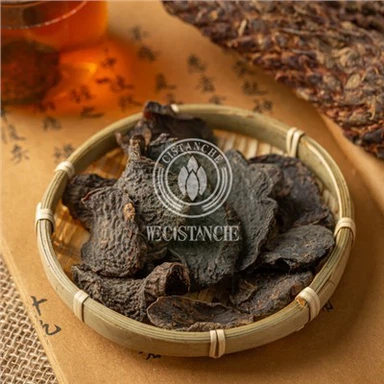
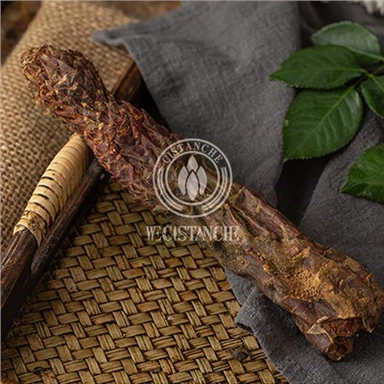
Cistanche tubulosa, a mysterious plant growing in the desert, is like a brilliant pearl left by nature in a barren land, emitting a unique and charming charm. It is a perennial parasitic herbaceous plant of the Cistanche genus in the family Liliaceae. It has a robust body, solid and tough fleshy stems, and a mottled texture on the surface, as if telling the story of the vicissitudes and hardships of time. Despite its unremarkable appearance, it contains endless medicinal value and is therefore also known as the "desert ginseng".
The medicinal history of Cistanche tubulosa dates back to ancient times. In the ancient book "Shennong Bencao Jing", which is regarded as a classic of traditional Chinese medicine, Cistanche tubulosa is listed as a top-grade product. The book records that it "mainly works on the five aspects of labor and seven injuries, replenishes the middle, removes cold, heat, and pain from the stem, nourishes the five organs, strengthens yin, benefits essence and qi, has many children, treats women's ailments, and takes long-term medication to lighten the body". This fully demonstrates that, as early as ancient times, people had already recognized the outstanding effects of Cistanche tubulosa in nourishing the body, regulating the five organs, and enhancing vitality. In the "Compendium of Materia Medica" written by Li Shizhen in the Ming Dynasty, the record of Cistanche tubulosa is even more detailed: "Cistanche tubulosa has a sweet and salty taste, a warm nature, and is non-toxic. It is mainly used for labor injury, with poor essence and black face, kidney deficiency and white turbidity, excessive sweating and constipation, easy hunger during digestion, tetanus, etc." These records in ancient books not only provide an important basis for later generations to study the medicinal value of Cistanche tubulosa, but also witness its long history and important position in the field of traditional Chinese medicine.

desert ginseng
Modern scientific research has also revealed the secrets of Cistanche tubulosa in nourishing the liver. Cistanche tubulosa is rich in various beneficial components for the liver, among which phenylethanolic glycosides and polysaccharides are particularly prominent. Phenylethanoid glycosides, such as echinacoside and verbascoside, have strong antioxidant and anti-inflammatory effects. They are like a loyal group of guardians, capable of clearing excessive free radicals in the liver, reducing oxidative stress damage to liver cells, and effectively preventing and alleviating liver diseases. Meanwhile, these components can also regulate the immune function of the liver, enhance its self-repair ability, and enable the liver to better cope with various external challenges.
Polysaccharides are another major liver-nourishing treasure of Cistanche tubulosa. They can promote the regeneration and repair of liver cells and accelerate the recovery of damaged liver tissue. In addition, polysaccharides can also regulate the metabolic function of the liver, helping it to better metabolize fats, proteins, and carbohydrates, and maintain normal physiological functions of the liver. For those who drink alcohol for a long time, stay up late, or suffer from chronic liver disease, polysaccharides can, to some extent, reduce the burden on the liver and protect it from further damage.

Total glycosides of Cistanche tubulosa can inhibit liver cancer cells at the early stage of liver cancer
Scientific basis for nourishing the liver with Cistanche tubulosa
Modern scientific research has provided a solid theoretical foundation and strong experimental evidence for the liver-nourishing effects of Cistanche tubulosa, allowing us to gain a deeper understanding of its miraculous properties at the microscopic level.
Numerous experiments have shown that extracts from Cistanche tubulosa have significant protective effects against liver damage. In an experiment on a chemical liver injury model animal, researchers injected the animals with carbon tetrachloride to induce liver damage, followed by intervention with Cistanche tubulosa extract. Surprisingly, it was found that compared with the control group that did not receive extracts of Cistanche tubulosa, the experimental group animals showed significantly reduced liver tissue damage, a significant decrease in the number of liver cell apoptosis, and a significant decrease in serum levels of alanine aminotransferase (ALT) and aspartate aminotransferase (AST). This indicates that the extract of Cistanche tubulosa can effectively inhibit hepatocyte apoptosis, reduce liver inflammation, and protect the liver from damage. Alanine transaminase and aspartate transaminase are important indicators reflecting the degree of liver cell damage, and a decrease in their levels means that the damage to liver cells has been alleviated and liver function is gradually recovering.

Cistanche tubulosa experiment
Cistanche tubulosa also performs well in inhibiting liver fibrosis. Liver fibrosis is a pathological process in which the extracellular matrix is excessively deposited in the liver after long-term damage. If not controlled, it may develop into cirrhosis, posing a serious threat to life and health. Researchers have found through experiments that extracts from Cistanche tubulosa can inhibit the activation of hepatic stellate cells, reduce the synthesis and deposition of collagen, and effectively inhibit the development of liver fibrosis. The activation of hepatic stellate cells is a key link in the occurrence of liver fibrosis, and the extract of Cistanche tubulosa can precisely act on this link to curb the process of fibrosis from the source, providing important guarantees for liver health. Meanwhile, the extract of Cistanche tubulosa can also promote liver cell regeneration and repair, improve damaged liver tissue, and gradually restore normal structure and function of the liver.

Total glycosides of Cistanche tubulosa can inhibit liver cancer cells at the early stage of liver cancer
Click here to view Cistanche Enhance Immunity products
【Ask for more】 Email:cindy.xue@wecistanche.com / WhatsApp: 0086 18599088692 / Wechat: 18599088692
The alleviating effect of Cistanche tubulosa extract on liver inflammation is also worthy of attention. Inflammation is a common pathological reaction in the occurrence and development of liver diseases, and persistent inflammation can further exacerbate liver damage. Research has shown that extracts from Cistanche tubulosa can inhibit the expression of inflammatory factors such as interleukin-1 β (IL-1 β) and tumor necrosis factor - α (TNF - α), reduce the infiltration of inflammatory cells, and thus alleviate the degree of liver inflammation. These inflammatory factors play a crucial mediating role in liver inflammation, and extracts of Cistanche tubulosa can reduce their expression levels, just like pouring cold water on the raging flames of inflammation, effectively alleviating liver inflammation and creating favorable conditions for liver self-repair.
Diversified eating methods easily nourish the liver
The consumption methods of Cistanche tubulosa are rich and diverse, each with its unique flavor and health benefits, which can meet the needs and taste preferences of different groups of people. Next, we will introduce in detail several simple and easy-to-operate methods for consuming Cistanche tubulosa, allowing you to enjoy delicious food while easily caring for liver health.
Slice Cistanche tubulosa and soak it in water
This is the most convenient way of consumption, especially suitable for busy office workers and daily health enthusiasts. Cut the dried Cistanche tubulosa into thin slices, take 3-5 grams each time, and place them in a cup. When cutting Cistanche tubulosa, try to cut it as much as possible, which can increase the contact area between Cistanche tubulosa and water, and is more conducive to the dissolution of effective ingredients. Next, brew with hot water at around 90 ℃. In an instant, the hot water is like a magical potion, stimulating the vitality of Cistanche tubulosa, and a faint fragrance wafts away. Cover and soak for 15-20 minutes, so that the essence of Cistanche tubulosa can be fully integrated into the water. This is like a wonderful fusion, where the nutrients of Cistanche tubulosa are gradually released by soaking in hot water, and a cup of vibrant Cistanche tubulosa tea is brewed. It can be brewed 2-3 times until the taste becomes lighter. When brewing, you can also pair 5-8 goji berries and 2 red dates. Goji berries have the function of nourishing the liver and kidneys, while red dates can nourish the middle and qi, nourish the blood, and calm the mind. The combination of the three can not only enhance the effect of nourishing the liver and kidneys, but also make the taste richer and sweeter, adding warmth and nourishment to your spring health.
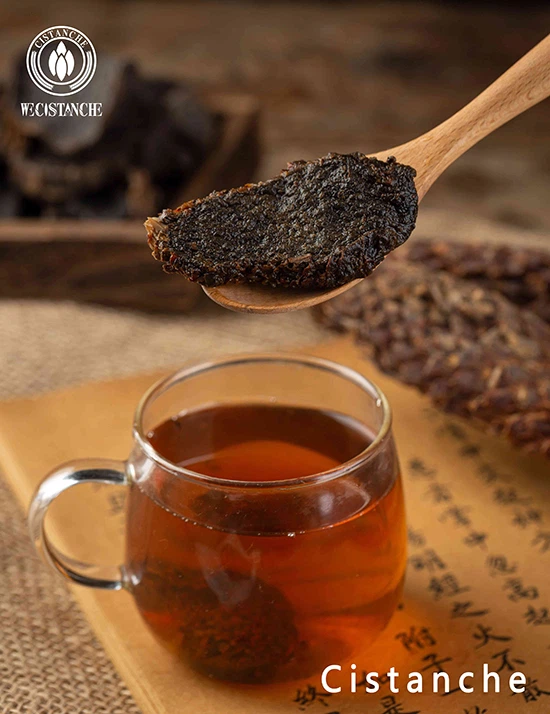
Cistanche tea
Cistanche tubulosa soup
Boiling soup is a traditional Chinese way of health preservation cooking. By stewing Cistanche tubulosa with various ingredients, not only can the soup be more delicious, but also the nutritional components of Cistanche tubulosa can be fully integrated into the soup, making it easy for the human body to absorb. For example, in the classic Cistanche tubulosa and lamb soup, prepare 15-20 grams of Cistanche tubulosa, 200-300 grams of lamb, ginger slices, scallions, cooking wine, salt, and other seasonings. First, wash and cut the lamb into pieces, blanch it in boiling water to remove blood and fishy smell. This step is like giving the lamb a hot bath, making it purer. Remove and drain the water for later use. Wash and slice the Cistanche tubulosa, soak it in warm water for 10-15 minutes to absorb moisture and restore some vitality. Put lamb, Cistanche tubulosa, ginger slices, scallions, and cooking wine into a stew pot, add an appropriate amount of water, bring to a boil over high heat, then reduce the heat and simmer for 2-3 hours. During the stewing process, the nutrients of Cistanche tubulosa blend with the deliciousness of lamb, and the aroma permeates the entire kitchen. Stew until the lamb is cooked and tender, then add an appropriate amount of salt to season. This soup has the effects of warming and tonifying kidney yang, nourishing liver and nourishing blood, especially suitable for people with a yang deficiency constitution to consume in spring, replenishing energy for the body and resisting spring cold. In addition to lamb, Cistanche tubulosa can also be paired with chicken, pork ribs, and other ingredients to make soup, depending on personal taste and needs. For example, Cistanche tubulosa chicken soup can nourish the liver and kidneys, nourish qi and blood; Cistanche tubulosa and pork rib soup has the effects of tonifying the kidneys, strengthening bones, and nourishing the liver and spleen.

Stewed Cistanche tubulosa soup
Cistanche tubulosa tea substitute granule package
If you feel that slicing, soaking in water, and boiling soup are not convenient enough, then the Cistanche tubulosa tea replacement granule package is your ideal choice. There are many processed granules of Cistanche tubulosa tea substitutes on the market now. These granules are made by scientific extraction, concentration, drying, and other processes of Cistanche tubulosa, which are convenient to carry and brew. Just take out a small packet, brew it with hot water, stir well, and it's ready to drink, just like brewing coffee or tea bags. This granule package not only retains the effective ingredients of Cistanche tubulosa but is also easy to store, allowing you to enjoy the health benefits of Cistanche tubulosa anytime, anywhere, whether in the office, on business trips, or on the go. Some granules of Cistanche tubulosa tea drinks are also paired with other traditional Chinese medicinal herbs, such as chrysanthemum, honeysuckle, cassia seed, etc. Chrysanthemum can clear the liver and improve vision, honeysuckle can clear heat and detoxify, cassia seed can moisten the intestines, promote bowel movements, and clear the liver and improve vision. Paired with Cistanche tubulosa, it can neutralize its warmth and further enhance its liver-nourishing effects, meeting the health needs of different groups of people.