Part Ⅰ Angiotensin II Receptor Blocker Associated With Less Outcome Risk in Patients With Acute Kidney Disease
May 05, 2023
Abstract
Objective
This study aimed to explore the respective use of angiotensin-converting enzyme inhibitors (ACEis) or angiotensin receptor blockers (ARBs) on the outcomes of patients who could be weaned from dialysis-requiring acute kidney injury (AKI-D).
Methods
This case-control study enrolled 41,731 patients who were weaned from AKI-D for at least 7 days by Taiwan’s National Health Insurance Administration. We further grouped AKI-D patients according to ACEi and ARB use to evaluate subsequent risks of all-cause mortality and re-dialysis. The outcomes included all-cause mortality and new onset of end-stage kidney disease (ESKD; re-dialysis) following withdrawal from AKI-D.
Results
A total of 17,141 (41.1%) patients surviving AKI-D could be weaned from dialysis for at least 7 days. The overall events of mortality were 366 (48.9%) in ACEi users, 659 (52.1%) in ARB users, and 6,261 (41.3%) in ACEi/ARB nonusers, during a mean follow-up period of 1.01 years after weaning from AKI-D. Regarding all-cause of mortality, pre-dialysis ARB users had a lower incidence than ACEi users [hazard ratio (HR 0.82), p = 0.017]. Compared with ACEi/ARB nonusers, continuing ARB users had a significantly low risk of long-term all-cause mortality (adjusted hazard ratio 0.51, p = 0.013) after propensity score matching. However, new users of ACEi during the acute kidney disease (AKD) period had a higher risk of dialysis after weaning than ACEi/ARB nonusers (aHR 1.82, p < 0.001), whereas neither ACEi nor ARB users confronted significantly increased risks of hyperkalemia after weaning.
Conclusions
Compared with patients without ACEi/ARB, those continuing to use ARB before the event and after weaning had low all-cause mortality, while new users of ACEi at AKD had an increased risk of re-dialysis. AKI-D patients continuing to use ACEi or ARB did not have a higher risk of hyperkalemia. Future prospective randomized trials are expected to confirm these findings.
Keywords
ARB; ACEi; AKD; AKI; dialysis; weaning; mortality; hyperkalemia; Cistanche's benefits.

Click here to buy Cistanche extract to improve kidney function
Introduction
Angiotensin-converting-enzyme inhibitors (ACEis) and angiotensin receptor blockers (ARBs) are both frequently prescribed in treating patients with hypertension, congestive heart failure, or chronic kidney disease. However, due to the concern about their possible worsening effect on acute kidney function impairment, it has been suggested that ACEi/ARB should be withheld before or during some clinical scenarios (Che et al., 2011). The Kidney Disease: Improving Global Outcomes (KDIGO) Conference developed a consensus that ACEi/ARB should be temporarily discontinued during acute kidney injury (AKI) and reinitiated in acute kidney disease (AKD) (Ostermann et al., 2020a; Ostermann et al., 2020b). The consensus report of the Acute Disease Quality Initiative (ADQI) 22 workshop further proposed recommendations regarding the ACEi/ARB treatment of patients with AKD (Liu et al., 2020). However, the impact of either ACEi or ARB alone on the kidney function of patients who were weaned off from dialysis requiring AKI (AKI-D) has not been well discussed.
Previous studies explored the impacts of the use of ACEi/ARB on post-AKI patients and provided conflicting data (Arora et al., 2008; Coca et al., 2013; Yang et al., 2020). ACEi and ARB are distinctive because they suppress different parts of the renin–angiotensin–aldosterone system (RAS), even though many of their pharmacologic effects could be similar. Therefore, focused exploration of the specific effects of ACEi versus ARB may help to clarify their respective effects on important outcomes in various clinical scenarios, considering their potentially different effects on RAS components (Vaduganathan et al., 2020).
kidney disease (CKD), ACEi users were associated with higher mortality rates than ARB users, particularly in a subgroup of diabetic patients (Lin et al., 2017). Currently, there is no large-scale study addressing the specific role of ACEi or ARB supremacy regarding the long-term mortality and/or future dialysis dependence (re-dialysis) in AKI-D patients who were successfully weaned off from dialysis. Previous studies examining the effects of these two kinds of agents on postoperative AKI rarely explored their respective roles. In patients with AKD, the superiority of ARB over ACE inhibitors regarding all-cause mortality and long-term kidney function remains to be proven. Therefore, in this study, we aimed to explore whether the respective use of ACEi or ARB is related to long-term mortality and/or eventual development of end-stage kidney disease (ESKD) in patients who were weaned off from AKI-D. METHODS Patients The study enrolled all patients between 18 and 80 years of age who were diagnosed with AKI and underwent dialysis treatment from May 2015 to December 2017 in Taiwan, with the final patient follow-up on 31 December 2018 (i.e., at least 1-year follow-up). Our study used a longitudinal database through the Applied Health Research Data Integration Service from Taiwan’s National Health Insurance Administration (NHIA). The longitudinal database contains comprehensive healthcare information, including but not limited to data regarding individual demographic background, acute inpatient hospitals, outpatient primary care and subspecialty office visits, outpatient pharmacies, diagnoses, prescriptions, long-term care facilities, and medical events. To detect possible fraud in the NHI, the NHIA has been routinely auditing data and records submitted by healthcare institutions and providers (Wu et al., 2015). The NHIA is the only insurance carrier of covered healthcare in Taiwan. To avoid rejection of claim reimbursement from the NHIA, physicians in Taiwan usually follow clinical guidelines/policies suggested by the consensus. This study excluded patients who had undergone nephrectomy, chronic dialysis, or renal transplantation before the index date.
The study protocol was approved by the Research Ethics Committee of the National Taiwan University Hospital (201807119RIND) and that of National Health Research Institutes (EC1060402-E), and the need for informed consent was waived because of its retrospective nature and no identifiable patient data could be accessible.

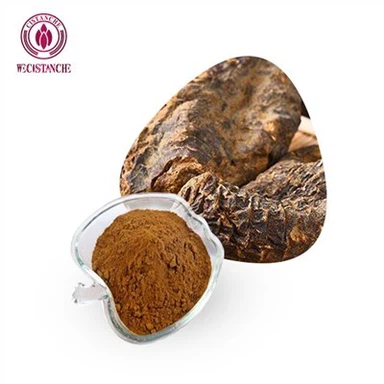
Herba Cistanche
The Use of ACEi/ARB Before AKI-D
The records of taking ACEi or ARB within 180 days before index dialysis were enrolled to determine the grouping of the patients. The patients who were treated simultaneously with both ACEi and ARB within 180 days before index dialysis were excluded to avoid misclassification (n = 133), and the others were classified into the following three groups before dialysis: AKI-D patients who were administered ACEi (ACEi users), who were administered ARB (ARB users), and who were administered neither ACEi nor ARB (ACEi/ARB nonusers). The baseline demographic data, comorbidities, and the prescribed medications of these patients were collected (Figure 1). The estimated glomerular filtration rate (eGFR) was calculated according to the Modification of Diet in Renal Disease Study equation according to the baseline serum creatinine (sCr). Baseline sCr was the nadir value obtained after the previous admission in those who had more than one admission within 6 months before the index admission or the mean outpatient sCr level in those without previous admission within 180 days before the index admission (Shu et al., 2016).

The Measurement of ACEi/ARB Exposure After Weaning From AKI-D
The use of the RAS inhibitors at weaning from AKI-D was defined as the use of a RASi 90 days after withdrawal from dialysis (AKD-period). We further inspected the respective effects of RASi during the AKD period. The patients who were not administered RAS inhibitors during AKD were divided into the following three groups: prior ACEi users (prior ACEi usage only), prior ARB users (prior ARB usage only), and ACEi/ARB nonusers (neither ACEI nor ARB usage), while the patients who kept on the usage of RASi were divided into continuing ARB and continuing ACEi users. The new user of RAS inhibitors during the AKD periods was defined as new users.
Comorbidities
For analysis of the comorbid conditions of these patients, we calculated the Charlson comorbidity index scores (Charlson et al., 1987) by coding from the International Classification of Disease, 9th Revision, Clinical Modification (ICD-9-CM), and ICD-10 administrative data (Quan et al., 2005). Gastrointestinal bleeding was ascertained from emergency department visits and hospitalization episodes using ICD-9 diagnosis codes.

Cistanche tubulosa
Outcomes of Interest
The main outcomes included all-cause mortality and new onset of end-stage kidney disease (ESKD; re-dialysis) following withdrawal from AKI-D. Additional outcome measures included hospitalization with a major adverse cardiovascular event (MACE) as the major diagnosis and MACE-related death, which was defined as death with hospitalization for MACE during the 90 days before the death.
Finally, to assess whether observed associations between the respective ACEi or ARB administration and the outcomes of interest were attributable to different health statuses, we further compared the risk of gastrointestinal bleeding, an outcome believed not to be affected by the choice of RASi treatments, as a negative control test.
Statistical Analysis
The baseline variables were shown as means ± standard deviations (SDs) for continuous variables and percentages for categorical variables in the three groups. Differences between these groups were compared using the post hoc analysis consisting of t-tests with the Bonferroni correction for continuous variables and the χ2 test for categorical variables. We compared the risks for AKI and mortality among these aforementioned groups using the COX proportional hazard model, adjusting for age, gender, medication, comorbidities, and eGFR (Table 1). The significance levels for entry (SLE) and for stay (SLS) were set to 0.15 to be conservative. Consequently, with the aid of substantive knowledge, the best candidate final COX proportional model was identified manually by dropping the covariates with p-value>0.05 one at a time until all regression coefficients were significantly different from 0. Because of the high mortality rate in patients after AKD, competing risk regression analysis considering mortality was also performed using the Fine and Gray model to calculate the subdistribution hazard (sHR) (Austin et al., 2016).

Given the differences in baseline characteristics and risk of outcomes of interest between the ACEi/ARB users and nonusers, we matched the three groups using a greedy matching algorithm with a caliper width of 0.2 SDs of the log of the odds of the estimated propensity score with a 1:1:1 ratio. The predictive variables of prescriptions or RASi with logistic regression analysis by applying a propensity score are shown in Supplementary Figure S1. Table 1 shows the covariates adjusted before and after propensity score matching: demographics, age, baseline comorbidities, CKD status, sepsis, medications and severity of kidney function, and the prescription of ACEi/ARB before dialysis initiation.
A forest plot was constructed for the hazard ratio of ACEi vs. ARB users on subsequent mortality according to prior comorbidities and clinical conditions. All analyses were performed using SAS 9.2 (SAS Institute Inc.) and Stata/MP version 16 (Stata Corporation, TX) for data analysis and figure plotting. A two-sided p-value < 0.05 was considered to be statistically significant.

Cistanche supplements
Vin-Cent Wu 1 , Yu-Feng Lin 1 , Nai-Chi Teng 2 , Shao-Yu Yang 1 , Nai-Kuan Chou 3 , Chun-Hao Tsao 3 , Yung-Ming Chen 1 , Jeff S Chueh 4,5 and Likwang Chen 2
1. Department of Internal Medicine, National Taiwan University Hospital, Taipei, Taiwan,
2. Institute of Population Health Sciences, National Health Research Institutes, Miaoli, Taiwan,
3. Department of Surgery, National Taiwan University Hospital, Taipei, Taiwan,
4. Glickman Urological and Kidney Institute, Cleveland Clinic Lerner College of Medicine, Cleveland Clinic, Cleveland, OH, United States,
5. Department of Urology, National Taiwan University Hospital, Taipei, Taiwan