Patients With Cardiovascular Disease Should Actively Prevent And Treat Constipation
Dec 19, 2023
Winter is a period of high incidence of cardiovascular diseases, and people with constipation may exert excessive force to defecate smoothly. At this time, the pressure in the abdominal and thoracic cavity increases, and abnormal blood circulation in the heart may cause cardiovascular diseases.

Chronic constipation may easily induce acute cardiovascular events
1. Straining to defecate can lead to adverse cardiovascular events
Forcing to defecate is similar to the Valsalva maneuver, which leads to an increase in intracranial pressure, which may cause aneurysm rupture or increase right-to-left pulmonary shunt, leading to the occurrence of adverse cardiovascular events [1]. In diseases such as acute myocardial infarction and cerebrovascular accidents, excessive force to defecate may lead to aggravation of the condition or even death [2].
2. Constipation is an independent risk factor for adverse cardiovascular events.
In a retrospective cohort study of 3,359,653 patients with chronic kidney disease in the United States [3], a total of 237,855 patients (7.1%) were diagnosed with constipation. After adjusting for demographics, comorbidities, medications, and socioeconomic multivariable, the results showed that patients with constipation had an 11% higher risk of coronary heart disease events than patients without constipation (hazard ratio 1.11, 95% CI, 1.08-1.14).
4. Constipation increases the risk of death in patients with cardiovascular disease[5]
A cohort study of Japanese people aged 40-79 years included a total of 45,112 cases and assessed defecation frequency through a self-administered questionnaire. During 13.3 years of follow-up, 2,028 patients with constipation died from cardiovascular diseases, including ischemic heart disease, hemorrhagic stroke, ischemic stroke, subarachnoid hemorrhage, etc.

Current status of chronic constipation in patients with cardiovascular disease
The incidence of constipation is relatively high in cardiology. According to different research statistics: the incidence of constipation in 90 patients with coronary heart disease reached 78.1%[6]; the incidence of constipation in 264 patients with acute myocardial infarction was 46%-66%[7], and the incidence of constipation in 122 patients after heart valve surgery Reaching 30.33%[8].
Multiple factors contribute to constipation in patients with cardiovascular disease
1. Neuromodulatory dysfunction
2. Weakened intestinal function
3. Dietary factors
4. Hypokalemia
5. Drug factors
6. Patients with long-term chronic diseases cause physical weakness
7. Age
8. Changes in defecation environment and habits
Pay attention to the management of constipation in patients with cardiovascular disease
Constipation is a symptom (group) characterized by difficulty in defecation and/or reduced defecation frequency and dry and hard feces. Defecation difficulties include straining to defecate, difficulty in defecation, the feeling of incomplete defecation, the feeling of anorectal blockage, time-consuming defecation, and the need for assisted defecation. Decreased bowel movement refers to having fewer than three bowel movements per week. Generally, no bowel movement for more than 2 days indicates the presence of constipation.
Traditional Chinese medicine divides constipation into deficiency constipation and excess constipation; elderly patients or patients with associated cardiovascular diseases mostly suffer from deficiency constipation or a mixture of deficiency and excess. Traditional Chinese medicine believes that deficiency and secretion are caused by the inability of the large intestine to pass down the intestines and conduction failure. The disease is closely related to the dysfunction of the kidneys, spleen, lungs, and other organs [9].

For constipation in the elderly, it is advisable to adopt the methods of nourishing qi and blood, tonifying kidney and essence, nourishing blood and activating blood, moistening intestines, and diluting stagnation, to achieve the effect of taking into account both the symptoms and root causes, attacking and tonifying at the same time, tonifying without stagnating and greasy, and clearing without damaging the body.
Natural Herbal Medicine For Relieving Constipation-Cistanche
Cistanche is a genus of parasitic plants that belongs to the family Orobanchaceae. These plants are known for their medicinal properties and have been used in Traditional Chinese Medicine (TCM) for centuries. Cistanche species are predominantly found in arid and desert regions of China, Mongolia, and other parts of Central Asia. Cistanche plants are characterized by their fleshy, yellowish stems and are highly valued for their potential health benefits. In TCM, Cistanche is believed to have tonic properties and is commonly used to nourish the kidney, enhance vitality, and support sexual function. It is also used to address issues related to aging, fatigue, and overall well-being. While Cistanche has a long history of use in traditional medicine, scientific research on its efficacy and safety is ongoing and limited. However, it is known to contain various bioactive compounds such as phenylethanoid glycosides, iridoids, lignans, and polysaccharides, which may contribute to its medicinal effects.

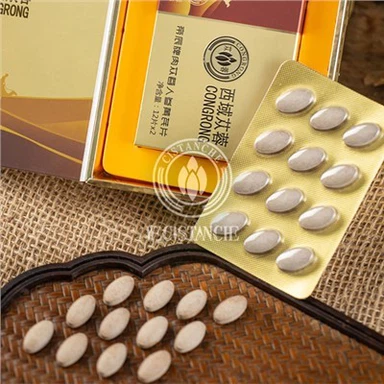
Wecistanche's cistanche powder, cistanche tablets, cistanche capsules, and other products are developed using desert cistanche as raw materials, all of which have a good effect on relieving constipation. The specific mechanism is as follows: Cistanche is believed to have potential benefits for relieving constipation based on its traditional use and certain compounds it contains. While scientific research specifically on Cistanche's effect on constipation is limited, it is thought to have multiple mechanisms that may contribute to its potential to relieve constipation. Laxative Effect: Cistanche has long been used in Traditional Chinese Medicine as a remedy for constipation. It is believed to have a mild laxative effect, which can help promote bowel movements and induce constipation. This effect may be attributed to various compounds found in Cistanche, such as phenylethanoid glycosides and polysaccharides. Moistening the Intestines: Based on traditional use, Cistanche is considered to have moisturizing properties, specifically targeting the Intestines. Promoting hydration and lubrication of the Intestines may help soften tools and facilitate easier passage, thereby relieving constipation. Anti-inflammatory Effect: Constipation can sometimes be associated with inflammation in the digestive tract. Cistanche contains certain compounds, including phenylethanoid glycosides and lignans, that are believed to have anti-inflammatory properties. By reducing inflammation in the intestines, it may help improve bowel movement regularity and relieve constipation.