Plantago × Cistanche PhGs Formulation: Multi‑Target Solution For Prostatitis And UTIs (Mechanisms, Formulas, Clinical Evidence)
Nov 17, 2025
Clinical applications of Plantaginis Semen in urinary system diseases
Plantaginis Semen possesses diuretic, strangury-relieving, dampness-draining, and diarrhea-attenuating properties. It is frequently used for renal, gynecologic, and andrologic conditions. This section summarizes clinical applications of Plantaginis Semen–containing compound prescriptions in urinary diseases.

Traditional Chinese Medicine (TCM) Pills for kidney deficiency and chronic prostatitis
3.1 Urinary tract infection (UTI)
In traditional Chinese medicine (TCM), UTIs fall under the category of strangury (lin zheng), often involving damp-heat pouring downward and patterns of kidney deficiency with bladder heat. The treatment principle is to clear heat, drain dampness, and relieve strangury. Plantaginis Semen excels at clearing heat and promoting diuresis for strangury and shows notable efficacy in urinary infections.
Deng Xiangjun reported that the Ziyin Tonglin Formula (Herba Lysimachiae, Smilax glabra 30 g each; Astragalus membranaceus, Rehmannia glutinosa prepared, Plantaginis Semen 15 g each; Achyranthis bidentatae Radix 12 g; Polygonum aviculare, Pyrrosia lingua 10 g each), combined with levofloxacin, significantly improved total efficacy vs. levofloxacin alone in women with recurrent UTI (P<0.05).
Li Zhaorong et al. used the Ba Zheng San (Talcum 25 g; Plantaginis Semen 20 g; Gardenia jasminoides and Dianthus superbus 15 g each; Polygonum aviculare 12 g; Akebia, Glycyrrhiza 10 g each; Rheum palmatum 6 g; Pith of Juncus 3 g) combined with levofloxacin for lower UTIs in women. The treatment group showed significantly higher negative urine culture conversion, reduced urinary leukocytes, and decreased TNF-α (all P<0.05).
These outcomes-lower inflammatory mediators and improved cultures-are consistent with anti-inflammatory actions of Plantaginis Semen constituents (phenylethanoid glycosides and flavonoids) via NF-κB and TLR4 pathway suppression, suggesting that clinical benefits likely arise from targeted inflammatory pathway modulation.
Table 2. Clinical Application of Plantago-Based Compound Preparations in Urinary System Diseases
| Disease | Cases (Treatment / Control) | Intervention (Treatment Group) | Duration | Clinical Efficacy |
|---|---|---|---|---|
| Urinary Tract Infection [45] | 30 / 30 (Levofloxacin) | Levofloxacin + Plantago Water Decoction (15 g/day) | 6 weeks | Total efficacy: 97.78% (treatment) vs. 77.78% (control) |
| Chronic Prostatitis [46] | 47 / 47 (Levofloxacin) | Levofloxacin + Bazheng Powder (20 g/day) | 6 weeks | Total efficacy: 91.49% (treatment) vs. 74.47% (control), statistically significant (P<0.05) |
| Ureteral Calculi [47] | 50 / 50 (Double J stent + Tamsulosin) | + Plantago Compound Granules (15 g/day) | 2 weeks | Stone expulsion time: 7.40 ± 0.92 days vs. 9.51 ± 1.14 days; urine RBCs and WBCs significantly lower in treatment group (P<0.05) |
| Kidney Stones [48] | 49 / 43 (Roxithromycin + Tamsulosin) | + Stone-Expelling Formula (10 g/day) | 4 weeks | Total efficacy: 95.35% vs. 74.42%; inflammatory markers significantly lower: IL-6 (6.13±0.87 vs. 8.05±0.78), IL-1β (5.04±0.78), TNF-α (1.76±0.42), CRP (9.42±1.73) |
| Bladder Stones [49] | 33 / 34 (Levofloxacin + Tamsulosin) | + Bazheng Powder (20 g/day) | 7 days | Total efficacy: 93.94% vs. 81.82%; lower PCT (0.76±0.15 vs. 1.29±0.31), IL-6, CRP; reduced adverse events (2.06% vs. 18.18%) and shorter stone expulsion time |
| Chronic Prostatitis [50,51] | 45 / 45 (Tamsulosin) | + Rehmannia-Plantago Formula (15 g/day) | 3 months | Total efficacy: 95.6% vs. 77.8%; improved NIH-CPSI score and inflammatory markers (IL-2, IL-10, IL-17, GM-CSF) |
| Chronic Prostatitis [51] | 42 / 42 (Levofloxacin) | + Bazheng Powder (20 g/day) | 4 weeks | Total efficacy: 95.24% vs. 71.43%; lower inflammatory markers (IL-6, TNF-α) |
| Chronic Renal Dysfunction [52–53] | 39 / 39 (α-Ketoacid Tablets) | + Astragalus-Plantago Formula (12 g/day) | 6 months | Total efficacy: 87.18% vs. 64.10%; lower BUN (treatment: 10.41±0.92 vs. 11.04±0.92), SCr, CCr, β2-MG, CysC, Hcy |
| Chronic Renal Dysfunction [54] | 45 / 45 (Hemodialysis + Standard Care) | + Plantago Water Decoction (15 g/day) | 3 months | Improved renal function: BUN (8.49±2.65), SCr (298.47±51.65), CCr (31.17±8.21), β2-MG (11.64±3.68), CysC (4.76±0.28), Hcy (26.21±5.79) |
Strategic PhGs insertion with cistanche for UTI/prostate SKUs
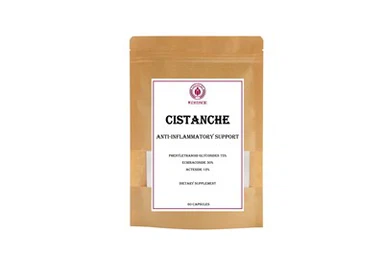
Phenylethanoid glycosides (PhGs), including verbascoside/acteoside and plantamajoside in Plantaginis Semen, deliver dual anti-inflammatory and antioxidant activity central to UTI and prostate symptom control. Cistanche is a rich, standardized PhG source (notably acteoside and echinacoside) and is widely positioned for "kidney nourishment." For supply resilience, stronger marker-based QC, and a unifying cross-category narrative (kidney–urinary–prostate), pair Plantaginis Semen with cistanche-derived PhGs. See: Cistanche for Nourishing Kidney (client link).
This pairing supports cistanche:
Enhanced NF-κB/TLR4 downregulation and Nrf2 antioxidant tone
Immunomodulation relevant to recurrent UTIs and chronic prostatitis
Robust assayability for release specs (acteoside/echinacoside, total PhGs)

ACTEOSIDE IN TCM CISTACHE
3.2 Urolithiasis
Kidney stones correspond to "stone strangury" (shi lin). Plantaginis Semen promotes diuresis and facilitates stone passage.
Cai Liming observed that Chai-Jin Huashi Decoction (Herba Lysimachiae, Paeonia lactiflora 30 g each; Endothelium corneum Gigeriae galli 20 g; Lindera aggregata, Lygodium spores, Aurantii Fructus 15 g each; Bupleurum 12 g; Scutellaria baicalensis, Aucklandia lappa, Plantaginis Semen, Achyranthes bidentata, Pinellia ternata praeparata 10 g each; Glycyrrhiza 9 g; Rheum palmatum 6 g) shortened ureteral stone expulsion time vs. control (P<0.05), reducing hydronephrosis burden.
Chen Yong et al. studied "Urolith Expulsion Formula" (Herba Lysimachiae 30 g; Astragalus, Endothelium corneum Gigeriae galli 25 g each; Talcum, Lygodium spores 20 g each; Pyrrosia, Alisma, Achyranthes, Cistanche, Dioscorea 15 g each; Plantaginis Semen, Aurantii Fructus, Pollen Typhae 10 g each; Glycyrrhiza 6 g) for residual fragments after flexible ureteroscope lithotripsy. The treatment group achieved higher stone-free rates and lower recurrence vs. control (both P<0.01).
Deng Taolin found that Ba Zheng San improved stone clearance time and analgesia onset vs. control (P<0.05).
In clinical practice, Plantaginis Semen combinations reduce IL-6, IL-1β, TNF-α, and CRP while increasing stone-free rates. These align with preclinical findings that Plantaginis Semen polysaccharides reduce urate crystal deposition and suppress inflammatory mediators, offering a molecular rationale for symptom improvement and recurrence reduction.

ACTEOSIDE IN TCM CISTACHE
3.3 Chronic prostatitis
Chronic prostatitis maps to "jing zhuo/bai zhuo" patterns; the principle is to clear heat and dampness, activate blood, and resolve masses.
Hu Dandan et al. evaluated a "Qingre Lishi Shanyu Formula" (Dioscoreae Hypoglaucae Rhizoma, Phellodendron, Polygonum cuspidatum, Plantaginis Semen 15 g each; Lygodium spores, Poria, Leonurus, Salvia miltiorrhiza, Carthamus, Corydalis, Cyperus 12 g each; Achyranthes, Cornus officinalis, Morinda officinalis, Glycyrrhiza 10 g each). NIH-CPSI scores decreased from 27.14±6.78 to 5.49±2.46 (P<0.001), significantly outperforming control.
Cao Long et al. reported that Ba Zheng San reduced serum TNF-α and IL-10 and lowered adverse events vs. control (P<0.05).
These clinical reductions in inflammatory cytokines are congruent with Plantaginis Semen iridoids and flavonoids suppressing NF-κB and MAPK signaling in experimental models, implying mechanistic relevance to CP/CPPS symptom relief.
Commercial angle: Prostatitis-focused PhG stack
Rationale: PhGs from Plantaginis Semen + cistanche strengthen anti-inflammatory/antioxidant axes pertinent to pelvic pain, urinary frequency/urgency, and post-ejaculatory discomfort in CP/CPPS.
Differentiators: measurable PhGs (acteoside, echinacoside), adjunct antibacterial pressure, and diuretic/AQP2 modulation for irritative LUTS overlap.

ACTEOSIDE IN TCM CISTACHE
3.4 Chronic renal insufficiency
Chronic renal insufficiency is categorized under edema, strangury, and kidney taxation. Key clinical indices include BUN, SCr, and 24‑h urinary protein.
Yang Ke et al. studied "Shenwu Yishen Tablets" (Polygonum multiflorum praeparata, Pseudostellaria heterophylla, Achyranthes 15 g each; Cuscuta, Lycopus, Paeonia rubra, Plantaginis Semen, Poria, Lycium 12 g each; Atractylodes, Alisma, Rehmannia praeparata 9 g each) and found superior renal function improvements vs. control.
Shi Lili et al. evaluated "Guben Xiezhuo Formula" (Poria, Astragalus, Coix 30 g each; Rehmannia, Perilla, Plantaginis Semen, Angelica, Serissa, Chuanxiong 15 g each; Pueraria, Atractylodes 12 g each; Rheum 10 g; Glycyrrhiza 5 g) plus hemodialysis in chronic renal failure; calcium–phosphorus metabolism indices improved more than control (P<0.05).
These outcomes align with Plantaginis Semen's anti-apoptotic and anti-EMT actions, suggesting that clinical benefits may partially stem from modulation of apoptosis-related targets.
3.5 Safety evaluation and drug interactions
Although Plantaginis Semen has a favorable safety profile, potential adverse effects warrant attention. Its hygroscopic fiber can swell to promote peristalsis and relieve constipation; however, partial/complete fermentation may produce short-chain fatty acids and gas, which can aggravate bloating, constipation, or diarrhea if used improperly. In subacute toxicity studies in rats, doses >1,000 mg/kg caused intestinal gas without pathological injury; 180‑day studies showed no hepatic/renal dysfunction at <300 mg/kg/day, indicating strong safety margins. Hypersensitive individuals may rarely experience rash, pruritus, or edema. The Chinese Pharmacopoeia (2020) notes "use with caution during pregnancy." Human safety data in pregnancy are insufficient; use should be cautious or guided by physicians. While combination therapy with Plantaginis Semen compound formulas often shows synergism clinically, rigorous interaction studies of Plantaginis Semen as a single agent are lacking; mechanistic work is needed to define safe co-administration.
Summary and outlook of cistanche on prostate
This review summarized pharmacologic mechanisms and clinical applications of Plantaginis Semen and its active components in urinary diseases. Flavonoids, polysaccharides, and terpenoids appear to exert multi-target, multi-pathway effects-antioxidant, anti-inflammatory, diuretic, and antibacterial.
Anti-inflammatory: PhGs, flavonoids, and iridoids modulate key pathways (NF-κB, TLR4), suppress inflammatory cytokines, and reduce cellular injury.
Antioxidant: PhGs and flavonoids neutralize free radicals across oxidative stress stages to reduce damage.
Renal protection: Polysaccharides mitigate inflammatory injury; PhGs and flavonoids contribute via antioxidant and anti-inflammatory routes, forming a multi-target protective network.
Open questions remain regarding multi-component synergy and cross-system interactions (e.g., gut–kidney axis). Network pharmacology suggests complementary target engagement, but direct experimental validation is limited. Future work should adopt mixture-design methods-e.g., in vitro combination studies with acteoside (verbascoside) + luteolin + Plantaginis Semen polysaccharides-and quantify synergy via isobolographic analysis.
Mechanistically, Plantaginis Semen acts by:
inhibiting inflammatory mediator release;
protecting cells from oxidative stress;
modulating aquaporins to promote diuresis;
suppressing common uropathogens in UTIs.
Clinically, Plantaginis Semen compound formulas demonstrate significant benefits in UTIs, nephrolithiasis, and prostate disorders, improving symptoms and lowering recurrence-showcasing multi-component, multi-target advantages.
Translational and development considerations of cistanche on prostate
Dose translation: Typical raw herb dose in formulas is 9–15 g; actual ingested active mass post-decoction differs from purified extract dosing in animals. Conversions must consider species, extract-to-crude ratios, and formula interactions.
Human PK/PD gaps: Bioavailability, metabolic conversion, and attainment of effective concentrations at urinary tract targets need clinical pharmacokinetic validation.
Evidence quality: Many studies have small samples/short duration; large, multicenter, long-term RCTs are required for generalizability and long-term outcomes.
Quality control: Traditional decoctions show variability; establish multi-marker quantitative QC for Plantaginis Semen and finished products (e.g., acteoside/plantamajoside/aucubin/total polysaccharides), ensuring batch-to-batch consistency.
Formulation innovation: Use modern dosage technologies to improve convenience and consistency.
B2B formulation concepts and roadmap (with cistanche PhGs integration)
A) CP/CPPS Relief with Dual-PhG Standardization
Actives: Plantaginis Semen extract (standardized to total PhGs, aucubin, total polysaccharides) + Cistanche extract standardized to acteoside/echinacoside; adjunct quercetin.
Claims focus: Supports prostate comfort, urinary frequency/urgency, pelvic discomfort; helps maintain a healthy inflammatory response.
QC targets: Total PhGs (e.g., ≥10–20% across blend), acteoside NLT X%, echinacoside NLT Y%, aucubin NLT Z%, total polysaccharides range.
Differentiation: Measurable PhG stack + AQP2/RAAS modulation narrative.
B) UTI Recurrence Guard / Stone Maintenance
Actives: Plantaginis Semen (diuresis, antibacterial, AQP2/ALD modulation) + Cistanche PhGs (antioxidant/immune) ± potassium citrate (where compliant).
Endpoints: Recurrence rate, time-to-relapse, urinary cytokines, urinary AQP2; stone-free rate in post-procedure maintenance.
C) LUTS Adjunct in BPH
Actives: Plantaginis Semen + Cistanche PhGs ± beta-sitosterol/saw palmetto (regulatory dependent).
Hypothesis: Irritative LUTS moderation via fluid balance + anti-inflammatory tone.
Development notes for business stakeholders
Supply chain: Dual-source PhGs (Plantaginis Semen + cistanche) for resilience; link product story to "kidney–urinary–prostate axis."
Regulatory: Position as dietary supplement/THR/TCM granule depending on market; maintain compliant structure/function language.
Evidence plan: 12–24 week pilot RCT in CP/CPPS with NIH‑CPSI primary; exploratory urinary AQP2/ALD and cytokines; culture-negative relapse tracking in UTI cohort.
Formats: Film-coated capsules/tablets; granules/sachets to pair with hydration; sugar-free liquid for seniors.
References
[1]–[19], [45]–[59] as provided in the source list, including: Atala A. J Urology, 2021; Chen X et al. Sci Rep, 2025; and key Chinese articles on Plantaginis Semen constituents and clinical prescriptions.
If you want, I can:
Deliver a one-page product brief (specs, markers, suggested claims) for "Dual-PhG CP/CPPS Relief."
Draft a meta description and H1/H2 structure for SEO around "Plantaginis Semen + Cistanche for Prostatitis/UTI."
Outline a 12-week pilot RCT protocol with assays for acteoside/echinacoside compliance and urinary AQP2 endpoints.