Plumbagin Suppresses α-MSH-Induced Melanogenesis in B16F10 Mouse Melanoma Cells By Inhibiting Tyrosinase Activity Part 1
May 09, 2023
Abstract:
Recent studies have shown that plumbagin has anti-inflammatory, anti-allergic, antibacterial, and anti-cancer activities; however, it has not yet been shown whether plumbagin suppresses alpha-melanocyte stimulating hormone (α-MSH)-induced melanin synthesis to prevent hyperpigmentation. In this study, we demonstrated that plumbagin significantly suppresses α-MSH-stimulated melanin synthesis in B16F10 mouse melanoma cells. To understand the inhibitory mechanism of plumbagin on melanin synthesis, we performed cellular or cell-free tyrosinase activity assays and analyzed melanogenesis-related gene expression. We demonstrated that plumbagin directly suppresses tyrosinase activity independent of the transcriptional machinery associated with melanogenesis, which includes microphthalmia-associated transcription factor (MITF), tyrosinase (TYR), and tyrosinase-related protein 1 (TYRP1). We also investigated whether plumbagin was toxic to normal human keratinocytes (HaCaT) and lens epithelial cells (B3) that may be injured by using skin-care cosmetics. Surprisingly, lower plumbagin concentrations (0.5–1 µM) effectively inhibited melanin synthesis and tyrosinase activity but do not cause toxicity in keratinocytes, lens epithelial cells, and B16F10 mouse melanoma cells, suggesting that plumbagin is safe for dermal application. Taken together, these results suggest that the inhibitory effect of plumbagin on pigmentation may make it an acceptable and safe component for use in skin-care cosmetic formulations used for skin whitening.

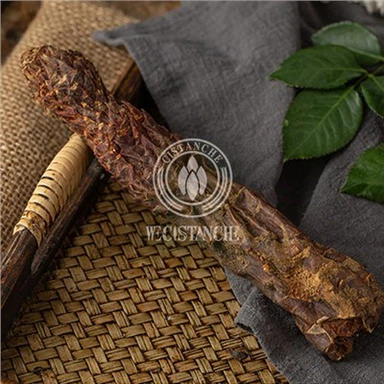
According to relevant studies,cistanche is a common herb that is known as "the miracle herb that prolongs life". Its main component is cistanoside, which has various effects such as antioxidant, anti-inflammatory, and immune function promotion. The mechanism between cistanche and skin whitening lies in the antioxidant effect of cistanche glycosides. Melanin in human skin is produced by the oxidation of tyrosine catalyzed by tyrosinase, and the oxidation reaction requires the participation of oxygen, so the oxygen-free radicals in the body become an important factor affecting melanin production. Cistanche contains cistanoside, which is an antioxidant and can reduce the generation of free radicals in the body, thus inhibiting melanin production.

Click On Cistanche bienfaits For Whitening
For more info:
david.deng@wecistanche.com WhatApp:86 13632399501
Keywords: plumbagin; melanogenesis; pigmentation; tyrosinase
1. Introduction
Melanin consists of a group of pigments synthesized in epidermal melanocytes that plays an important role in defending skin against ultraviolet (UV) radiation damage [1]. Abnormal melanogenesis, either increased or decreased production of melanin, is closely associated with several skin diseases including melanoma and the pigmentation disorders, such as chloasma and freckles [2,3]. The biosynthesis of melanin is initiated by multiple stimuli including UV irradiation, inflammatory cytokines, and hormonal signaling. Specifically, α-melanocyte stimulating hormone (α-MSH) released from UV-exposed keratinocytes can stimulate melanin biosynthesis in epidermal melanocytes by activating the cAMP-PKA-CREB (cyclic adenosine monophosphate-protein kinase A-cAMP response element binding protein) axis [3]. The activated cAMP-PKA-CREB axis leads to an increase in mRNA encoding microphthalmia-associated transcription factor (MITF). MITF increases the gene expression of tyrosinase (TYR), tyrosinase-related protein 2 (TYRP1), and tyrosinase-related protein 2 (TYRP2) upon α-MSH stimulation in melanocytes [3,4]. In addition, many signaling pathways that control cell growth, including mitogen-activated protein kinases (MAPKs), extracellular response kinase (ERK), and AKT, are essential to melanogenesis by regulating MITF stability and activity [5].

The enzyme tyrosinase, a multifunctional copper-containing oxidase, plays an essential role in melanin biosynthesis by catalyzing the reactions in which L-tyrosine is hydroxylated to L-dihydroxyphenylalanine (L-DOPA) and L-DOPA is oxidized into o-quinone (dopaquinone) [5,6]. Therefore, some tyrosinase inhibitors also inhibit melanin biosynthesis, and these include resveratrol, arbutin, and honokiol, which have all been used in skin-whitening cosmetic applications [7].
Plumbagin is a simple hydroxyl-naphthoquinone, that was first extracted from the roots of the Plumbago genus of plants and has been shown to have remarkable medicinal properties [8]. Anti-inflammatory, anti-cancer, anti-allergic, and antibacterial activities of plumbagin have been reported [8,9]. Indeed, it has been reported that plumbagin inhibits neutrophil activation, angiogenesis, and collagenase expression by suppressing topoisomerase-II, suggesting the use of plumbagin as a potential drug in the treatment of rheumatoid arthritis [10]. In addition, several reports have shown that plumbagin exhibits anti-cancer activity in multiple types of cancer, including breast [11], prostate [12], ovarian [13], lung [14], skin carcinoma [15], and liver cancer [16]. Although it is becoming clear that plumbagin may be useful as a therapeutic intervention in the treatment of various human diseases, the inhibitory effect of plumbagin on melanogenesis linked to hyperpigmentation has never been reported.

2. Results
2.1. Chemical Structure and Cytotoxic Effects of Plumbagin in B16F10 Mouse Melanoma Cells
Before studying the anti-melanogenic effects of plumbagin, we first assessed its toxicity in melanin-producing B16F10 mouse melanoma cells. The chemical structure of plumbagin is shown in Figure 1A. The results of our cytotoxicity assay wherein plumbagin concentrations less than 5 µM did not affect cell viability in B16F10 cells are shown in Figure 1B.

2.2. Plumbagin Suppresses α-MSH-Induced Melanin Synthesis in B16F10 Mouse Melanoma Cells
We next investigated the inhibitory effects of plumbagin on α-melanocyte stimulating hormone (α-MSH)-induced melanin synthesis in B16F10 cells. We demonstrated that plumbagin strongly suppresses α-MSH-induced melanin accumulation in a cultured medium of B16F10 cells (Figure 2A). To confirm the inhibitory effect of plumbagin on α-MSH-induced melanin synthesis, we determined the extracellular or intracellular melanin content in the absence or presence of plumbagin in α-MSH-stimulated B16F10 cells. Figures 2B, and C show that plumbagin significantly decreases extracellular and intracellular melanin content.

2.3. Plumbagin Does Not Regulate α-MSH-Induced Melanogenesis Gene Expression and Signal Transduction Cascades
Because microphthalmia-associated transcription factor (MITF) is an essential transcription factor that regulates melanogenesis-associated gene expression through the α-MSH-PKA-CREB axis, we investigated whether plumbagin could regulate MITF-mediated gene expression associated with melanogenesis. First, we determined a time point of maximal melanogenesis gene expression for MITF, tyrosinase (TYR), and tyrosinase-related protein 1 (TYRP1) under α-MSH stimulation. MITF is strongly upregulated after α-MSH treatment for 2 h (Figure 3A). TYR and TYRP1 were dramatically upregulated after 48 h of α-MSH treatment (Figure 3A). MITF and tyrosinase protein levels increased in response to α-MSH treatment and were not suppressed by the plumbagin treatment (Figure 3B). Consistently, plumbagin did not inhibit MITF, TYR, and TYRP1 mRNA levels after α-MSH stimulation, suggesting that plumbagin does not regulate the transcriptional machinery related to melanogenesis gene expression in B16F10 cells (Figure 3C). Because phosphorylation and activation of AKT, ERK1/2, and CREB (major signal transduction cascades that regulate melanogenesis) are required for melanogenesis [3], we further investigated whether plumbagin regulates these melanogenesis-associated signal transduction pathways. Our results, described in Figure 3D, show that plumbagin does not alter AKT, ERK1/2, or CREB signaling after α-MSH treatment.

2.4. Plumbagin Inhibits Tyrosinase Activity
Because it is clear that direct or indirect tyrosinase-inhibiting natural products could be useful for the development of skin-whitening cosmetics, we next investigated the inhibitory effect of plumbagin on tyrosinase enzyme activity. In this study, we demonstrated that plumbagin significantly suppresses α-MSH-induced cellular tyrosinase enzymatic activity in B16F10 cells (Figure 4A). To understand whether plumbagin inhibits tyrosinase activity directly or indirectly, cell-free tyrosinase activity was measured. Plumbagin strongly inhibits the L-DOPA oxidation activity of mushroom-derived tyrosinase as well, suggesting that plumbagin suppresses melanogenesis by directly inhibiting tyrosinase activity (Figure 4B). In addition, signifificant elevation in radical scavenging activities using a 1,1-diphenyl-2-picrylhydrazyl (DPPH) assay was observed in samples treated with vitamin C and plumbagin at concentrations ranging from 0.1 to 5 mg/mL. Consequently, 5 mg/mL of plumbagin exhibited a similar effect on radical scavenging activity to those of 0.1 mg/mL of vitamin C (Figure 4C).

2.5. Plumbagin Is Not Toxic in Normal Keratinocytes and Lens Epithelial Cells
Because cosmetics such as skin cream are for external use and cytotoxicity could cause skin problems, we further investigated whether plumbagin is toxic to normal keratinocytes (HaCaT) and lens epithelial cells (B3) and whether it may be useful for the development of skin-whitening cosmetics. Consequently, we found that lower plumbagin concentrations (1–5 µM) do not cause toxicity in HaCaT and B3 cells, but are effective in the inhibition of melanin synthesis (Figure 5A). In addition, plumbagin did not induce DNA damage-related γH2AX and reduce cellular apoptosis-related poly (ADP-ribose) polymerase (PARP) and caspase-3 proteins in HaCaT and B3 cells (Figure 5B), suggesting that plumbagin may be acceptable for use in skin-whitening products without exhibiting any dermal toxicity

For more info: david.deng@wecistanche.com WhatApp:86 13632399501