Plumbagin Suppresses α-MSH-Induced Melanogenesis in B16F10 Mouse Melanoma Cells By Inhibiting Tyrosinase Activity Part 2
May 09, 2023
3. Discussion
Plumbagin is a plant-derived secondary metabolite and shows several biological functions, including anti-inflammatory, anti-cancer, anti-allergic, and antibacterial activities [8,9]. However, it was not known whether plumbagin had an inhibitory effect on melanogenesis linked to hyperpigmentation and melanoma. In this study, we demonstrated that plumbagin strongly suppresses melanogenesis in B16F10 melanoma cells, and this work could provide an opportunity for developing skin-care cosmetics based on the anti-inflammatory, anti-allergic, antibacterial, and anti-melanogenesis activities of plumbagin.
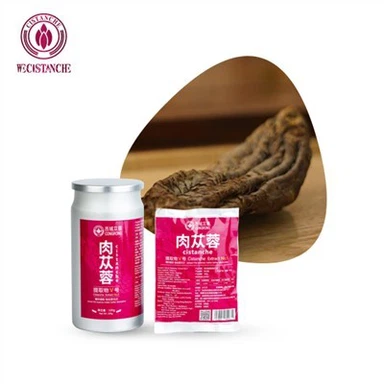
According to relevant studies,cistanche is a common herb that is known as "the miracle herb that prolongs life". Its main component is cistanoside, which has various effects such as antioxidant, anti-inflammatory, and immune function promotion. The mechanism between cistanche and skin whitening lies in the antioxidant effect of cistanche glycosides. Melanin in human skin is produced by the oxidation of tyrosine catalyzed by tyrosinase, and the oxidation reaction requires the participation of oxygen, so the oxygen-free radicals in the body become an important factor affecting melanin production. Cistanche contains cistanoside, which is an antioxidant and can reduce the generation of free radicals in the body, thus inhibiting melanin production.

Click On Rou Cong Rong Benefits For Whitening
For more info:
david.deng@wecistanche.com WhatApp:86 13632399501
Because upregulation of melanogenesis is often observed in malignant melanoma with overexpressed tyrosinase levels in the blood as well as tumor tissues, it is apparent that melanogenesis is a potential target for chemotherapy of malignant melanomas [1]. In the present study, we found that plumbagin directly suppresses tyrosinase activity independent of the transcriptional machinery associated with melanogenesis (Figure 6). Therefore, our results suggest that plumbagin may be a potential component of a preventive and therapeutic strategy for the management of malignant melanoma. Indeed, the anti-melanoma, chemosensitizing, and radiosensitizing effects of plumbagin on melanoma therapy have been reported [17–21].

In previous studies dealing with the anti-cancer and anti-inflammatory effects of plumbagin, approximately 5–10 µM of plumbagin (higher than the concentration used in this study) has been used in in vitro models [17,22,23]. Therefore, we investigated the toxic effect of plumbagin in proliferative cells, including normal keratinocytes (HaCaT) and lens epithelial cells (B3), that can be damaged by skin-care cosmetics. Our results demonstrated that lower concentrations, approximately 0.5–1 µM of plumbagin, are not toxic to normal keratinocytes and lens epithelial cells, but are effective enough to reduce tyrosinase activity and melanin synthesis. In addition, we also found that plumbagin more effectively suppresses melanogenesis than 1 mM arbutin or 0.2 mM kojic acid, which is well-known skin-whitening agents. These results suggest that plumbagin is safe for use as a component for developing skin-whitening cosmetics.
In the present study, we studied the inhibitory effects of plumbagin on the tyrosinase enzyme reaction using cellular and cell-free tyrosinase activity assays based on L-DOPA oxidation. Nevertheless, we did not suggest a precise molecular mechanism as to how plumbagin inhibits tyrosinase activity. This mechanism should be further investigated to determine whether plumbagin directly interacts with tyrosinase and inhibits its oxidase activity or whether it has indirect effects that lead to decreased tyrosinase activity.
4. Materials and Methods
4.1. Reagents and Antibodies
Plumbagin, α-MSH (M4135), arbutin (A4256), kojic acid (K3125), L-DOPA (333786), and tyrosinase (T3824) purified from mushrooms were purchased from Sigma-Aldrich (St. Louis, MO, USA). Antibodies against MITF (#12590), p-AKTS473 (#4060), p-AKTT308 (#13038), p-CREB (#9198), p-ERK1/2 (#4370), ERK1/2 (#9102), γH2AX (#9718), PARP (#5625), and caspase-3 (#9665) were purchased from Cell Signaling Technology (Danvers, MA, USA). Tyrosinase (sc-7833), and β-tubulin (sc-9104) were purchased from Santa Cruz Biotechnology (Dallas, TX, USA).

4.2. Cell Culture and Cell Viability Assay
4.3. Immunoblotting
4.4. Measurement of Intracellular and Extracellular Melanin Content
Melanin content was determined and quantified using a previously described method with slight modification [2,24]. For melanin content analysis, B16F10 cells were cultured in phenol red-free DMEM containing 10% fetal bovine serum. B16F10 cells were cultured with α-MSH treatment in the absence or presence of plumbagin for 3 or 4 days. The cultured cells or media were harvested and pellets were dissolved in 1N NaOH containing 10% DMSO at 80 ◦C for 1 h. The melanin content was measured using an absorbance reader at 475 nm (OD475), and melanin content was then normalized to the cellular protein concentration.

4.5. RNA Isolation and Quantitative RT-PCR
4.6. Cellular Tyrosinase Activity Assay
Cellular tyrosinase activity was determined using a previously described method with modification [25,26]. Cultured B16F10 cells were incubated with α-MSH in the absence or presence of plumbagin, and cells were then washed and lysed with PBS containing 1% sodium deoxycholate and 0.5% Triton X-100. After the protein concentration was determined, 50 µg of protein was incubated with 2.0 mM L-DOPA and 0.1 M PBS (pH 6.8) for 1 h at 37 ◦C. The oxidation of L-DOPA was measured at 475 nm (OD475) using an absorbance reader. The activity was measured using the following formula: tyrosinase activity (%) = (OD475 of sample/OD475 of control) × 100.
4.7. Cell-Free Tyrosinase Activity Assay
4.8. DPPH Radical Scavenging Activity Assay
4.9. Statistical Analysis
5. Conclusions
The major findings of this study are that plumbagin (i) suppresses α-MSH-induced melanin synthesis by inhibiting tyrosinase activity; (ii) does not affect the MITF-linked transcriptional machinery and signal transduction cascades including AKT and ERK1/2 activation associated with melanogenesis; and (iii) does not cause toxicity in normal keratinocytes (HaCaT) and lens epithelial (B3) cells when its concentration was less than 5 µM. Taken together, plumbagin abrogates α-MSH-induced melanin synthesis by inhibiting tyrosinase activity independent of the CREB-MITF transcriptional axis. These results, therefore, suggest a promising and safe natural product plumbagin for decreasing hyperpigmentation by using it in the development of skin-whitening cosmetics.

Abbreviations
References
1. Riley, P.A. Melanogenesis and melanoma. Pigment Cell Res. 2003, 16, 548–552. [CrossRef] [PubMed]
2. Bae, J.S.; Han, M.; Yao, C.; Chung, J.H. Chaetocin inhibits IBMX-induced melanogenesis in B16F10 mouse melanoma cells through activation of ERK. Chem. Biol. Interact. 2016, 245, 66–71. [CrossRef] [PubMed]
3. D’Mello, S.A.; Finlay, G.J.; Baguley, B.C.; Askarian-Amiri, M.E. Signaling pathways in melanogenesis. Int. J. Mol. Sci. 2016. [CrossRef] [PubMed]
4. Kim, H.J.; Yonezawa, T.; Teruya, T.; Woo, J.T.; Cha, B.Y. Nobiletin, a polyethoxy flavonoid, reduced endothelin-1 plus SCF-induced pigmentation in human melanocytes. Photochem. Photobiol. 2015, 91, 379–386. [CrossRef] [PubMed]
5. Kang, S.J.; Choi, B.R.; Lee, E.K.; Kim, S.H.; Yi, H.Y.; Park, H.R.; Song, C.H.; Lee, Y.J.; Ku, S.K. Inhibitory effect of dried pomegranate concentration powder on melanogenesis in B16F10 melanoma cells; involvement of p38 and PKA signaling pathways. Int. J. Mol. Sci. 2015, 16, 24219–24242. [CrossRef] [PubMed]
6. Kim, J.W.; Kim, H.I.; Kim, J.H.; Kwon, O.C.; Son, E.S.; Lee, C.S.; Park, Y.J. Effects of ganodermanondiol, a new melanogenesis inhibitor from the medicinal mushroom Ganoderma lucidum. Int. J. Mol. Sci. 2016, 17, 1798. [CrossRef] [PubMed]
7. Tsao, Y.T.; Huang, Y.F.; Kuo, C.Y.; Lin, Y.C.; Chiang, W.C.; Wang, W.K.; Hsu, C.W.; Lee, C.H. Hinokitiol inhibits melanogenesis via AKT/mTOR signaling in B16F10 mouse melanoma cells. Int. J. Mol. Sci. 2016, 17, 248. [CrossRef] [PubMed]
8. Padhye, S.; Dandawate, P.; Yusufifi, M.; Ahmad, A.; Sarkar, F.H. Perspectives on medicinal properties of plumbagin and its analogs. Med. Res. Rev. 2012, 32, 1131–1158. [CrossRef] [PubMed]
9. Gupta, S.C.; Kim, J.H.; Prasad, S.; Aggarwal, B.B. Regulation of survival, proliferation, invasion, angiogenesis, and metastasis of tumor cells through modulation of inflammatory pathways by nutraceuticals. Cancer Metastasis Rev. 2010, 29, 405–434. [CrossRef] [PubMed]
10. Jackson, J.K.; Higo, T.; Hunter, W.L.; Burt, H.M. Topoisomerase inhibitors as anti-arthritic agents. Inflflamm. Res. 2008, 57, 126–134. [CrossRef] [PubMed]
11. Ahmad, A.; Banerjee, S.; Wang, Z.; Kong, D.; Sarkar, F.H. Plumbagin-induced apoptosis of human breast cancer cells is mediated by inactivation of NF-κB and Bcl-2. J. Cell. Biochem. 2008, 105, 1461–1471. [CrossRef] [PubMed]
12. Aziz, M.H.; Dreckschmidt, N.E.; Verma, A.K. Plumbagin, a medicinal plant-derived naphthoquinone, is a novel inhibitor of the growth and invasion of hormone-refractory prostate cancer. Cancer Res. 2008, 68, 9024–9032. [CrossRef] [PubMed]
13. Thasni, K.A.; Rakesh, S.; Rojini, G.; Ratheeshkumar, T.; Srinivas, G.; Priya, S. Estrogen-dependent cell signaling and apoptosis in BRCA1-blocked BG1 ovarian cancer cells in response to plumbagin and other chemotherapeutic agents. Ann. Oncol. 2008, 19, 696–705. [CrossRef] [PubMed]
14. Gomathinayagam, R.; Sowmyalakshmi, S.; Mardhatillah, F.; Kumar, R.; Akbarsha, M.A.; Damodaran, C. Anticancer mechanism of plumbagin, a natural compound, on non-small cell lung cancer cells. Anticancer Res. 2008, 28, 785–792. [PubMed]
15. Wang, C.C.; Chiang, Y.M.; Sung, S.C.; Hsu, Y.L.; Chang, J.K.; Kuo, P.L. Plumbagin induces cell cycle arrest and apoptosis through reactive oxygen species/c-Jun N-terminal kinase pathways in human melanoma A375.S2 cells. Cancer Lett. 2008, 259, 82–98. [CrossRef] [PubMed]
16. Shih, Y.W.; Lee, Y.C.; Wu, P.F.; Lee, Y.B.; Chiang, T.A. Plumbagin inhibits invasion and migration of liver cancer HepG2 cells by decreasing productions of matrix metalloproteinase-2 and urokinase-plasminogen activator. Hepatol. Res. 2009, 39, 998–1009. [CrossRef] [PubMed]
17. Anuf, A.R.; Ramachandran, R.; Krishnasamy, R.; Gandhi, P.S.; Periyasamy, S. Antiproliferative effects of Plumbago rosea and its purified constituent plumbagin on SK-MEL 28 melanoma cell lines. Pharmacogn. Res. 2014, 6, 312–319.
18. Gowda, R.; Sharma, A.; Robertson, G.P. Synergistic inhibitory effects of celecoxib and plumbagin on melanoma tumor growth. Cancer Lett. 2017, 385, 243–250. [CrossRef] [PubMed]
19. Li, J.; Shen, Q.; Peng, R.; Chen, R.; Jiang, P.; Li, Y.; Zhang, L.; Lu, J. Plumbagin enhances TRAIL-mediated apoptosis through up-regulation of death receptor in human melanoma A375 cells. J. Huazhong Univ. Sci. Technol. Med. Sci. 2010, 30, 458–463. [CrossRef] [PubMed]
20. Nair, S.; Nair, R.R.; Srinivas, P.; Srinivas, G.; Pillai, M.R. Radiosensitizing effects of plumbagin in cervical cancer cells is through modulation of the apoptotic pathway. Mol. Carcinog. 2008, 47, 22–33. [CrossRef] [PubMed]
21. Prasad, V.S.; Devi, P.U.; Rao, B.S.; Kamath, R. Radiosensitizing effect of plumbagin on mouse melanoma cells grown in vitro. Indian J. Exp. Biol. 1996, 34, 857–858. [PubMed]
22. Li, Y.C.; He, S.M.; He, Z.X.; Li, M.; Yang, Y.; Pang, J.X.; Zhang, X.; Chow, K.; Zhou, Q.; Duan, W.; et al. Plumbagin induces apoptotic and autophagic cell death through inhibition of the PI3K/Akt/mTOR pathway in human non-small cell lung cancer cells. Cancer Lett. 2014, 344, 239–259. [CrossRef] [PubMed]
23. Checker, R.; Sharma, D.; Sandur, S.K.; Khanam, S.; Poduval, T.B. Anti-inflammatory effects of plumbagin are mediated by inhibition of NF-κB activation in lymphocytes. Int. Immunopharmacol. 2009, 9, 949–958. [CrossRef] [PubMed]
24. Kim, B.; Lee, S.H.; Choi, K.Y.; Kim, H.S. N-Nicotinoyl tyramine, a novel niacinamide derivative, inhibits melanogenesis by suppressing MITF gene expression. Eur. J. Pharmacol. 2015, 764, 1–8. [CrossRef] [PubMed]
25. Lee, H.Y.; Jang, E.J.; Bae, S.Y.; Jeon, J.E.; Park, H.J.; Shin, J.; Lee, S.K. Anti-melanogenic activity of Gauguin D, a highly oxygenated diterpenoid from the marine sponge Phorbas sp., via modulating tyrosinase expression and degradation. Mar. Drugs 2016, 14, 212. [CrossRef] [PubMed]
26. Winder, A.J.; Harris, H. New assays for the tyrosine hydroxylase and DOPA oxidase activities of tyrosinase. Eur. J. Biochem. 1991, 198, 317–326. [CrossRef] [PubMed]
For more info: david.deng@wecistanche.com WhatApp:86 13632399501