Progress In Diagnosis And Treatment Of Primary Chronic ConstipationⅡ
Aug 28, 2023
3. Pathophysiology of primary chronic constipation
Primary chronic constipation is often associated with disturbed bowel movements or dysfunction of the coordinated contraction of the pelvic floor muscles during defecation. Intestinal motility disorders can be divided into two categories: NTC and STC according to the 72-h marker excretion rate in the colonic transit experiment.

1. NTC: In the colonic transport experiment, the 72 h marker excretion rate of NTC was >80% [6]. Although NTC is the most prevalent subtype in primary chronic constipation, its pathophysiology remains unclear. Colonic dysmotility occurs not only in STC but also in NTC. Therefore, the relationship between colonic motility and colonic transit is unclear. Like other functional gastrointestinal diseases, the etiology of NTC may also be affected by diet, lifestyle, behavioral and psychological factors, etc.
2. Rectal emptying disorder: usually due to anatomical factors (such as rectocele, anal stenosis, rectal prolapse) or anorectal dysfunction. Defecation dyssynergia is the most common type of rectal emptying disorder. Most patients cannot coordinate the abdominal, rectal, anal, and pelvic floor muscles when attempting to defecate. This incoordination manifests as a paradoxical contraction of the anus, insufficient anal relaxation, or impaired rectal or abdominal propulsion. Defecation dyssynergia is an acquired bowel behavior disorder. In two-thirds of adult patients, it is caused by incorrect toileting habits, painful defecation, back injury, or dysfunction of the brain-gut axis [7]. In patients with defecation dyssynergia, afferent anorectal-evoked neuronal potentials were impaired and improved after biofeedback therapy, suggesting that impairment of the brain-gut axis may be a key mechanism.
3. STC: STC may be due to delayed transmission of stool due to underlying myopathy (colonic smooth muscle dysfunction) or neuropathy. As the course of the disease progresses, more severe symptoms tend to appear, especially in female patients. Several physiological and histochemical findings have been used to explain slow colonic transit, such as decreased cholinergic effects, enhanced adrenergic effects, decreased gastroenteric reflexes, rectosigmoid motility dyssynergia, myenteric plexus ganglia, and interstitium of Cajal Enteric ganglion degeneration of cells, and abnormalities of intestinal neurotransmitters, such as substance P, pancreatic polypeptide, peptide YY, neuropeptide Y, cholecystokinin, vasoactive intestinal peptide, nitric oxide, and ovarian and adrenal steroid hormones. Studies have shown that delayed emptying and prolonged transit time in patients with STC occur in the ascending colon and transverse colon (usually in the proximal colon) [8]. The pathological examination of the resected colon in patients with severe STC showed that the colon proper nerve and interstitial cells of Cajal were significantly reduced [9]. Although most cases of STC are idiopathic, pelvic plexus injury caused after hysterectomy or childbirth can also be a predisposing factor for STC [10].

4. Diagnosis
The symptoms of chronic constipation are usually non-specific, such as hard stools, incomplete defecation, anorectal blockage, etc. According to the latest diagnostic criteria of Rome IV, the diagnosis of chronic constipation needs to follow the following 5 steps: ① clinical history; ② physical examination; ③ as few laboratory tests as possible; ④ colonoscopy or other examinations; pathophysiological mechanism. Clinicians should first rule out organic diseases that can cause constipation, such as colorectal cancer, which are usually accompanied by some specific alarm signs, including blood in the stool, unexplained weight loss (>10% within 3 months), fever, Family history of colorectal cancer or new symptoms after the age of 50, etc.
(1) Clinical history and physical examination
Constipation can be secondary to a variety of diseases or medications, so identifying the cause of constipation is critical. A detailed medical history should include the duration of symptoms, frequency of bowel movements, associated symptoms such as abdominal pain, bloating, and relief after defecation. In addition, it should also include the amount, shape, thickness, and effort of defecation. Medication history, surgery history, disease history, smoking history, and drug abuse history are also closely related to the occurrence of constipation and should also be included in the medical history.
Digital rectal examination is important in the evaluation of patients with constipation, to rule out a rectal mass or other mechanical cause of obstruction (eg, anal stenosis, rectal prolapse, intussusception), to observe the perineum at rest and during strained defecation, assess Defecation function can also be used in the diagnosis of pelvic floor dysfunction. Studies have shown that the sensitivity of digital rectal examination for diagnosing pelvic floor dysfunction is 75.9%, and the specificity is 87.0% [11].
(2) Laboratory examination
Before diagnosing the subtype of constipation, it is necessary to perform thyroid function or blood calcium tests based on medical history and physical examination to exclude secondary constipation caused by other diseases. Colonoscopy screening should be performed for all patients with alarm signs or age > 50 years old Check to rule out colonic obstructive lesions or inflammatory lesions. Imaging studies such as barium rectal and magnetic resonance defecography are also helpful in diagnosing anorectal dysfunction (coordinated defecation disorder) and anatomical abnormalities.
(3) Anorectal function test
There is considerable overlap in the symptoms expressed between the various subtypes of constipation. In clinical practice, determining the clinical phenotype is not essential, but patients who do not respond to reasonable empiric therapy (e.g., fiber supplementation, osmotic laxatives) should undergo a diagnostic evaluation to identify subtypes of constipation. Identification of subtypes could pave the way for treatment and prognosis, especially in cases where first-line therapy fails.
1. Balloon expulsion test: The balloon expulsion test is simple and reliable, and can be used for the diagnosis of rectal emptying disorders [12]. At the same time, this method has certain limitations, such as failure to distinguish between functional and anatomical causes of rectal emptying impairment, abnormal results requiring additional tests; and normal results not completely exclude pelvic floor muscle contraction coordination disorders.

2. Colonic/anorectal manometry: Conventional anorectal manometry and high-resolution anorectal manometry are physiological methods for assessing resting and contracted anal sphincter tone, recto-anal reflex, rectal sensation, and pressure changes during defecation. Tests to help identify rectal and pelvic floor dysfunction or abnormal rectal sensory thresholds. The anorectal pressure gradient can be used as a useful indicator for diagnosing defecation dyssynergia, but there is a large overlap in all anorectal manometry parameters between constipated patients and healthy volunteers, so the overall diagnostic value of the technique itself is limited [13], and must be combined with clinical indicators (medical history, physical examination). Colonic manometry can measure changes in colonic pressure in a resting state and after stimulation by food and drugs. Patients with slow transit constipation who do not respond well to drug therapy can be considered for colonic manometry. However, due to the difficulty of implementing this method and the differences in intestinal manifestations, there is no exact standard at present, and it is only used as a research tool rather than a clinical examination item.
3. Colonic transit test: Colonic transit test can be detected in many ways, and the most widely used method in clinical practice is the detection of radiopaque markers. The test measures the entire intestinal transit time, not just the colonic transit time, although the latter accounts for the largest proportion of the total intestinal transit time. The simplest and most widely used method in clinical practice is the Hinton method: the patient takes 1 capsule containing 20–24 radiopaque markers on the same day, and then takes 1 abdominal X-ray film on the 5th day. If more than 20% of the marker remains, it can be diagnosed as slow colonic transit; if the residual marker is concentrated in the rectum, it can be diagnosed as outlet obstruction constipation. Relative simplicity, low cost, and wide availability are the most acceptable features of radiopaque marker detection, yet lead to more radiation exposure and additional hospital visits.

Scintigraphy can also be used to measure colonic transit time. This method requires oral administration of radioactive isotopes with longer half-lives such as 111In or 99Tc, and nuclide imaging is performed according to time, to calculate the time for passing through a certain intestinal segment. Although this method can detect the transit time of each segment of the colon, it is expensive and difficult to popularize at this stage.
Another method to detect intestinal transit time is the wireless motion capsule test, which can measure the pH, pressure, and temperature of the whole gastrointestinal tract through a wireless capsule to evaluate intestinal transit function. The capsule was also able to detect the magnitude of the contraction along the GI tract, but not the direction of its propagation. At present, this method has been recommended by American and European gastrointestinal motility and neurology for the detection of colonic transit function [14].
Natural Herbal Medicine For Relieving Constipation-Cistanche
Cistanche is a genus of parasitic plants that belongs to the family Orobanchaceae. These plants are known for their medicinal properties and have been used in Traditional Chinese Medicine (TCM) for centuries. Cistanche species are predominantly found in arid and desert regions of China, Mongolia, and other parts of Central Asia. Cistanche plants are characterized by their fleshy, yellowish stems and are highly valued for their potential health benefits. In TCM, Cistanche is believed to have tonic properties and is commonly used to nourish the kidney, enhance vitality, and support sexual function. It is also used to address issues related to aging, fatigue, and overall well-being. While Cistanche has a long history of use in traditional medicine, scientific research on its efficacy and safety is ongoing and limited. However, it is known to contain various bioactive compounds such as phenylethanoid glycosides, iridoids, lignans, and polysaccharides, which may contribute to its medicinal effects.
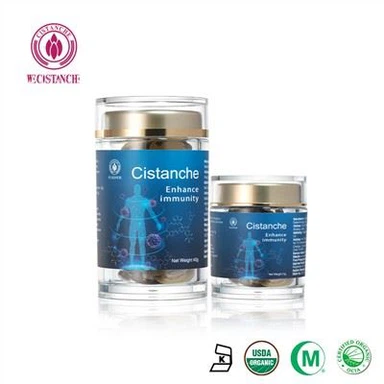
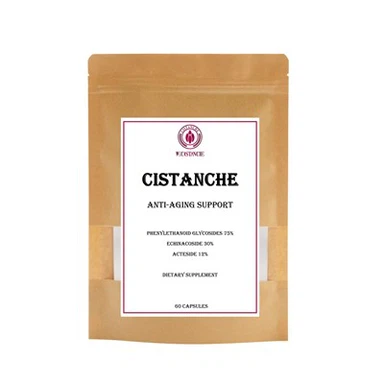
Wecistanche's cistanche powder, cistanche tablets, cistanche capsules, and other products are developed using desert cistanche as raw materials, all of which have a good effect on relieving constipation. The specific mechanism is as follows: Cistanche is believed to have potential benefits for relieving constipation based on its traditional use and certain compounds it contains. While scientific research specifically on Cistanche's effect on constipation is limited, it is thought to have multiple mechanisms that may contribute to its potential to relieve constipation. Laxative Effect: Cistanche has long been used in Traditional Chinese Medicine as a remedy for constipation. It is believed to have a mild laxative effect, which can help promote bowel movements and induce constipation. This effect may be attributed to various compounds found in Cistanche, such as phenylethanoid glycosides and polysaccharides. Moistening the Intestines: Based on traditional use, Cistanche is considered to have moisturizing properties, specifically targeting the Intestines. By promoting hydration and lubrication of the Intestines, it may help soften tools and facilitate easier passage, thereby relieving constipation. Anti-inflammatory Effect: Constipation can sometimes be associated with inflammation in the digestive tract. Cistanche contains certain compounds, including phenylethanoid glycosides and lignans, that are believed to have anti-inflammatory properties. By reducing inflammation in the intestines, it may help improve bowel movement regularity and relieve constipation.