Pathogenesis And Research Progress Of Traditional Chinese Medicine in Treating Hyperuricemia And Related Diseases Ⅱ
Jan 17, 2025
2.4 Kidney system diseases
2.4.1 Modern medical research
Two-thirds of the uric acid in the human body is mainly excreted through the kidneys, which are an important part of uric acid balance. HUA is closely related to the occurrence of a series of diseases such as chronic kidney disease, diabetic nephropathy, and IgA nephropathy. Correspondingly, kidney disease is also a common cause of HUA[41]. HUA causes renal parenchymal damage through the deposition of monosodium urate crystals (MUS). MUS is usually deposited in the renal tubules and renal interstitium. Renal parenchymal damage includes renal vasoconstriction, renal ischemia, and even renal function impairment. In addition, if uric acid stones are formed, it will also cause prerenal damage, resulting in obstruction, water accumulation, infection, and severe bleeding[42].

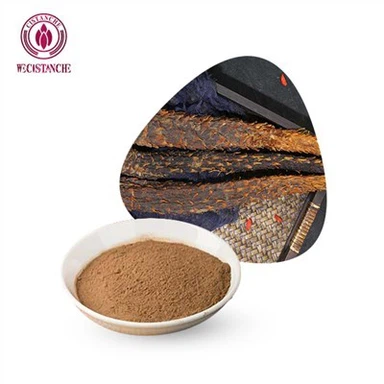
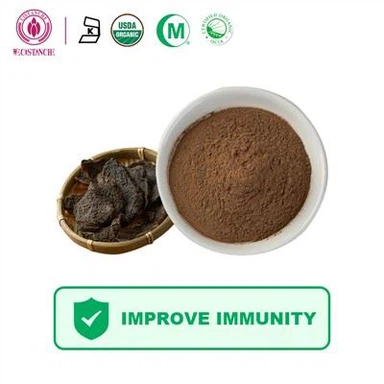
tcm Cistanche For Kidney Disease and High uric acid
2.4.2 Traditional Chinese Medicine Treatment
Traditional Chinese medicine believes that the pathogenesis of hyperuricemia is root deficiency and superficial excess, and the disorder of qi and blood circulation. It is based on inadequate congenital endowment and spleen and kidney deficiency, and is superficial with dampness and blood stasis. Stasis, dampness, heat and dampness gather to cause the disease. When hyperuricemia is combined with chronic nephritis, the root cause is treated by tonifying the spleen and kidney qi, and the symptoms are treated by activating blood circulation and removing blood stasis, and removing turbidity and toxins. Treatment is based on syndrome differentiation, and both the symptoms and the root cause are treated [43].

In the treatment of hyperuricemia and renal injury, the pathogenesis is mainly blood stasis, internal dampness and heat, spleen deficiency and kidney deficiency. The main treatment methods are to resolve phlegm and reduce turbidity, activate blood circulation and remove blood stasis, and tonify the kidney and replenish qi [44]. The basic principles of medication are to remove stasis and remove turbidity, tonify the kidney and replenish qi, and correct the root and clear the source. Zheng Yuan et al. [45] found that the stone-clearing, diuretic and stasis-clearing compound can reduce serum uric acid levels, improve renal function, and relieve hyperuricemia and renal function damage. At the same time, based on the method of clearing heat and removing turbidity, activating blood circulation and unblocking collaterals, it was found that Lingyu Qingluo Yin can significantly reduce the blood uric acid level of patients with hyperuricemia and alleviate kidney damage.
In addition, Zhang Xu et al. [46] found that the single Chinese medicine Corydalis extract can also effectively reduce serum uric acid levels and improve renal injury.
In addition, the Chinese Medicine Dictionary points out that kidney tea has the effects of clearing away heat and dampness, relieving stranguria and removing stones. Kidney tea can promote diuresis, remove urinary stones, fight inflammation and bacteria, and has a certain therapeutic effect on chronic renal failure. It can also regulate immunity [47].
2.5 Diabetes
2.5.1 Modern medical research
Research shows that insulin resistance (IR) is involved in the entire process of the occurrence and development of diseases such as HUA, and is the bridge between hyperuricemia and diabetes [48]. IR is caused by a variety of factors that reduce the effectiveness of insulin in the absorption and utilization of glucose. In order to maintain blood sugar stability, the body will compensatory secretion of excessive insulin. Studies by Mou Lin et al. [49] show that the level of human glucose metabolism and serum uric acid levels have a certain corresponding relationship. Factors such as oxidative stress, renal damage and hyperinsulinemia in diabetic patients will affect the excretion of uric acid. Therefore, diabetic patients are more likely to develop HUA.

2.5.2 Treatment with Traditional Chinese Medicine
Diabetes was first recorded in the Yellow Emperor's Classic of Internal Medicine. Ancient books often referred to it as "xiaoke", "xiaolan" and "pilan". Hyperuricemia combined with diabetes was called "xiaoke gout" [50]. The etiology and pathogenesis of "xiaoke gout" are complex and are often related to the internal accumulation of dampness, heat and toxins. Professor Zhao Jinxi believes that long-term unhealthy diet, spicy food, excessive drinking, and middle-aged people with weak spleen and stomach and impaired water and dampness transport function can easily lead to the occurrence of type 2 diabetes combined with hyperuricemia. Phlegm-dampness syndrome is a cause of disease and also a pathological product. It can lead to organ dysfunction, blood circulation obstruction, and the formation of phlegm-dampness, stasis and heat in the body, which in turn leads to the occurrence of the disease [51]. Shao Guanru et al. [50] found that Chinese medicine alone, compound prescriptions, Chinese patent medicine, and external treatment methods all have good effects in treating diabetes and gout. Single Chinese medicines include Gynostemma pentaphyllum, Sophora japonica, Salvia miltiorrhiza, and Rhubarb; prescriptions include Da Chaihu Decoction, Simiao Powder, Ginseng Poria Powder, and Qiwei Baizhu Powder; Chinese patent medicines include Urea Clearing Granules and Tongfeng Ding Capsules. At present, there is also acupoint combination treatment.
Gynostemma pentaphyllum has the effects of clearing away heat and detoxification, replenishing qi and generating essence, calming the nerves, relieving cough, clearing the lungs and removing phlegm. It mainly exerts its hypoglycemic effect by improving insulin resistance, increasing glycogen synthesis and reducing gluconeogenesis, and inhibiting glycosidase activity.
In addition, Gynostemma pentaphyllum increases the concentration of uric acid in urine, increases solubility and promotes uric acid excretion, and relieves kidney damage; on the other hand, it reduces blood uric acid levels by inhibiting uric acid production [52]. Sophora japonica is slightly cold in nature and has the functions of cooling blood and stopping bleeding, clearing the liver and purging fire, and can effectively reduce blood sugar and serum uric acid levels. Danshen has the functions of promoting blood circulation and cooling blood, removing blood stasis, relieving pain, clearing the heart and relieving restlessness, and it can reduce uric acid content by promoting uric acid excretion. Rhubarb has the functions of relieving heat and attacking accumulation, clearing away heat and purging fire, stopping bleeding and detoxifying, removing blood stasis and relieving menstruation, and removing dampness and jaundice. Rhubarb can inhibit renal fibrosis, reduce renal damage and protect renal function by reducing inflammatory reactions[53].

2.6 Polycystic ovary syndrome
2.6.1 Modern medical research
Polycystic ovary syndrome (PCOS) is a common endocrine disorder that is more common in adolescent women. Symptoms fluctuate over time. The clinical features of PCOS include irregular ovulation, excessive androgen secretion, and polycystic ovaries [54]. Zhang Siqi et al. [55] studied the Chinese and Western medicine mechanisms of PCOS combined with hyperuricemia and found that hyperuricemia is the main cause of PCOS. The pathogenesis may be related to the various clinical manifestations and long-term complications of PCOS. Hyperuricemia can promote HUA and affect the short-term and long-term symptoms of PCOS. The two affect each other at multiple levels such as insulin resistance, sex hormone levels, and metabolic levels, thereby accelerating the progression of the disease and having an adverse effect on the prognosis of the disease.
2.6.2 Traditional Chinese medicine treatment
The pathogenesis of hyperuricemia combined with PCOS is internal accumulation of dampness and turbidity, which belongs to the category of "uric acid turbidity", "turbid blood stasis", and "turbid blood stasis disease". Kidney deficiency is the root cause. In the Suwen·Ni Tiao Lun Pian, it is said that "kidney is the foundation of innateness". Kidney essence is transformed into Tiangui, and the internal organs Qi and blood support Chong and Ren. The uterus excretes on time and breeds offspring, which is closely related to the normal functioning of the physiological functions of "kidney Qi-Tiangui-Chong and Ren-Baogong" [56]. PCOS patients can remove blood stasis and turbidity through the promotion effect, and only when the kidney Qi is sufficient can the effect of warming and filling be achieved. Secondly, the liver and kidney have the same origin. If the function is disordered, the flow of Qi and blood will be unfavorable, dampness will stagnate, phlegm and turbidity will accumulate, flow into Chong and Ren, and block the uterus. Phlegm, dampness, turbidity and toxicity are accumulated in the joints, causing blood stasis and arthralgia.

Feng Xiao et al. [57] believed that the cause of PCOS combined with HUA is liver qi stagnation, so the treatment methods of soothing the liver and tonifying the spleen, regulating Qi, removing dampness, and clearing heat should be used to keep the liver qi unobstructed so as to better regulate it. The spleen is responsible for transportation and transformation, and phlegm is generated from the spleen. If the spleen fails to function properly and the middle jiao is weak, transportation and transformation will be blocked, which will cause phlegm to form. Phlegm dampness and blood stasis will block the uterus and increase its volume, accumulating in the ovaries to form "cystic nests" [58]. Xie Pengpeng et al. [59] and Chen Ye [60] found that the Chinese medicine modified Cangfu Daotan Decoction and Heqi Powder are effective in treating PCOS patients.
Polycystic ovary syndrome is caused by kidney deficiency, and the main medicines used are Codonopsis pilosula, Salvia miltiorrhiza, Angelica sinensis, Astragalus membranaceus, Morinda officinalis, and Epimedium. The basic principle of treatment is to treat the symptoms. For kidney deficiency, the kidney should be tonified, for qi stagnation, the spleen should be regulated, and for spleen and stomach smoothness, the qi will be smooth. Similarly, for blood heat and dampness, heat should be cleared and dampness should be removed.
2.7 Non-alcoholic fatty liver disease
2.7.1 Modern medical research
Studies have found that SUA can cause metabolic disorders in the body, including non-alcoholic fatty liver disease (NAFLD)[61]. Studies have shown that serum uric acid levels in human cells are closely related to inflammatory factors[62]. In a liver cell environment with high SUA expression, it is more likely to cause mitochondrial dysfunction and induce lipogenesis, leading to liver fat accumulation[63]. However, whether NAFLD can be treated by lowering SUA levels requires further study.
2.7.2 Traditional Chinese medicine treatment
Zhou Ke et al.[64] found that the common syndrome of HUA and NAFLD is phlegm and blood stasis, and the "different diseases with the same treatment" method can be used. The common pathogenesis is phlegm and blood stasis. The prescriptions and symptoms correspond to each other, and the Chinese medicine prescriptions used are mostly the same. Most of them use blood-activating and stasis-removing drugs, such as Danshen, Rhubarb, and Angelica; dampness-removing and phlegm-removing drugs, such as Poria, Alisma, and Atractylodes.
3 Summary
Hyperuricemia (HUA) is closely related to daily life. With the improvement of living standards, the dietary structure has also been constantly changing. HUA is gradually becoming younger and younger. The prevention and treatment of hyperuricemia requires a comprehensive strategy. For patients who have already developed hyperuricemia, drug treatment is the main method. In traditional Chinese medicine, "arthralgia" and "lijie" are due to spleen and kidney deficiency, dysfunction, qi deficiency and yang weakness, and inability to transport water and dampness, which eventually leads to phlegm, stasis, dampness and turbidity. The main clinical treatment methods are to nourish the liver and kidney, strengthen the spleen and nourish the stomach, remove dampness and stasis, clear heat, promote dampness and turbidity, and activate blood circulation and remove stasis. The efficacy of traditional Chinese medicine in treating hyperuricemia is acceptable, with high safety and few adverse reactions. The overall concept of syndrome differentiation and treatment can better guide clinical medication.
In terms of combined Chinese and Western medicine treatment, diuretics, uric acid synthesis inhibitors, uric acid excretion increasers and other drugs are often used for comprehensive treatment.
In summary, hyperuricemia is closely related to daily life and is very important for the prevention and treatment of hyperuricemia and its related diseases. We should strengthen the diagnosis and treatment of hyperuricemia based on traditional Chinese medicine, symptomatic treatment, further deepen the research on hyperuricemia, formulate reasonable diagnostic standards and treatment plans, strengthen publicity and education, improve the dietary structure of residents, and actively prevent and treat hyperuricemia, which is of great significance for reducing the occurrence and development of hyperuricemia-related diseases.