Research Progress On The Pharmacological Mechanism Of Traditional Chinese Medicine Saponins in The Treatment Of Parkinson's Disease
Dec 20, 2022
Abstract Parkinson's disease (PD) is a neurodegenerative disease caused by multiple factors, which seriously reduces the quality of human life, and there is still a lack of effective treatment drugs. Modern pharmacological studies have shown that saponins extracted from Chinese herbal medicines have significant effects on the treatment of PD, and their mechanisms include inhibiting excessive activation of microglia, regulating neurotransmitters, anti-apoptosis, and anti-oxidative stress. Among them, a variety of saponins in cistanche can mediate and regulate a variety of receptors and pathways, and play anti-PD effects through multiple channels and multiple targets, which has great research prospects. At present, the research on the anti-PD mechanism of saponins mainly focuses on animal experiments, and there is still a lack of effective clinical research and relevant pharmacokinetic experimental research evidence, and there is no research on the high-efficiency chemical components, receptor molecules, and signaling pathways related to pharmacological effects. Systematically summarized, the next step is to start research from the above aspects, in order to provide ideas and references for follow-up clinical research and drug development.
Key words traditional Chinese medicine saponins; Parkinson's disease; oxidative stress; apoptosis; review

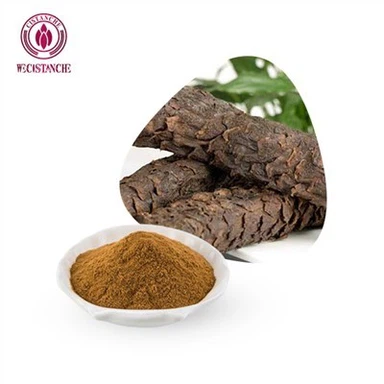
Click to Cistanche bioflavonoids tablets and cistanche for Parkinson's disease
ASK FOR MORE DETAILS:
wallence.suen@wecistanche.com
Parkinson's disease (PD) is a chronic progressive neurodegenerative disease commonly seen in the elderly, characterized by tremor, muscle rigidity, hypokinesia, and dementia [1]. PD affects 6.1 million people worldwide, and more than 1% of people over the age of 65 suffer from this disease, and the prevalence rate is increasing year by year [2]. Relevant data show that the prevalence of PD will double by 2030 [2]. The main diagnostic indicators of PD are the deterioration of dopaminergic (DArgic) neurons and the accumulation of the protein α-synuclein (α-Syn) in the cytoplasm, and the pathogenesis is related to apoptosis, oxidative stress, neuroinflammation, and mitochondrial dysfunction. , neurotransmitter secretion disorders and other factors [3], the current clinical treatment of PD mostly use oral levodopa preparations and other dopamine receptor agonists. Drugs such as levodopa are beneficial to most early PD patients and can achieve the purpose of improving daily activities [4]. However, according to relevant follow-up data, long-term use of levodopa and other preparations will produce many adverse reactions [4], including motor fluctuations, dyskinesias, and neuropsychiatric complications, and the drug efficacy is progressively declining.
Therefore, finding long-term effective PD drugs has become a top priority. Saponins have long been considered as the key components of traditional Chinese medicine, and they exist in a variety of Chinese herbal medicines, such as cistanche, astragalus, yam, Polygala, Anemarrhena, etc. [5]. Saponins are a class of important natural plant products with biological activity, which can be divided into triterpene saponins and steroidal saponins according to the structure of saponins. Substantial evidence has shown that saponins have significant neuroprotective effects on central nervous system (CNS) diseases such as PD, stroke, Alzheimer's disease, and Huntington's disease. Modern botany, pharmacology and network pharmacology studies have shown that saponins in traditional Chinese medicine can inhibit the excessive activation of microglial cells, regulate neurotransmitters, resist apoptosis, resist oxidative stress, and regulate neurotrophy in the process of PD lesions. factors, etc. [6-7]. In this paper, the research on the pharmacological mechanism of traditional Chinese medicine saponins in the treatment of PD is summarized as follows.
1 Saponin for Inhibition of excessive activation of microglia
Glial cells in the CNS are mainly divided into microglia, astrocytes, and oligodendrocytes, which play a role in regulating inflammation, metabolism, regeneration, and myelination of neurons. Microglia have immune functions and secrete pro-inflammatory cytokines, overactivated microglia will increase interleukin (IL)-1α, IL-1β, IL-6, tumor necrosis factor (TNF)-α and activity The secretion of oxygen (ROS) enhances the phagocytic ability of microglia and the infiltration ability of lymphocytes, causes neuronal inflammatory response, further induces apoptosis of DArgic neurons, and finally leads to
To PD[8,6]. Therefore, inhibiting the excessive activation of microglia and reducing the inflammatory response is an important strategy for the treatment of PD. Lipopolysaccharide (LPS) is one of the effective stimulatory factors of macrophages. LPS induces the signal transduction of toll-like receptor 4 (TLR4) to trigger inflammatory response by activating microglia; it can also activate mitogen-activated protein kinase ( MAPKs) and inflammation-related transcription factors, induce the expression and release of inflammatory mediators, such as nitric oxide (NO), ROS and pro-inflammatory cytokines [9]. Studies have confirmed that reducing the phosphorylation of phosphatidylinositol-3 kinase-protein kinase B (PI3K/Akt) can inhibit the activation of nuclear factor (NF)-κB signaling pathway and reduce the generation of ROS, thereby alleviating the inflammatory response of BV2 cells induced by LPS; ROS generation is inversely correlated with heme oxygenase-1 (HO-1), a key factor in the regulation of oxidative stress and inflammatory responses in the peripheral and central nervous systems [10-11].
LEE Y Y et al[12] found that ginsenoside Rg5 can not only inhibit LPS-induced NO production and the secretion of pro-inflammatory factor TNF-α, but also inhibit the phosphorylation of PI3K/Akt and MAPKs, preventing the activation of NF-κB signaling pathway, Reduce the excessive activation of microglial cells; at the same time, ginsenoside Rg5 inhibits the production of ROS by up-regulating the expression of HO-1 in LPS-stimulated BV2 cells, thereby inhibiting the activation of microglial cells, reducing the inflammatory response, and protecting DArgic neurons. LID W et al[13] found that ginsenoside Rb1 may reduce the secretion of inflammatory mediators such as TNF-α and IL-β by inhibiting the activation of NF-κB signaling pathway, and inhibit the excessive activation of microglia induced by LPS. Bisapenosides are aglycones of steroidal saponins, mainly extracted from disco plant and fenugreek seeds. LEE S L et al[14] found that double saponin pretreatment could prevent LPS-induced neurite shortening of tyrosine hydroxylase (TH) positive neurons in midbrain neuron and glial cells, thereby reducing the Expression of TNF-α and inducible nitric oxide synthase (iNOS), inhibited LPS-induced activation of extracellular signal-regulated kinase (ERK), and alleviated inflammatory responses. Polygala saponin is the active ingredient extracted from Polygala. Yuan Huili et al. [15] conducted animal studies and showed that Polygala saponin can significantly inhibit LPS-induced production of inflammatory factors by substantia nigra (SN) microglial cells and reduce the loss of DArgic neurons in SN , thereby improving the behavioral damage of inflammatory PD model rats.

2 Regulating neurotransmitters
Neurotransmitters are the medium of intercellular signal transduction, including amino acids such as glutamic acid, aminobutyric acid (GABA), monoamines such as dopamine (DA), 5-hydroxytryptamine and other neurotransmitters. Neurotransmitter secretion disorders will cause CNS disorders, induced PD and other neurological diseases [16]. Research confirms that
Increasing the expression of GABA transmitters can reduce nerve cell apoptosis, reduce excitotoxicity, inhibit immune inflammation, etc., and play a neuroprotective role [17].
Liu Yan[18] found that ginsenoside Rb1 can block glutamate excitotoxicity in SN striatum and cortical pyramidal system by regulating glutamate transporter GLT-1, and improve 1-methyl-4- benzene
Methyl-1,2,3,6-tetrahydropyridine (MPTP)-induced motor deficits in PD mice, prevents DArgic neuron death, suppresses α-synuclein expression and astrogliosis. LIU Y et al [19] also confirmed that ginsenoside Rb1 can increase and promote the content and transmission of GABA in the prefrontal cortex of mice, so as to alleviate the gait disorder and cognitive impairment in mice induced by MPTP. Typical features of PD are loss of DArgic neurons in the SN and decreased DA levels in the striatum. DA is synthesized in the SN and is an inhibitory neurotransmitter. 1-methyl-4-phenylpyridinium ion (MPP+
) into DArgic neuron cells through DA transporter, and reduce the synthesis of DA by inhibiting the activity of intracellular tyrosine hydroxylase (TH)[20].
TH is the rate-limiting enzyme in DA synthesis and a marker of DArgic neuron survival. When TH is inhibited, DA levels are significantly reduced, and PD symptoms appear clinically. WANG J Y et al[21] found that American ginsenoside-F11 could significantly increase MPP+-induced extracellular DA levels in the striatum of PD rats.
Calming the expression of TH in the SN, improving the degeneration of DArgic neurons in the SN and DA depletion in the striatum, thereby protecting the neurological function of PD patients.
3 Anti-apoptosis
Apoptosis is a pathological process in which various stimulating factors lead to cell death through activation of cell death programs. Apoptosis of DA nerve cells in the midbrain SN and striatum is one of the main reasons for the pathogenesis of PD. During the pathogenesis of PD, due to changes in the internal and external environment of DArgic neurons, some apoptosis-related genes such as cysteine protease-3 (caspase-3), B lymphocyte tumor-2 protein (Bcl-2) and Bcl-2 Related X protein (Bax) induces DArgic neuron death by regulating cell death signaling pathway [22]. Among them, the change of Bcl-2/Bax and the expression of caspase are the key factors of PD
A key marker of apoptosis in neuron cells, Bcl-2 is an anti-apoptotic protein that directly or indirectly protects the integrity of the outer mitochondrial membrane, preventing cell c release and mitochondria-mediated cell damage, and the pro-apoptotic protein Bax It promotes the release of c from mitochondrial cells [23]. Studies have shown that MPTP-induced
In PD mice, the expression of Bax protein is increased and the expression of Bcl-2 is decreased, which leads to the imbalance of Bcl-2/Bax, Bax translocation to mitochondria, causing the increase of mitochondrial colloid osmotic pressure, followed by swelling, outer membrane rupture, release of cell c, and activation of caspase expression, induce neuronal apoptosis [24].
Diosgenin, a steroidal saponin, attenuates MPP+-induced neuronal apoptosis by down-regulating the expression of activated caspase-3 and Bax and increasing the expression of Bcl-2 [25]. Ginsenoside Rg1 not only has the effect of nourishing nerves[26], Chen X C et al.[27] experimental research found that ginsenoside Rg1 can also significantly reduce DA-induced ROS generation and mitochondrial c release in PC12 cells, and reduce iNOS levels and NO produced, thereby reducing neuronal apoptosis. Another study showed that ginsenoside Rg1 can reduce apoptosis and protect DArgic neurons by inhibiting the activation of caspase-3 [28].
Asiaticoside, a triterpenoid saponin isolated from the Chinese herbal medicine Centella asiatica, can significantly slow down the MPTP-induced decline in DA levels in the striatum, increase the Bcl-2/Bax ratio, and inhibit
It can stop the apoptosis of DA nerve cells and effectively reverse the process of PD [29]. Aescin is a triterpenoid saponin from horse chestnut seeds. Studies have confirmed that aescin can protect neurons by inhibiting caspase production, maintaining Bax/Bcl-2 balance, preventing mitochondrial dysfunction and nerve cell apoptosis The role of cells [30]. Caspases are not active under normal conditions. When activated as effectors, caspases generate a cascade reaction and participate in the process of apoptosis [31]. Saikosaponin D is the main active ingredient in the extract of Bupleurum chinensis, a traditional Chinese medicine. Experiments have shown that saikosaponin D can reduce MPP+-induced neuronal apoptosis by inhibiting caspase-3 activity [32].

4 Anti-oxidative stress
Oxidative stress appears in the occurrence and development of many diseases, such as tumors, dementia, PD, etc. The reason is that a large number of free radicals and ROS that are not removed in a timely manner lead to an imbalance in the level of oxides/antioxidants in the body, thereby causing damage between tissue cells. Therefore, alleviating oxidative stress is an important measure to reduce nerve cell damage in PD treatment. Studies have shown that antioxidants and related regulatory pathways such as thioredoxin-1 (Trx-1), catalase, glutathione peroxidase (GPX), glutathione-S-transferase (GST), Janus kinase 2 (JAK2), trans
Recording activator 3 (STAT3), nuclear factor E2-related factor 2 (Nrf2), and HO-1 can all reduce the process of oxidative stress and damage, thereby protecting neurons in patients with PD [33].
Triol saponins (PTS), the main component in cistanche, have been shown to alleviate mitochondria-mediated apoptosis and MPTP by increasing the expression of Trx-1 and inhibiting the overexpression of the oxidative stress factor cyclooxygenase (COX)-2 induced apoptosis in substantia nigra pars compacta (SNc) neurons [34]. Rotenone is a pesticide ingredient enriched in plants, which can diffuse through the blood-brain barrier into the brain and damage nerve cells. Rotenone induces neuronal apoptosis in in vitro and in vivo experimental models
and PD features (i.e., levodopa-responsive motor deficits, SN iron accumulation, and α-Syn accumulation), its mechanism is related to its inhibition of mitochondrial complex I, increasing ROS, and inducing the failure of the ubiquitin-proteasome system, triggering neuronal apoptosis related to mutation [35]. Studies have confirmed that ginsenoside Rd and saponin Re
All of them can significantly inhibit the increase of intracellular ROS and the accumulation of by-product lipid peroxidation caused by rotenone, and enhance the function of glutathione system. The mechanism of action may be related to the activation of Nrf2 signaling pathway. transcription factor, which plays an important role in inducing the body's antioxidant capacity [36]. Han Yingjie[37] proved that after intragastric administration of ginsenoside Rg3 to rotenone-induced PD mice, the number of TH-positive neurons in the substantia nigra of the mice, the average density of TH-positive nerve fibers, and the DA content in the striatum all increased significantly. And the ROS level in SN was significantly reduced; at the same time, ginsenoside Rg3 can improve the motor function of rotenone-induced PD mice by increasing the activity of glutathione cysteine ligase subunit with antioxidant effect. Astragaloside Ⅳ is also known as astragaloside IV. Huang Xiaojing et al. [38] reported that astragaloside Ⅳ plays an anti-oxidative stress role by regulating the JAK2-STAT3 signaling pathway and alleviates MPP+-induced nerve cell damage. pink-1 is a serine/threonine kinase that reduces oxidative stress in mitochondria, and pdr-1 is an E3 enzyme involved in the ubiquitin-mediated proteasome pathway; mutations in pdr-1 lead to endoplasmic reticulum stress Hypersensitivity, the overall reduction of ubiquitination leads to excessive protein aggregation; ubc-12 (ubiquitin coupling enzyme), as an E2 enzyme, binds to ubiquitin molecules through thioester bonds, and activates E3 enzymes for proteasomal degradation[39-40] . Aspartoside is a steroidal saponin. SMITA S S et al. [41] found that aspartoside may up-regulate PD-related genes pdr-1, ubc-12 and pink-1 by utilizing the ubiquitin-mediated proteasome system to alleviate oxidation Stress, and found that aspartoside can reduce intracellular ROS, protein carbonylation-related oxidative damage. Glycolipidin ginsenosides, a derivative isolated from cistanche, have been shown to have neuroprotective effects against various neurological diseases, and the mechanism of action is related to the Nrf2/HO-1 pathway, which regulates SN and striatum in mice in vivo
The expression of inflammatory cytokines, iNOS and apoptosis markers to alleviate oxidative stress can also reduce α-Syn accumulation in SN and striatum [42].

5 Conclusion
Due to the large number of patients and the difficulty of clinical treatment, PD has become a hot spot in international research. Through the induction and combing of the pharmacological mechanism of traditional Chinese medicine saponins in the treatment of PD, it is found that various saponins in cistanche can mediate and regulate various receptors and pathways, and exert anti-PD effects through multiple channels and multiple targets, which has great research prospects. This paper concludes that the mechanism of many saponins in the treatment of PD has not yet carried out effective clinical research, and only stays at the level of animal and in vitro cell experiments. However, the absorption and metabolism of drugs in the human body under pathological conditions are different from animals and in vitro cell experiments. Pharmacokinetics are still unclear and scientific evidence is lacking. In addition, saponins are monomer components of traditional Chinese medicine, and there are various extraction methods. There are problems such as different standards and differences in drug efficacy. The extraction technology and standards need to be further improved. In the future, clinical and pharmacological research can be carried out based on the above deficiencies, in order to provide theoretical support for subsequent clinical applications and new drug development.