Spring Is The Perfect Time To Nourish The Liver, And Cistanche Deserticola Has A Great Effect!
Feb 12, 2025
It is urgent to nourish the liver in spring.
Spring is a season of revival and vitality for all things in nature. In this season, plants and trees sprout, flowers bloom, and the whole world is full of vitality. From the perspective of traditional Chinese medicine health preservation, spring is closely related to the liver in the human body and is the golden period for nourishing the liver.
Traditional Chinese medicine believes that the five organs and six viscera of the human body correspond to the seasonal changes in nature, with spring corresponding to the liver. In spring, the yang energy rises, and all things give birth. The yang energy in the human body also conforms to nature, radiating upwards and outwards. At this time, the liver's function is also most active, just like trees in spring, requiring sufficient nutrients and smooth qi to grow and develop. If you can take good care of your liver in spring, you can lay a solid foundation for a year of health.

Desert living cistanche-Maintaining the liver
The liver, as the largest substantial organ in the human body, can be called the "human chemical factory" and plays an irreplaceable role in maintaining life activities. It undertakes multiple important responsibilities such as metabolism, detoxification, immunity, and coagulation. Take metabolic function as an example, whether it is the food we consume or the various substances produced by the body itself, they all need to be processed by the liver. For example, the liver participates in the metabolism of nutrients such as sugar, protein, and fat, converting them into forms that the human body can utilize to provide energy for the body. Once liver function is impaired, metabolism will become disrupted, leading to various health problems, such as common fatty liver, which is caused by abnormal metabolism of fat in the liver, resulting in fat accumulation in the liver.
The liver is still the body's "detoxification guardian". In daily life, we inevitably come into contact with various harmful substances such as drugs, alcohol, environmental pollutants, etc. After entering the human body, these substances mainly rely on the liver for detoxification. The liver converts harmful substances into non-toxic or low-toxicity substances through a series of complex chemical reactions, and then excretes them from the body, thus protecting our body from harm. If the detoxification function of the liver decreases, toxins will accumulate in the body, damaging various organs, and leading to skin dullness, pigmentation, acne, and digestive system discomfort.
In addition, the liver plays an important role in immunity and coagulation. It is an important component of the human immune system, which can help the body resist the invasion of pathogens and enhance immunity; Meanwhile, the coagulation factors synthesized by the liver play a crucial role in the process of blood clotting, ensuring timely hemostasis in the event of injury bleeding.

Cistanche male benefits-Maintaining the liver
Liver damage, body warning
The liver is a 'silent organ' that lacks pain receptors, so in the early stages of damage, it often does not cause significant pain and is easily overlooked by us. But this does not mean that there is no sign of liver damage the body will send us warning signals through some subtle changes.
When you often feel physically weak and find it difficult to relieve even after sufficient rest, it may be a signal of liver damage. Liver damage can affect metabolism and detoxification functions, leading to insufficient energy supply to the body and making people easily feel tired. Like a malfunctioning engine that cannot provide sufficient power to the entire body, making people feel lethargic all day long.
Bitter mouth is also a common symptom of liver damage. Under normal circumstances, bile is secreted by the liver, stored in the gallbladder, and discharged into the intestine during feeding to help digest fat. When there is a problem with liver function, the excretion of bile will be affected, leading to bile reflux and causing bitterness in the mouth. This bitter taste is often particularly pronounced when waking up in the morning, causing discomfort.
Looking at your nails again, if they become fragile, brittle, and lackluster, it may also be related to liver health. Traditional Chinese Medicine believes that "the liver governs the tendons, and their radiance lies in the claws". Nails are a part of the "tendons", and the adequacy of the liver's qi and blood will be reflected on the nails. When the liver is damaged and qi and blood are insufficient, the nails cannot receive sufficient nutrition supply and become fragile and prone to breakage.
In addition, jaundice of the skin, which refers to yellowing of the skin and sclera, is also an important manifestation of liver damage. This is because the liver plays a crucial role in bilirubin metabolism. When liver function is impaired and there are obstacles in bilirubin metabolism and excretion, it can lead to an increase in bilirubin levels in the blood, resulting in the yellowing of the skin and sclera.
Cistanche deserticola: a treasured herb for nourishing the liver
(1) The mysterious veil of Cistanche deserticola
In the vast and boundless desert, there is a mysterious and precious plant that grows quietly, which is Cistanche deserticola. As a parasitic plant that parasitizes the roots of the desert tree Salix, Cistanche deserticola is extremely picky about its growth environment and often grows in the Gobi Desert, where the climate is extremely dry, the sunshine is strong, and the annual precipitation is less than 250mm. There is a drastic change in temperature and heat, with strong winds and abundant sand. The soil is poorly developed, mostly consisting of medium fine sand that is neutral or slightly alkaline, with high salt content and a lack of organic matter. However, it provides unique conditions for the growth of Cistanche deserticola.
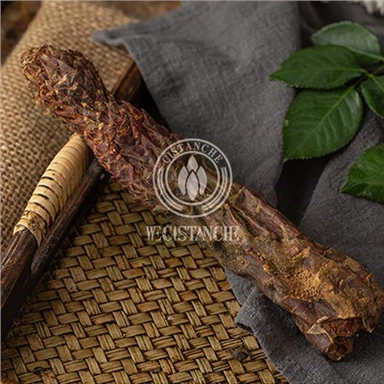
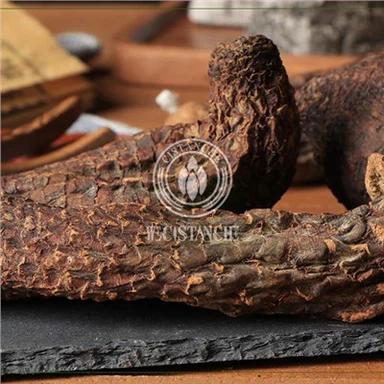
Cistanche deserticola is a tall herbaceous plant, with a plant height of up to 40-160 centimeters, mostly hidden underground. Its stem is fleshy, slightly flattened, or cylindrical, with a lower diameter of up to 5-10 (-15) centimeters, gradually becoming thinner upwards. Its scale-like leaves are pale yellow-white, triangular-ovate, or broadly ovate. They are denser at the lower part of the stem and sparser and narrower at the upper part, appearing lanceolate or narrowly lanceolate. During specific seasons each year, Cistanche deserticola will produce spike-like inflorescences that can grow up to 15-50 centimeters in length and 4-7 centimeters in diameter. The corolla is light yellow and bell-shaped, blooming with a unique beauty in the desert.
Cistanche has a long history of medicinal use and is known as the "desert ginseng". It is a precious traditional Chinese medicinal herb and has been regarded as a nourishing treasure since ancient times, highly valued. In history, various countries in the Western Regions often regarded it as a precious tribute to the imperial court, which shows its preciousness.
(2) Uncovering the principle of liver supplementation with Cistanche deserticola
Modern scientific research has found that Cistanche deserticola is rich in various beneficial active ingredients for the human body, such as polysaccharides, flavonoids, phenylethanoid glycosides, etc. These ingredients endow Cistanche deserticola with powerful liver-nourishing effects.
From the perspective of antioxidants, polysaccharides, and flavonoids in Cistanche deserticola have significant antioxidant effects and can effectively eliminate excessive free radicals in the body. Free radicals are harmful substances produced during human metabolism, which can attack cells, causing cell damage and aging. As an important metabolic organ in the human body, the liver is highly susceptible to the invasion of free radicals. The antioxidant components in Cistanche deserticola are like "scavengers" that can timely eliminate free radicals, reduce their damage to liver cells, and protect the health of liver cells.
In terms of anti-inflammatory effects, studies have shown that certain components in Cistanche deserticola can regulate the expression of inflammation-related factors and inhibit inflammatory responses. When the liver is damaged or infected, it can trigger an inflammatory response, and the persistent presence of inflammation can further damage liver tissue. Cistanche deserticola inhibits inflammatory reactions, reduces the degree of liver inflammation, and creates a favorable environment for liver self-repair.

Benefits of cistanche tubulosa-Maintaining the liver
Cistanche deserticola also can promote liver cell repair and regeneration. Related experiments have shown that the active ingredients in Cistanche deserticola can stimulate the proliferation of liver cells, and promote the repair and regeneration of damaged liver cells. It's like injecting "repair factors" into injured liver cells to enable them to quickly restore normal function, and maintain normal metabolism and physiological activity of the liver.
(3) The unique advantages of eating Cistanche deserticola in spring
Spring is the season for the revival of all things and the rise of yang energy. The body's yang energy also naturally flows upwards and outwards. At this time, the liver function is most active, and the demand for nutrients is more urgent. Cistanche deserticola is warm, sweet, and salty, and belongs to the kidney and large intestine meridians. It has the effects of tonifying kidney yang, nourishing essence and blood, moistening intestines, and promoting bowel movements. When consumed in spring, it can better adapt to the characteristics of rising yang energy and achieve twice the result with half the effort in nourishing the liver.
In spring, liver qi is prone to stagnation, and the warm and moist nature of Cistanche deserticola can help regulate liver qi and promote normal drainage. It is like a gentle 'mediator', making the liver's qi flow smoother and avoiding various discomforts caused by liver qi stagnation. At the same time, the metabolism of the human body accelerates in spring, requiring more energy and nutritional support. Cistanche deserticola is rich in various nutrients, which can provide sufficient nutrients for the liver, enhance liver function, and help the body better adapt to the changes of spring.
Eating Cistanche deserticola has clever ways to nourish the liver
(1) Brewing Tea: A Simple and Convenient Health Preservation Method
Cistanche deserticola tea is a simple and convenient way of health preservation, which is very suitable for busy modern people. You can take 3-5 grams of fresh and dried Cistanche deserticola slices, put them in a cup, brew them with boiling water, and let them steep for 5-10 minutes before drinking. The taste of Cistanche deserticola itself is relatively light, with a hint of sweetness and a mellow texture.
To enhance the liver-nourishing effect, tea can also be brewed with other ingredients. For example, the combination of Cistanche deserticola and goji berries can be considered a classic combination. Goji berries have the effects of nourishing the liver and kidneys, as well as improving vision. When brewed with Cistanche deserticola tea, it can further enhance the kidney and liver nourishing effects. Take 3 grams of Cistanche deserticola and 5-8 goji berries, put them in a cup, and brew with boiling water. Brewed tea has both the richness of Cistanche deserticola and the sweetness of goji berries, with a unique taste. Long-term consumption can effectively improve symptoms such as liver and kidney yin deficiency, dizziness, and vertigo.
The combination of Cistanche deserticola and chrysanthemum is also very good. Chrysanthemum has the effects of clearing heat and detoxifying, clearing the liver, and improving vision. When combined with Cistanche deserticola, it can have the effects of clearing heat and detoxifying, improving vision, and lowering blood pressure. It is suitable for people with symptoms such as excessive heat toxicity, high blood pressure, dizziness, and vertigo. Put 3 grams of Cistanche deserticola and 3-5 chrysanthemums together in a cup, brew with boiling water, and the resulting tea soup is golden and transparent. The fragrance of chrysanthemums blends with the light sweetness of Cistanche deserticola, creating a fresh and pleasant taste. It can nourish the liver and improve eyesight, as well as relieve discomfort caused by strong liver fire in spring.

cistanche powder health benefits
(2) Boiling Congee: a nourishing recipe with full nutrition
Cistanche Congee is not only delicious but also can fully integrate the nutrition of Cistanche into Congee, which is easy to be absorbed by the human body. It is a nourishing recipe with full nutrition. Cistanche japonica rice porridge is simple, but it has an excellent health-preserving effect. Prepare 15 grams of Cistanche deserticola, 100 grams of glutinous rice, and an appropriate amount of water. First, wash the Cistanche deserticola, cut it into thin slices, put it in a clay pot, add an appropriate amount of water, boil for about 30 minutes, filter out the medicine residue, and take the juice for later use. Then wash the japonica rice, put it into a pot, add cistanche juice, add some water, boil it on high fire, turn to low fire, and cook it slowly until the japonica rice is boiled into Congee. The cooked rice porridge with Cistanche deserticola has a pungent aroma and a soft and glutinous taste. It has both the fragrance of japonica rice and the faint medicinal fragrance of Cistanche deserticola.
This Congee is suitable for most people, especially those with insufficient liver and kidney, weak waist and knees, and constipation. For the middle-aged and elderly, often drinking Cistanche rice porridge can nourish the liver and kidneys, strengthen the muscles and bones, and alleviate the symptoms of liver and kidney deficiency due to aging; For office workers, when they face computers for a long time, they are prone to eye fatigue and liver and kidney yin deficiency. Rice porridge with cistanche can play a very good role in conditioning; For female friends, it can also beautify and nourish the skin, making it smoother and more delicate.
(3) Soaking in wine: a way to maintain health in the rich aroma of wine
Soaking Cistanche deserticola in wine is a traditional way of health preservation. Wine can have medicinal properties, and immersing Cistanche deserticola in wine can help enhance its medicinal effects. Prepare 30g Cistanche deserticola and 1000ml Baijiu. Wash Cistanche deserticola, cut it into thin pieces, put it into a clean glass bottle, pour it into Baijiu, and seal the mouth of the bottle. Place the wine bottle in a cool and ventilated place, and shake it every 1-2 days to allow the Cistanche deserticola to fully blend with the wine. After soaking for 7-10 days, the color of the wine gradually darkens, and the effective ingredients of Cistanche deserticola are fully dissolved in the wine. At this point, it can be consumed. The pickled Cistanche wine is golden in color and has a strong aroma, which not only has the mellowness of Baijiu but also has the unique medicinal fragrance of Cistanche.
When drinking Cistanche deserticola wine, it is important to drink in moderation, 15-30 milliliters each time, 2-3 times a day. Do not drink excessively to avoid adverse effects on the body. Pregnant women, children, hypertensive patients, heart disease patients, and other special groups should avoid drinking Cistanche deserticola-infused liquor. In addition, the soaking time of Cistanche deserticola wine should not be too long, usually around 7-10 days, otherwise it may affect the efficacy of the medicine.

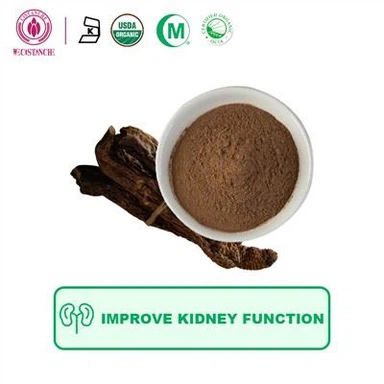
cistanche powder
Click here to view Relieve Physical Fatigue Cistanche products
【Ask for more】 Email:cindy.xue@wecistanche.com / Whats App: 0086 18599088692 / Wechat: 18599088692
Liver Nourishing Action, starting from now on.
Nourishing the liver in spring is an important measure to follow the laws of nature and care for physical health. As the "life factory" of the human body, the health of the liver directly affects our quality of life and overall health. When the liver is damaged, various warning signals issued by the body cannot be ignored, and we must pay attention to them promptly and take effective maintenance measures.
Cistanche deserticola, a precious medicinal herb that grows in the desert, provides a natural boost to our liver health in spring. Its unique growth environment endows it with strong medicinal value, and its rich active ingredients make it play a significant role in antioxidant, anti-inflammatory, and promoting liver cell repair and regeneration. Whether it's making tea, Congee, or wine, Cistanche deserticola can be integrated into our daily life in different ways, injecting endless vitality into the liver.
However, while enjoying the liver-nourishing benefits brought by Cistanche deserticola, we cannot ignore its consumption taboos. Individuals with yin deficiency and excessive fire, as well as loose stools and diarrhea, should consume it with caution. At the same time, they should strictly control the dosage, avoid contact with metal objects, and pay attention to dietary combinations to ensure the safe and effective use of the benefits of Cistanche deserticola.