Studies On Chemical Constituents Of Cistanche Deserticola
Mar 10, 2022
Contact: Audrey Hu Whatsapp/hp: 0086 13880143964 Email: audrey.hu@wecistanche.com
Cistanche deserticola is a valuable Chinese herbal medicine, which has the functions of Tonifying Kidney power, benefiting essence and blood, moistening intestines, etc. Its decoction and alcohol extract can enhance the immune function of Yang deficiency mice (hydrocortisone modeling). We studied its chemical components, isolated two monomers from its n-butanol part, identified them as 8-epibrucine glucoside and mannitol respectively. Fifteen free amino acids were measured.
Keywords: Cistanche deserticola amino acid mannitol 8-epibrucine glucoside

Intro
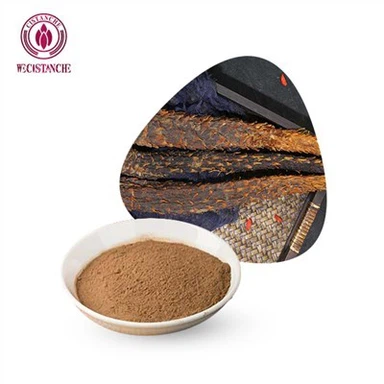
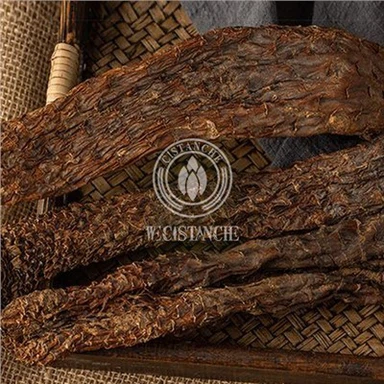
Cistanche deserticola is a valuable Chinese herbal medicine. Synonymous with Cistanche deserticola, goblins, golden bamboo shoots, and Grand Rue. Commonly known as "desert ginseng". It is the dry scaly succulent stem of Cistanche deserticola (Orobanchaceae Plant).
Chinese Pharmacopoeia (1) records the functions of Cistanche are tonifying Kidney Yang, benefiting essence and blood, moistening intestines, and so on. There are Cistanche deserticola in the composition of various classic prescriptions such as the Youyin pill. Yang Guizhen et al. (2) reported that Cistanche deserticola Decoction and alcohol extract can enhance the immune function of Yang deficiency mice (prednisone modeling). The chemical composition was not reported. Kobayashi Hiromi et al. (3) obtained geraniol glucoside and 8-epibrucine Glucoside from the same genus of Cistanche salsa produced in Inner Mongolia.
Fifteen amino acids were determined from Cistanche deserticola (collected in 1982) in Ejina Banner, Gansu Province. Four monomers were isolated by solvent method and silica gel column chromatography, of which two compounds identified were 8-epibrucine (crystal I) and mannitol (crystal II) are summarized as follows.

Experiment
The melting point tester is Kfloer type, nuclear magnetic resonance spectrometer: Type FX-100, H-NMR 100MHz, C-NMR25MHz, mass spectrometer: Type MAT-312, infrared spectrometer: Type 7650, ultraviolet spectrometer: Type 710, and high-speed amino acid analyzer: Japanese Type 835.
1. Extraction and identification of crystal I and crystal II
The slices of the experimental materials were extracted with 95% ethanol under thermal reflux, and the solution was evaporated to remove the solvent. The obtained paste was divided into four solvent parts: petroleum ether, ether, acetic acid, ethyl alcohol, and n-butanol. The n-butanol part was subjected to silica gel column chromatography, eluted with different proportions of CHCl3-MeOH, EtOH, and 50% EtOH, crystal I was obtained from 1:1 chcl_3-MeOH eluent, and crystal II was obtained from 50% EtOH eluent.

Crystal I: colorless needle (Abs. EtOH) mp127-128 ° C (uncorrected)
The naphthol test was positive, and the RF value of the spots of the hydrolyzed mother liquor was consistent with that of the standard glucose. Elemental analysis: the experimental value (%) C46.76, H6.85; the calculated value (%) C46.60, H6.84. Based on the above data, it is consistent with the literature 8-epibrucine glucoside, so it is identified as 8-epibrucine.
Crystal II: colorless acicular crystal (recrystallization in MeOH) mp164-165 ° C (uncorrected) Elemental analysis: experimental value (%) C40.29, H7.67; calculated value (%) C39.56, H7.74 IR is consistent with the standard infrared spectrum of mannitol; crystal II is prepared by a normal method. The colorless square crystal (recrystallization in ethanol) mp124-125 ° C obtained from hexaacetate of mannitol is consistent with the melting point of hexaacetate of mannitol standard, so it is identified as mannitol.

2. Analysis of free amino acids
Take 10g of Cistanche deserticola (chopped and sieved with 40 mesh) and heat extract it three times with 90 mL of 50% ethanol and filter the extract. The filtrate passes through 20g 732 cation exchange resin and is washed with distilled water until there is no sugar reaction in the eluent, and then eluted with 20%NH4OH aqueous solution. Collect the flow with a positive reaction to ninhydrin, concentrate it to 10ml, add sulfosalicylic acid, adjust it to about pH 2.2 with hydrochloric acid, centrifuge to remove the turbidity, dilute the clarified solution with 0.02NHCl for 4 times, and determine it with Japanese Type 835 high-speed amino acid analyzer.

Reference
(1) Pharmacopoeia of the people's Republic of China (Volume I), 1977
(2) Yang Guizhen et al., J. Traditional Chin Med 4 (2); 153, 1984
(3) Kobayashi Hiromi et al: Journal of Pharmacy 103 (5): 509, 1983
(4) Standard Infrared Grating Spectra Volume, 21-22, 21021K, 1971