A Research On The Chemical Constituents Of Cistanche Plants
Apr 12, 2022
For more info. contact tina.xiang@wecistanche.com
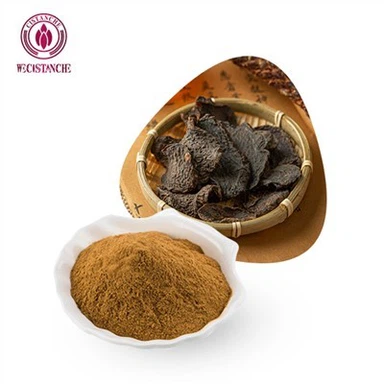
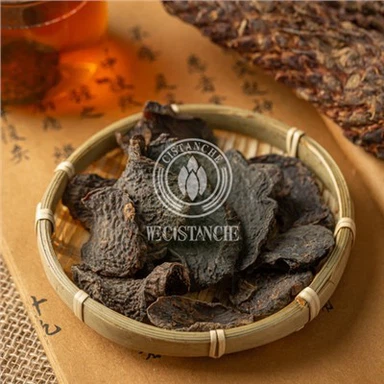
Cistanche (Cistanche Herba ) is the succulent stem of Cistanche with dry scaly leaves in the genus Cistanche of the family O roban2chaceae. It was first recorded in the "Shen Nong's Materia Medica", which was listed as the top grade. After that, there were many records in the classical "Ben Cao Jing Shu", "Ben Cao Hui Yan", and "Yue Hua Zi Materia Medica". Li Shizhen said: "This thing is tonic but not severe, so it has a calmness." Cistanche is sweet, salty, and warm in nature. It has the functions of invigorating kidneys and strengthening yang, filling essence and marrow, nourishing blood and moisturizing dryness, and prolonging life. Constipation, etc. It has been used in our country for more than 2,000 years, and its appearance rate ranks first in the prescriptions of Zengli traditional Chinese medicines, and it ranks second after ginseng in anti-aging and anti-aging prescriptions. Due to the increasing depletion of wild resources of Cistanche, it has been listed as a second-class protected species in my country, and has been included in the "International Wild Plant Protection List". Based on the latest domestic and foreign literature, this paper focuses on the research progress of the resource distribution, chemical constituents, and pharmacological effects of Cistanche deserticola for reference.
Click here to learn more products
1. Cistanche Overview (What is Cistanche)
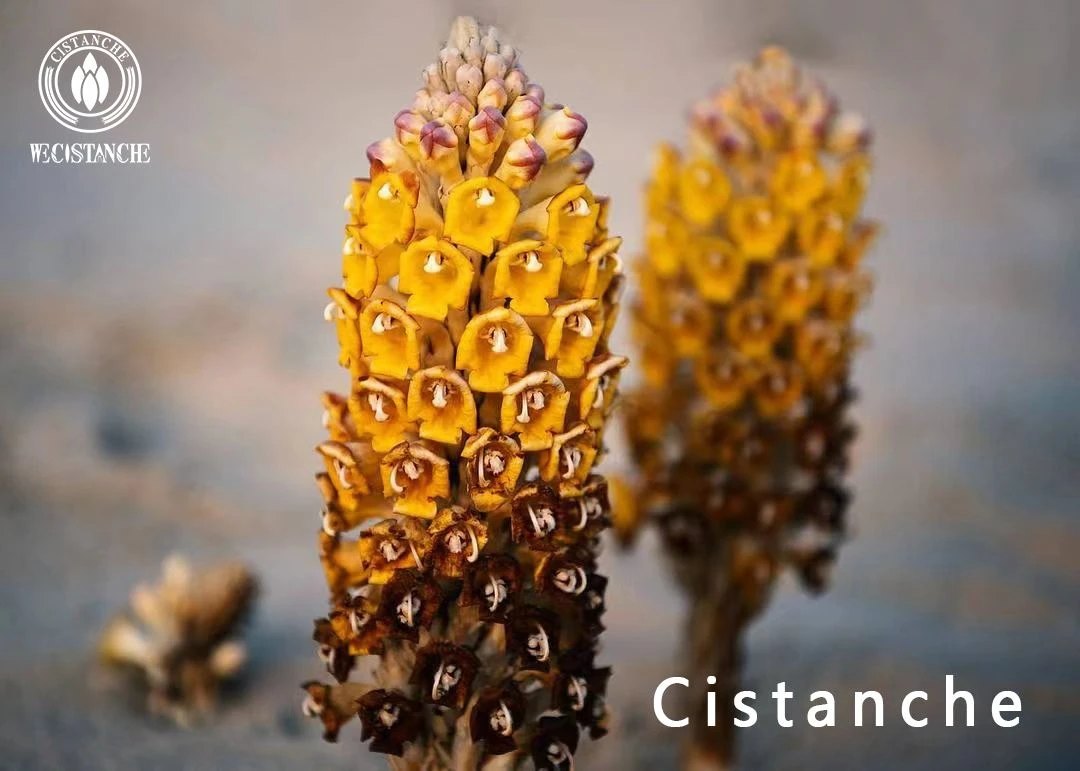
The original Cistanche plant is a parasitic plant of the genus Cistanche in the family Lidanaceae. There are about 20 species in the world, and there are 6 species and 1 variety in my country: Cistanche deserticola Ma. Cistanche tubulosa (Schenk) R. W right, ( tell cistanche deserticola vs tubulosa) Cistanche salted Cistanche salsa (C. A. Mey) G. Beck, Cistanche sinensis G. Beck, Cistanche lanzhouensis Z. Y. Zhang, Cistanche am bigua (Bge. ) G. Beck 6 species and 1 variant Cistanche salsa var. albi2 flor P. F. Tu et Z. C. Lou. Cistanche is mainly grown in saline-alkali land, dry river ditch, sandy land, Gobi, and desert environment. The climate is extremely arid, the sunshine is strong, the annual precipitation is less than 250 mm, the change of cold and heat is severe, the wind is strong and sandy, the soil is poorly developed, and the soil layer is thin. , Coarse texture and lack of organic matter. It has certain cold and drought resistance. It is parasitic on the roots of plants such as red sand, salt claw, leaf-bearing salt claw, pearl, Siberia, etc. It is mainly distributed in my country at 36°-37° north latitude and spans 5 places including Inner Mongolia, Shaanxi, Gansu, Ningxia, and Xinjiang from east to west. province. In addition, Qinghai also has a small amount of distribution. Among them, Inner Mongolia is the first authentic producing area of Cistanche deserticola, with an output of 10 × 104 kg before the 1990s, and Xinjiang was the largest producing area of Cistanche deserticola in the 1990s, with an annual output of C., Chai Dayun) 20 × 104 kg, Qiu Dayun (Southern Xinjiang Dayun, Hongliu Dayun, Guanhua Dayun) 5 × 10⁴ kg. Among the 4 kinds of Cistanche in Xinjiang (Cistanche Milo, Cistanche Salt Raw), Cistanche Cistanche is the symbol of Xinjiang. Ningxia is one of the traditional producing areas of Cistanche deserticola, mainly produced in Zhongwei, Lingwu, and Yanchi counties. The original plants are Cistanche deserticola, Cistanche deserticola, Cistanche salina and Cistanche sand, and Cistanche salt.

2. Chemical composition
Since the 1980s, a lot of research has been done on the chemical components of Cistanche deserticola at home and abroad, among which Japan started earlier. With the rapid development of separation, extraction, and detection technology, various types of substances have been separated, which can be mainly divided into benzene Alcohol glycosides, iridoids, lignans, polysaccharides, and alkaloids, etc.
2.1 phenylethanoid glycosides (PhGs)
The sugar chain part of PhGs is only composed of glucose and rhamnose; the central sugar directly connected to the aglycone is glucose; except for the aminoglycosides, the 3-position of the central glucose is connected with rhamnose; in the triglycerides, the second glucose Connected to the 6-position of the central glucose; phenylacryloyl groups such as caffeoyl, feruloyl or coumaroyl are often connected to the 4 or 6-position of the central glucose. Phenylethanol glycosides are the main active components in Cistanche deserticola and have various functions such as aphrodisiac, anti-oxidation, and memory enhancement. The research on this component is also more in-depth. A total of 22 phenethyl glucosides have been isolated so far, including 1 monoglycoside, 14 glycosides, and 7 triglycerides: 2'-acetylacteoside, 2'- ergosteroside acteoside), cistanoside A, B, C, D, E, G, H ( cistanoside A, B, C, D, E, G, H ), decaffeoylacteoside (decaffeoylacteoside), echinacea (echinaco2 side), isoacteoside, isosyringalide 3'-α-L-rhamnopyranoside, osmanthuside B, salidroside, syringalide A 3'-α-L-rhamnopyr2 anoside, salidroside A, B, C, D, E (tubuloside A, B, C, D, E), crenatoside. Echinacea and ergosteroside are the main components of total phenylethyl alcohol glycosides in Cistanche deserticola, and their contents are 0.10%-0.53% and 0.06%-0.46%, respectively. It has been reported in the literature that the content of echinacoside in the total glucosides of Cistanche deserticola was determined by high-performance liquid chromatography with chlorogenic acid as the internal standard.
2.2 Iridoids and their glycosides
At present, 2 iridoids and 10 iridoid glycosides have been isolated from Cistanches. The iridoid glycosides of the Cistanche genus have the following characteristics: 1-position is connected to glucose; 5, 9-position is β-H; 4-position has some carboxyl groups; 6, 7, 8, or 10 often contain hydroxyl groups, or lose hydroxyl groups to form Double bond or epoxy ether bond. Some scholars conducted a systematic study on C. salsa produced in Inner Mongolia and obtained 8-epiloganic acid, Mussaenosidea CID, Le2 onuride ( ajugol), and 8-epi-deoxy strychnic acid. , Gluroside, geniposidic acid, Bartsioside, 6-Deoxycatal2 pol, Cistanche, Cistanche chloride, and other compounds. Some scholars have obtained 8 - epistrychnic acid glucoside from C. deserticola. Xu Wenhao et al isolated 8-epistrychnine from C. deserticola.

2.3 Lignans and their glycosides
Some scholars have isolated 1 lignan and 5 lignan glycosides from Cistanche spp., of which 2 are new lignan glycosides. They are: ( + ) - Syringaresinol O - β - D - glucopyrano2 side; L iriodendrin, pinoresinol powder, Rosinol O - β - D - glucoside ( ( + ) - Pinoresinol O -β - D - gluco2 pyranoside) and rosin acid. New lignins were isolated from C. tubulosa: Dehydrodiconiferyl alcoholγ'- O -β - D - gluco2 pyranoside and Dehydrodiconiferyl alcohol 4 '- O - β - Dglucopyranoside.
2.4 Volatile components
Domestic scholars have used GC-MS technology and supercritical fluid extraction technology (SFE) to do a lot of research on the fat-soluble and volatile oil components of Cistanche deserticola, which can be roughly divided into three categories: C16-C28 linear alkanes; three ester compounds The main components are dibutyl phthalate, dibutyl sebacate, and dioctyl phthalate; low molecular weight oxygen- and nitrogen-containing compounds are mainly eugenol, followed by vanillin and isoeugenol, etc. In addition, palmitic acid and linoleic acid were found.
2.5 Other categories
Cistanche also contains phenolic glycosides, monoterpene glycosides, alkaloids, sugars, sugar alcohols, sterols, and other components. Yang Jianhua et al. isolated and identified 7 compounds from artificially cultivated Cistanche saline: β-sitosterol, carotene, β-sitosterol glucoside-3'-O-heptanoate, 8-OH-geraniol-1 -β-D-glucoside, 2-hydroxymethyl-5-OH-pyridine, betaine, galactitol. These compounds were isolated from the artificially cultivated Cistanche salina for the first time. It was isolated from this plant for the first time, and 2-hydroxymethyl-5-OH-pyridine was obtained from this genus for the first time. Chen Xiaodong et al. also analyzed that the content of calcium, magnesium, and phosphorus contained in it is relatively high, and the content of iron, copper, manganese, and zinc is also higher, which is higher than that of ordinary traditional Chinese medicine, especially the content of iron reaches 63.1 mg/100 g. Cistanche deserticola has the functions of invigorating yang, strengthening muscles and bones, etc., which is directly related to its rich iron, calcium, magnesium, and phosphorus.