Study On The Component Analysis And Antioxidant Activity Of Polysaccharides From Cistanche Deserticola Deserticola
Jul 06, 2023
Abstract: In this paper, the neutral sugar CLP1 and acid sugar CLP2 of Cistanche deserticola were obtained by extracting the polysaccharide from Cistanche deserticola deserticola and purifying the crude polysaccharide CLP of Cistanche deserticola deserticola with DEAE cellulose column chromatography. The content of total sugar, Uronic acid and protein in Cistanche deserticola crude polysaccharide CLP, Cistanche deserticola neutral sugar CLP1 and Cistanche deserticola acid sugar CLP2 were determined by ultraviolet spectrum scanning, and the molecular weight and monosaccharide composition of polysaccharide were determined. At the same time, the content of Cistanche deserticola crude polysaccharide CLP The DPPH radical scavenging capacity and total antioxidant capacity of neutral sugar CLP1 of Cistanche deserticola deserticola and acid sugar CLP2 of Cistanche deserticola deserticola were analyzed experimentally. The measured data showed that the composition of crude polysaccharide CLP of Cistanche deserticola deserticola, neutral sugar CLP1 of Cistanche deserticola deserticola, and acid sugar CLP2 of Cistanche deserticola deserticola were similar, but the content was significantly different; The neutral sugar CLP1 of Cistanche deserticola deserticola and the acid sugar CLP2 of Cistanche deserticola deserticola can obtain multiple elution peaks when they are separated and purified by DEAE cellulose chromatographic column, and the molecular weight is between 0 and 10000 Da, indicating that the main component of Cistanche deserticola deserticola polysaccharide is small molecular sugar. The monosaccharides of neutral sugar CLP1 in Cistanche deserticola deserticola showed that the monosaccharides contained in neutral sugar CLP1 in Cistanche deserticola deserticola deserticola were mainly Mannose, Galactose uronic acid, glucose, Galactose, and Arabinose; The determination results of monosaccharides of Cistanche deserticola acid sugar CLP2 showed that the monosaccharides contained in Cistanche deserticola acid sugar CLP2 were mainly Rhamnose, Galactose uronic acid, glucose, and Galactose. The DPPH free radical scavenging experiment and total antioxidant capacity experiment of polysaccharides in Cistanche deserticola showed that the antioxidant capacity of neutral sugar CLP1 in Cistanche deserticola was higher than that of crude polysaccharide CLP in Cistanche deserticola and acid sugar CLP2 in Cistanche deserticola.
Key words: Cistanche deserticola; Polysaccharides; Component analysis; Antioxidant activity; absorbance

Cistanche deserticola experiment
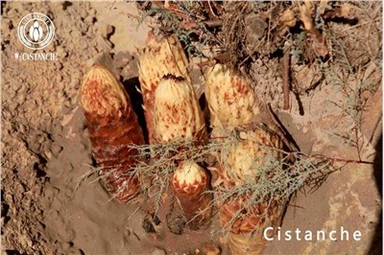
Cistanche deserticola deserticola is a kind of herbaceous parasitic plant, which contains a large number of phenolic glycosides, alkaloids, Phenethyl alcohol glycosides, sugars, and alcohols. Among them, sugars are mainly in the form of polysaccharides. Cistanche deserticola polysaccharides have strong immune activity regulation function [1-2]. As an intermediate metabolite in human life activities, free radicals are in an unstable state and have high oxidation activity intensity, which will cause damage to tissues and organs of biomacromolecules in the human body. Therefore, the use of natural antioxidants to eliminate free radicals has become the main direction of current Food studies. Polysaccharide components in Cistanche deserticola have a strong antioxidant capacity, which can promote the elimination of free radicals in the human body [3].

Benefits of cistanche tubulosa—Antioxidant
In this paper, Cistanche deserticola deserticola was taken as the research object, and the polysaccharide substances were extracted and classified. The molecular weight of Cistanche deserticola deserticola polysaccharide substances was measured by high-performance Gel permeation chromatography. At the same time, the composition of polysaccharide substances was in-depth analyzed. The antioxidant activity of Cistanche deserticola deserticola deserticola polysaccharide was analyzed by measuring the free radical scavenging capacity and total antioxidant capacity of Cistanche deserticola deserticola polysaccharide components, It provides a theoretical basis for the development and utilization of Cistanche deserticola deserticola and the promotion of added value.

Desert living cistanche
Click here to view Cistanche products
【Ask for more】 Email:cindy.xue@wecistanche.com / Whats App: 0086 18599088692 / Wechat: 18599088692
1 Sample preparation of Cistanche deserticola
Weigh 2.5kg of Cistanche deserticola, slice it, add 12.5L distilled water, and boil it for 3h. After boiling, filter and collect the filtrate. Add 75% ethanol and let it stand for 24h. Centrifuge it at 4000r/min for 30min, collect the sediment, and freeze and dry the sediment to obtain crude polysaccharide CLP of Cistanche deserticola [4]. Take DEAE cellulose, soak and swell it before degassing treatment, load it into the DEAE cellulose anion exchange chromatography column, and balance it with distilled water and NaCl solution. Weigh 100mg of crude polysaccharide CLP from Cistanche deserticola deserticola and dissolve it in 10 mL of distilled water. After washing with distilled water, collect the eluant and concentrate it for freeze-drying to obtain neutral sugar CLP1 from Cistanche deserticola deserticola; After eluting with NaCl solution, the eluent was collected, concentrated, and freeze-dried after dialysis to obtain the acid sugar CLP2 of Cistanche deserticola [5].
Prepare the neutral sugar CLP1 and acidic sugar CLP2 of Cistanche deserticola into polysaccharide solutions with a concentration of 1mg/mL, respectively. Use a 210-600nm spectrophotometer for UV spectroscopy scanning. When a peak appears at 260-280nm, it is confirmed that the solution contains protein and nucleic acid [6].

Main Chemical Constituents of Cistanche deserticola
2 Determination of polysaccharide components of Cistanche deserticola
The content of total sugar in Cistanche deserticola was determined by the phenol sulfuric acid method. Measure 0, 0.2, 0.4, 0.6, 0.8, and 1mL glucose solutions with a concentration of 0.1mg/mL, and place them in glass test tubes. Add distilled water to a constant volume of 1mL, and then add 0.5mL phenol reagent with a concentration of 6% and 2.5mL concentrated sulfuric acid to the test tubes. Shake well and cool to room temperature. Use a spectrophotometer to measure absorbance at 490nm, with sugar content as the x-axis and absorbance as the y-axis, draw a standard curve, and calculate the regression equation [7-8].
Coomassie brilliant blue method was used to determine the protein content in Cistanche deserticola samples. Take 1mL of standard samples with different concentrations and sample solutions with concentrations of 0.1mg/mL, respectively add 4mL of Coomassie brilliant blue solution into each test tube, shake well, and then stand still. Use a spectrophotometer to measure the absorbance at 495nm, and calculate the protein content in the sample according to the standard curve equation [9].
The content of Uronic acid in Cistanche deserticola was determined by the m-hydroxyphenyl method. Take 0.4mL of standard solution with different concentrations and sample solution with a concentration of 0.1mg/mL, add 2.5mL of concentrated sulfuric acid into the test tube, shake it well, and then conduct a 25min boiling water bath, take it out and cool it to room temperature, add m-hydroxyphenyl with a concentration of 0.3% and sodium hydroxide solution with a concentration of 0.5% into the test tube, shake it well, and then place it for 30min, Use a spectrophotometer to measure the absorbance at 525nm, and calculate the Uronic acid content in the sample according to the standard curve equation [10-11]. The relative molecular weight of Cistanche deserticola polysaccharide was determined by high-performance gel chromatography, and the monosaccharide composition of Cistanche deserticola deserticola was determined by high-performance liquid chromatography [12].
3 Determination results and analysis of polysaccharide components of Cistanche deserticola
The UV spectrum scanning curve of the photometer at 210-600nm is shown in Figure 1

Figure 1 UV Spectral Scanning Curve (210-600nm)
It can be seen from Figure 1 that the neutral sugar CLP1 of Cistanche deserticola deserticola has an obvious absorption peak at 280nm, and the acid sugar CLP2 of Cistanche deserticola deserticola deserticola has no obvious absorption peak at 260-280nm, but the UV absorption spectrum is high. Since the Tryptophan and tyrosine contained in the protein have large absorption value to ultraviolet light at 280nm, it can be determined that the neutral sugar CLP1 of Cistanche deserticola contains glycoprotein, and it is impossible to determine whether the acid sugar CLP2 of Cistanche deserticola contains nucleic acid and protein.
DEAE cellulose anion exchange chromatographic column chromatography can adsorb ionic substances and impurities on the chromatographic column to realize the separation of polysaccharide substances. After concentrating and drying the distilled water washing solution, a total of 34.68 mg of neutral sugar CLP1 was obtained from Cistanche deserticola, and after eluting, concentrating, and drying with NaCl solution, a total of 16.52 mg of acid sugar CLP2 was obtained from Cistanche deserticola. During the experiment, the standard curve equations of total sugar content, protein content, and Uronic acid of Cistanche deserticola were obtained. The contents of total sugar, protein, and Uronic acid in Cistanche deserticola were measured, as shown in Table 1.
Table 1 Total sugar, protein, and Uronic acid content of Cistanche deserticola

The regression equation can be obtained by determining the molecular weight and peak area of the standard sample. The molecular weight of the sample to be tested can be obtained by substituting the photoemission signal value of the sample to be tested into the regression equation. Further analysis and calculation can obtain the number average molecular weight, weight average molecular weight, and dispersion coefficient of the neutral sugar CLP1 and acid sugar CLP2 of Cistanche deserticola. The retention time and molecular weight calculation results of the high-performance gel permeation chromatogram of Cistanche deserticola neutral sugar CLP1 and Cistanche deserticola acid sugar CLP2 are shown in Table 2. The number average molecular weight is used to represent the size of the measured molecule, and the ratio of the weight average molecular weight to the number average molecular weight is used to represent the molecular distribution width.
Table 2 Retention Peak Determination Time and Molecular Weight Calculation Results

It can be seen from Table 2 that the molecular weight distribution range of the neutral sugar CLP1 of Cistanche deserticola and the acid sugar CLP2 of Cistanche deserticola is 0~10000 Da, which indicates that the polysaccharide in Cistanche deserticola is a small molecule polysaccharide with different molecules, and the molecular weight shows heterogeneity. It can be inferred that the neutral sugar CLP1 of Cistanche deserticola and the acid sugar CLP2 of Cistanche deserticola are mixtures of several polysaccharide substances.
See Table 3 for the HPLC peaks and peak retention times of nine monosaccharide standard samples, neutral sugar CLP1 of Cistanche deserticola deserticola and acid sugar CLP2 of Cistanche deserticola deserticola. By comparing the peak time, it can be concluded that there are five obvious monosaccharides in the neutral sugar CLP1 of Cistanche deserticola and four obvious monosaccharides in the acid sugar CLP2 of Cistanche deserticola. The proportion of monosaccharides in neutral sugar CLP1 of Cistanche deserticola deserticola and acid sugar CLP2 of Cistanche deserticola deserticola is shown in Table 4.
Table 3 Retention Time of Monosaccharide High-Performance Liquid Chromatography Peaks

Table 4 Proportion of Monosaccharides in Cistanche deserticola

The monosaccharide content of the neutral sugar CLP1 of Cistanche deserticola after hydrolysis is significantly different from that of the acid sugar CLP2 of Cistanche deserticola. The glucose content of the neutral sugar CLP1 of Cistanche deserticola is as high as 88.62%, the glucose content of the acid sugar CLP2 of Cistanche deserticola is only 9.99%, and the Galactose aldehyde acid, Galactose and Rhamnose content of the acid sugar CLP2 of Cistanche deserticola are all more than 5%.
4 Antioxidant activity analysis of Cistanche deserticola polysaccharide
During the antioxidant experiment analysis of Cistanche deserticola deserticola polysaccharide, Cistanche deserticola deserticola polysaccharide was prepared into Cistanche deserticola deserticola polysaccharide solution with the concentration of 0, 0.25, 0.5, 1.0, 2.0, 4.0 mg/mL, and the DPPH free radical scavenging rate and total antioxidant capacity of the solution were measured. During the determination of DPPH free radical scavenging rate of Cistanche deserticola deserticola polysaccharide solution, add 2 × A total of 2mL of 10-4mol/L DPPH was mixed evenly and placed in dark conditions for 15 minutes. The solution was centrifuged at a centrifuge speed of 4000r/min and a centrifugation time of 15 minutes. Use a spectrophotometer to measure the absorbance value of the solution at 517nm wave, from which the DPPH radical scavenging rate of Cistanche deserticola deserticola polysaccharide solution can be obtained, as shown in Table 5.
Table 5 DPPH radical scavenging rate of Cistanche deserticola polysaccharide solution

It can be seen from Table 5 that the scavenging rate of crude polysaccharide CLP of Cistanche deserticola and neutral sugar CLP1 of Cistanche deserticola on DPPH free radicals is significantly higher than that of acid sugar CLP2 of Cistanche deserticola on DPPH free radicals. When the concentration of the solution is less than 2.0mg/mL, the DPPH radical scavenging rate of crude polysaccharide CLP of Cistanche deserticola deserticola and neutral sugar CLP1 of Cistanche deserticola deserticola gradually increases with the increase of concentration, and finally becomes stable.
During the determination of the total antioxidant capacity of Cistanche deserticola deserticola polysaccharide, the antioxidant capacity test kit was used for rapid detection. Take the Trolox standard detection solution and dilute it with distilled water to 0, 0.25, 0.5, 1.0, 2.0, and 4.0 mg/mL, respectively. Add peroxidase working solution to the detection well plate, then add the sample or standard detection solution to be tested, and finally add the working solution of the rapid detection kit. Mix well and let it stand for 6 minutes, The total antioxidant capacity of Cistanche deserticola polysaccharide was determined by a microplate reader at the wavelength of 405nm and 734nm [14-15]. See Table 6 for the test results of the total antioxidant Achievement test of the Cistanche deserticola deserticola polysaccharide solution.
Table 6 Total antioxidant capacity of Cistanche deserticola polysaccharide solution

It can be seen from Table 6 that when the concentration of Cistanche deserticola solution is less than 4.0mg/mL, the total antioxidant capacity of crude polysaccharide CLP of Cistanche deserticola, neutral sugar CLP1 of Cistanche deserticola and acid sugar CLP2 of Cistanche deserticola increases with the increase of solution concentration; The antioxidant capacity of neutral sugar CLP1 of Cistanche deserticola deserticola is significantly higher than that of crude polysaccharide CLP of Cistanche deserticola deserticola deserticola and acid sugar CLP2 of Cistanche deserticola deserticola deserticola.

Cistanche tea
5 Conclusion
The analysis results of Cistanche deserticola deserticola polysaccharide by high-performance Gel permeation chromatography showed that the molecular weight of the polysaccharide contained in it was not more than 10000 Da, and it contained multiple elution peaks. Cistanche deserticola deserticola polysaccharide had certain antioxidant properties. The results of this study lay a foundation for the further development and utilization of Cistanche deserticola.
References:
[1] Bi Cuicui, Liu Yinlu, Wei Fenfen, et al. Research progress on the main chemical constituents and biological activities of Cistanche deserticola [J]. Drug Evaluation Research, 2019, 42 (9): 1896-1900
[2] Dong Yuwei, Miao Jingzhi, Li Yong. Optimization of Double Enzyme Extraction Process for Garlic Polysaccharides and It's in Vitro Antioxidant Activity [ J ]. Chinese Seasonings, 2020, 45 (10): 30-35, 48
[3] Yang Ting, Eladan McIntyre, Tao Yichun, et al. Determination of polysaccharide content and antioxidant activity of Cistanche tubulosa dregs [ J ]. Journal of Xinjiang Medical University, 2019, 42 (2): 234-236241
[4] Liu Lisa, Zhang Qing, You Lin, et al. Study on the solvent extraction technology of Phenethyl alcohol glycosides from Cistanche tubulosa [J]. Food Science and Technology, 2019, 44 (4): 225-229
[5] Liu Yaowei, Su Zihao. Study on the flash extraction process of echinacea and Verbascum thapsus glycosides in Cistanche deserticola [ J ]. Medical Diet and Health, 2020, 18 (23): 27-28
[6] Tian Wenjing, Zhou Xuan, Huang Qunhui, et al. Effect of ultrasonic treatment on Rheology properties of Cistanche deserticola deserticola polysaccharide [ J ]. Bulletin of Biology, 2021, 56 (2): 48-53
[7] Feng Jie, Guo Yehong, Zhu Wenjuan, et al. Effects of different hosts, habitats, and harvest dates on the content of Active ingredients in Cistanche deserticola [ J ]. Chinese Wild Plant Resources, 2021, 40 (5): 18-23
[8] Lv Mingshuai, Zhao Bo, Sun Wenyu, et al. Study on the physicochemical properties and antioxidant activity of selenium-rich Auricularia auricula-judge polysaccharide [ J ]. Chinese Flavoring, 2021, 46 (6): 54-59
[9] Chen Yuebai. The screening of the Lentinan extraction process and the analysis of the current status of research on its health effects [J]. Chinese Flavoring, 2021, 46 (8): 189-191
[10] Guo Qiaoli, Wu Zhibo, Zhou Yubi, et al. Composition analysis and antioxidant activity of polysaccharides from Cistanche deserticola in Lanzhou [ J ]. Food Industry Science and Technology, 2021, 42 (15): 96-103
[11] Cao Libo, Gong Xingcheng, Jia Jinru, et al. Rapid qualitative analysis of chemical constituents of Cistanche salsa by direct injection multi-stage mass spectrometry full scan method [ J ]. Chinese Journal of Traditional Chinese Medicine, 2021, 46 (16): 4150-4156
[12] Hu Dongbao, Du Wei, Yang Meng. Optimization of the extraction process and antioxidant activity of polysaccharide from Macrocybe gigantea by response surface methodology [ J ]. Chinese Condiments, 2021, 46 (10): 78-82
[13] Xu Sheng, Chai Shasha. The rapid detection method of main active substances in Cistanche deserticola [J]. Journal of Wuhan Vocational and Technical College, 2021, 20 (4): 116-120
[14] Zhang Hongchi, Liu Rui, Jiao Lele, et al. Optimization of the extraction process of Lentinan based on the quadratic regression rotation orthogonal method [ J ]. Chinese Flavoring, 2021,46 (11): 88-93
[15] Song Qingqing, Zhang Ke, Li Ting, et al. Simultaneous determination of multi-component content of Cistanche deserticola by reverse phase hydrophilic interaction chromatography customized multi-reaction monitoring method [J]. Analytical chemistry, 2020, 48 (11): 1573-1593