Tea Therapy Of Chinese Tea Culture
Nov 09, 2022
All over the world, countless people make tea, drink tea, and drink tea every day. For the Chinese, tea is the national drink. Tea originated from Shennong and flourished in the Tang Dynasty. Its culture combined the ideas of Confucianism, Taoism, and Buddhism. It has developed along the way and is self-contained and flourishing.

Click to benefits of cistanche and Cistanche tea
A wisp of tea fragrance spreads out, starting from the sense of taste and reaching the spiritual world, creating a unique Chinese tea culture. In China, tea is endowed with the idea of "heaven, earth, and people", which contains the concepts of tranquility, restraint, indifference, and simplicity. Where there is tea, there is elegance.
Li Shangyin's poem said: "Small Ding Jiancha Noodles Quchi, White-bearded Taoist priests play chess in bamboo." A pot of good tea, thousands of acres of bamboo forest, Qingyi Yushi, sitting and playing chess, what a pleasant feeling out of the dust, fascinating. The rare thing about tea is that it can not only enjoy the spring and the snow, but also the Liba people. In high-end tea houses, celebrities and elegant scholars listened to the violin and listened to the zither; in the lively street market, people took bowls of steaming tea and drank the story in one go.
So, how was tea discovered in the first place? Regarding the origin of tea, the most widely circulated legend is that "Shen Nong tasted all kinds of herbs, encountered seventy-two poisons every day, and got rid of them". Legend has it that Shennong had a transparent stomach, which not only made the internal organs clear at a glance but could even observe the changes in the food in the stomach. At that time, the ancestors did not know which plants could be eaten everywhere, and people often got sick or even died from eating poisonous weeds by mistake. To make people stop worrying about food and fear, Shennong decided to use his unique skills to find food and herbs for the world. One day, when Shennong was collecting flowers and plants, he accidentally tasted a kind of grass blade. He felt dry and dizzy. He put down the medicine bag in pain and leaned against a tree to rest. At this time, a breeze hit, and a young leaf floated in front of him. He picked up the leaf and smashed it and smelled it, and found that it had a fragrant smell. After tasting it, it was slightly bitter. After swallowing it, he saw that the leaves flowed and washed around in his stomach from top to bottom, from left to right. After a while, Shennong felt refreshed and invigorated. He happily named this magical leaf "tea" and slowly passed it down.

The story of Shennong's discovery of tea may be true, or it may have been fabricated by later generations. But in the long-term process of identifying and searching for food, the ancestors must have had a similar behavior of "tasting a hundred herbs". Historically, tea was first used as a medicinal product. It was not until the Han and Wei Dynasties that the princes and dynasties made tea as a soup and used tea as a daily drink. As for people starting to taste tea and study the tea ceremony, it was a matter of the Tang and Song Dynasties.
There are many kinds of tea in China, such as green tea, black tea, and oolong tea. Today, let's talk about green tea. Green tea is the largest tea category in my country. It is called "green tea" because the color of the finished product and the tea soup after brewing remain green. According to the different methods of fixing and drying, green tea is divided into four categories: steamed green tea, fried green tea, roasted green tea, and sun-dried green tea. When it comes to tea therapy, some people say that tea can cure diseases, and some people say that tea cannot cure diseases. When discussing tea therapy, there must be a clear response to this question.
"Xinxiu Materia Medica", the first national pharmacopeia of China in the Tang Dynasty, has a special entry for tea: "Ming, sweet and bitter, slightly cold and non-toxic. , control the qi, and consume food." The earliest extant monograph on tea studies in Tang Dynasty Lu Yu's "The Classic of Tea" also said when discussing the use of tea: "The use of tea, the taste is very cold, ... if it is hot and thirsty, Congestion, brain pain, astringent eyes, tired limbs, uncomfortable joints, talking about four or five sips, and competing with Daigo and nectar." In the Tang Dynasty, the main purpose of tea was to maintain health and treat diseases.

As for the classic Chinese medicine "Compendium of Materia Medica" in the Ming Dynasty, which is well known to women and children, there are more than 100 tea treatment prescriptions, including single prescription, compound prescription, external use (coating, compressing, smoking, sticking) and tea wine and other usages. Chinese tea therapy is a kind of natural therapy that uses only blind tea to form a single prescription or compound prescription, brews it with boiling water or decocts it a little, and then takes the soup to drink it, which is used to prevent and cure diseases. It is based on the traditional Chinese tea theory and guided by the theory of traditional Chinese medicine. To limit the scope of discussion, the tea here refers to the buds and leaves of Camellia sinensis of the Camellia family, excluding tea seeds, camellia flowers, and tea tree root bark for the time being.
Chinese tea therapy only uses tea leaves as medicines and does not add other ingredients. The so-called "single prescription" means that only one type of tea is used as medicine; the so-called "compound prescription" means that more than one type of tea can be used in combination to Meet the needs of the disease.
In chapter 130 of Yang Rongpeng's novel "Chief Medical Officer", there is a passage in which the protagonist Zeng Yi used green tea to treat the Queen of England. The warmth goes straight into the stomach, not only does not feel like vomiting but feels extremely comfortable in the stomach." And this description shows the magic of tea therapy, the Queen of England suffered from stomach heart disease, and green tea is a kind of herbal tea, that has the effect of clearing the spleen and appetizing, so the curative effect of Chinese tea therapy is unique. It is based on the traditional tea theory and guided by the theory of traditional Chinese medicine.

Traditional tea science takes tea science as the research goal and studies all aspects of tea planting, tea selection, tea making, tea brewing, and tea tasting. The purpose is different. Compared with traditional Chinese medicine, Chinese tea therapy only uses tea leaves as medicine, and tea soup is mainly made by brewing. The operating system is different from traditional Chinese medicine. Therefore, the knowledge system of Chinese tea therapy straddles the two fields of tea science and medicine. It can neither only understand tea but not medicine, nor only understand medicine but not tea.
Cistanche Tea
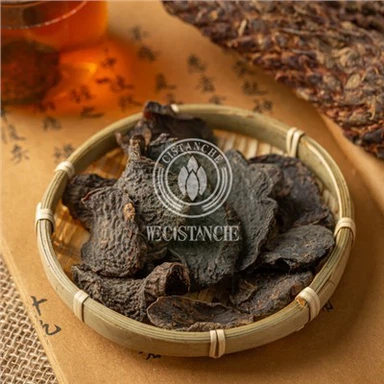
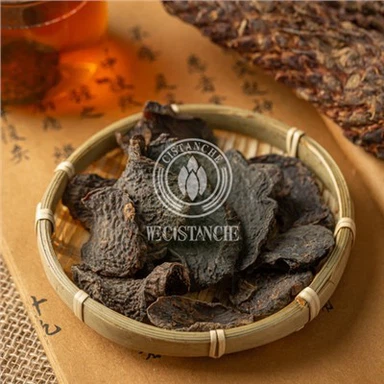
Cistanche tea can invigorate kidney yang, replenish essence and blood, inhibit the appearance of "Yang deficiency" symptoms, and prevent weight loss. Cistanche tea can effectively prevent and treat diseases such as kidney deficiency and impotence in men, nocturnal emission, premature ejaculation, irregular menstruation, amenorrhea, and infertility in women. Citrus cinnamon has the reputation of "desert ginseng", and it is the highest-grade medicine among more than 60 kinds of tonic Chinese medicines found in China. It contains a lot of amino acids, cysteine, vitamins, and minerals. , cavernous body and other sexual organs have a great tonic effect, the impotence, premature ejaculation is even more immediate, fulfilled like a god. Cistanche tea can be used for kidney deficiency, impotence, nocturnal emission, premature ejaculation, cold pain in the waist and knees, and weak muscles and bones. For the treatment of impotence due to kidney deficiency, nocturnal emission, premature ejaculation, etc., it is combined with Rehmannia glutinosa, dodder seeds, and dogwood meat. It is suitable for men with declining sexual function; women with irregular menstruation, infertility, numbness in limbs, waist and knee pain; elderly people with a weak constitution, hypertension patients, and constipation.
for more information:ali.ma@wecistanche.com