Briefing Of Forage Plants And Their applicable functions
Mar 29, 2022
Contact: Audrey Hu Whatsapp/hp: 0086 13880143964 Email: audrey.hu@wecistanche.com
Forage plants are forage natural plants, which refer to plants with certain application functions approved by the relevant documents of the Ministry of Agriculture and Rural Affairs to be used for the production of commercial feed (or substrate). The specific manifestations include forage plant powder and forage plant extracts. , wherein the product form is feed raw materials, such as feed raw material licorice powder, feed raw licorice crude extract. In 2018, the state promulgated the "National Standard for General Requirements for Natural Plant Feed Raw Materials (GB/T 19424-2018)"[9], which restricts the quality, safety, and standardized use of natural plant feed raw materials, and restricts the development of feed plant-related products. and applications have normative significance.

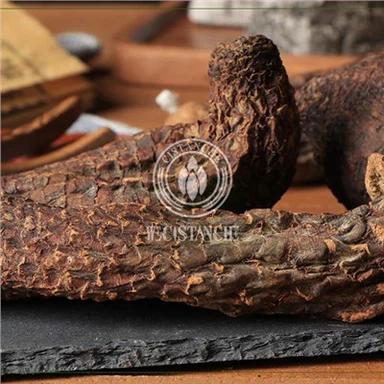
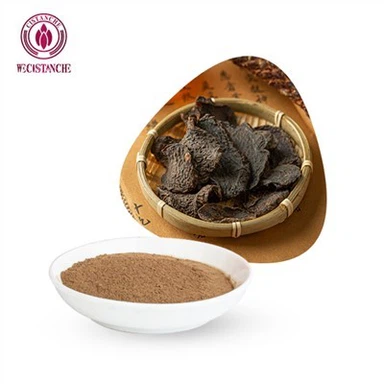
natural plant/herb: cistanche herb
Forage plant extracts are divided into crude forage plant extracts and forage plant refined extracts according to their extraction and separation process and product quality control standards. The crude extract of forage plants refers to the simple extract that is extracted by water or alcohol without the separation unit process. Forage plant extract refers to after crude extraction, through the separation and purification process, there are quantitative quality control requirements or functional components and even purified extracts for the identified components, which are generally approved as feed additives according to the registration procedure, such as Eucommia ulmoides leaf extract. thing. Plant extract feed additive refers to the feed additive product developed according to the feed additive registration procedure with plant extract (active ingredient) as the main active ingredient, such as Eucommia ulmoides leaf extract, Epimedium extract, rosemary extract, etc.

There are 117 kinds of forage plants included and approved in the feed raw materials catalog, most of which are Chinese herbal medicines with the same origin as medicine and food, but Chinese herbal medicines are by no means equivalent to forage plants. At present, in journals and magazines, there are common expressions such as "Chinese (herbal) medicinal feed additives", and products in the form of "Chinese (herbal) medicinal feed additives" and "Chinese (herbal) medicinal extracts" are common in the market. And is used by manufacturers to publicize and hype related concepts. The author believes that the concept of "Chinese (herbal) medicinal feed additives" is unscientific, at least not rigorous, and there is no category of "Chinese (herbal) medicinal feed additives" among the feed additives approved by the feed additive registration process in my country; Chinese (herbal) medicines and feed additives are two independent concepts. Chinese (herbal) medicines represent their medicinal properties, while feed additives generally have functional properties. Plant-derived products currently used in animal production are classified as compliant with regulations: Natural plant feed raw materials can be used as forage plants, including 117 kinds of medicinal and edible homologous plants included in 7.6 of the "Catalogue of Feed Raw Materials" for other natural plants that can be used for forage; Plant extract feed additives, that is, the feed additive products developed according to the feed additive registration procedure with plant extracts as the main active ingredients, including those included in the "Catalogue of Feed Additives", food flavors and approved by the Ministry of Agriculture and Rural Affairs, but not yet included in the "Catalogue of Feed Additives" New feed additive products listed in the Feed Additives Catalogue; Chinese veterinary medicines, which are medicines that use traditional Chinese medicinal materials as raw materials and are registered and approved in accordance with the veterinary drug registration procedure for the treatment of clinical diseases, or the prevention of animal diseases and the improvement or enhancement of production performance; Medium Veterinary drug feed additives, that is, Chinese veterinary drug products included in the "Catalogue of Drug Feed Additives", can be added and used for a long time in the feed and breeding process. Types of Medicinal Feed Additives" and "Change the management method of traditional Chinese medicine medicated feed additives, no longer issue the approval number of 'Veterinary Drug Additives', and change it to 'Veterinary Drugs' Approval No.", that is, cancel the category of medicated feed additives, and the drug quality standard It is distinguished from veterinary drugs for therapeutic use by the labeling of "non-prescription veterinary drugs" and the instructions of "can be added for a long time in the feed and breeding process, with no withdrawal period" on the label instructions.

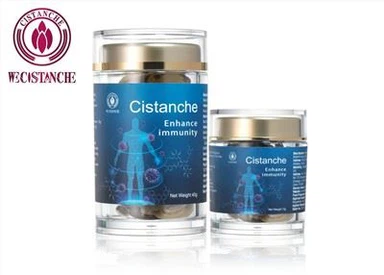
cistanche supplement: improve immunity
The main functional and active components of forage plants are secondary metabolites synthesized during the natural growth of plants, such as alkaloids, polyphenols, volatile oils, flavonoids, plant polysaccharides, organic acids, saponins, etc. [10] ]. Different plant varieties have different active components, and the functional active components in forage plants are not a single compound, but often appear as a class of functional active components (or class-component substances). Therefore, forage plants generally have a variety of Functional properties, but according to their main active substance content, a certain forage plant and its extract should have a certain main functional property. Plant extracts are the main form of additive products developed by forage plants. According to the composition of functional active ingredients, they generally have the functions of anti-microbial, anti-oxidation, growth promotion, prevention and treatment of diarrhea, enhancement of immunity, and improvement of intestinal health [11].

Note: The traditional Chinese medicinal herb cistanche (also known as the "dragon herb" and "desert ginseng"), grows only in arid and warm deserts. As one of the nine immortal herbs, Cistanche (cistanche tubulosa/cistanche deserticola/desertliving cistanche/cistanche salsa)contents with rich effective ingredients such as echinacoside, acteoside, total phenylethanoid glycosides, flavonoids, polysaccharides, etc. these effective ingredients made cistanche a precious nourishing herb and food material for people's immunity, internal organs, and brain cells and neurons, etc. Modern pharmacological studies have confirmed the following effects of cistanche(benefits of cistanche): improve immunity; improve sexual function and kidney function; anti-fatigue; anti-aging; improved memory; anti-Parkinson's disease; anti-Alzheimer's disease; antioxidation; ease-constipation; anti-inflammatory; promote bone growth, whitening skin; protect liver; etc.

buy cistanche