The Difference Between Sliced Cistanche Deserticola And Sliced Cistanche Deserticola
May 10, 2024
1. Different traits
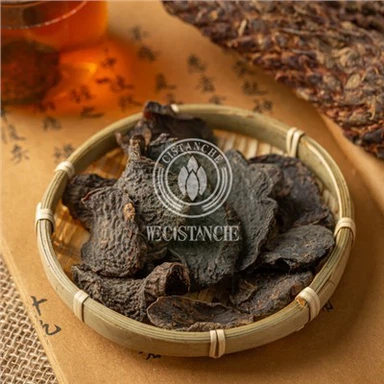
The cut surface of the sliced Cistanche deserticola (commonly processed) is light grayish brown, with some edges resembling black-brown glial tissue, and numerous irregular black-brown dotted vascular bundles scattered on the slice.
The cut surface of desert Cistanche deserticola slices is dark brown or black-brown, mostly consisting of yellow-brown dotted vascular bundles arranged in a wavy, curved ring or slightly radiating shape.

superman herbs cistanche
2. Different processing methods for slicing
The processing of Cistanche deserticola can be divided into natural drying, oven drying, microwave drying, and other processing methods.
The desert deserticola slices on the market are generally processed through common techniques such as natural drying, oven drying, or microwave drying.
However, the sliced tube flower Cistanche deserticola is different from the ordinary Cistanche deserticola slices on the market, as it is a fresh Cistanche deserticola microwave enzyme killing method. Firstly, select fresh and clean slices of Cistanche deserticola, cut them into 6 10mm thick slices, and place them in a polytetrafluoroethylene box. Then, place the polytetrafluoroethylene box in the enzyme-killing equipment and confirm the time. The duration of enzyme inactivation varies depending on the size of the product. If it is not enough, the efficacy is difficult to achieve. If it is too high, the efficacy will be lost. During the preparation process, the staff must be professional and cautious. Finally, the enzyme inactivation equipment should be operated until the slices show a dark brown color.

Phenylethanol glycoside is the main active component of Cistanche deserticola
3. Different ways to save slices
Due to different processing methods of slicing, their storage time varies. The storage method for sliced Cistanche deserticola is to store it in a cool, dry place, and for a longer period, making the slices less prone to deformation and decay; The storage method of desert deserticola slices is to store them in a cool and dry place, with limited storage time. If not treated with enzymes, they are easily attacked by diseases and pests, leading to mold and decay.

Cistanche deserticola slice
4. Comparison of effective ingredient content in slices
Due to different processing methods of slicing, there are differences in the content of effective ingredients.
Slices of desert deserticola are generally processed through common techniques such as natural drying, oven drying, or microwave drying. The content of effective ingredients such as quercetin and anthocyanins in Cistanche deserticola will be decomposed by enzymes in the process of drying, with about 80% of the content remaining. The effective content is only about 15%, and the pharmacological effect is minimal, making it difficult to store and prone to spoilage.
The sliced Cistanche deserticola uses a fresh Cistanche deserticola microwave enzyme inactivation method, which achieves enzyme inactivation of fresh Cistanche deserticola slices, retaining 100% of quercetin and piloside, and the effective ingredient content is several times higher than that of desert Cistanche deserticola slices.
In addition, according to the regulations on the effective content of desert deserticola and tubular deserticola included in the Pharmacopoeia of the People's Republic of China (2015 edition). The total amount of Echinacetin (C35H46O20) and Fructoside (C29H36O15) in desert Cistanche deserticola shall not be less than 0.30%, while the total amount of Echinacetin (C35H46O20) and Fructoside (C29H36O15) in tubular Cistanche deserticola shall not be less than 1.5%.

Main Chemical Constituents of Cistanche deserticola
Reference paper: "Comparative Study on Fingerprint Patterns of Desert Cistanche and Tubular Cistanche"
Through the study and comparison of the fingerprint spectra of the two (note: plant fingerprint spectra are equivalent to plant ID cards), and the comparison of phenylethanolamine glycosides and iridoid terpenes, the results show that the effective content of Cistanche deserticola is higher than that of Cistanche deserticola.

Click here to view Cistanche deserticola tea products
【Ask for more】 Email:cindy.xue@wecistanche.com / Whats App: 0086 18599088692 / Wechat: 1859908869
The content of phenylethanolamine and cyclone terpenoid glycosides in desert deserticola is relatively average, and the content of phenylethanolamine glycosides in tubular deserticola is significantly higher than that in desert deserticola. The phenylethanolamine glycosides in tubular deserticola are significantly higher than those in cyclone terpenoid glycosides, among which phenylethanolamine glycosides are mainly composed of two major components: echinoid and glycosides from pistil flowers.
In addition, the content of quercetin and ergosterol in the slices of Cistanche deserticola is generally between 1.5g-4g in 100g, and the higher the year, the higher the content, which will decrease with the loss of water.
Due to its high content of active ingredients, it is widely used in the pharmaceutical industry. Generally, Cistanche deserticola is chosen as the main raw material for drugs, and its export is mainly focused on Cistanche deserticola.
The content of quercetin in desert deserticola is about 0.3g in 100g, and it turns black after being brewed with hot water. The color still turns yellow after being brewed multiple times. Therefore, consumers assume that the effect will be better, but in reality, it is not.
The cold resistance of desert deserticola is mainly due to its high sugar content, and the high woodiness of tubular deserticola may also be due to its low sugar content, resulting in a bitter taste.