The Effect And Mechanism Of Cistanche Glycoside Hyaluronic Acid On The Healing Of Rabbit Shoulder Sleeve Tendon Bone
May 25, 2023
[Abstract] Objective: To investigate the effect of the Cistanche glycoside hyaluronic acid complex on the healing of the tendon-bone interface after surgery for rotator cuff injury in rabbits and its mechanism of action. Method: Thirty male New Zealand white rabbits were selected and randomly divided into sham surgery group, model group, cistanche glycoside group, sodium hyaluronate group, and cistanche glycoside hyaluronate group, with 6 rabbits in each group. The sham surgery group only underwent shoulder skin incision and suturing, while the other groups of rabbits established a right shoulder sleeve injury model and underwent shoulder sleeve reconstruction surgery one week after modeling, followed by intra-articular injection. The sham surgery group and model group were injected with physiological saline, the cistanche glycoside group was injected with saline-dissolved cistanche glycoside containing serum freeze-dried powder solution, the sodium hyaluronate group was injected with sodium hyaluronate injection, and the cistanche glycoside hyaluronic acid group was injected with cistanche glycoside hyaluronic acid conjugate once a week for 5 consecutive weeks. After 5 weeks of injection, rabbits in each group were killed and interleukin-1 in shoulder joint fluid was detected using ELISA method β ( IL - 1 β) 、 Interleukin-6 (IL-6), tumor necrosis factor - α ( TNF - α) Content: HE staining was used for pathological observation of the tendon-bone interface tissue, and immunohistochemistry was used to detect the positive expression of vascular endothelial growth factor (VEGF) and basic fibroblast growth factor (bFGF) in the tendon-bone interface tissue. Result: Cistanche glycoside group, sodium hyaluronate group, and Cistanche glycoside hyaluronate group IL-1 β、 IL - 6、TNF - α The content was significantly lower than that of the model group (P<0.05), and the IL-1 in the Cistanche glycoside hyaluronic acid group β、 IL - 6、TNF - α The content was significantly lower than that of the icariin group and the sodium hyaluronate group (P<0.05). In the sham surgery group, the tendon and cartilage are tightly combined, and there is an inherent structure at the normal tendon-bone interface; In the model group, inflammatory cells and a few fibroblasts were scattered at the tendon-bone interface, and the connection was loose; The cistanche glycoside group and sodium hyaluronate group showed a closer connection between the cartilage and tendon collagen fibers at the tendon-bone interface, filled with more round like chondrocytes and fibroblasts, and some neovascularization was observed; Cistanche glycoside hyaluronic acid group tightly connects the cartilage and tendon collagen fibers at the tendon-bone interface, with a large number of round like chondrocytes and neovascularization. The average optical density values of VEGF and bFGF positive expression in the model group were significantly higher than those in the sham operation group (P<0.05);
The average optical density values of VEGF and bFGF positive expression in the cistanche glycoside group, sodium hyaluronate group, and cistanche glycoside hyaluronate group were significantly higher than those in the model group (P<0.05), and the cistanche glycoside hyaluronate group was significantly higher than the cistanche glycoside group and sodium hyaluronate group (P<0. 05) 05)。 Conclusion: Cistanche glycoside hyaluronic acid can promote the healing of rotator cuff tendon-bone after rotator cuff injury, and its mechanism of action may be related to reducing the local inflammatory response, promoting neovascularization, and the proliferation and differentiation of chondrocytes and fibroblasts.

Desert ginseng
[Keywords] Cistanche glycoside; Hyaluronic acid; Shoulder sleeve injury; Tendon bone healing
Shoulder cuff injury is a common shoulder joint disease, mainly treated with rotator cuff repair surgery, but the risk of re-tearing after surgery is still high. From the perspective of structural mechanics, tendon-bone healing determines the success of rotator cuff repair surgery, which is a hot research issue in the field of sports medicine. Zhang Juntao et al. [1] confirmed that the combination of Cistanche glycosides and hyaluronic acid has a protective effect on articular cartilage and can reduce inflammatory reactions, providing new ideas for the research and development of intra-articular injection drugs. This experiment established a rabbit model of rotator cuff injury and performed rotator cuff repair surgery to observe the effect of Cistanche glycoside hyaluronic acid on tendon-bone healing after rotator cuff injury surgery and explore its possible mechanism of action. The results are reported as follows.
1. Experimental Materials and Methods
1.1 Experimental animals
30 4-month-old New Zealand male white rabbits, weighing 2.5-3.0 kg, were adaptively fed with a single cage of regular feed for 1 week and confirmed to be healthy and disease-free.
1.2 Experimental drugs
Cistanche glycoside: purity>98%, Shanghai Ronghe Medical Technology Development Co., Ltd. Hyaluronic acid: purity 98%, product number S7020, brand: Solarbio. Sodium hyaluronate injection (Alzhi): Biochemical Industry Co., Ltd., registration number H20140533. Cistanche glycoside containing serum freeze-dried powder: According to the literature [2], Cistanche glycoside was administered to New Zealand white rabbits by gavage, followed by blood collection and centrifugation to obtain the supernatant, which was then freeze-dried at low temperature and sterile. Cistanche glycoside hyaluronic acid freeze-dried powder: Referring to the research of Zhang Juntao et al. [1], icariin is converted into amino Cistanche glycoside through a glycine amino protection reaction, and its amino group is coupled with the carboxyl group of hyaluronic acid (molar ratio 1:10) to obtain the combination of Cistanche glycoside and hyaluronic acid, which is then freeze-dried at low temperature and sterile.
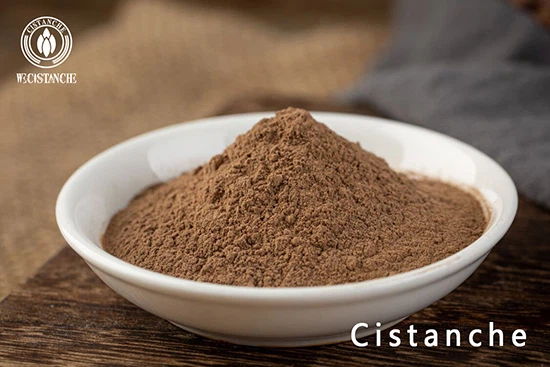
Cistanche extract powder
1.3 Experimental reagents
Vascular Endothelial Growth Factor (VEGF) Kit (produced by Ryan Biotechnology Co., Ltd. in the United States, number 19003-1-AP); Basic Fibroblast Growth Factor (bFGF) Kit (produced by Beijing Boorsen Biotechnology Co., Ltd., number bs-0219R). Interleukin-1 β ( IL - 1 β) 、 Interleukin-6 (IL-6), tumor necrosis factor - α ( TNF - α) ELISA kit (produced by Hunan Aifang Biotechnology Co., Ltd., product number: ml027836, ml051629, ml001696).

Cistanche deserticola experiment
Click here to view Cistanche products
【Ask for more】 Email:cindy.xue@wecistanche.com / Whats App: 0086 18599088692 / Wechat: 18599088692
1.4 Experimental methods
1. 4. 1 Grouping and modeling
Thirty male white rabbits were randomly divided into sham surgery group, model group, cistanche glycoside group, sodium hyaluronate group, and icariin hyaluronate group, with 6 rabbits in each group. The sham surgery group only underwent shoulder skin incision and suturing, while the other groups established a model of rotator cuff injury using reference [3] methods. Specific operation method: Fix the experimental rabbit in a fixed box and inject 10% pentobarbital 30 mg/kg into the ear vein for general anesthesia. After successful anesthesia, place the rabbit in a prone position on the operating table. Using the insertion point of the supraspinatus tendon of the right shoulder joint as the center of the circle, prepare and clean the area with a radius of 3 cm, disinfect it with iodine, and lay a hole towel. Cut the skin, subcutaneous tissue, and fascia layer by layer longitudinally on the outside of the right shoulder joint, down to the deltoid muscle, passively separate its muscle fibers until the greater tubercle of the humerus and the insertion of supraspinatus muscle tendon are seen, transect the supraspinatus muscle tendon, and cut off about 0.5 cm at the insertion × A 0.5 cm tendon tissue was used to create a model of rotator cuff injury. To facilitate the localization of rotator cuff reconstruction surgery, the transverse tendon was marked with sutures. After rinsing and hemostasis, stitch the wound layer by layer and wrap it with a sterile gauze bandage. All rabbits were given penicillin 20 IU intramuscular injection for 3 days after surgery to prevent infection, and the wounds were disinfected and changed with complex iodine. Each model rabbit underwent shoulder sleeve reconstruction surgery after 1 week of modeling.
1. 4. 2 Shoulder sleeve reconstruction surgery and postoperative intervention
Under the principle of sterility, anesthesia, fixation, and disinfection are carried out in the same manner as during mold making. Open the original incision, find the suture to cut the supraspinatus tendon, release the surrounding tissue adhesion, free the tendon, and pull the broken end back to the insertion point of the large nodule without tension; Clean the excess tissue on the surface of the large nodule, and then drill 2 bone holes on it with a Kirschner wire (diameter 1 mm). Use an improved Mason Allen bridge suture to firmly suture the supraspinatus muscle tendon at the insertion point with the No. 2 Aishibang suture. Then rinse and stop the bleeding. Inject 0.2 mL of physiological saline into the joint of the model group, The Cistanche glycoside group was injected with 0.2 mL of Cistanche glycoside medicated serum freeze-dried powder solution dissolved in physiological saline (according to the freeze-dried powder amount corresponding to 7 mL of serum), the sodium hyaluronate group was injected with 0.2 mL of sodium hyaluronate injection, and the Cistanche glycoside hyaluronic acid group was injected with 0.2 mL of Cistanche glycoside hyaluronic acid conjugate solution dissolved in physiological saline (Cistanche glycoside content is the same as the Cistanche glycoside group), and the wound was closed layer by layer, Complex iodine disinfection, sterile dressing and bandage wrapping. Postoperative animals were raised in a single cage, antibiotics were injected intramuscularly and local dressing changes were made to prevent infection. After surgery, each group received a local injection of the corresponding drug under the right shoulder peak every 7 days. In the sham operation group, 0.2 mL of physiological saline was injected for 5 weeks.
1.5 Observation Indicators and methods
1. 5. 1Content of inflammatory factors in shoulder joint fluid
After 5 weeks of injection, the rabbits in each group were killed, the shoulder articular capsule was cut, the shoulder joint fluid was extracted with a disposable syringe, and the supernatant was centrifuged. Detection of IL-1 in shoulder joint fluid using ELISA method β、 IL - 6、TNF - α Content.
1. 5. 2Histopathological morphology of the tendon-bone junction after rotator cuff reconstruction surgery
Take the bone, cartilage tissue, and supraspinatus muscle-tendon tissue from the large nodule of the tendon-bone junction within 3 cm around the center of the reconstruction surgery suture tendon-bone insertion point. Sharply cut the supraspinatus muscle tendon at a distance of about 3 cm from the tendon-bone insertion point, trim and remove excess soft tissue, and store and fix it with polyformaldehyde. Prepare paraffin sections and observe for normal tendon-bone surface similar structures using HE staining.
1. 5. 3Positive expression of VEGF and bFGF in the tissue at the tendon-bone junction after rotator cuff reconstruction surgery
Take tissue samples and stain them with the SP method. Positive results indicate a yellow or brownish-yellow staining of the cytoplasm or nucleus. Use IPP analysis software to measure the average optical density value. The higher the average optical density value, the more positive VEGF and bFGF expression is.
1.6 Statistical methods
SPSS 22.0 software was used for data sorting and analysis. All measurement data were tested for normality. Measurement data that conform to the normal distribution and have the same variance were described using mean ± standard deviation (x # ± s). Variance analysis was used for comparison between multiple groups, and the LSD test was used for comparison between two groups. Inspection level α = 0. 05, P < 0. 05 represents a statistically significant difference.
2 Results
2.1 IL-1 in shoulder joint fluid of rabbits in each group β、 IL-6 and TNF - α Content comparison
IL-1 in shoulder joint fluid of model group β、 IL -6、TNF - α The content was significantly higher than other groups (P<0.05); Cistanche glycoside group, sodium hyaluronate group, and Cistanche glycoside hyaluronate group IL-1 β、 IL - 6、TNF - α The content was significantly lower than that of the model group (P<0 05), and the glycoside hyaluronic acid group IL-1 of Cistanche deserticola β、 IL - 6、 TNF - α The content was significantly lower than that of the Cistanche glycoside group and the sodium hyaluronate group (P<0.05), and there was no statistically significant difference in the content of each indicator between the Cistanche glycoside group and the sodium hyaluronate group (P>0.05). See Table 1.
Table 1 IL-1 in the shoulder joint fluid of rabbits in the sham surgery group and after rotator cuff injury reconstruction surgery in each group β、 IL-6 and TNF - α Content comparison (x # ± s, pg/mL)
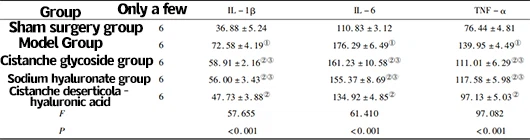
Note: ① Compared with the sham surgery group, P<0.05; ② Compared with the model group, P<0.05; ③ Compared with the Cistanche glycoside hyaluronic acid group, P<0.05.
2. 2 HE staining performance of tendon-bone interface tissue in each group of rabbits
In the sham surgery group, the tendons and cartilage of the rabbits were tightly combined, with clear tidal lines. Fibrochondria and tendon fibers were distributed parallel and arranged regularly, and the normal tendon-bone interface had an inherent structure; In the model group, inflammatory cells and a few fibroblasts were scattered at the tendon-bone interface, and the connection was loose; The tendon-bone interface of the cistanche glycoside group and sodium hyaluronate group in rabbits is more tightly bound than that of the model group, filled with more round like chondrocytes and fibroblasts, and partially neovascularized; Cistanche glycoside hyaluronic acid group tightly connects the cartilage and tendon collagen fibers at the tendon-bone interface, with a large number of round like chondrocytes and neovascularization. See Figure 1.

Figure 1 HE staining of the tendon bone interface tissue in the sham surgery group and the reconstruction of rotator cuff injury in each group of rabbits( × 200)
2. 3 Positive expression of VEGF and bFGF in the tendon-bone interface tissues of rabbits in each group
The average optical density values of VEGF and bFGF positive expression in the model group were significantly higher than those in the sham operation group (P<0.05); The average optical density values of VEGF and bFGF positive expression in the cistanche glycoside group, sodium hyaluronate group, and cistanche glycoside hyaluronate group were significantly higher than those in the model group (P<0.05), and the cistanche glycoside hyaluronate group was significantly higher than the cistanche glycoside group and sodium hyaluronate group (P<0.05). The sodium hyaluronate group was significantly higher than the cistanche glycoside group (P<0.05). See Figure 2 and Table 2.

Figure 2: Positive expression of VEGF and bFGF in the tendon bone interface tissue of rabbits in the sham surgery group and after rotator cuff injury reconstruction surgery in each group (immunohistochemical staining, × 200)
Table 2 Comparison of the average optical density of VEGF and bFGF positive expression in the tendon bone interface tissues of rabbits in the sham surgery group and after rotator cuff injury reconstruction surgery in each group (x # ± s)
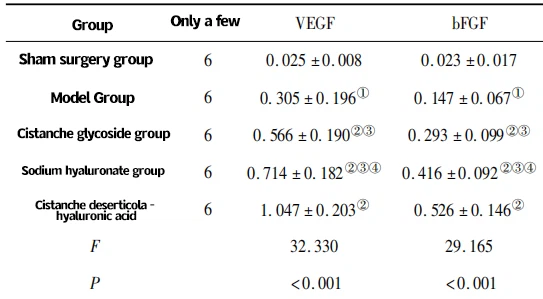
Note: ① Compared with the sham surgery group, P<0.05; ② Compared with the model group, P<0.05; ③ Compared with the Cistanche glycoside hyaluronic acid group, P<0.05; ④ Compared with the Cistanche glycoside group, P<0.05.
3. Discussion
Shoulder cuff injury is more common in middle-aged and elderly populations, and the aging population has gradually made shoulder cuff injury a public health issue of great concern. After a rotator cuff tear, it is difficult to heal on its own. Patients with mild tears can improve clinical symptoms through conservative treatment, while patients with huge rotator cuff tears require surgical treatment. The tendon-bone surface of the greater tuberosity of the humerus is a weak point in mechanics. Although the anatomical form of the ligament has been reconstructed after treatment of rotator cuff injury, its biomechanical strength is still insufficient, accompanied by bone loss, and stress is difficult to transmit reasonably. There is a risk of re-tearing during exercise [4]. According to relevant data statistics, the rate of rotator cuff re-tearing in different surgical schemes ranges from 38% to 90% [5-6]. At present, clinical researchers are constantly exploring new drugs and treatment methods to improve the healing ability of the rotator cuffs tendon-bone interfaces, such as periosteal transplantation, autologous platelet-rich plasma (APRP), bone marrow stromal cells (MSCs), growth factors, and other biomaterials and biological factors. However, due to the requirements of technical equipment and high costs, they cannot be widely used in clinical practice [7].
Hyaluronic acid is a mucopolysaccharide substance that can lubricate the knee joint, cover and protect joint cartilage. In clinical practice, injection of sodium hyaluronate into the joint cavity is commonly used to treat knee osteoarthritis, which can reduce the inflammatory response of bone joints and reduce the secretion of inflammatory joint fluid [8]. Hao Qinghai et al. [9] found in their experiment that local use of hyaluronic acid can promote the healing of the tendon-bone interface after autologous semitendinosus muscle reconstruction of the anterior cruciate ligament in rabbits. Yang Yanfei et al. [10] confirmed that hyaluronic acid treatment for knee osteoarthritis can promote cartilage repair while also reducing inflammatory reactions.
Traditional Chinese medicine has unique advantages in the treatment of diseases such as fractures and tendons. Cistanche glycosides are important components in Cistanche deserticola that exert medicinal effects. Cistanche deserticola is a Chinese herbal medicine that tonifies the kidneys and bones, can benefit the essence and qi, strengthen muscles and bones, and nourish the waist and knees. The combination of Cistanche glycoside hyaluronic acid prepared by Zhang Juntao et al. [1] can be used locally to repair rabbit chondrocytes. Numerous studies have found that icariin can regulate the proliferation and differentiation of osteoblasts, chondrocytes, and tendon cells, and has a good preventive and therapeutic effect on osteoporosis and cartilage degeneration [11-12]. Luo et al. [13] reported that Cistanche glycosides can improve cartilage degeneration and promote differentiation in osteoarthritis mice, which may be related to the upregulation of parathyroid hormone-related protein expression and downregulation of Indian porcupine protein expression. Dang et al. [14] found that cistanche glycoside can induce the formation of actin stress fibers through the MAPK signaling pathway. Li Lei et al. [15] found that Cistanche glycosides can promote the proliferation of rabbit bone marrow mesenchymal stem cells and induce differentiation into osteoblasts.
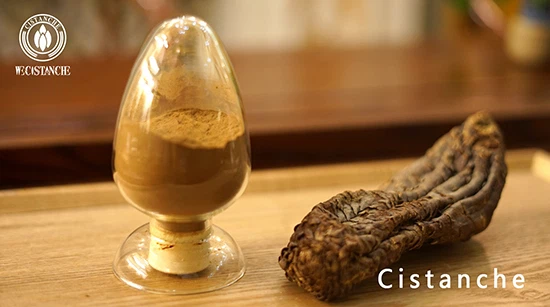
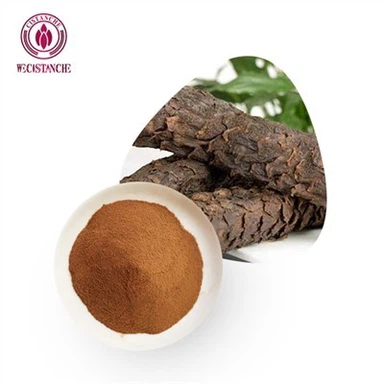
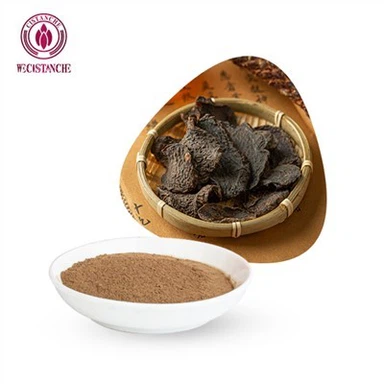
Cistanche extract powder
Related studies have shown that inflammation occurs locally after rotator cuff injury, leading to the release of a large number of inflammatory factors. Detecting the content of related inflammatory factors in shoulder joint fluid can evaluate the degree of rotator cuff injury [16]. The results of this experiment show that IL-1 in the shoulder joint fluid of the model group β、 IL - 6、TNF - α The content was significantly higher than that of the sham surgery group, indicating a significant local inflammatory response after rotator cuff injury. IL-1 in shoulder joint fluid of the Cistanche glycoside group, sodium hyaluronate group, and Cistanche glycoside hyaluronate group β、 IL - 6、TNF - α The content of icariin, sodium hyaluronate, and the combination of glycosides and hyaluronic acid can significantly reduce inflammation, and the anti-inflammatory effect of glycosides hyaluronic acid combination is more significant. HE staining showed that the tendon-bone interface of the Cistanche glycoside group, sodium hyaluronate group, and Cistanche glycoside hyaluronic acid group was more tightly bound, filled with more round-like chondrocytes and fibroblasts, and partially neovascularized. Among them, the cartilage and tendon collagen fibers at the tendon-bone interface of the Cistanche glycoside hyaluronic acid group were tightly connected, with a large number of round-like chondrocytes and neovascularized cells. Analysis and regulation of osteoblasts by Cistanche glycoside The proliferation and differentiation of chondrocytes and tendon cells are related.
Previous studies have confirmed that the effect of traditional Chinese medicine preparations such as continuous tendon and bone grafting on promoting the healing of the rotator cuff tendon-bone interface is achieved by upregulating the expression of VEGF and bFGF [17]. Under normal circumstances, VEGF and bFGF are almost not expressed, and only under pathological conditions, their synthesis increases, promoting tissue repair. VEGF can specifically act on vascular endothelial cells, stimulate the binding of damaged vascular endothelial cells to receptors, promote endothelial cell proliferation and differentiation, and promote the proliferation and formation of new microvessels. It can accelerate the reconstruction of capillary networks and improve local blood circulation [18]; In addition, VEGF is an osteogenic-inducing factor that can promote the maturation and differentiation of osteoblasts and the increase of chondrocytes, thereby promoting the healing of the tendon-bone interface [19]. BFGF is released by tendon cells and fibroblasts, which can stimulate the formation of new blood vessels by promoting fibroblast proliferation and migration. Its expression level increases during the healing process of the rotator cuff tendon-bone, inducing cartilage tissue to grow into the tendon, promoting mesenchymal cell proliferation and differentiation, and tightly binding the tendon-bone interface; BFGF can also increase the expression of VEGF, promote the regeneration of the capillary network at the tendon-bone interface, and contribute to tendon-bone healing [20]. The results of this experiment showed that the average optical density values of VEGF and bFGF positive expression in the cistanche glycoside group, sodium hyaluronate group, and cistanche glycoside hyaluronate group were significantly higher than the model group, and the cistanche glycoside hyaluronate group was significantly higher than the cistanche glycoside group and sodium hyaluronate group. The sodium hyaluronate group was significantly higher than the cistanche glycoside group. It is inferred that Cistanche glycoside hyaluronic acid may promote the proliferation and differentiation of vascular endothelial cells and the regeneration of microvascular networks at the tendon-bone interface by upregulating the expression of VEGF and bFGF, thereby promoting tendon-bone healing. Moreover, the effect of Cistanche glycoside hyaluronic acid on promoting shoulder sleeve tendon-bone healing is more significant than that of Cistanche glycoside and sodium hyaluronate alone, and the two have a synergistic promoting effect.

Benefits of cistanche tubulosa
In summary, both Cistanche glycosides and hyaluronic acid have definite therapeutic effects in the treatment of bone and joint diseases. The combination of the two has a synergistic effect, which can more effectively reduce the content of related inflammatory factors in the shoulder joint fluid after rotator cuff injury, reduce inflammatory reactions, and improve the healing environment of the tendon-bone surface; It can significantly increase the expression of VEGF and bFGF at the tendon-bone interface, promote neovascularization, proliferation and differentiation of chondrocytes and fibroblasts, and promote tendon-bone healing. However, the specific mechanism of action of Cistanche glycoside hyaluronic acid still needs further research and exploration.
[Reference]
[1] Zhang Juntao, Zhang Donglin, Wu Chaochao, et al. Preparation of Cistanche glycoside hyaluronic acid conjugate and its protective effect on rabbit cartilage tissue with knee joint cartilage defect [J]. Shandong Medical Journal, 2018, 58 (16): 30-33
[2] Zhang Juntao, Wang Ping, Yang Guang, et al. The effect of Xianlinggubao capsule containing serum on the proliferation and secretion function of rabbit chondrocytes [J]. Chinese Journal of Traditional Chinese Medicine, 2016, 31 (4): 1479-1482
[3] Li Fenglong, Jiang Chunyan, Lu Yi, et al. Establishment of a rabbit rotator cuff injury model and preliminary histological study [J]. China Tissue Engineering Research, 2012, 16 (20): 3685-3689
[4] Muller B,Bowman K J,Bedi A. ACL graft healing and biologics[J]. Clin Sports Med,2013,32( 1) : 93 - 109.
[5] Cao Yinsheng, Wan Yunfeng. Research progress on tendon bone healing after rotator cuff tear repair [J]. China Bone Trauma, 2018, 31 (12): 1172-1179
[6] Deng Yingjie, Xiao Yuchen, Fang Rui. Comparison of clinical efficacy between full shoulder arthroscopy and small incision treatment for rotator cuff injury [J]. Chinese Journal of Endoscopy, 2020, 26 (10): 19-24
Zhao Yang, Dai Haifeng, Liu Shasha, et al. The efficacy of autologous periosteum in promoting the healing of rabbit rotator cuff tendon bone [ J ]. Chinese Journal of Comparative Medicine, 2018, 28 (2): 74-79
[8] Cooper C,Rannou F,Richette P,et al. Use of intra-articular hyaluronic acid in the management of knee osteoarthritis in clinical practice[J]. Arthritis Care Res ( Hoboken) ,2017,69( 9) : 1287 - 1296.
[9] Hao Qinghai, Li Hanxiu, Chu Tao, et al. Biomechanical analysis of sodium hyaluronate combined with recombinant human bone morphogenetic protein 2 gel on tendon bone healing of rabbit anterior cruciate ligament reconstruction with autologous semitendinosus muscle [ J ]. China Tissue Engineering Research and Clinical Rehabilitation, 2008, 12 (49): 9669-9672
[10] Yang Yanfei, Zhou Xin, Zhou Jing, et al. Short term efficacy of hyaluronic acid combined with glucocorticoid intra-articular injection in the treatment of knee osteoarthritis [J]. Chinese Journal of Orthopedics, 2020, 40 (10): 644-652
[11] Yang Liu, Yin Hong, Qian Weiqing, et al. Research progress on the effect of Cistanche deserticola on osteoblasts and osteoclast [J]. Shanghai Journal of Traditional Chinese Medicine, 2015, 49 (2): 94-96
[12] Zhang Li, Zhang Yang, Wang Xuping, et al. The mechanism of regulating miR-34a-5p by total flavonoids of Cistanche deserticola to protect osteoblasts from lipopolysaccharide induced injury [J]. Chinese Pharmacological Bulletin, 2020, 36 (8): 1158-1164
[13] Luo J,Yang Z,Ma Y,et al. LGR4 is a receptor for RANKL and negatively regulates osteoclast differentiation and bone resorption[J]. Nat Med ,2016,22( 5) : 539 - 546.
[14]Dang P N,Dwivedi N,Phillips L M,et al. Controlled Dual Growth Factor Delivery From Microparticles Incorporated Within Human Bone Marrow-Derived Mesenchymal Stem Cell Aggregates for Enhanced Bone Tissue Engineering via Endochondral Ossification[J]. Stem Cells Transl Med, 2016,5( 2) : 206 - 217.
[15] Li Lei, Zheng Huailiang, Kou Yu, et al. Study on the differentiation of bone marrow mesenchymal stem cells into osteoblasts induced by cistanche glycoside [J]. Chinese Journal of Traditional Chinese Medicine, 2018, 33 (6): 2599-2601
[ 16 ] Guo Rui, Dong Yun, Yang Yong, et al. The expression and clinical significance of inflammatory factors in rats with rotator cuff injury [ J ]. Journal of Jinan University (Natural Science and Medicine Edition), 2020, 41 (5): 455-460467
[17] He Jiang. The effect of Xujin Jiegu Liquid on the healing of rabbit rotator cuff tendon bone and the expression of VEGF and bFGF [D]. Changsha: Hunan University of Traditional Chinese Medicine, 2019
[18]Yancopoulos G D,Davis S,Gale N W,et al. Vascular-specific growth factors and blood vessel formation[J]. Nature,2000,407( 6801) : 242 - 248.
[19]Uggen J C,Dines J,Uggen C W,et al. Tendon gene therapy modulates the local repair environment in the shoulder [J]. J Am Osteopath Assoc,2015,105( 1) : 20 - 21.
[20]Wu G,Xu P C,Wu P,et al. Advances in the treatment of rotator cuff lesions by cytokines[J]. Front Biosci,2017, 22( 3) : 516 - 529.