The Germplasm Collection And Quality Evaluation Of Cistanche Tubulosa From Xinjiang
Jul 17, 2024
Abstract
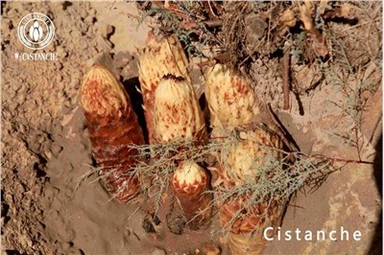
Cistanche tubulosa, one in two sources of a traditional tonic Cistanches Herba, was uniquely distributed in Xinjiang Uygur Autonomous Region, China. Different cultivated and wild C. tubulosa germplasms were collected from southern Xinjiang, the main
producing area of C. tubulosa. Then, the quality evaluation of the germplasms was systematically carried out after morphological measurement, weighing, and processing.
The quality evaluation methods were based on the previous experiments in our laboratory. Phenylethanoid glycoside contents were quantified by using a microplate reader, according to their ultraviolet absorption. Five obviously bioactive and relatively high-content phenylethanoid glycosides, including echinacoside, acteoside, A tubulosa glycosides, acteoside, 2'-acetyl verbascoside, were determined by ultra-performance liquid chromatography (UPLC). The contents of water-soluble extracts and dilute ethanol-soluble extracts were also analyzed following the guidance in Pharmacopoeia of China. The attenuated total reflectance mid-infrared (ATR-MIR) spectrums of all the C. tubulosa samples were carried out with clustering analysis using AssureID software.
A total of 285 C. tubulosa germplasms were sampled from 29 sites of 6 counties in southern Xinjiang in this study. Among them, 180 samples were gathered from 17 samples in Autumn 105 samples were gathered from 12 samples in Spring, 133 samples were wild, and the other 152 samples were from cultivation sites. The results of appearance characteristic analysis show that the plant heights of C. tubulosa sampled in spring in different sampling sites have no significant difference, but the difference between different sampling times is significant. The coefficients of variation (CV) of fresh weight and dry weight from the same sampling point are not big, which means the weights of all the samples from the same sampling site are relatively consistent. The average dry-to-fresh weight ratio of C tubulosa in autumn is higher than that in spring, which means the samples in spring have higher water content. The quality evaluation results have shown that the main active ingredient contents of (-;. Toulouse is significantly different in various sampling sites and seasons. The coefficients of variation of different samples from the same sampling sites are quality between large, which is up to a maximum of 1.70. The difference in C. tubulosa sampling seasons is more obvious than that among different areas. The contents of phenylethanoid glycosides, soluble sugar, and extracts in spring samples were all significantly higher than those in the samples.
Using ATR-MIR spectroscopy combined with cluster analysis, C. tubulosa sampled from different seasons can be quickly classified. The results provide profound information for the analysis of C. tubulosa quality and technical dance germplasm evaluation and application.
[Key words]: Cistanche tubulosa; Xinjiang; Germplasm; Quality

HIGH-QUALITY CISTANCHE EXTRACT FOR SALE
Chapter 1 Introduction
Section 1 Research Purpose and Significance
Cistanches Herba, also known as Congrong and Dayun, is a parasitic medicinal material unique to the arid areas of northwest my country and is known as "desert ginseng". Roucongrong was first recorded in "Shen Nong's Materia Medica" and has the effects of nourishing kidney yang, replenishing essence, and blood, moistening the intestines, and laxative[']. Modern medical research shows that Roucongrong has anti-aging, antioxidant, anti-fatigue, and neuroprotective effects. , and immune regulation, it is regarded as a treasure in medicine (Z-6l) and has great development potential in the fields of medicines and healthcare products. "Pharmacopoeia of the People's Republic of China" (hereinafter referred to as "Chinese Pharmacopoeia,") Cistanche deserticola has been included in the 1977 edition as the source plant of Cistanche medicinal herbs.
The 2005 edition of the Chinese Pharmacopoeia began to add Cistanche tubulosa. Cistanche tubulosa is mainly produced in southern Xinjiang and is a valuable tonic commonly used in Uyghur medicine. desert meat

Congrong and Roucong rong are both the source plants of the Congrong medicinal material specified in the 2015 version of the Chinese Pharmacopoeia. Their dried scaly leaves and fleshy stems are used as medicine. Due to the large difference in the content of the intrinsic components of the two species, the Chinese Pharmacopoeia stipulates The minimum limits for different indicator ingredients are set. Since the total phenylethyl alcohol content in the flower buds from the flower pods is higher, it is more suitable as a raw material for the extract. In recent years, Japan and other countries have imported large quantities of the extracts from the pods and developed more than 40 types of products [(A1, with the development and production of Rouconongrong medical and health care products, the demand for raw materials has soared, and prices have risen rapidly [(91). However, the quality of Roucongrong medicinal materials on the market is uneven, and there is a lack of scientific methods to analyze different sources.
Conduct a comprehensive evaluation of the quality of medicinal materials.
Research on the diversity and quality evaluation of germplasm resources is an important basic work for the protection and artificial cultivation of traditional Chinese medicine resources. It can be seen from the field investigation that the harvest time of pork belly from Rong in southern Xinjiang is from the autumn of the current year to the spring of the next year. Moreover, there are many production areas of pork belly from Rong and the germplasm is rich. There is an urgent need to judge the origin of flower pork from different germplasm. Differences in quality of Rong. The quality of the medicinal material of Polygonum tuberosum is the basis for ensuring the safety, effectiveness, and controllable quality of Polygonum tuberosum as medicine. This article measured, weighed, processed and quality evaluated the samples of Polygonum tuberosum from different germplasm. The analysis lays the foundation for a comprehensive understanding of the quality characteristics and sources of differences of tube flower pork Congrong in Xinjiang. Section 2 Research progress on meat quality evaluation methods and quality differences
1. Quality evaluation methods and research status of medicinal materials of the genus Rouconi
The Chinese Pharmacopoeia's pre-1995 version stipulated the meat quality control standards were only limited to the identification of appearance characteristics and identification of alkaloids. The 2000 version of the Chinese Pharmacopoeia added the content of qualitative identification of mullein and betaine using thin-layer chromatography and stipulated that the High-performance liquid chromatography (HPLC) method is used to quantitatively determine verbascoside. As a medicinal material, its content should not be less than 0.08%. Starting from the 2005 edition of the Chinese Pharmacopoeia, echinaceaside and verbascoside have been used as meat quality control indicators. In the 2015 version of the Chinese Pharmacopoeia, under the content determination item, the total amount of echinacoside and verbascoside contained in meat rong must not be less than 0.3%; the total amount of echinacoside and verbascoside contained in tube flower meat rong must not be less than 1.5%. At the same time, the 2015 version of the Chinese Pharmacopoeia stipulates that when measuring the extracted content of meat from wrong, the content of meat from rong should not be less than 35.0%, and the content of tuber meat from rong should not be less than 25.0%.

1.1 Phenylethyl alcohol
Phenylethanol glycosides are the main active ingredients of Roucong, and they are also the most studied compounds among the phytochemical components of Roucong. New active compounds are constantly being isolated and identified ['"]. Benzene in Roucong The main ingredients of ethanol glycosides include echinacea, verbascoside, 2'-ethyl phthalide verbascoside, isomurabasin, and rhodolite A. Tu Pengfei [11] studied the phenylethanoid glycosides of rhododendron plants. Ingredient research found that the ingredients of Rou Cong Rong, Salt Raw Rou Cong Rong, and Tuhua Rou Cong Rong are similar, but Sha Cong Rong is quite different; while the first three still have certain differences in the types and contents of phenylethanoid glycosides. Modern pharmacological research shows that phenylethanoid glycosides have anti-Alzheimer's and
Anti-Parkinson's disease, anti-fatigue, anti-aging and immunity-improving effects[[6]
The methods for determining the content of total phenylethanol glycosides in Roucong include the aluminum nitrate-colorimetric method [l2], diazonium salt-colorimetric method [13], and ultraviolet spectrophotometry [14]. In response to the problem of cumbersome pre-treatment operations by UV spectrophotometry, Wang Linan et al. [5] not only improved the pre-treatment method of Roucong Rong but also investigated the optimal extraction time and extraction solvent. Li Mingguo et al. [16] used high-performance capillary electrophoresis chromatography to determine the content of Rhodiola rosea, the active ingredient in Roucong Rong, for the first time.
Ma Zhiguo's research group used HPLC to establish a method for the simultaneous determination of 4 kinds [17], g kinds ['"], and 10 kinds [19] of phenylethanol compounds in Roucong rong medicinal materials. Qingqing Song et al. [20] developed a pressurized solvent This method combines extraction and high-performance liquid chromatography to extract, separate, and detect 8 phenylethanoid glycosides in Roucong Cheng. The method is reliable.
1.2 Sugars
At present, monosaccharides such as glucose, mannose, and fructose have been isolated from meat and plants of the genus [[21]] Oligosaccharides such as rhamnose and sucrose [[21 j], and CDP-4 (glucose-4) [22] Wait for polysaccharides. Among them, polysaccharide is an important active ingredient in Roucongrong, which is mainly composed of glucose, galactose, rhamnose, arabinose, fructose, etc. It is an effective ingredient for Roucongrong to aphrodisiac, improve immunity, laxative, anti-aging, sedative, and analgesic. substance. Oligosaccharides and galactitol have a laxative effect [23], while D-mannose has anti-aging activity [24]. The quality analysis of sugars has attracted more and more attention from researchers in recent years, and currently, There are relatively few studies on the sugars in meat from meat. The most commonly used method for determining monosaccharide content is chromatography [25]. Others include spectrophotometry, capillary electrophoresis, etc.
The phenol-sulfuric acid method is the most commonly used method to determine the polysaccharide content of Roucong Rong [[26, 2'7]]. It is highly accurate and relatively simple. Wang Linan et al.[[2a] used the phenol-sulfuric acid method to study and showed that the polysaccharide content was the highest when dried at 60°C. As the initial processing temperature increased, the polysaccharide content decreased. Ma Jingmei et al. [29] improved the phenol-sulfuric acid method and added the conversion factor of polysaccharide to glucose to make the measurement results closer to the true content of the polysaccharide. Xue Dejun et al [30] used the phenol-sulfuric acid method to study and found that the sugar composition and content of meat from different origins are different.
1.3 Overview of Infrared Spectroscopy Research
Fourier Transform Infrared Spectroscopy (FTIR) technology has the advantages of high sensitivity, good repeatability, small sample volume, no extraction and separation, simple instrument operation, and macroscopic, holistic, non-destructive, and rapid characteristics. It is suitable for identifying complex mixed systems such as Chinese medicinal materials [[31-33] According to the different regions of its absorption spectrum, it can be divided into mid-infrared spectrum, near-infrared spectrum, and far-infrared spectrum. The infrared spectrum can comprehensively reflect the complex composition characteristics of Chinese medicine and conduct multi-level and multi-index analysis of samples. With the development of computer technology, high-resolution, high-light-throughput, and excellent signal-to-noise ratio infrared spectroscopy combined with chemometrics for pattern recognition of Chinese medicinal materials has become an effective way to quickly identify Chinese medicinal materials, and has played an important role in various disciplines, such as analysis and identification of complex mixtures [[34, 35], damage monitoring of living cells [[36], rapid identification of the origin and authenticity of medicinal plants and animals [[37-39], component analysis and comparison of different parts of Chinese medicinal materials [[40,411, etc.
Sun Suqin's research group analyzed the infrared spectra, secondary derivative spectra, and two-dimensional correlation infrared spectra of more than 300 Chinese medicinal materials, summarized the three-level identification method of Chinese medicine, and provided technical support for the identification of complex Chinese medicine [[42]. In the early stage, our research group used infrared spectroscopy combined with two-dimensional correlation infrared spectroscopy to identify three species of medicinal materials of the genus Rhizoma (Rhizoma Rhizoma, Rhizoma Tubulosa, and Rhizoma Rhizoma Desertosa) and their counterfeits [32]. At the same time, the radial parts of Rhizoma Rhizoma were analyzed and evaluated, providing a fast and objective method for analyzing and evaluating the subtle differences in different parts of Rhizoma Rhizoma [31]. In recent years, combined with the rapid development of computer processing technology, infrared spectroscopy has been used to model through various cluster analysis methods, which has played an important role in the real-time monitoring of various links such as the harvesting, processing, and storage of medicinal materials.
The conventional sample preparation method for infrared spectroscopy analysis is the tableting method or the film coating method. In the 1980s, the ATR accessory was applied to the Fourier transform infrared spectrometer, so that solid and liquid samples could be directly tested. It has been widely used in food, environment, medicine, and other fields [[43] o The emergence of the ATR accessory further simplified the sample preparation process, making the sample state more flexible and the detection process simpler and more direct. Currently, ATR accessories have been widely used in the analysis of traditional Chinese medicines such as Gastrodia elata[[45] and Niu Fen Zi[[46]].
1.3 Overview of Infrared Spectroscopy Research
Fourier Transform Infrared Spectroscopy (FTIR) technology has the advantages of high sensitivity, good repeatability, small sample volume, no extraction and separation, simple instrument operation, and macroscopic, holistic, non-destructive, and rapid characteristics. It is suitable for identifying complex mixed systems such as Chinese medicinal materials [31-33]. According to the different regions of its absorption spectrum, it can be divided into mid-infrared spectrum, near-infrared spectrum, and far-infrared spectrum. The infrared spectrum can comprehensively reflect the complex composition characteristics of Chinese medicine and conduct multi-level and multi-index analysis of samples. With the development of computer technology, high-resolution, high-light-throughput, and excellent signal-to-noise ratio infrared spectroscopy combined with chemometrics for pattern recognition of Chinese medicinal materials has become an effective way to quickly identify Chinese medicinal materials, and has played an important role in various disciplines, such as analysis and identification of complex mixtures [[34, 35], damage monitoring of living cells [[36], rapid identification of the origin and authenticity of medicinal plants and animals [[37-39], component analysis and comparison of different parts of Chinese medicinal materials [[40,41], etc.
Sun Suqin's research group analyzed the infrared spectra, secondary derivative spectra, and two-dimensional correlation infrared spectra of more than 300 Chinese medicinal materials, summarized the three-level identification method of Chinese medicine, and provided technical support for the identification of complex Chinese medicine [[42]. In the early stage, our research group used infrared spectroscopy combined with two-dimensional correlation infrared spectroscopy to identify three species of medicinal materials of the genus Rhizoma (Rhizoma Rhizoma, Rhizoma Tubulosa, and Rhizoma Rhizoma Desertosa) and their counterfeits [32]. At the same time, the radial parts of Rhizoma Rhizoma were analyzed and evaluated, providing a fast and objective method for analyzing and evaluating the subtle differences in different parts of Rhizoma Rhizoma [31]. In recent years, combined with the rapid development of computer processing technology, infrared spectroscopy has been used to model through various cluster analysis methods, which has played an important role in the real-time monitoring of various links such as the harvesting, processing, and storage of medicinal materials.
The conventional sample preparation method for infrared spectroscopy analysis is the tableting method or the film coating method. In the 1980s, the ATR accessory was applied to the Fourier transform infrared spectrometer, so that solid and liquid samples could be directly tested. It has been widely used in food, environment, medicine, and other fields [[43] o The emergence of the ATR accessory further simplified the sample preparation process, making the sample state more flexible and the detection process simpler and more direct. At present, ATR accessories have been widely used in the analysis of Chinese medicinal materials such as Shijie [Gastrodia elata[[45] and Niu Fen Zi[[46]].

2. Overview of factors affecting the quality differences of Rou Cong Rong
2.1 Species and Host Diversity
The Chinese medicinal material Rou Cong Rong has been mixed with authenticity since ancient times, and the species source is relatively complex. In 1809, Hoffmonnsogg and Link established the genus Cistanche, but only the model species was recorded at that time. In 1930, Austrian scholar G. Beck published a monograph on Orobanchaceae plants, recording 18 species of Cistanche plants. Volume 69 of Flora of my country identified 5 species and 1 doubtful species of Cistanche plants in China [4s]. However, domestic scholars generally believe that there are 4 species and 1 variant of Cistanche plants in my country: Cistanche deserticola Y C. Ma, Cistanche salsa (C. A. Mey) G. Beck, Cistanche tubulosa (Schenk) Wight, Cistanche sinensis G. Beck and Cistanche salsa var. albiflora P. F. Tu et Z. C. Lou. The source of the medicinal material Cistanches Herba recorded in the 1963 edition of the Chinese Pharmacopoeia is salt-grown Cistanches Herba. Starting from the 1977 edition of the Chinese Pharmacopoeia, Desert Cistanches Herba became the only authentic source of the medicinal material Cistanches Herba. The 2005 edition of the Chinese Pharmacopoeia added Cistanches Tubulosa. Cistanches Herba and Cistanches Tubulosa are species included in the 2015 edition of the Chinese Pharmacopoeia. Their dried fleshy stems with scale leaves are used as medicine as the Chinese medicine Cistanches Herba〔',4910 Cistanches Herba plants are believed to be ancient Mediterranean relict plants that parasitize on the roots of other plants during the long evolutionary process. Cistanches Herba is a special parasite on Haloxylon am modena, a plant of the genus Haloxylon in the family Rosaceae. Bunge roots, commonly known as Haloxylon ammodendron; Tubule Carp parasitizes on the roots of Tamarix plants, which are unique to Xinjiang and naturally distributed on the edge of the Taklimakan Desert, commonly known as Red Willow Carp; Salt Carp has a wide range of hosts and can parasitize plants such as the Salicaceae, Salicaceae and Funeraceae. Common hosts include: Kalidium, Ceratoides, Anabasis, Suaeda, Atriplex, and Reamuria plants, as well as Salsola passerine Bunge, Nitraria sibirica Pall., Tetraenamongolica Maxim and other plants, commonly known as Salt Carp; Sand Carp parasitizes on the roots of small shrubs of the Reamuria genus, mainly Reaumuria soongarica (pall.) Maxim.; White Salt Carp hosts are plants of the genus Salicaceae.
Modern research has shown that the quality of different hosts and species of Cistanche is different. Moriya et al. [501] used HPLC to study the phenethyl alcohol components in Cistanche plants from Turkey, Pakistan, Qatar, Bahrain, and China and found that the total amount of phenethyl alcohol in Turkey's salt-grown Cistanche was the highest. Tu Pengfei used RP-HPLC to analyze the phenethyl alcohol components of 4 domestic species and 1 variant of Cistanche medicinal materials. All five Cistanche medicinal materials contained a variety of phenethyl alcohol components, among which the total amount of phenethyl alcohol in salt-grown Cistanche was the highest. Zhang Xuan et al., based on the method of the Chinese Pharmacopoeia, used RP-HPLC to determine the content of echinacoside and ergoside in Cistanche with 3 different species, 5 natural hosts, 2 cultivated hosts, and 7 different origins and found that there were differences. As one of the main active ingredients, the content of carbohydrate components varies significantly between different species of the genus Rhizoma and between different origins of the same species [30, 52]. Due to the huge market demand for Rhizoma Rhizoma, driven by huge economic benefits, the phenomenon of illegal mining has become increasingly serious, resulting in the depletion of its wild resources. my country has issued a clear ban on the mining of wild Rhizoma Rhizoma and encouraged the development of artificial cultivation to meet market demand. In recent years, provinces and regions such as Inner Mongolia, Xinjiang, Ningxia, and Gansu have combined ecological construction to carry out the cultivation and artificial cultivation of Rhizoma Rhizoma [[53]. Wang Changlin et al. [54] analyzed the chemical composition of artificially cultivated Rhizoma Rhizoma Rhizoma. The types of phenylethyl alcohol components in Rhizoma ... Wang Guoping et al. [55] measured the content of echinacea in roucongrong from different origins in southern Xinjiang. The content of the index components in roucongrong from different origins and species varied greatly. The content of echinacea in cultivated and wild roucongrong from the same origin also varied greatly.
2.2 Genetic diversity
Genetic diversity in a broad sense refers to the sum of all gene and chromosome variations of all biological individuals. These variations can have different manifestations, including genetic diversity at different structural levels such as the morphological structure, chromosome karyotype, and DNA bases of the organism, and genetic diversity at different functions such as physiology, biochemistry, growth, and development [56]. Genetic diversity in a narrow sense generally refers to the diversity of genetic material DNA, and its research techniques mainly include DNA molecular markers and barcode technology. Genetic factors play a leading role in the quality formation of traditional Chinese medicine [57].
Dang Rongli et al. [58] conducted RAPD analysis on desert bromelain, tubulosa bromelain, and salt-grown bromelain produced in Xinjiang and studied the genetic relationship between them. They believed that there was a certain difference in the genomes between different species of the genus bromelain. The genetic map of artificially cultivated tubulosa bromelain was completely consistent with that of the wild species from the same origin, and they had similar genetic characteristics. Cui Guanghong et al. [59] used RAPD technology to study two populations of desert bromelain and four populations of tubulosa bromelain and analyzed the differences in their genetic diversity. They believed that the genetic differentiation between populations of desert bromelain was greater, while the differentiation between populations of tubulosa bromelain was smaller. Xu Rong et al. [60] used AFLP molecular markers to analyze bromelain samples from wild authentic production areas and introduced cultivation bases. The bromelain had high genetic diversity and rich intraspecific variation. Ma Qin[[61] used the ISSR method to analyze the genetic diversity of 13 populations of Rhizoma Rucongrong, indicating that Rhizoma Rucongrong has high genetic diversity and obvious differentiation among populations. Huang Linfang et al.[62] successfully distinguished Rhizoma Rucongrong from different origins using psbA-trnH sequences. The results showed that there were differences in sequence sites between Rhizoma Rucongrong from different origins.
2.3 Differences in origin processing and preparation methods
Medicinal plants must be processed and prepared at the origin from fresh harvest to becoming commercially available Chinese medicinal materials. In particular, the origin processing directly affects the appearance and internal quality of the medicinal materials. Rhizoma Rucongrong has a long history of processing and preparation, and there is much research progress on processing and preparation.
Steaming or water-killing enzymes can effectively increase the content of phenylethanolic acid components in meat paste. Yang Jianhua et al. [63, 64] found that high temperature is beneficial to increase the content of total phenylethanolic acid, echinacoside and verbascoside; while Wang Linan et al. [28] found that with the increase of primary processing temperature, the content of phenylethanolic acid and polysaccharides tends to decrease, so the total amount of echinacoside and verbascoside is the highest when drying naturally, and the polysaccharide content is also suitable for drying at 60℃. There are also many studies on meat paste winemaking. Ma Zhiguo et al. [65] found that within a certain period, as the steaming time of meat paste was prolonged, the content of meat paste A in meat paste first increased and then decreased, and the content of the other five phenylethanoid acid components (echinacoside, verbascoside, is verbascoside, meat paste C, 2'-acetyl verbascoside) gradually decreased. Zhang Siju et al. [66] conducted a comparative study on the content of verbascoside in raw and processed C. edulis. They found that the content of verbascoside in raw slices and soaked slices was similar, and significantly higher than that in wine-stewed slices and high-pressure wine-stewed slices. It is speculated that the long-term high-temperature and high-pressure processing decomposed and destroyed the glycoside components.
2.4 Differences in habitat factors
2.4.1 Differences in regional distribution of C. edulis resources
C. edulis was once widely distributed in the desert areas of Inner Mongolia, Xinjiang, Ningxia, and Qinghai in my country. In recent years, due to the illegal exploitation of C. edulis and its host plants, my country has established C. edulis cultivation bases in Inner Mongolia, Ningxia, Xinjiang, and other places to ensure the sustainable use of C. edulis resources [[53]. The distribution range of C. deserticola is consistent with that of its host plant[67], but the distribution of C. tubulosa is not synchronized with that of its host plant. The distribution of C. tubulosa plants is nationwide, while C. tubulosa only exists in southern Xinjiang. It is naturally distributed in the Taklimakan Desert and the surrounding Gobi Desert south of the Tianshan Mountains in Xinjiang. The main production areas are Hotan, Kashgar, Aksu, Korla, and other regions, with the largest production in Hotan[[68]0 Chen Shilin et al.[[69] used ecological suitability numerical analysis and combined with natural and social conditions to recommend selecting Inner Mongolia, Xinjiang, Gansu, and Ningxia as suitable areas for artificial cultivation and introduction of C. deserticola, and Inner Mongolia, Xinjiang, Gansu, Ningxia and other places as suitable areas for introduction of C. tubulosa. Xie Caixiang et al.[70] believed that low temperature in winter is the key factor limiting the distribution of C. tubulosa, and the main reason for the localization of C. tubulosa in southern Xinjiang is the unique local climate conditions. Modern research has shown that there are differences in the quality of Rhizoma Cistanche in different distribution areas. Cai Hong et al. [71] conducted HPLC determination of echinacoside, verbascoside, and galactitol in Rhizoma Cistanche from different origins. The amount of effective ingredients contained in samples from different cultivation locations was quite different. Xiong Yuanjun et al. [72] conducted a comparative study on 9 samples from different origins. The contents of the ingredients contained in the 9 origins were different; Wang Guoping et al. [55] determined the content of echinacoside in Rhizoma Cistanche from different origins in southern Xinjiang. The results showed that the content of Rhizoma Cistanche index components in different origins and species in Xinjiang varied by several to dozens of times.
2.4.2 Differences in soil environmental factors
Chen Jun et al. [67, 68] believed that the suitable area for Rhizoma Cistanche is most affected by soil factors, and the distribution of its suitable area varies significantly with soil types. The soil suitable for the growth of Rhizoma Cistanche and its host is high in salt content, and the content of potassium, sodium, calcium, magnesium, silicon, nitrogen, phosphorus, and organic matter in the water-soluble salt of the soil is low. Artificial cultivation of succulent plants and Haloxylon ammodendron requires nutritional supplementation[[73]. Huang Peiku[74] investigated the parasitic environment of wild succulent plants in Xinjiang and found that the host Haloxylon ammodendron of succulent plants under different soil conditions was significantly different. Wet salt land was particularly suitable for the growth of Haloxylon ammodendron, and succulent plants also grew well. Xu Li et al.[[75] used the grey correlation analysis method to analyze the dominant factors of the soil ecosystem of Haloxylon ammodendron and succulent plants in Jilantai, Inner Mongolia. Haloxylon ammodendron had obvious biological salt accumulation, and various factors in the Haloxylon ammodendron forest soil had an impact on the height of Haloxylon ammodendron. At the same time, due to soil drought, the proportion of nutrients transported to the host Salix babylonica from the assimilation products of the succulent plants was reduced, and the biological yield of the succulent plants decreased[76]. At present, most of the C. tubulosa is cultivated artificially. Different water and fertilizer management can affect the quality of C. tubulosa. For example, greenhouse cultivation can promote the growth of C. tubulosa and C. tubulosa[7/j. It is speculated that different soil environmental conditions not only affect the host, but also affect the parasitic growth of C. tubulosa, and thus affect the quality of C. tubulosa.