The Importance Of Developing The Cistanche Industry
Aug 08, 2024
The plants of the Cistanche genus are parasitic, and the development of the Cistanche industry can comprehensively promote the artificial cultivation of host plants, the development of the Cistanche planting industry, and the development of the Cistanche industry, thereby driving local farmers and herdsmen employment, increasing income, and solving some prominent social problems. It has good ecological, economic, and social benefits. Meanwhile, as a precious traditional Chinese medicine, Cistanche deserticola has various pharmacological effects and can effectively alleviate the impact of current social aging and sub-health.

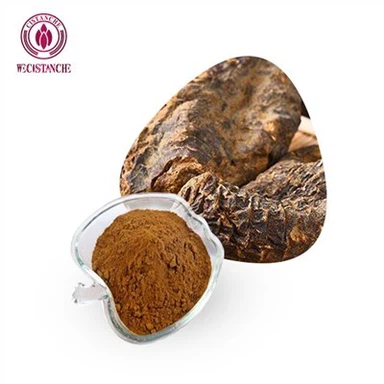
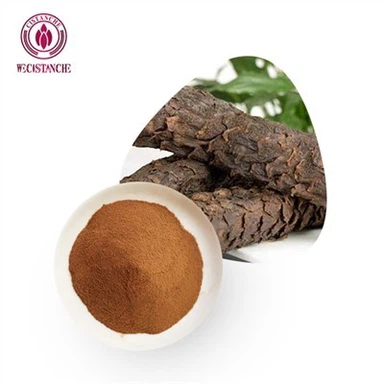
Cistanche deserticola
1, Ecological benefits
The development of the Cistanche deserticola industry has good ecological benefits. The plants of the Cistanche genus are parasitic, and their hosts are famous sand control and fixation plants such as Haloxylon ammodendron, Tamarix genus, Salt Claw Claw, Red Sand, Pearl Wood, etc. Cistanche plants in China are mainly distributed in deserts and desert areas in northwest China. Cistanche deserts are naturally distributed in the Ulanbu Desert and Badanji Desert of Inner Mongolia grassland within 36 °~37 ° north latitude. They are distributed southward along Ningxia, through the Gansu Hexi Corridor, through Qinghai Qaidam Basin to the Junggar Basin, Gurbanton Desert, and Taklimakan Desert in Xinjiang. Parasitic on the roots of Haloxylon ammodendron (C.A. Mey.) Bunge and H. persicum Bunge exBoiss. The growth substrate includes fixed dunes, sandy land, gravelly deserts, gravelly deserts, and mildly saline-alkali soil deserts. Cistanche salsa is distributed in Inner Mongolia, Ningxia, Qinghai, Gansu, and Xinjiang. It extends to the saline-alkali land of Yanchi lowland in Ningxia in the south and the saline-alkali soil of counties around the Junggar Basin in Xinjiang in the west. Born in desert grasslands, lowlands of lake basins in desert areas, and areas with heavy salt alkali, the host of halophilic Cistanche deserticola is more widespread. It has been found to parasitize the roots of various plants such as Kalidium, Ceratoldes, Anabasis, Suaeda, Atriplex, Reamuria, etc. It is mainly distributed in dry areas such as deserts and deserts. According to data analysis, its natural conditions for growth are even more harsh, ranging from general deserts to highly saline soils, and it can even tolerate high levels of 3% to 4% salt in the soil. Guanhua Cistanche deserticola is naturally distributed in the Taklamakan Desert and its surrounding areas in southern Xinjiang; Born in well-watered tamarisk clusters and dunes, at an altitude of 1200 meters, parasitic on the roots of TamarirL plants.

Desert ginseng-Fresh Cistanche deserticola
Click here to view Cistanche Enhance Immunity products
【Ask for more】 Email:cindy.xue@wecistanche.com / Whats App: 0086 18599088692 / Wechat: 18599088692
By artificially transforming wild Haloxylon ammodendron forests, the area of oases will be increased and the total amount of green plants will be increased. The role of green plants in air purification is that they absorb carbon dioxide and release oxygen through photosynthesis. According to relevant statistics, for every 1000 grams of dry matter growth in trees, they need to absorb 1400 grams of carbon dioxide and release 1200 grams of oxygen. At the same time, a large area of forest belt can increase the humidity inside the forest, reduce the temperature inside the forest, slow down the sudden rise and fall of temperature, and reduce the driving force of wind generation. The increase in surface roughness caused by a large number of forest belts can reduce wind speed and decrease the occurrence of sandstorms. Whether it is the Haloxylon ammodendron forest in Xinjiang, the Suaeda salsa desert, or the Haloxylon ammodendron forest growing in Alxa League, Inner Mongolia, their site conditions are all in uninhabited desert areas or desert frontiers. Due to drought, strong sandstorms, large temperature differences, low precipitation, high evaporation, long sunshine hours, and high soil salinity, it cannot be directly used for agricultural production. The distribution area of salt-bearing flesh ash paste, mainly hosted by Suaeda salsa, has a soil salt content between 3.5% and 6%. The soil structure is primarily composed of medium sand particles, and the water-soluble salts in the soil have high potassium, sodium, calcium, magnesium, and silicon content, low nitrogen and phosphorus content, and lower organic matter content. The practice has proven that inoculating Cistanche deserticola on saline-alkali land can reduce soil salinity and improve soil quality. Taking the artificial cultivation of Cistanche deserticola as an example, the host plant of Cistanche deserticola is tamarisk, which can live for more than 100 years in extremely arid deserts. Tamarix chinensis is an excellent windbreak and sand-fixing plant, and also a rare tree species for afforestation in heavily saline alkali land. Its biggest characteristics are drought resistance, salt alkali resistance, tolerance to poor soil and sand burial, as well as water and humidity resistance, making it highly adaptable. The natural conditions of the counties around the Tarim Basin in southern Xinjiang are very poor. Due to its high latitude, it is located in the center of Eurasia, surrounded by mountains, and under the control of the Siberia Mongolia cyclone, the humid airflow in the Pacific Ocean and the Indian Ocean cannot enter, which makes the climate very continental and dry, and belongs to the arid desert zone. The annual, monthly, and daily temperature ranges vary greatly. The main species of plant that can thrive in such harsh environments is tamarisk. At present, this plant is still the preferred tree species for windbreak and sand control. Because it has strong adaptability, is easy to reproduce, grows quickly, has a well-developed root system, and does not have strict requirements for soil, it is easy to successfully inoculate. Nowadays, a large number of artificially planted tamarisk forests in southern Xinjiang have built a green windbreak and sand barrier against the once barren desert. Under its influence, the wind speed significantly decreases, and the air humidity increases. When the wind speed passes through the willow forest at an altitude of 1-1.5 meters, it can reduce the original wind speed by about 50%, and the amount of quicksand blocked each year can reach more than 4 million cubic meters. The humidity in the forest has increased by 10% compared to before, effectively curbing the harm of sandstorms to the area and improving the local ecology. Therefore, developing the Cistanche deserticola industry can effectively promote the artificial cultivation and protection of host plants, play a role in windbreak and sand fixation, improve soil, increase local air humidity, and improve ecology.

Professor Cistanche Research on the Growth of Cistanche deserticola
2, Economic benefits
Developing the Cistanche deserticola industry can generate good economic benefits. Due to the increasing market demand, the production of wild Cistanche deserticola has dropped significantly, and the price of Cistanche deserticola is rising day by day. At present, the market price for desert Cistanche deserticola is 200-300 yuan/kg, and for tube flower Cistanche deserticola it is 80-100 yuan/kg. According to general vaccination and management, the yield per mu is 40-100 kg, and the annual output value per mu is 3200-12000 yuan. Nowadays, the price of wild Cistanche deserticola has risen to nearly 1000 yuan/kg. Taking the market price of cultivating Cistanche deserticola as an example, from fresh raw materials to extracts to fine products, with the improvement of technological content, its economic added value has also doubled. By processing various finished products, the output value per mu will reach tens of thousands of yuan, which can greatly promote the growth of the local economy, increase the income of farmers and herdsmen, and effectively solve the overall economic situation in border areas.
3, Social benefits
The development of the Cistanche deserticola industry will effectively solve some social problems and generate good social benefits. Internationally, the standard for countries and regions to enter aging is usually set at 10% of the total population aged 60 and above, or 7% of the total population aged 65 and above. Based on this standard, China has entered an aging society since 2000. Taking the proportion of the total population aged 65 and above as a reference, this indicator increased from 7.3% in 2002 to 9.4% in 2012. On February 26, 2015, the National Bureau of Statistics released the 2014 Statistical Bulletin on National Economic and Social Development. According to the official data, as of the end of 2014, the population aged 60 and above in China was 212.42 million, accounting for 15.5% of the total population; The population aged 65 and above is 137.55 million, accounting for 10.1%, surpassing 10% for the first time. This proportion is significantly higher than the traditional United Nations standard for an aging society of 10%. The latest data from the Chinese government shows that the average annual population growth rate in the first decade of the 21st century was 0.57%, lower than the 1.07% annual growth rate maintained in the last decade of the last century. The elderly population is still increasing at a rate of 8 million people per year. Therefore, China's population is aging. Experts predict that by 2050, China's aging population will reach one-third of the total population. Since entering an aging society, China has shown a significant trend of a large and rapidly growing elderly population, aging, disability, and empty nest population. In addition, the combination of China's national conditions of aging before becoming wealthy and the structure of small families has made the issue of elderly care extremely severe. The rapid increase in the elderly population, especially the annual growth rate of 1 million elderly people over 80 years old and disabled people, has highlighted the increasing demand for elderly care, rehabilitation care, medical care, spiritual and cultural development, and the problem of elderly care is becoming increasingly severe.

Harvest of Cistanche deserticola
Subhealth is a critical state in which individuals may experience a decline in mental vitality, adaptability, and responsiveness, even if they do not have specific illnesses. If this state is not corrected promptly, it can easily lead to psychosomatic disorders. Sub-healthy refers to a nondisease and nonhealthy state, which is a type of sub-healthy state that is between health and disease. Therefore, it is also known as "sub healthy", "third state", "intermediate state", "wandering state", "gray state", etc. It is commonly referred to as a "sub-healthy state" in China. Clinical manifestations include decreased memory, lack of concentration, slow thinking, delayed reactions, prolonged negative emotions, lack of confidence, and insufficient sense of security. The sub-healthy population mainly includes older people, those who are under long-term competitive pressure, and those with poor dietary habits. The white-collar class is the main population with sub-health status. This mainly includes older people, as well as those who experience long-term competitive pressure, such as excessive use of the brain or fatigue leading to physical and mental exhaustion. This often causes the body and mind to be severely overloaded, and once the body cannot bear it, it will fall ill. In addition, there are people with poor dietary habits. According to surveys, over 70% of people today are sub-healthy. The white-collar class is the main population with sub-health status. The intense pressure of work and life causes dual physical and psychological fatigue among white-collar workers, making them the main group in sub-health status. According to a special survey in China, 75.3% of middle-aged intellectuals with senior professional titles in Beijing are in a state of sub-health. What is even more worrying is that over 85% of business managers are in a state of chronic fatigue or sub-health, which is determined by their unique work and living environment and behavioral patterns. The white-collar class has a fast pace of social life, high psychological pressure, complex urban life, complex interpersonal relationships, unavoidable risks, unexpected setbacks, deteriorating environmental quality, irregular lifestyles, especially smoking, alcohol abuse, overeating, and lack of necessary exercise, which have led many people into a sub-health state.

Harvest of Cistanche deserticola
At present, China's society is severely aging, and there is a large population of sub-healthy people. As a tonic traditional Chinese medicine, Cistanche deserticola will be able to effectively improve these social problems. Cistanche deserticola has the effects of tonifying kidneys and strengthening yang, anti-fatigue, delaying aging, and preventing senile dementia. On the one hand, it can greatly improve the quality of life of the elderly and prolong their lifespan; On the other hand, Cistanche products can alleviate the problems of high stress and fatigue in sub-healthy populations, alleviate sub-healthy symptoms, and improve the quality of life and work. Secondly, Cistanche deserticola is mainly distributed in saline-alkali, desert, and desert areas, which are often inhabited by ethnic minorities in northwest China. There, the economy is often backward, people's living standards are low, and various social conflicts are intense. The development of the Cistanche deserticola industry will effectively drive local employment, increase overall income levels, improve people's living standards, alleviate social conflicts, and is of great significance for stabilizing and consolidating Xinjiang in the region.