THE INTESTINAL MICROBIOME IN PATIENTS UNDERGOING BARIATRIC SURGERY: A SYSTEMATIC REVIEWⅡ
Dec 08, 2023
We analyzed 28 articles dealing with clinical studies or literature reviews as their main characteristics, 82% (n=23) of which were related to retrospective studies. The sample size of the studies ranged from 9 to 257 participants and/or fecal samples. The epidemiological profile showed a higher prevalence of obesity in females, ranging from 24.4 to 35.1%, with a mean age of around 25–40 years. All selected articles exposed the relationship between IM in obesity and its alteration after bariatric surgery. There was a variation regarding the type of bariatric surgery, migrating between the RYGB, adjustable gastric banding, and vertical gastrectomy (VG). Of the 28 studies, 6 of them evaluated the gut microbiota of obese people undergoing bariatric surgery and their relationship with DM2/glucose metabolism/insulin resistance.

Click to home remedies for constipation
Five studies demonstrated the importance of fecal analysis (metabolome) and genetics, along with epigenetics, for future contributions to improving the gut microbiota in obesity, such as fecal transplantation. One of these articles also brought up the relationship between respiratory diseases, such as asthma, and advanced overweight. Another study evaluated the importance of probiotics in the microbiota after surgical intervention, as well as its association with taste and repercussions on the vaginal microbiota. One of the articles raised the relationship between the IM with cognitive function and the change after bariatric surgery1,25. Finally, we had an article that evaluated the correlation between IM and bile acids in nonalcoholic fatty liver disease (NAFLD) and its reversal after bariatric surgery.
The digestive tract constitutes the largest surface area of the human body, with a size of approximately 30–40 m², and it is uniquely exposed to environmental factors such as diet, antibiotics, pathogens, and other lifestyle habits such as physical activity1. The human gut harbors approximately 100 trillion microbes, which have diverse physiological and biochemical functions in the human body14,16. The IM is different from one person to another because its colonization begins at birth and is composed of three phases: from birth to weaning, from weaning to adulthood, and old age.
Breast milk is free of bacteria, but soon after birth, the intestine starts to be populated due to endogenous and exogenous influences. During the first 12–24 h, the main bacteria are facultative anaerobes such as Escherichia coli, Enterococcus, and Streptococcus, which will support their growth. A crucial determinant of the development of IM is infant feeding, since at the end of exclusive breastfeeding and the introduction of solid food, there is a greater differentiation of microorganisms, which will result in the adult microbiota. This microbiota remains stable if there are no changes in eating habits, disease onset, or antibiotic consumption.

Bifidobacterium and Clostridium bacteria are more present in children and adolescents compared to adults, while in the elderly, their representation decreases1,13. The IM works as an organ of the human body, whose various functions can suffer alterations if not nourished correctly14,16,17. Its main activities are related to the immune system, helping in the intestinal barrier, metabolism, nutrient absorption, vitamin synthesis, defense against pathogens, and the dehydroxylation of bile acid. When there is an inadequate intake of modern ultra-processed Western diets, these functions are affected, diminishing the applicability of the gut microbiome. In contrast, natural and fiber-rich foods assist its development healthily and diversely.
The IM is composed of five different phyla that mainly colonize the large intestine, with about 90% of the bacterial species belonging to the phyla Firmicutes (Bacillus spp.) and Bacteroidetes (Bacteroides spp.). There is also a representation of the other phyla such as Actinobacteria (Bifidobacterium spp.), Proteobacteria (Escherichia, Helicobacter), and Verrucomicrobia (Akkermansia spp.)1,14,16,25. It is known that the profile of IM in obese and healthy individuals is divergent. Obese individuals often have the microbiota associated with a decrease in Bacteroidetes and an increase in Firmicutes, but some studies in humans have found an opposite ratio, suggesting that the FirmicutesBacteroidetes ratio would be increased. Low MGR in obese people is associated with metabolic diseases, inflammation, and insulin resistance16,17. IM may contribute to obesity in some ways. Its microorganisms participate in the regulation and ability to process nondigestible polysaccharides from the diet, influencing intestinal absorption of short-chain fatty acids (SCFAs).
Similarly, there is a regulatory dysfunction of the carbohydrate metabolic pathways of fructose and mannose, galactose, starch, and sucrose. Another particularity would be the gene regulation pathway where, according to the bacterial species present there, there is a promotion of fat storage in adipose tissue (AT)12,15. In summary, in obesity, there may be an increase or decrease in bacterial phyla, leading to a change in the relationship between Firmicutes and Bacteroidetes, causing their diversity to be lower in contrast to individuals within the ideal weight. According to Abenavoli et al., all carbohydrate and starch metabolic pathways were highly enriched in the obese microbiome.
Furthermore, within this observation, the abundance of genes related to lipopolysaccharide (LPS) biosynthesis and peptidoglycan biosynthesis was higher, and this finding could be related to higher levels of inflammatory cytokines such as IL-6 and TNF-beta present in obesity1. Finally, pathways related to amino acid metabolism involving phenylalanine, tyrosine, and tryptophan biosynthesis and modules of the glutamine/ glutamate transport system were higher compared to those in the control group of healthy individuals15. Butyrate-producing bacteria are in greater numbers in obese individuals, in contrast to the amino acid glycine, which is decreased. Elevated glycine levels are related to improved HbA1c, and acetyl-glycine has been associated with a reduced risk of developing DM2. The bacterial species Bacteroides thetaiotaomicron influences host adiposity and metabolism, so its depletion is associated with overweight and serum amino acid concentration.
When comparing healthy and obese individuals, one can note a difference in the number of metabolites derived from gut microorganisms, such as higher production of aromatic amino acids (AAA) and branched-chain amino acids (BCAA). In the microbiota of obese individuals, the serum concentration of phenylalanine, tyrosine, leucine, isoleucine, and valine was notably higher15. In summary, microbial by-products (SCFAs) are produced in the gut and cross the intestinal barrier, proceeding through the blood circulation until they reach the brain. These byproducts manage to cross the blood-brain barrier until they reach the hypothalamus, the regulatory center of appetite and metabolic processes. Therefore, the Enterococcus species, for example, when fermenting dietary fiber, produces certain SCFAs that are directly related to the decrease in appetite. Thus, direct communication is established between the gut and the brain.

Obesity is a low-grade but chronic systemic inflammatory disease with AT damage. Inflammation participates directly in the development of complications since the size of adipocytes influences the production of inflammatory cytokines and chemokines, which recruit pro-inflammatory cells within the AT.
Thus, in severe obesity, a high prevalence (75% of patients) of reduced fecal microbiota and MGR occurs6,7. A critical factor in modulating the MGR, and one that can provide diversity, is the eating habits of the individual. In obesity, the intestine is characterized by greater permeability, facilitating the bacterial components to cross the intestinal barrier and fall into the bloodstream, and this would be associated with intestinal dysbiosis, permeability, inflammation, and obesity. Thus, studies show that intestinal dysbiosis is identified in overweight and moderate obesity, which worsens more with increasing body mass index (BMI); the worsening of the disease is associated with metabolic changes, such as insulin resistance, low-grade inflammation, and hypertrophy of adipocytes6-8,12. Abenavoli et al. performed an analysis with mice in which two mechanisms by which the microbiota may contribute to obesity are demonstrated:
energy regulation and the ability to process nondigestible dietary polysaccharides, leading to increased intestinal absorption of SCFAs and
via gene regulation, promoting increased fat storage in AT
From this, it is suggested that the microbiota of obese individuals has a greater advantage in the extraction of energy from food when compared to nonobese individuals1. Furthermore, analysis of the composition and complexity of the gut microbiota is important to associate IM signatures with host diseases. The two main approaches are metagenomic analyses of random DNA fragment sequencing (Shotgun) and 16S ribosomal RNA gene amplicon sequencing16. Furthermore, through analysis of the fecal microbiome of 1,126 twin pairs, a close relationship between the microbiota and heritable microbial taxa was observed, where the IM of identical twins was more closely related than that of fraternal twins and was observed in other genetically close relatives.
The microorganisms themselves contribute to shaping composition through the secretion of peptides and regulatory molecules that influence the metabolic profile of the host. To analyze the effects of genetics and test the relationship of microbial interference with metabolic status, the microbiota of patients with Crohn's disease (CD) was studied in relatives (parents, twins, and non-twin siblings) using DNA fingerprinting. Dysbiosis was present in twin patients with CD and absent in relatives without the disease, even though their genetic heritage was shared. As such, it was found that intestinal colonization by the microbiota results in transcriptional changes in intestinal cells.
Natural Herbal Medicine For Relieving Constipation-Cistanche
Cistanche is a genus of parasitic plants that belongs to the family Orobanchaceae. These plants are known for their medicinal properties and have been used in Traditional Chinese Medicine (TCM) for centuries. Cistanche species are predominantly found in arid and desert regions of China, Mongolia, and other parts of Central Asia. Cistanche plants are characterized by their fleshy, yellowish stems and are highly valued for their potential health benefits. In TCM, Cistanche is believed to have tonic properties and is commonly used to nourish the kidney, enhance vitality, and support sexual function. It is also used to address issues related to aging, fatigue, and overall well-being. While Cistanche has a long history of use in traditional medicine, scientific research on its efficacy and safety is ongoing and limited. However, it is known to contain various bioactive compounds such as phenylethanoid glycosides, iridoids, lignans, and polysaccharides, which may contribute to its medicinal effects.

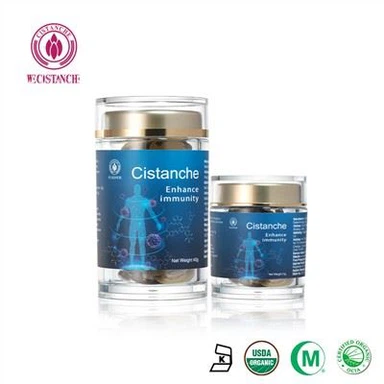
Wecistanche's cistanche powder, cistanche tablets, cistanche capsules, and other products are developed using desert cistanche as raw materials, all of which have a good effect on relieving constipation. The specific mechanism is as follows: Cistanche is believed to have potential benefits for relieving constipation based on its traditional use and certain compounds it contains. While scientific research specifically on Cistanche's effect on constipation is limited, it is thought to have multiple mechanisms that may contribute to its potential to relieve constipation. Laxative Effect: Cistanche has long been used in Traditional Chinese Medicine as a remedy for constipation. It is believed to have a mild laxative effect, which can help promote bowel movements and induce constipation. This effect may be attributed to various compounds found in Cistanche, such as phenylethanoid glycosides and polysaccharides. Moistening the Intestines: Based on traditional use, Cistanche is considered to have moisturizing properties, specifically targeting the Intestines. Promoting hydration and lubrication of the Intestines may help soften tools and facilitate easier passage, thereby relieving constipation. Anti-inflammatory Effect: Constipation can sometimes be associated with inflammation in the digestive tract. Cistanche contains certain compounds, including phenylethanoid glycosides and lignans, that are believed to have anti-inflammatory properties. By reducing inflammation in the intestines, it may help improve bowel movement regularity and relieve constipation.