The Magical Charm Of Cistanche Deserticola
Nov 01, 2024
1, The magical charm of Cistanche deserticola
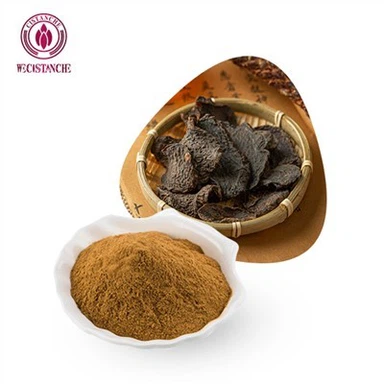
As a precious Chinese medicinal herb, Cistanche deserticola occupies an important position in traditional Chinese medicine. It was first recorded in the "Shennong Bencao Jing" and is classified as a top-grade product. It has the effects of tonifying kidney yang, nourishing meridians and blood, moisturizing the intestines and promoting bowel movements. The reputation of "desert ginseng" has a long history, mainly due to the following reasons.
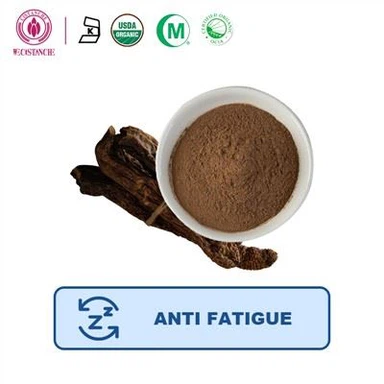
Firstly, in terms of medicinal value, Cistanche deserticola contains abundant alkaloids, crystalline neutral substances, amino acids, trace elements, vitamins, and more. It can nourish kidney yang, nourish essence and blood, effectively prevent and treat male kidney deficiency, impotence, nocturnal emission, premature ejaculation, and female menstrual disorders, amenorrhea, infertility and other diseases. Modern pharmacological research has also proven that Cistanche deserticola not only has the effects of tonifying the kidney and yang, moisturizing the intestines and promoting bowel movements, but also has anti fatigue, anti-aging, enhancing the body's immunity, and improving memory. Its nourishing effect is equivalent to ginseng, and it does not have the "heat up" and "dryness" of ginseng, so it is known as "desert ginseng".

Cistanche tea
Secondly, Cistanche deserticola is a parasitic plant that parasitizes the roots of desert trees such as Haloxylon ammodendron, and grows in extremely harsh environments. It is mainly produced in Inner Mongolia, Xinjiang, Gansu and other places. It prefers to grow on soft sandy land with mild salinization, generally on sandy or semi fixed sand dunes, dry old riverbeds, lowlands of lake basins, etc., with poor habitat conditions. The climate suitable for growth is arid, with low rainfall, high evaporation, long sunshine hours, and large temperature differences between day and night. The soil is mainly composed of gray brown desert soil and brown desert soil. This tenacious vitality endows Cistanche deserticola with magical effects.
According to the survey, there are only 7 Cistanche deserticola plants per thousand parasitic plants of Haloxylon ammodendron. Moreover, due to its excellent feed for camels and fuel for local communities, overgrazing and extensive harvesting of Haloxylon ammodendron have also put Cistanche deserticola in a precarious situation. Only a small amount of wild Cistanche deserticola is distributed in the Badain Jaran Desert. This also makes Cistanche more precious.
It is said that there was a desert after the first cistanche. Because the cistanche absorbed the essence of the earth and the aura of all things, the earth became a desert. Although this is just a legend, it also indirectly reflects the magical nature of Cistanche deserticola.
2, Medicinal value and efficacy
(1) Tonifying the kidneys, aiding yang, and strengthening the body

cistanche deserticola ma-improve kidney function
Cistanche deserticola has shown outstanding performance in nourishing the kidneys and promoting yang. For men, it can effectively improve symptoms caused by insufficient kidney yang, such as impotence, premature ejaculation, and soreness of the waist and knees. Research has shown that Cistanche deserticola can improve sperm quality and have a certain adjuvant therapeutic effect on male infertility. For example, drinking water soaked in Cistanche deserticola has a certain effect on nourishing the kidneys and can also assist in cases of weak penile erection. However, if the weak erection is caused by reproductive system diseases, effective treatment should be carried out based on the cause of the disease. For women, Cistanche deserticola can also treat menstrual disorders, amenorrhea and infertility caused by kidney yang deficiency. Cistanche deserticola has a sweet and salty taste, a warm nature, and belongs to the kidney and large intestine meridians. It has the effects of tonifying kidney yang and nourishing essence and blood. It can be used for symptoms such as kidney yang deficiency, essence and blood deficiency, impotence and infertility, soreness and weakness of the waist and knees, and muscle and bone weakness.
(2) Moisturizing the intestines and promoting bowel movements to promote health
Cistanche deserticola is rich in dietary fiber and has good moisturizing and laxative effects. According to the Journal of Food Safety and Quality Testing, the dietary fiber of Cistanche deserticola contains 88.12% soluble dietary fiber. After continuous gavage for 14 days, the small intestine activated carbon propulsion rate of mice in each dose group of Cistanche deserticola dietary fiber was higher than that of the constipation model group, and there was a significant difference between the medium and high dose groups and the constipation model group. This indicates that Cistanche deserticola can significantly improve the propulsion speed of the small intestine, shorten the defecation time, and also have a significant inhibitory effect on the water absorption of the large intestine, thereby promoting the wetting and excretion of feces. Cistanche not only alleviates constipation symptoms, but also promotes gastrointestinal peristalsis, accelerates fecal excretion, and plays a positive role in promoting gastrointestinal health. Suitable for constipated individuals, but the dosage and method should be adjusted according to personal constitution and physician's guidance during the consumption process to ensure safety and effectiveness.
3, Diverse methods of consumption
(1) Fried soup has a long-lasting flavor when taken orally
Oral administration of Cistanche deserticola decoction is a common method of consumption. Wash and slice the Cistanche deserticola, add water to a pot and boil, then simmer over low heat for a period of time to obtain a soup with a strong medicinal aroma. This method can fully release the active ingredients in Cistanche deserticola, allowing its medicinal value to be fully realized. In addition to decoction alone, Cistanche deserticola can also be combined with other medicines to make pills or powders. For example, grinding Cistanche deserticola into powder form and making it into pills or powders together with kidney tonifying drugs such as Dodder and Eucommia ulmoides can be taken according to the doctor's advice for regulating the body. In addition, Cistanche deserticola can also be brewed into wine for consumption. Put a proper amount of Cistanche deserticola and Baijiu into a bottle to brew. After a period of time, the effective ingredients of Cistanche deserticola will be incorporated into the liquor. Drinking a proper amount every day has the effect of tonifying the kidney and strengthening the yang.

cistanche deserticola ma-improve kidney function
(2) Both brewing tea and boiling water are feasible
Cistanche can be used to make tea. Put an appropriate amount of Cistanche deserticola mixture into a teacup, add an appropriate amount of boiling water, and wait for it to cool before drinking. It can be brewed multiple times for convenience and speed. Cistanche tea can also be boiled with other herbs such as astragalus and angelica, which can not only enhance its taste but also strengthen its nourishing effects. In addition, adding an appropriate amount of Cistanche deserticola and other ingredients to a pot for stewing or cooking can enhance the taste of the soup and rice, and also have a nourishing effect on the body. It is recommended to use no more than 10 grams each time to avoid excessive consumption and burden on the body.
(3) Doctor's guidance should be kept in mind
Although Cistanche deserticola has many benefits, people with specific diseases should not consume it excessively. For example, people with liver and kidney dysfunction, diabetes, hyperthyroidism and other diseases should carefully eat Cistanche deserticola under the guidance of doctors. Because Cistanche deserticola may have a certain impact on the condition of these patients, excessive consumption may worsen the condition. In addition, pregnant women, people with weak cold constitution, and those with damp heat constitution should not consume Cistanche deserticola. Pregnant women consuming Cistanche deserticola may have an impact on the fetus; Excessive consumption of Cistanche deserticola by people with weak and cold constitution can increase yang energy in the body, leading to excessive internal heat; People with a damp and hot constitution who consume Cistanche deserticola may experience heavier dampness and exacerbate damp and hot symptoms. Therefore, before consuming Cistanche deserticola, it is best to consult a doctor's opinion and determine whether it is suitable for consumption, as well as the dosage and method of consumption, based on personal physique and physical condition.
4, There are differences in market prices
The price of Cistanche deserticola varies greatly due to factors such as origin and specifications. Generally speaking, the price of Cistanche deserticola per kilogram ranges from 150 to 400 yuan. Among them, the price of Cistanche deserticola produced in Xinjiang is relatively low, usually in the tens of yuan per kilogram. This is mainly because the production of Cistanche deserticola in Xinjiang is relatively large, and there may be some differences in quality and efficacy compared to Cistanche deserticola from other regions.
The price of Cistanche deserticola produced in Gansu region is around 100 yuan per kilogram. Gansu's Cistanche deserticola also has a certain market share, and its price is influenced by factors such as the production environment and planting methods.
The price of Cistanche deserticola produced in Inner Mongolia is relatively high, ranging from several hundred to thousands of yuan per kilogram. For example, the price of Cistanche deserticola, which is produced in Inner Mongolia and has been around for ten years or more, is relatively reasonable and may reach 700 yuan per plant or even higher. If the size is around 40 centimeters, the diameter is between 1.5 and 3 centimeters, and the weight of a single Cistanche deserticola is not less than 500 grams, it is worth 500 yuan per kilogram. The reason why the price of Cistanche deserticola in Inner Mongolia is relatively high is partly because its growth environment is more harsh and its quality is better; On the other hand, the longer the age of Cistanche deserticola in Inner Mongolia, the higher its medicinal value and efficacy.

chinese herb cistanche
In addition, the price of Cistanche deserticola is also affected by market supply and demand. Due to the limited quantity of Cistanche deserticola and its widely recognized medicinal value, there is a high market demand, resulting in price fluctuations. Meanwhile, different purchasing channels can also affect the price of Cistanche deserticola. Generally speaking, purchasing Cistanche deserticola in Inner Mongolia production areas may be relatively cheaper, but it is important to distinguish its authenticity and quality. Purchasing from some legitimate traditional Chinese medicine stores or online platforms may result in relatively high prices, but there is a certain guarantee of quality and after-sales service.
In short, when purchasing Cistanche deserticola, consumers should choose suitable origin and specifications based on their own needs and economic strength, and purchase through formal channels to ensure the quality and safety of the product.
5, There are specific planting methods to consider
(1) There are requirements for the growth environment
Cistanche deserticola is mainly found in desert areas with mild salinization, high groundwater levels in fixed and semi fixed sandy areas, sand dunes, lake basin lowlands, gravelly Gobi lowlands, dry riverbeds, mountain front fan areas, as well as salt lake edges, saline alkali land, and saline alkali sand land. It prefers a dry and rainy climate, with the characteristics of drought tolerance, long sunshine, high accumulated temperature, and large temperature difference between day and night. The climate suitable for growth is arid, with low rainfall, high evaporation, long sunshine hours, and large temperature differences between day and night. The soil is mainly composed of gray brown desert soil and brown desert soil.
(2) Different vaccination methods
Seed propagation: Dig seedbeds on the east or southeast side of wild Fusarium oxysporum, 50-80 centimeters away from the host. The size of the seedbeds varies, with a length of 1-2 meters, a width of about 1 meter, and a depth of 50-80 centimeters; In areas with high host density, dig a large seedling bed ditch around many host plants, sprinkle seeds on the seedbed, apply camel manure, cow and sheep manure, etc., and cover with 30-40 centimeters of soil. Leave a ditch or seedbed pit on top for watering. Artificial thorn forests grow neatly and in rows, and can be used as seedbeds by digging trenches on both sides of the plants. Sow in spring or autumn, and in the second year, some seedbeds may be parasitized by Cistanche deserticola. A few may emerge and grow, while the majority will emerge, flower, and bear fruit within 2-4 years after sowing.
Combined with afforestation inoculation: When planting Cistanche deserticola, place the seed paper horizontally at one end of the afforestation pit, with the absorbent paper facing upwards, then backfill with an appropriate amount of soil, plant the host on the other end of the afforestation pit, and compact the backfill with soil.
Inoculate on the original host: Dig a 40cm long, 30cm wide, and 40-80cm deep pit in the root dense area outside the wild host, place seed paper, raise the suction surface upwards, and backfill soil to about 10cm along the edge of the pit to facilitate the storage of snow or rainwater.
Artificial host inoculation: Artificially cultivated Haloxylon ammodendron and Salix matsudana have a plant spacing of 1.5m, a row spacing of 3m, and a density of 140 plants/667m ² or more. Ditches can be made on both sides of the plant as seedbeds, and after inoculation, the seedbeds can be kept moist to induce the host to extend onto the seedbeds. Cistanche deserticola is usually inoculated in spring and autumn, and begins to grow after inoculation. A few are unearthed in the second year, while most are unearthed and bloom within 2-4 years.
(3) Fine field management is necessary
Management of artificial afforestation area: During the initial stage of host afforestation, appropriate watering can be applied, not too much, to ensure the normal growth of the host; From now on, irrigate 1-2 times a year according to the appropriate amount of rainfall. Fertilization should mainly use manure, and chemical fertilizers are prohibited to ensure the wild quality of Cistanche deserticola.
Wild host area management: In desert areas with strong winds, the host roots are often exposed after being blown by the wind. Attention should be paid to soil cultivation or using branches to surround the host roots to prevent wind. The seedbed should be kept moist, and other plants should be manually removed. When Cistanche deserticola blooms, artificial pollination should be carried out to improve the fruiting rate.
Disease and pest control:
Haloxylon powdery mildew: it usually occurs in July to August, and damages tender branches. It can be spray with 300 times of biological agent or 4000 times of 25% triadimefon.
Haloxylon root rot: It mostly occurs during the seedling stage and harms the roots. During the occurrence period, 50% carbendazim 1000 times solution can be used to irrigate the roots.
Seed fly: It occurs at the flowering stage of Cistanche deserticola. The larva harms the tender stem and can bore into the base of the underground stem. It can be spray or irrigated with 90% trichlorfon 800 times solution or 40% dimethoate emulsifiable concentrates.
Great sand rat: gnaws on the branches or roots of the host, causing the host to die. Poison bait can be used to lure or kill.
6, Distribution of production areas and optimal production areas
The authentic production areas of Cistanche deserticola are widely distributed, covering Inner Mongolia, Gansu, Xinjiang, Qinghai and other places. Among these regions, Cistanche deserticola from Inner Mongolia and Gansu production areas is generally considered to have better quality.
The Cistanche deserticola produced in Inner Mongolia, especially the wild Cistanche deserticola from Alxa region, is recognized as top-quality in the industry. It has thick meat, high oil content, excellent texture, and high value, and is known as the "desert ginseng". Inner Mongolia Cistanche deserticola is generally flat cylindrical, slightly curved, with a length of over 20 centimeters and a diameter of over 2 centimeters. It has scales on the surface, is hard in weight, slightly flexible, not easy to break, and has a brown cross-section with light brown dotted vascular bundles arranged in wavy rings. Qi is subtle, with a sweet and slightly bitter taste. The climate conditions in Inner Mongolia are suitable for the growth of Cistanche deserticola, with dry and cold winters, hot summers, scarce rainfall, frequent sandstorms, and a frost free period of 130-160 days. The annual precipitation in most areas is less than 100 millimeters, and evaporation is strong. It belongs to desert and semi desert types, with sparse vegetation and dominant shrubs and small shrubs.
Gansu region also produces Cistanche deserticola, although its quality is slightly inferior to that of Cistanche deserticola in Inner Mongolia region, it is better compared to Cistanche deserticola in Xinjiang region. The production of Cistanche deserticola in Gansu region is relatively low, and the market quantity is relatively small.
The production of Cistanche deserticola in Xinjiang is relatively large, and its price is also relatively low. However, there may be some differences in quality and efficacy compared to Cistanche deserticola from Inner Mongolia and Gansu regions.
Cistanche deserticola is also distributed in Qinghai region, but its market share is relatively small.
Overall, the quality of Cistanche deserticola from Inner Mongolia and Gansu production areas is more advantageous. The growth environment of Cistanche deserticola in these two regions is harsh, with arid climate, low rainfall, high evaporation, long sunshine hours, large temperature difference between day and night, and mainly gray brown desert soil and brown desert soil. This special growth environment endows Cistanche deserticola with unique qualities and medicinal value.
When purchasing Cistanche deserticola, consumers can choose from the production areas of Inner Mongolia or Gansu based on their own needs and economic strength. At the same time, it is necessary to purchase through formal channels to ensure the quality and safety of the product.
7, Summary and Prospect
As a precious traditional Chinese medicine, the medicinal value of Cistanche deserticola is remarkable. It not only performs well in nourishing kidney and yang, moistening intestines and promoting bowel movements, but also has various effects such as anti fatigue, anti-aging, enhancing immune system and memory, which have many benefits for human health.
However, the cultivation of Cistanche deserticola does pose certain difficulties. Its growth environment requires special conditions, and it prefers to grow on soft sandy land with mild salinization. It is suitable for growing in areas with arid climate, low rainfall, high evaporation, long sunshine hours, and large temperature differences between day and night. The soil is mainly gray brown desert soil and brown desert soil. Meanwhile, the planting cycle of Cistanche deserticola is relatively long, and it takes several years from seed propagation to maturity. In addition, the inoculation method of Cistanche deserticola is relatively complex, and field management also requires fine operation, including artificial afforestation area management, wild host area management, and pest control.
Although the cultivation of Cistanche deserticola is difficult, its prospects are very broad. As people's attention to health continues to increase, the demand for natural, green, and healthy health products and medicines is also constantly growing. As a traditional Chinese medicine with rich medicinal value, Cistanche deserticola has enormous market demand potential. At present, the production of wild Cistanche deserticola in China remains at 500 tons, and with the continuous development and maturity of planting technology, the scale of planting Cistanche deserticola is expected to continue to expand.
In addition, the development of the Cistanche deserticola industry has also received policy support from the government. The Chinese government has been committed to promoting the development of the traditional Chinese medicine industry, including the rational development, protection, and utilization of traditional Chinese medicine resources. As an important Chinese medicinal resource, Cistanche deserticola will also benefit from these policy measures.

cistanche deserticola ma-improve kidney function
Click here to view Cistanche for Kidney disease products
【Ask for more】 Email:cindy.xue@wecistanche.com / Whats App: 0086 18599088692 / Wechat: 18599088692
The scientific research on Cistanche deserticola is also gradually strengthening. In recent years, not only have its pharmacological effects been extensively studied, but the effective ingredients in Cistanche deserticola have also been extracted through modern technological means, and more forms of products have been developed, such as oral liquids, capsules, health supplements, etc., thus expanding the application fields of Cistanche deserticola products.
In short, Cistanche deserticola has high medicinal value and is difficult to cultivate but has broad prospects, which is worthy of in-depth research and development. We believe that with the joint efforts of the government, research institutions, enterprises, and farmers, the Cistanche deserticola industry will surely usher in a better future.