The Potential Of Cistanche Tubulosa in The Treatment And Prevention Of Parkinson's Disease
Aug 07, 2026
Parkinson's disease (PD) is the second-largest neurodegenerative disease in the world, with a prevalence rate of about 1.7% among people aged 65 and above in China. The total number of patients has exceeded 5 million, and it is rapidly increasing with aging. At present, clinical treatment mainly relies on drugs such as levodopa. Although it can alleviate symptoms, it cannot prevent disease progression. Long term use of drugs can also lead to complications such as dyskinesia and end-of-dose. In recent years, the traditional Chinese medicine Cistanche tubulosa has attracted much attention due to its multi-target and multi pathway neuroprotective potential.

Superman herbs cistanche-Anti Parkinson's disease
Parkinson's disease: a public health challenge that urgently needs to overcome treatment bottlenecks
Essence of Disease and Epidemiology
Parkinson's disease is a chronic neurodegenerative disease characterized by progressive degeneration and death of dopaminergic neurons in the substantia nigra pars compacta of the midbrain. When dopamine neurons are lost by more than 50%, patients may experience typical motor symptoms such as resting tremors, muscle rigidity, bradykinesia, and abnormal posture and gait, often accompanied by non-motor symptoms such as constipation, depression, decreased sense of smell, and sleep disorders.
In China, the total number of PD patients has exceeded 5 million, accounting for nearly half of the global total, and showing a clear trend towards younger age groups -5% to 10% of patients develop the disease before the age of 50. It is predicted that by 2030, the number of PD patients in China will approach 5 million. The existing treatment methods (levodopa, dopamine receptor agonists, MAO-B inhibitors, COMT inhibitors, and deep brain electrical stimulation, etc.) mainly focus on symptom control and cannot reverse or prevent the neurodegenerative process. Disease-modifying therapy is still an unmet clinical need.

Benefits of cistanche tubulosa-Anti Parkinson's disease
Limitations of existing treatments
Levodopa is the "gold standard" for treating PD, but after long-term use, about 50% of patients experience motor complications within 5 years, including end-of-dose deterioration, on-off phenomenon, and dyskinesia. In addition, existing drugs have limited efficacy in treating non-motor symptoms such as constipation, depression, and cognitive impairment. Therefore, finding new intervention strategies that can protect dopamine neurons and delay disease progression has become one of the core directions in the field of PD research.
Cistanche tubulosa: from "desert ginseng" to candidate neuroprotective drugs
Traditional Origins and Origins
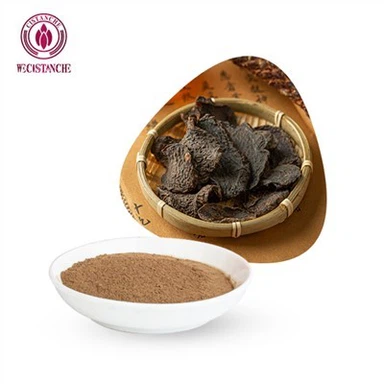
Cistanche tubulosa is a dry, scaled, fleshy stem of the genus Cistanche in the family Liliaceae. It was first recorded in the "Shennong Bencao Jing" and is classified as a "top-grade" plant, known as the "desert ginseng". It has a sweet and salty taste, a warm nature, and is beneficial to the kidneys and large intestine meridians. Its traditional effects include tonifying kidney yang, nourishing essence and blood, moistening the intestines and promoting bowel movements. It is one of the most frequently used tonics in kidney tonifying and yang strengthening prescriptions throughout history. In 2023, Cistanche tubulosa was included in the list of substances that are both food and traditional Chinese medicinal materials according to tradition, further establishing its status as a medicinal and edible herb.

Cistanche tubulosa
Main active ingredients
Modern chemical research has shown that Cistanche tubulosa contains various bioactive substances, among which the core components closely related to neuroprotection include:
(1) Phenylethanolic glycosides (PhGs), such as echinacoside, acteoside, isoverbascoside, etc., are the main pharmacological substances of Cistanche tubulosa for nourishing the kidneys and marrow, and are also the content determination indicators specified in the Chinese Pharmacopoeia. The content of pineal glycoside in Cistanche tubulosa is about 6 times that of other varieties.
(2) Cycloene ether terpenes, such as catalpol, have mitochondrial protection and neurotrophic effects.
(3) Polysaccharides: Cistanche tubulosa polysaccharides (CDPS) have immunomodulatory, antioxidant, and gut microbiota regulatory functions.
(4) Other: Betaine, lignin, flavonoids, various amino acids, and trace elements such as iron, zinc, and manganese.
Tu Pengfei, a professor of Peking University, has conducted long-term research and confirmed that phenylethanoid glycosides in Cistanche tubulosa have clear pharmacological activities such as anti Alzheimer's disease and prevention and treatment of Parkinson's disease. Based on this, "total glycosides of Cistanche tubulosa capsule" with phenylethanoid glycosides as the main component has been developed, and has been widely used in clinical treatment of neurodegenerative diseases.
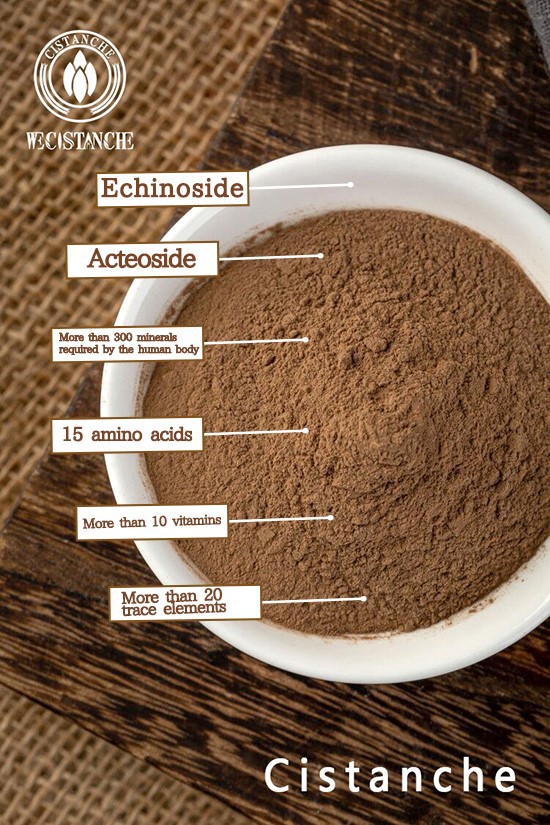
Main Chemical Constituents of Cistanche tubulosa
The core mechanism of Cistanche tubulosa intervention in Parkinson's disease
Antioxidant stress: activate the Nrf2 pathway, eliminate free radicals
Oxidative stress is a key driving factor in the onset of Parkinson's disease. Excessive reactive oxygen species (ROS) attack dopamine neurons, leading to mitochondrial dysfunction and cell death. Cistanche tubulosa phenylethanolic glycoside is a potent "antioxidant pioneer" that can activate the Nrf2/Keap1/HO-1 signaling pathway: Nrf2 dissociates from Keap1 and translocates into the nucleus, upregulating the expression of antioxidant enzymes such as heme oxygenase-1 (HO-1) and superoxide dismutase (SOD).
Experimental studies have shown that Cistanche tubulosa can significantly increase SOD activity in the hippocampus of PD model rats, reduce malondialdehyde (MDA) content, and alleviate lipid peroxidation damage. In the cell model induced by 6-OHDA, pineal glycoside can increase the survival rate of neurons by about 30%. This function constructs an effective "antioxidant defense line" for dopamine neurons.
Inhibiting neuroinflammation: blocking the NLRP3/NF - κ B pathway
Neuroinflammation plays an important role in PD. Activated microglia release pro-inflammatory factors such as TNF - α, IL-1 β, and IL-6, which exacerbate dopamine neuron damage. The verbascoside in Cistanche tubulosa is vividly referred to as an "inflammation extinguisher", which can inhibit the activation of the NLRP3 inflammasome and reduce the release of "inflammation bombs" such as IL-1 β.
Pinecone chrysanthemum glycoside can reduce abnormal activation of microglia and astrocytes, lower TNF - α levels, and upregulate the expression of glial cell-derived neurotrophic factor (GDNF). Further studies in network pharmacology have revealed that Cistanche tubulosa may regulate the NF - κ B signaling pathway and alleviate neuroinflammatory responses by acting on targets such as ESR1 and SRC. Mendelian randomization studies also suggest that Cistanche tubulosa can exert therapeutic effects by regulating circulating inflammatory axes such as IL-17A/CXCL10/MMP1.

Benefits of cistanche tubulosa-Treatment of Parkinson's disease
Inhibiting neuronal apoptosis: regulating the PI3K/AKT/GSK-3 β pathway
Apoptosis is the direct cause of dopamine neuron loss. Multiple in vivo experiments have shown that Cistanche tubulosa can regulate the PI3K/AKT signaling pathway, increase the phosphorylation levels of AKT and GSK-3 β, inhibit GSK-3 β activity, thereby reducing the expression of pro-apoptotic factors (such as cleaved caspase-3), inhibiting excessive phosphorylation of Tau protein, and exerting neuroprotective effects.
In the PD rat model induced by 6-OHDA, after 14 days of intervention with Cistanche tubulosa, the stride of the medium and high dose groups significantly increased, the expression of tyrosine hydroxylase (TH) in the substantia nigra significantly increased, and behavioral disorders were effectively improved. In addition, Cistanche tubulosa can also counteract the apoptosis of dopaminergic neurons caused by MPP+by inhibiting Caspase-3 activity.
Regulating cellular autophagy and mitochondrial function
The dysregulation of the autophagy-lysosome pathway is closely related to abnormal aggregation of alpha-synuclein. Cistanche tubulosa can promote the phosphorylation of anti-apoptotic protein Bcl-2, clear damaged mitochondria, indirectly inhibit cell apoptosis, and achieve a rebalancing of autophagy and apoptosis by activating targets such as MAPK8. Cycloiridoid compounds (such as catalpol) charge neurons and improve mitochondrial function by increasing GDNF expression.
Regulating gut brain axis: reshaping gut microbiota ecology
Constipation is one of the most common non-motor symptoms of PD, affecting approximately 70% of PD patients and often occurring several years before motor symptoms. The gut-brain axis theory suggests that dysbiosis of the gut microbiota can accelerate the progression of Parkinson's disease through mechanisms such as endotoxins entering the bloodstream and promoting alpha-synuclein deposition.
Polysaccharides from Cistanche tubulosa can act as "microbiota commanders", increasing the abundance of beneficial bacteria in the gut (such as Rossella) and promoting the production of short-chain fatty acids such as butyric acid. Butyric acid transmits signals through the gut-brain axis: on one hand, it repairs the intestinal barrier and reduces the entry of endotoxins into the bloodstream; On the other hand, it inhibits midbrain inflammation and reduces alpha-synuclein deposition by about 22%. Clinical observations have found that patients taking Cistanche tubulosa extract have an increased frequency of bowel movements from 2 to 4 times per week, while their UPDRS scores have decreased by approximately 15%.

Superman herbs cistanche-Anti Parkinson's disease
Click here to view the products of Cistanche for preventing Parkinson's disease
【Ask for more】 Email:cindy.xue@wecistanche.com / WhatsApp: 0086 18599088692 / WeChat: 18599088692
Preclinical and clinical research evidence
animal experimentation
In various PD animal models, Cistanche tubulosa and its active ingredients have shown consistent protective effects:
In PD models induced by 6-OHDA and MPTP in rats/mice, pineal glycoside significantly inhibits the loss of dopaminergic neurons in the substantia nigra, maintains striatal dopamine and its metabolite levels, and improves motor coordination.
Cistanche tubulosa protects hippocampal neurons and improves spatial learning and memory function through the Wnt/GSK-3 β signaling pathway.
In zebrafish models, verbascoside reduced neuroinflammatory damage by approximately 45%; In MPTP model mice, cyclohexene ether terpenes improved motor ability by approximately 28%.
Phenylethanoid glycosides can simultaneously improve depression like behavior (reducing tail suspension time by about 40%) and metabolic abnormalities in PD model animals.

The efficacy of Cistanche tubulosa in preventing Parkinsons disease
clinical research
In terms of clinical research, a randomized controlled trial has been conducted on the compound "Cistanche Shujing Granules" with Cistanche tubulosa as the core. This study used techniques such as magnetic resonance spectroscopy and electromyography to find that Cistanche Shujing granules can improve motor and non-motor symptoms in PD patients, enhance their quality of life, and that its mechanism of action may be to delay damage to substantia nigra neurons, increase neuronal activity, and promote glial cell proliferation.
In addition, studies based on network pharmacology, molecular docking, and PRM targeted protein validation have revealed that Cistanche Shujing granules can alleviate endoplasmic reticulum stress, inhibit cell apoptosis, and exert neuroprotective effects through the ASK1-JNK signaling pathway. These studies provide increasingly solid modern scientific evidence for the treatment of PD with traditional Chinese medicine.
References
[1] Zhao Shiying, Zhang Hui, Shao Xiaoxiao, etc Research progress on pharmacological mechanisms of traditional Chinese medicine Cistanche tubulosa in the treatment of Parkinson's disease [J]. Chinese Journal of Traditional Chinese Medicine, 2024
[2] Liang et al. Echinacoside reduces microglial activation and upregulates GDNF in subacute PD mice. J Agric Food Res, 2025.
[3] Xu Qian, Lin Yao, Gao Zhengtao, etc Cistanche tubulosa regulates Keap1/Nrf2/HO-1 antioxidant pathway to improve hippocampal neuronal damage in Parkinson's disease model rats [J]. Chinese Journal of Traditional Chinese Medicine, 2025
[4] Chen Shiya, Li Qianyu, Zhang Chutian, etc A randomized controlled study on the effect of Congrong Shujing granules on substantia nigra metabolites in Parkinson's disease patients [J]. Chinese Journal of Integrative Medicine, 2024, 44 (3): 296-302
[5] Liu Haimin, Zhao Yan, Yu Xinmiao, etc Quality Analysis and Comprehensive Evaluation of Desert Cistanche from Different Regions in China [J]. Food Industry Science and Technology, 2023, 44 (8): 341-350
[6] Zhu G, et al. Medicinal and food plant: Cistanches Herba, a potential therapeutic hope for Parkinson's disease and related complications. J Agric Food Res, 2025.
[7] Cistanche Herba/Cistanche tubulosa China Medical Information Query Platform https://m.dayi.org.cn/cmedical/1115217
[8] Scientific Anti Parkinson's Disease: Latest Understanding and Prevention Points China National Radio, April 11, 2025
[9] Tu Pengfei Research progress and industrial development of traditional Chinese medicine Cistanche tubulosa Peking University Frontier Engineering Lecture Hall, 2024
[10] Dong Jiani, Zhao Longshan, Bo Yukun, etc Optimization of natural low-melting-point solvent extraction process for phenylethanoid glycosides from Cistanche tubulosa using response surface methodology combined with genetic algorithm [J]. China Pharmacy, 2022, 33 (13): 1605-1611