The Prescription Rule About The Essence OfChinese Herbal Tea in The Palace OfQingDynasty And An Preliminary Investigation OnModern Application Of Chinese Herbal Tea
Oct 17, 2024
Abstract
Chinese herbal tea is an important part of traditional Chinese medicine. Chinese herbal tea has its own advantages. However, most modern studies are based on experimental techniques and clinical observations to study the effects, efficacy and mechanism of Chinese herbal tea on related diseases, or to observe the clinical efficacy of self-made Chinese herbal tea. Overall, the research scope is relatively limited and scattered, and there is a lack of systematic and in-depth analysis of Chinese herbal tea, and there is a lack of corresponding understanding of the current application of Chinese herbal tea (including clinical). This study first used the TCM Inheritance Assistance Platform (V2.5) software system to conduct in-depth data mining and analysis on the substitute tea drinks in the book "The Essence of Qing Palace Substitute Tea Drinks" and summarized their medication rules. Secondly, by distributing questionnaires, the community was sampled, counted, and analyzed to understand people's understanding of TCM substitute tea drinks and the current application of substitute tea drinks.
The main body of the paper is divided into 6 parts, namely: preface, review of the medicinal use of tea and the development of Chinese medicine substitute tea, analysis of the Chinese medicine inheritance auxiliary platform (V2.5) "The Essence of Qing Dynasty Tea Drinks", research results (I), research results (II), and preliminary investigation and analysis of the modern application of substitute tea drinks. The preface introduces the significance and purpose of this study, defines the concepts of "tea", "medicinal tea", "Qing Dynasty Tea Drinks", and "Chinese medicine substitute tea drinks", and clarifies the relationship between them.

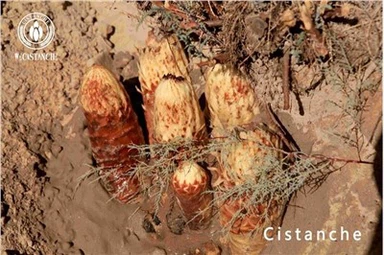
Traditional Chinese Medicine Cistanche That Foumous For Kidney And Sexual Health
Part 2
"The medicinal use of tea and a historical review of Chinese medicine replacing tea" first introduces the use of tea as medicine from the legend of Shennong era to the earliest written record of its name in the Western Han Dynasty, and then to the superficial understanding of the medicinal effect of tea in the Wei and Jin Dynasties. Its medicinal value was not systematically explored until tea was listed in the ancient herbal books, and then it began to be officially used as medicine in traditional Chinese medicine. Secondly, the development history of Chinese medicine replacing tea was reviewed from the three stages of "initial", "prosperity" and "maturity". The third part, "Analysis of the Medication Rules of "The Essence of Tea Drinks in the Qing Dynasty" by the Traditional Chinese Medicine Inheritance Assistance Platform (V2.5), introduces the research data and research methods of this research part.
The fourth part, "Research Results (I)", analyzes the medication rules of the major categories of tea drinks in the book "The Essence of Tea Drinks in the Qing Dynasty". The medication rules of four categories of tea drinks, namely "heat-clearing", "dampness-removing", "digestive" and "tonifying", were selected for display. The following results were obtained:
The principle of using "heat-clearing tea substitute" is to nourish yin and produce body fluid, relieve restlessness and digestion, and cool blood on the basis of clearing heat. The imperial doctors of the Qing Dynasty knew that the drugs with heat-clearing effect were bitter and cold, which could easily cause dryness and damage Yin. At the same time, the heat disease itself would also damage Yin and body fluid. Therefore, they did not use heat-clearing drugs blindly, but combined them with drugs such as nourishing Yin and promoting body fluid on the basis of heat-clearing. Moreover, these drugs of nourishing Yin and promoting body fluid were mostly sweet, which could neutralize the bitterness and coldness of heat-clearing drugs, making the taste of tea substitutes more palatable and easier to accept.
The medication rule of "damp-removing tea substitutes" is to mainly use dampness-draining and heat-clearing drugs on the basis of regulating Qi and strengthening the spleen, drying dampness and resolving phlegm. The imperial doctors of the Qing Dynasty understood that dampness can hinder the movement of Qi and cause Qi stagnation. If Qi stagnates for a long time, it can turn into heat and fire. If Qi is unfavorable, it can affect the metabolism of water and further produce phlegm and dampness. Therefore, tangerine peel is used as the main medicine to match the products of penetrating dampness, dispelling exterior pathogens, and clearing heat, so as to achieve the effect of Qi movement and dampness removal, so as to eliminate the exterior pathogens and internal heat on the basis of removing dampness.

Traditional Chinese Medicine Cistanche Herbal Tea
The principle of using "digestive tea" is to regulate qi, strengthen the spleen, and dry dampness, and to use digestion and tonification as the main medicine. The nobles in the Qing Dynasty court were pampered and well-dressed, and their food was mainly fatty and sweet. Their physical activities were limited, which could easily lead to food stagnation, hurting the spleen and stomach, and causing qi stagnation over time, which could then turn into heat and fire, causing abdominal distension, noisy after eating and other symptoms. The imperial doctors considered that the power of the drugs for tonification and digestion was relatively strong and would hurt the vital energy, so they used tangerine peel as the main medicine and combined it with digestion and tonification products to play the role of digestion. The purpose of the method of digesting food and eliminating evil is to eliminate evil.
The principle of using "tonic tea substitute" is to nourish yin and produce body fluids, and to strengthen the spleen, clear away heat and nourish blood.
The nobles in the Qing Dynasty court lived a life of luxury, with fine clothes and delicious food, and they paid attention to taking care of their bodies, so the number of tonic tea substitutes was the largest. However, because the concubines in the palace lived in a relatively closed environment, they would feel sad and depressed, and there were complicated rules and regulations, so the slightest carelessness would lead to a disaster. They had to live cautiously every day. If their emotions were not smooth for a long time, fire evil would be generated inside, which would damage the yin essence over time; if they were sick for a long time and the remaining evil was not completely eliminated, it would damage the yin fluid over time; frequently taking some warm and dry products would also secretly consume the yin fluid. Therefore, the main purpose of tonic tea substitutes is to nourish yin.
Part V
"Research Results (II)" analyzes the medication rules of substitute tea drinks from the perspective of substitute tea drinks containing a certain drug in "The Essence of Substitute Tea Drinks in the Qing Palace". A total of four Chinese medicine substitute tea drinks containing "tangerine peel", "chrysanthemum", "malt" and "platycodon" were selected for display. The results are as follows: In the "substitute tea drink containing tangerine peel", tangerine peel is often used in combination with digestive drugs, qi-tonifying drugs, diuretic and dampness-inducing drugs, etc. This type of substitute tea drink is mainly warm in nature and sweet in taste, and mainly enters the spleen, lung and stomach meridians. When playing the role of "clearing heat and removing dampness", "removing dampness and harmonizing the stomach", "clearing heat and removing stagnation", and "relieving cough", tangerine peel has commonly used drugs in combination with it.
In the "tea substitute containing chrysanthemum", chrysanthemum is often used in combination with drugs that clear heat, replenish yin, promote blood circulation and replenish blood, and remove dampness. The frequency of use is highest when paired with tangerine peel, bamboo shavings, and mulberry leaves. This type of tea substitute is mainly cold in nature and sweet in taste, and mainly enters the lung, liver, stomach, and spleen meridians. When playing the role of "clearing heat and removing dampness", "spicy and cool to relieve the symptoms", and "removing dampness and harmonizing the stomach", chrysanthemum has commonly used drugs in combination with it.
"Tea substitute containing malt"
In the prescription, malt is often used in combination with drugs for digestion, qi circulation, heat clearing, yin tonifying and dampness removal. It is most frequently used in combination with dried tangerine peel, mountain shrub and Liushenqu. This type of tea substitute is mainly warm in nature and sweet in taste, and mainly enters the stomach, spleen and liver meridians. In the treatment of "food accumulation syndrome" and "residual heat syndrome", malt has commonly used drugs with it.
In the recipe of "tea substitute containing Platycodon grandiflorum", Platycodon grandiflorum is often used in combination with dried orange peel and licorice. The main symptoms are superficial symptoms and phlegm-heat in the lung system. This type of tea substitute is mainly cold in nature and bitter in taste, and mainly enters the lung, stomach, spleen, and heart meridians. In the treatment of "wind-cold binding superficial symptoms" and "phlegm-heat blocking lung symptoms", Platycodon grandiflorum has commonly used drugs in combination with them.

Traditional Chinese Medicine Cistanche Herbal Tea
Part VI
"Preliminary Survey and Analysis on Modern Application of Tea Substitutes" Through the distribution of questionnaires, sampling, statistics and analysis of community residents, we can understand people's understanding of Chinese medicine tea substitutes and the current application of tea substitutes, so as to facilitate people to correctly understand and choose Chinese medicine tea substitutes in the future, and enable clinical doctors, especially community doctors, to clearly understand the acceptance of Chinese medicine tea substitutes among the people, providing reference and help for future clinical work. This part conducts investigation and analysis from four aspects: "general situation", "family income situation", "understanding of TCM treatment and health care methods", and "recognition and attitude towards TCM tea substitutes". It is found that the people in this community generally have a low level of education, their occupations are mainly manual labor, and their family income is low. They understand that TCM tea substitutes are a form of TCM treatment and health care, and they believe that TCM tea substitutes have the advantages of simple preparation and convenient use. However, the actual usage is not ideal. Most people take it by boiling water, and they don't know how to take it by decocting it. What's worse is that Chinese herbal teas are rarely used in clinical practice. Most of the respondents take Chinese herbal teas on their own, and most of these tea recipes are obtained through health and wellness TV programs. The respondents lacked basic awareness of TCM syndrome differentiation and could not choose appropriate medicines to prepare Chinese medicine tea according to their own conditions. They simply used medicines based on traditional solidified knowledge.
This article discusses the "medicine and food have the same origin" theory in "The Essence of Tea Drinks in the Palaces of the Qing Dynasty", the characteristics of Chinese medicines replacing tea drinks, and the wide application scope of Chinese medicines replacing tea drinks. First, "The Essence of Tea Drinks in the Palaces of the Qing Dynasty" involves a total of 182 Chinese medicines, of which 108 medicines belong to the category of "medicine and food have the same origin", accounting for 59.3% of the medicines involved in the book. In addition, 8 of the top 10 most frequently used medicines in the book are within its category. Secondly, the characteristics of "simple" and "sufficient", "light" and "heavy" of Chinese medicine tea are summarized. Finally, the wide application range of Chinese medicine tea is discussed. It can prevent and treat a variety of diseases, including internal medicine, surgery, gynecology, pediatrics, etc. At the same time, it can also be used for health care from the four seasons, constitution, population and other aspects, and is also good at conditioning the body.
Keywords: "Essence of Qing Palace Tea Drinks"; Traditional Chinese Medicine Inheritance Auxiliary Platform (V2.5); Medication Rules; Chinese Medicine Tea Drinks; Application Status
Review (I) Current status of research on tea substitutes
Chinese herbal medicine tea substitutes are an important part of traditional Chinese medicine. They have their own advantages and are of certain research significance. In order to better study Chinese herbal medicine tea substitutes, this paper first searches for relevant research results on Chinese herbal medicine tea substitutes through online resources such as CNKI China National Knowledge Infrastructure, Wanfang Data Knowledge Service Platform, and China National Digital Library, and conducts a review. The search results are introduced as follows:

Traditional Chinese Medicine Cistanche Herbal Tea
1 Master and Doctoral Dissertations
This paper mainly studies Chinese herbal tea drinks, which belong to the traditional dosage form of Chinese medicine. They are different from the processed finished medicinal teas on the market, such as Jianqu tea, noon tea, and tea bags, so these finished medicinal teas are not within the scope of this study. Modern research considers Chinese herbal tea substitutes and medicinal tea as the same concept. At the same time, Chinese herbal tea substitutes can prevent and treat diseases and maintain health. In order to avoid missing out, we searched for keywords such as "medicinal tea", "tea substitutes", and "health tea" through the "Full-text Database of Doctoral and Master's Degree Dissertations" of CNKI and Wanfang Data Knowledge Service Center. The search results in the past 15 years are as follows:
1.1 Experimental research
In the laboratory, animal modeling experiments are conducted and modern experimental techniques are used to study the effects of medicinal tea on diseases, the health effects of medicinal tea, and its mechanism of action. Zhu Fengdan first used epidemiological methods to conduct a detailed investigation of the ethnic custom of drinking trilobite tea among the general population in Chengbu Miao Autonomous County, Shaoyang City, Hunan Province, a place where trilobite tea is produced. The experiment adopted a stratified random sampling method, using questionnaires and face-to-face interviews. The survey found that long-term drinking of worm tea can promote human health, improve gastrointestinal function and prevent the occurrence of hypertension. It is especially suitable for middle-aged and elderly people to drink. Secondly, experimental studies have shown that three-leaf begonia can enhance gastric motility, and trilobite tea can enhance the rat's This may be one of the principles of their digestive function, while the significant inhibitory effect of Malus trifoliata on intestinal propulsion and intestinal peristalsis may be one of the principles for its use in the treatment of diarrhea. Experiments on diabetic rat models showed that trilobite worm tea and its tea-producing plant Malus trilobata have a more obvious hypoglycemic effect, and the effect of trilobite worm tea is better than that of Malus trilobata. Its mechanism is related to its promotion of INS secretion and regulation of lipid metabolism disorders. 1 ". In order to study the therapeutic effect of kidney tea on the chronic nephritis C-BS A model of SDD rats, Liu Xuhang conducted a series of modeling and animal experiments and found that kidney tea can reduce urine protein in C-BS A model rats, improve BUN, Cr and blood lipids, and has a protective effect on the renal function of model rats; Shencha can improve the pathological damage of renal tissue in C-BS A model rats; the efficacy of Shencha in treating C
BS A rat model is equivalent to that of Tripterygium wilfordii polyglycosides tablets. Liu Danping conducted a series of animal experiments and statistical analyses to observe the effects of Shencha extract and ursolic acid on the pathological changes of kidneys and the expression of cytokines TGF-P1 and CTGF in aristolochic acid nephropathy, and explored its possible mechanism, which provides clinical reference for aristolochic acid nephropathy. Provide experimental basis for clinical treatment1: "Liu Yang used conventional methods and high-performance liquid chromatography to determine the nutritional components of bitter herb tea, established a mouse model of alcoholic liver injury, and used bitter herb tea extract for gavage treatment. From the physiological, biological, biochemical and molecular aspects, scientific means were used to explore the intervention effect of bitter herb tea extract on alcoholic liver injury. Wei Yuanqing used apple leaves as materials and used modern laboratory technology to conduct animal experiments to study its health care functions and mechanisms. Naren Tuoya16], Zhang Min m used modern experimental technology to achieve the research purpose through animal experiments.
L2 Clinical research
Through clinical efficacy observation, group experiment and statistical analysis, the positive effects of a medicinal tea on specific diseases are analyzed and studied. Jiang Lisha randomly selected 60 patients after anorectal disease surgery, 30 of whom were in the Chinese herbal tea group and 30 in the control group. They were given yellow wheat medicinal tea and boiled water to drink on the day after surgery, the first day after surgery, and the second day after surgery, respectively. The patients' symptoms such as dry lips and thirst, dry throat, poor appetite, fatigue, and difficulty urinating after surgery were observed, and the above indicators were quantified and scored. The conclusion was drawn that yellow wheat medicinal tea has the effects of strengthening the spleen, replenishing qi, nourishing yin, and promoting urination. It can increase appetite, enhance resistance, significantly improve the patients' quality of life after surgery, and promote wound healing. Chen Cheng first classified the patients according to the diagnosis standard of traditional Chinese medicine, and randomly divided each type of patients into a treatment group and a control group. According to the clinical trial plan and requirements, the treatment group was given lipid-regulating tea (30 g of salvia miltiorrhiza, 20 g of cassia, 10 g of raw hawthorn), brewed with hot water, and replaced with tea; the control group was given liver-protecting tablets, the main ingredients of which were bupleurum, isatis root, mung bean, pig gall powder, schisandra chinensis, and capillaris, and taken orally.
After clinical trials, it can be concluded that lipid-regulating tea can significantly improve the clinical symptoms of non-alcoholic fatty liver , protect liver function and promote liver recovery. Li Fenglei randomly divided 60 patients with phlegm turbidity and blood stasis type hyperlipidemia diagnosed by Xianlin Community Health Service Center in Qixia District, Nanjing into a control group and a treatment group. The control group was treated with simvastatin, and the treatment group was treated with hawthorn and calamus tea. The course of treatment was 3 months, and an assessment was conducted after the end of the treatment. After statistical analysis, it was concluded that the medicinal diet therapy of hawthorn and calamus tea was effective in treating hyperlipidemia, without adverse reactions, and was safe and effective. It has a good rehabilitation effect on phlegm turbidity and blood stasis type hyperlipidemia. This method of integrating treatment into daily diet is a method of preventing and treating hyperlipidemia that is worth promoting. Xu Lipei sorted out ancient and modern literature and summarized the causes of the formation of blood stasis constitution, its effects on the body, and the commonly used