The Relaxing Bowel Effect Of Cistanche Deserticola
Mar 08, 2022
Contact: Audrey Hu Whatsapp/hp: 0086 13880143964 Email: audrey.hu@wecistanche.com
Intro
Cistanche deserticola is a commonly used traditional Chinese medicine, which has the functions of Tonifying Kidney Yang, benefiting essence and blood, moistening intestines, and defecating [1]. There is so much literature on the chemical composition and pharmacology of it [2,3], but there is no report on the pharmacological study related to the effect of Cistanche deserticola on relaxing bowel function. Therefore, Guang'anmen Hospital of Chinese Academy of Traditional Chinese Medicine conducted an experimental study on the effect of Cistanche deserticola on intestinal function and made a preliminary discussion on the effective components.

Experimental materials
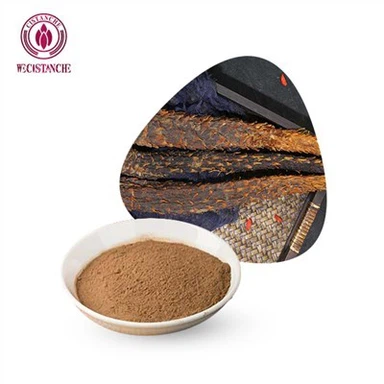
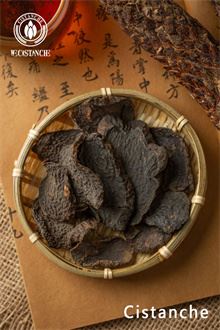
Medicinal materials: the original medicinal materials of Cistanche deserticola were purchased from Gansu medicinal materials company, the origin of which is Xinjiang. It was identified as Cistanche deserticola which belongs to the Orobanchaceae by Xie Zongwan. Decoction pieces of Cistanche deserticola: washed the original medicinal materials, soaked them in water for 2 ~ 4 hours, moistened them, cut them too thick pieces, dried them with air at 50 ℃ for 4 hours, and let them cool. Wine Cistanche deserticola: Took pieces of Cistanche deserticola, added into some yellow rice wine, mixed well, steamed the mixture in the pot until the wine was absorbed, spread, and cooled. Dried for 2 hours at 50 ℃ and cooled.
Test solution: ground the original medicinal materials, Cistanche deserticola decoction pieces, and Cistanche deserticola wine decoction pieces into some coarse powder, decocted them respectively for 3 times, filtered them with 4 layers of gauze, combined and concentrated them, and adjusted the concentration to 50% (calculated by the weight of crude medicinal materials).
Drug: atropine (product of Shanghai Tianfeng pharmaceutical factory), prepared into 0.025% solution before use. Metoclopramide (product of Beijing Shuangqiao pharmaceutical factory), prepared into 0.1% solution before use
Experimental animal: Kunming white mouse, both male and female, purchased from the animal room of Capital Medical College
Methods and results
1. Pharmacological action
1. Effect on defecation of mice: 57 female mice (five months old) weighing 33 ± 3g were randomly divided into 4 groups according to their body weight. The mice were placed into some single feeding cages 16 hours before the administration, and fasting and water supply. The used Cistanche solution and distilled water control solution were dissolved in eosin (the dosage was 1% of the drug solution) before the administration. The test solution of each group was 0.6ml/a mouse ig, and the administration time and the time for mice to excrete the first red stool were recorded. The latter minus the former was the defecation time of the mouse. The results are shown in Chart 1. Cistanche deserticola groups can significantly shorten the defecation time of mice and promote defecation. At the same time, the morphology of excreted feces was observed. Most of the groups given Cistanche deserticola were normal or slightly large fecal particles, and some mice (5%) had excreted diluted water.

2 Effects on small intestinal propulsion function of mice: 60 female mice (5 months old) weighing 33 ± 3g were selected and divided into 4 groups according to their body weight. The Cistanche solution and distilled water control solution were mixed with carbon powder before administration (the dosage was 5% of the solution). The mice were fed with 0.6ml/one mouse ig for 16 hours with water supply but fasting and killed after 20 minutes. The side volume of the small intestine was taken out by laparotomy. The farthest distance from the pylorus to charcoal powder trail was the propulsion length, and the distance from the pylorus to the ileocecal valve was the full length. The former divided the latter was the push progress. The results are shown in Chart 2. Cistanche deserticola group can significantly improve the push progress of mouse small intestine, which proves that Cistanche can enhance intestinal peristalsis and improve the motor function of intestinal muscle.

3. Antagonistic effect of Cistanche deserticola on defecation inhibition of atropine: 20 male mice weighing 42 ± 3g (8 months old) and 20 female mice weighing 46 ± 4g (8 months old) were randomly divided into 4 groups according to their weight, half male and half female. After 16 hours of fasting and water supply, the water supply-only group was given 0.15ml/10g body weight Ig distilled water, the other three groups were given 0.1ml/10g body weight of atropine first, and then 0.15ml/10g body weight Ig test solution after 15 minutes. The time of ip atropine, the time of Ig test solution, and the time of mice excreting the first red stool were recorded, and the defecation time was calculated. The results are shown in Chart 3. The results showed that 0.025% atropine could significantly inhibit defecation in mice. Cistanche deserticola could effectively resist the defecation inhibition of atropine, and its antagonism intensity had no significant difference compared with metoclopramide (P > 0.47).

4. Effects of Cistanche deserticola on water absorption in the large and small intestines of mice: 20 male mice weighing 43 ± 3g (8 months old) and 20 female mice weighing 43 ± 3g (8 months old) were randomly divided into 4 groups according to their weight, half male and half female. After 16 hours of fasting and water supply, the control group was treated with 0.15ml/10g body weight Ig distilled water, and the Cistanche deserticola group was treated with 50% of the original Cistanche deserticola decoction. Half of the mice were killed 3 hours and 5 hours after administration respectively, and laparotomy was performed on them. The ends of the large and small intestine were clamped with hemostatic clamps. The large and small intestines were separated and cut off, placed on weighing paper respectively, loosened the hemostatic clamp, and weighed on the balance immediately. After drying in the oven at 105 ℃ for 2 hours, weigh the dry weight of the large intestine. The results are shown in Chart 4. Chart 4 shows that the water content of the large intestine in the Cistanche deserticola group is significantly different from that in the control group after 5 hours of administration, indicating that Cistanche deserticola has an inhibitory effect on water absorption of the large intestine.

2. Determination of elements in 50% Cistanche deserticola Decoction
The contents of some elements in 50% Cistanche deserticola Decoction and solvent distilled water (tested by the industrial hygiene Laboratory of the Ministry of Health) are shown in Chart 5.

3. Determination of negative ions in 50% Cistanche deserticola Decoction
The results of negative ion determination of 50% Cistanche deserticola Decoction (entrusted to Beijing physical and chemical analysis and testing center) are shown in Chart 6.

4. Polysaccharide test
Weigh 5g Cistanche deserticola, decocted it in water, filtered, and concentrated. The concentrated solution was precipitated with ethanol and filtered while hot. The precipitate was washed with hot ethanol many times and dissolved in a small amount of water. This aqueous solution has been tested for Feeling reagent and α- Naphthol reagent showed an obvious positive reaction, suggesting that Cistanche deserticola contained polysaccharides.

Discussion
1. Constipation is a common disease that induces death of heart and brain diseases and other serious complications, mostly in the elderly [4]. Therefore, the mice with longer age and greater weight were selected for the defecation study of Cistanche deserticola. The results show that Cistanche deserticola can promote the wetting and excretion of feces, and has a definite effect of "moistening intestines and defecating". The main mechanism is that Cistanche deserticola can enhance the motor function of the intestine, greatly improve the pushing progress of the small intestine, significantly shorten the defecation time and inhibit the absorption of water in the large intestine.
2. The elemental analysis and negative ion determination of Cistanche deserticola aqueous solution showed that Cistanche contained some cations such as magnesium and sodium and negative ions such as sulfate and phosphate. In addition, the test solution of Cistanche deserticola is often gelatinous after being placed into the refrigerator. Through the polysaccharide test, Cistanche deserticola contains some hydrophilic colloidal polysaccharides. According to the above analysis, we believe that the inorganic ions and polysaccharides are the effective components of "moistening intestines and defecating" of Cistanche deserticola. Whether Cistanche deserticola contains other effective components for defecation remains to be further studied.
3. It is said that Cistanche deserticola has the advantages of moistening intestines and defecation, liquored it can strengthen the waists and bones [5]. Although our experimental results show that the original medicinal materials and processed groups of Cistanche deserticola have good effects on moistening intestines and defecation (there is no significant difference among the groups after statistical treatment), considering the differences in the processing methods of Cistanche deserticola in different areas, the defecation intensity of each processed product may be different. To ensure the "moistening intestines and defecating" effect of Cistanche deserticola, it is suggested that the original medicinal material of Cistanche deserticola should be used directly for defecation for clinical use of traditional Chinese medicine.

Reference
〔1〕 Chinese Pharmacopoeia, Volume I, page 110, 1990
〔2〕 Luo Shangfeng et al., northwest Journal of pharmacy, 5 (1); 47,1990
〔3〕 Hong Yongfu: pharmaceutical information communication, 8 (3), 671990
〔4〕 Zhou Lan, editor-in-chief: practical elderly digestive system diseases. 87 pages, people's Military Medical Publishing House, 1988
〔5〕 Lu Zheng: clinical use and preparation of traditional Chinese medicine, first edition, 290 pages, people's Health Publishing House, 1983