The Wonderful Association Between Cistanche Deserticola And Cerebral Perfusion Injury
Nov 21, 2024
1, The wonderful association between Cistanche deserticola and cerebral perfusion injury
As a traditional Chinese medicinal herb, Cistanche deserticola has a long history and wide applications in the field of traditional Chinese medicine. It not only has unique medicinal value, but may also have potential therapeutic effects on cerebral perfusion injury, which has attracted the attention of many medical researchers.
(1) Characteristics and efficacy of Cistanche deserticola
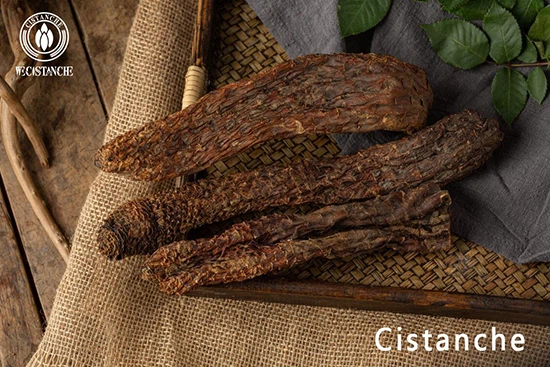
Cistanche deserticola
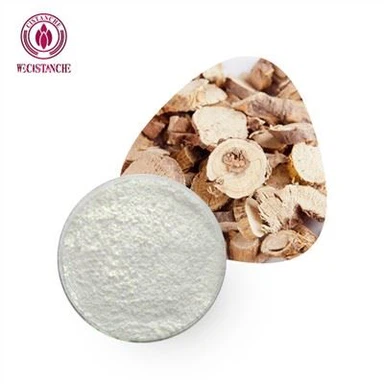
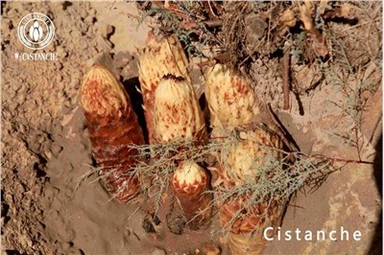
Cistanche deserticola is warm in nature, sweet and salty in taste, and belongs to the kidney and colon meridians. In traditional Chinese medicine, Cistanche deserticola has the effects of tonifying the kidneys, nourishing essence, strengthening yang, and moistening the intestines. It is regarded as an essential medicine for tonifying kidney and yang, moistening intestines and promoting bowel movements. It can be used to treat symptoms such as impotence, infertility, soreness and weakness of the waist and knees, muscle and bone weakness, intestinal dryness and constipation.
In modern medicine, Cistanche deserticola has also demonstrated many application values. Research has shown that Cistanche deserticola contains various active ingredients, such as phenylethanoid glycosides, iridoids, lignans, polysaccharides, alkaloids, etc. These ingredients have antioxidant, anti-aging, anti apoptotic, anti radiation, and improved learning functions. For example, polysaccharides and alkaloids in Cistanche deserticola can enhance the body's immune function and improve its ability to resist external pathogenic microorganisms; Cistanche deserticola is also believed to have the effect of nourishing yin and kidney, and has a certain auxiliary therapeutic effect on symptoms such as soreness, coldness, and decreased sexual function caused by kidney yang deficiency in the waist and knees. In addition, Cistanche deserticola also has the function of nourishing lung yin, which is suitable for dry cough without phlegm, dry throat and thirst, hoarseness of voice and other symptoms caused by lung yin deficiency.

cistanche-prevent Alzheimers disease
(2) The hazards of cerebral perfusion injury
Cerebral perfusion injury has a serious impact on human health. The clinical manifestations of cerebral ischemia-reperfusion injury are generally dizziness, headache, nausea, drowsiness, memory loss, language disorders, etc. When this situation occurs, if left untreated, it may lead to more serious consequences. For example, if local blood vessels rupture, it may also compress soft tissue in the brain, causing symptoms such as drowsiness, dizziness, memory loss, language disorders, and hemiplegia in patients.
The mechanism of cerebral perfusion injury is relatively complex. When there is insufficient blood and oxygen supply to the blood vessels in the brain, if the blood flow to the brain tissue suddenly improves, reperfusion injury may occur, which can easily cause a sudden increase in pressure in the cerebral blood vessels, leading to symptoms such as dizziness, headache, and nausea. In addition, the brain is more sensitive to oxygen. When there is ischemia and hypoxia, cellular anaerobic fermentation is enhanced, lactate increases, brain cell acidosis occurs, brain cell edema occurs, and neuronal dysfunction occurs; During blood perfusion, there is an increase in oxygen free radicals and excitatory amino acids, leading to brain edema and cell necrosis in the brain tissue. Clinical manifestations include sensory, consciousness, and motor dysfunction, and in severe cases, even death.
2, Research progress on the treatment of cerebral perfusion injury with Cistanche deserticola
(1) The mechanism of action of total glycosides in Cistanche deserticola
Antioxidant effect: Total glycosides of Cistanche deserticola can significantly reduce the content of lipid peroxides. Research has shown that during cerebral ischemia-reperfusion, the total glycosides of Cistanche deserticola can reduce the content of malondialdehyde (MDA) in brain tissue and increase the activity of superoxide dismutase (SOD). For example, in an experiment, mice treated with total glycosides of Cistanche deserticola showed a significant decrease in MDA content in their brain tissue compared to the model group, while SOD activity was significantly increased. This indicates that the total glycosides of Cistanche deserticola effectively protect brain tissue from oxidative damage by reducing lipid peroxide content and enhancing superoxide dismutase activity.
Anti apoptotic effect: The total glycosides of Cistanche deserticola have the ability to inhibit neuronal apoptosis, promote neuronal growth and repair. In vitro experiments have shown that total glycosides of Cistanche deserticola can downregulate the expression of lncRNA GAS5, reduce the apoptosis rate of nerve cells, and increase the expression of pro-caspase3 protein. At the same time, the high-dose group of total glycosides of Cistanche deserticola showed the most significant effect on tumor cell necrosis, with cell distribution becoming increasingly sparse, cell nuclei appearing to shrink, vacuolar changes increasing, cell rupture and even dissolution necrosis reduced, and unclear structures improved. This indicates that total glycosides of Cistanche deserticola play an important role in anti apoptosis.

cistanche-prevent Alzheimers disease
Protecting against cerebral ischemia and reperfusion injury: Cistanche glycosides can reduce the scope of cerebral infarction and improve neurological symptoms. In the mouse model of cerebral ischemia-reperfusion, the total glycosides of Cistanche deserticola can reduce the stroke index and percentage of cerebral infarction during cerebral ischemia-reperfusion. When cancer cells rapidly proliferate and the tumor volume continues to expand, the total glycosides of Cistanche deserticola have a certain inhibitory effect on tumor volume in vivo, and high-quality concentrations have better inhibitory effects. In addition, the liver index and spleen index of mice treated with total glycosides of Cistanche deserticola were correspondingly reduced, and the tumor mass was smaller than that of the model group. The tumor inhibition rates were 6.1332%, 18.2706%, and 26.8557%, respectively, which were dose-dependent.
(2) The role of other active ingredients
Ingredients such as verbascoside also have a significant improvement effect on cerebral perfusion injury. Maorui glycoside has a therapeutic effect on cerebral ischemia-reperfusion injury in rats, which is related to its antioxidant and anti-inflammatory effects. In a rat model of cerebral ischemia-reperfusion injury, after intervention with verbascoside, the neurobehavioral scores and cerebral infarction volume ratio of rats were significantly reduced, and the levels of TNF - α, IL-2, and IL-6 were significantly reduced. In addition, Cistanche deserticola verbascoside can improve cognitive dysfunction in mice induced by cerebral hypoperfusion, reverse the increase in AChE activity and MDA levels in brain tissue of model mice, and upregulate SOD activity in brain tissue of model mice. This indicates that verbascoside improves cerebral perfusion injury by alleviating oxidative damage caused by low perfusion.

cistanche-prevent Alzheimers disease
Click here to view Cistanche Improving Memory and Prevent Alzheimer's Disease products
【Ask for more】 Email:cindy.xue@wecistanche.com / Whats App: 0086 18599088692 / Wechat: 18599088692
3, The application prospects of Cistanche deserticola in the treatment of cerebral perfusion injury
(1) Potential for clinical application
Cistanche deserticola has great potential in the clinical treatment of cerebral perfusion injury. Current research has shown that the active ingredients in Cistanche deserticola, such as total glycosides of Cistanche deserticola and verbascoside, have significant protective effects against cerebral perfusion injury. In future clinical applications, Cistanche deserticola can be used as an adjuvant therapy, combined with existing treatment methods to improve treatment efficacy. For example, it can be combined with traditional methods such as medication and physical therapy to promote patient recovery.
In addition, as a natural Chinese medicinal herb, Cistanche deserticola has the characteristics of low side effects and high safety. Compared with some chemically synthesized drugs, Cistanche deserticola has a smaller physical burden on patients and is more suitable for long-term use. In clinical practice, personalized treatment plans can be developed based on the specific conditions of patients, fully leveraging the therapeutic advantages of Cistanche deserticola.
(2) Expansion of research direction
The future research directions for the treatment of cerebral perfusion injury with Cistanche deserticola can be expanded from the following aspects.

Desert ginseng-Improve immunity
Firstly, conduct in-depth research on the mechanism of action of Cistanche deserticola. Although there is currently some understanding of the antioxidant, anti apoptotic, and protective mechanisms of Cistanche deserticola against cerebral ischemia and reperfusion injury, there are still many unknown areas that need to be explored. For example, which specific components in Cistanche deserticola play a key role in treating cerebral perfusion injury? How do these components interact with each other? Thoroughly studying the mechanism of action will help to better develop and utilize the medicinal value of Cistanche deserticola.
Secondly, optimize the extraction process of Cistanche deserticola. The current extraction methods may have issues such as low efficiency and high cost. By improving the extraction process, the extraction rate of active ingredients in Cistanche deserticola can be increased, production costs can be reduced, and higher quality pharmaceutical raw materials can be provided for clinical applications. For example, advanced biotechnology methods such as enzymatic extraction and ultrasound assisted extraction can be used to improve extraction efficiency and purity.
In addition, large-scale clinical trials can be conducted to further validate the effectiveness and safety of Cistanche deserticola in the treatment of cerebral perfusion injury. Through rigorous clinical trial design and data analysis, more reliable evidence can be provided for the clinical application of Cistanche deserticola. At the same time, the impact of different doses and administration methods on treatment efficacy can also be explored, providing more scientific guidance for clinical treatment.