Therapeutic Effects And Mechanisms Of Cistanche Deserticola Extract On Functional Constipation
Apr 29, 2025
3. Discussion
Functional constipation (FC) commonly affects the elderly and individuals with weakened constitutions. According to modern medicine, FC can be classified into three types based on motility mechanisms: obstructive functional constipation, slow-transit constipation (STC), and irritable bowel syndrome-related constipation. Among them, STC is the most prevalent form of FC. Current Western medical treatments for FC primarily rely on laxatives and prokinetic agents; however, long-term use of these drugs may lead to adverse effects and drug dependence.
In recent years, traditional Chinese medicine (TCM) has been increasingly applied in the treatment of FC due to its lower recurrence rates and fewer side effects.

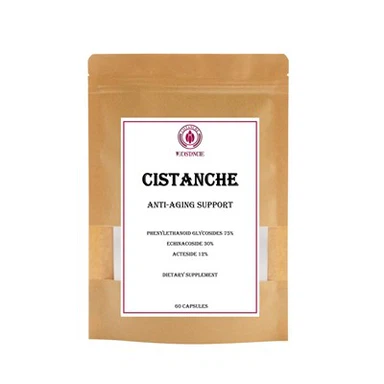
New Herbal Supplements For Functional constipation (FC)
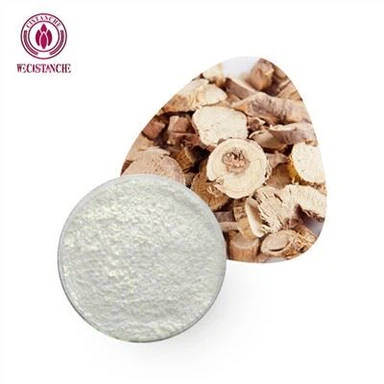
Cistanche deserticola, known as the "ginseng of the desert," is a classic tonic herb in TCM. It is associated with the kidney and large intestine meridians and is believed to regulate the balance of essence and blood, strengthen kidney function and yang energy, and improve bowel function to promote smooth defecation. In TCM prescriptions for FC, Cistanche appears with a high frequency - up to 57.92%[^8] - and herbal formulas containing Cistanche have demonstrated significant effects on relieving constipation. However, the specific therapeutic mechanisms remain to be fully elucidated.
The active components of Cistanche include quercetin, echinacoside, xylose, mannitol, and β-sitosterol. Previous studies have shown[^9–12] that:

Quercetin helps restore impaired intestinal function and protects the intestinal mucosa, showing beneficial effects on STC.
Echinacoside exerts a laxative effect in constipated mice by reducing intestinal inflammation and oxidative stress, and by modulating enteric neurotransmitter levels.
Xylose increases fecal pellet number, fecal water content, and both wet and dry fecal weights in constipated mice, while also shortening the time to first defecation, supporting its role in promoting intestinal transit.
Oral mannitol has been shown to be effective in treating constipation in patients with colorectal cancer.
Other research[^13] has suggested that constipation is closely related to the mitogen-activated protein kinase (MAPK) signaling pathway. The level of MAPK in colonic tissues is inversely correlated with fecal water content in STC rats, and Cistanche may exert its therapeutic effects by modulating the MAPK pathway. The results of this study support the efficacy of Cistanche extract in treating FC, consistent with previous reports[^14].
The enteric nervous system (ENS) plays an autonomous role in regulating intestinal function, and its dysfunction is of significant clinical relevance in FC[^15]. Neurotransmitters such as nitric oxide (NO), 5-hydroxytryptamine (5-HT), substance P (SP), and vasoactive intestinal peptide (VIP) are all associated with gastrointestinal motility disorders[^16]. This study suggests that Cistanche extract can modulate abnormal levels of enteric neurotransmitters in FC rats.
Furthermore, abnormal expression of aquaporins (AQPs) in the colon can lead to impaired water transport, which is considered a key factor in the pathogenesis of FC. AQP3 and AQP8 are important subtypes of the AQP family and play a critical role in regulating water transport in the colon. Downregulating the expression of AQP3 and AQP8 may help inhibit the progression of FC[^17]. The findings of this study suggest that Cistanche extract may exert therapeutic effects by downregulating the expression of AQP3 and AQP8 in FC rats.
In summary, Cistanche extract may improve functional constipation by downregulating AQP3 and AQP8 expression, correcting abnormalities in enteric neurotransmitters, improving the ultrastructure of colonic mucosa, and enhancing gastrointestinal motility. However, whether its efficacy also involves pathways such as the renin-angiotensin system (RAS), phosphoinositide 3-kinase/protein kinase B (PI3K-Akt), MAPK, or forkhead box O (FoxO) signaling remains to be further investigated.

4. References
Knaus ME, Lu PL, Lu A, et al. Antegrade continence enemas in children with functional constipation and dyssynergic defecation: go or no go? J Pediatric Surg, 2022; 57(8): 1672–1675.
Gong LP, Guo X, Huang NN, et al. Research progress on Shouhui Tongbian Capsules in the treatment of functional constipation. Chinese Traditional and Herbal Drugs, 2022; 8(18): 53–55.
Chen KX, Zhang LJ, Li PC. Clinical evaluation of Wen Shen Jian Pi Tong Bian Decoction combined with Baixiao Moxibustion in treating elderly patients with spleen-kidney yang deficiency type chronic functional constipation and its effect on serum enteric neurotransmitters. China Journal of Traditional Chinese Medicine and Pharmacy, 2022; 10(4): 37–42.
Zhang BY. Overview of the chemical constituents of Cistanche deserticola. Strait Pharmaceutical Journal, 2015; 27(5): 40–44.
Gao YJ, Jiang Y, Dai F, et al. Pharmacodynamic substance study of the laxative effect of Cistanche. China Modern Chinese Medicine, 2015; 1(4): 5–6.
Guo QQ, Yang GQ, Qin WX, et al. Research progress on the pathogenesis and acupuncture intervention of functional constipation. Journal of Liaoning University of Traditional Chinese Medicine, 2022; 24(11): 48–49.
Xin Y, Zhang HX, Zhou L. Research progress on animal models of functional constipation. Hubei Journal of Traditional Chinese Medicine, 2014; 36(3): 34–36.
He PP, Fan XH, Liang XM, et al. Data mining research on medication patterns of Chinese medicine in treating elderly functional constipation. Chinese Journal of Information on Traditional Chinese Medicine, 2019; 26(12): 103–107.
Chen XY, Chen YM, Zhong YY. Study on quercetin regulating AQP3 in intervention of slow-transit constipation. In: Proceedings of the 13th National Nutrition Science Conference and Global Chinese Nutrition Scientists Conference, 2017: 160–161.
Duan XY, Fan SA, Zhu KJ, et al. Laxative effect and mechanism of echinacoside on constipated mice. Chinese Patent Medicine, 2023; 1(2): 1–6.
Shi XZ, Zhu ST, He F. Effect of xylose on laxative function in mice. Food and Machinery, 2008; 127(5): 42–44.
Zhang L. Observation on the efficacy of laparoscopic surgery combined with oral mannitol in the treatment of constipation complicated with colorectal cancer. Chinese Journal of Coloproctology, 2021; 41(1): 23–25.
Fan YH, Zhao D, Liu HL, et al. Molecular mechanism of Cistanche in treating constipation based on network pharmacology. Journal of Shanxi University (Natural Science Edition), 2022; 3(1): 45–47.
Du Q, Wu Z. Study on the dose-effect relationship and mechanism of Cistanche in treating yang-deficiency constipation models. Central South Pharmacy, 2016; 4(1): 5–11.
Ma XW, Wang C, Zhang RC, et al. Study on the effect of abdominal massage combined with 5-HT4 receptor agonist on STC rats via SCF/c-kit signaling pathway. Journal of Difficult and Complicated Cases, 2020; 19(5): 68–71.
Wang YJ, Zhou YX, Zhang H, et al. Effect of Xiaofu Tongjie Formula on enteric neurotransmitters in rats with functional constipation. Shaanxi Journal of Traditional Chinese Medicine, 2015; 3(2): 247–248.
Wang Y, Wang Q, Liu SY, et al. Effects of electroacupuncture at different acupoint groups on colonic mucosa ultrastructure and expression of AQP3 and AQP8 in rats with functional constipation. Journal of Nanjing University of Chinese Medicine, 2019; 6(2): 58–63.