Tonifying Yang Does Not Equal Generating Fire: The Underlying Logic Of Cistanche’s “Warming Without Heat, Tonifying Without Harshness”
Oct 22, 2026
Abstract: In clinical practice, there is a common misconception that all Yang-tonifying herbs are drying and that all kidney-warming therapies inevitably cause "fire" symptoms such as dry mouth, sore throat, and irritability. Cistanche deserticola (Rou Cong Rong), however, has been praised for centuries as a "mild tonic" characterized by the phrase "warming without heat, tonifying without harshness, warming without dryness, moistening without draining" (Ben Cao Hui Yan). This article explores the underlying logic of why Cistanche can tonify Yang without inducing fire, from the perspectives of its nature and flavor, the relationship between essence and blood, its structural balance of tonification and dredging, modern pharmacological findings, and clinical boundaries.

Desert ginseng
Why "Tonifying Yang" Is Mistaken for "Causing Fire"
In Traditional Chinese Medicine (TCM), "Yang" does not simply mean heat, inflammation, or stimulation. Yang governs warming, propelling, growth, consolidation, and transformation. It is the power system of life activities, not merely "fire." The Su Wen compares Yang to the sun in the sky: without it, life cannot flourish.
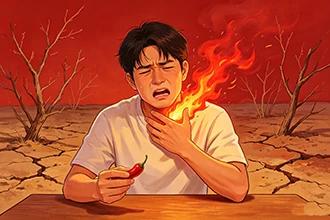
The clinical complaint that "tonifying Yang causes fire" usually stems from three misunderstandings.
First, mistaking deficient fire for excess fire. In kidney Yang deficiency with declined Mingmen fire, deficient Yang may float outward, causing dry mouth, irritability, flushed face, and insomnia. Using bitter-cold herbs like Huang Qin or Huang Lian to "clear fire" only deepens the deficiency. The correct approach is to warm the kidney, receive Qi, and guide fire back to its root.
Second, tonifying Yang without nourishing essence and blood. Potent Yang-warming herbs like Fu Zi, Rou Gui, Xian Mao, and Yin Yang Huo are powerful but drying. If the patient is already depleted in essence and blood, it is like adding fuel to a fire without water in the pot-leading to dryness, constipation, and sore throat. TCM Yang tonification is never about "igniting a flame" but about ensuring "fire shines when oil is sufficient; Yang is retained when Yin is present."
Third, neglecting constitution differentiation. Those with Yin deficiency and effulgent fire, damp-heat internal accumulation, or excess heat constipation are not suitable for aggressive Yang tonification. Using warming herbs in such cases naturally adds fuel to the fire.
Therefore, "tonifying Yang equals generating fire" is a flawed proposition. The accurate statement is: blind tonification, harsh warming, and non-differentiated treatment cause fire.

Effects of cistanche-improve kidney function
The Pharmacological Nature of Cistanche: Sweet, Salty, Warm; Acting on Kidney and Large Intestine
The Chinese Pharmacopoeia defines Cistanche as "sweet, salty, warm; enters Kidney and Large Intestine meridians; tonifies kidney Yang, benefits essence and blood, moistens intestines and promotes bowel movement." Its indications include kidney Yang deficiency, essence-blood depletion, impotence, infertility, soreness of waist and knees, weakness of tendons and bones, and intestinal dryness constipation.
These brief lines already contain the secret of why it does not cause fire.
Sweetness tonifies and harmonizes. The sweet flavor nourishes, harmonizes, and moderates. Cistanche's tonification is not aggressive but gradual. It does not pursue temporary excitement but slowly replenishes kidney essence and blood, providing a material foundation for Yang.

Effects of Cistanche-Improve kidney function
Click here to view Cistanche for Kidney disease products
【Ask for more】 Email:cindy.xue@wecistanche.com / WhatsApp: 0086 18599088692 / WeChat: 18599088692
Saltiness enters the kidney and promotes downward moistening. The salty flavor enters the kidney and blood level. The root of kidney Yang lies in kidney essence; saltiness can tonify the kidney and soften hardness while moistening downward. Therefore, Cistanche treats intestinal dryness constipation not by purging like Da Huang, but by "adding fluid to propel the boat": nourishing kidney essence and moistening the large intestine so that bowel movements normalize naturally.
Warmth, not heat. The Ben Cao Jing Shu clearly states that its Qi is "slightly warm," correcting later misunderstandings that it is hot. Warmth is like the spring sun reviving life; heat is like midsummer scorching the earth. Cistanche is like spring sunlight-melting ice without cracking soil-unlike Fu Zi or Rou Gui that fan flames into a blaze.
Entering both Kidney and Large Intestine is its most ingenious feature. Many Yang-tonifying herbs only warm the kidney but ignore intestinal dryness, resulting in depleted fluids before Yang is restored. Cistanche simultaneously enters both meridians: warming Mingmen and benefiting essence and blood on one hand, while moistening the intestines and clearing waste on the other. It tonifies with dredging, and dredges without damaging upright Qi.
The Underlying Logic of "Warming Without Heat": Adding Oil, Not Adding Fire
The human body can be likened to an oil lamp: Yang is the flame, essence and blood are the oil. "Fire" usually arises from two states-too little oil causing the flame to flicker wildly, or pouring alcohol to force the flame higher.
Fu Zi and Rou Gui act like bellows: the flame flares up instantly but consumes oil rapidly. Cistanche is like slowly adding oil-the flame may not leap high immediately, but it burns more stably, lasts longer, and produces less smoke.
This can be broken down into three layers.

Chinese herb cistanche
First, warming Yang without consuming Yin. While tonifying Yang, Cistanche also nourishes essence and blood, embodying the principle of "Yang generating Yin growth." It does not force Yang outward through dryness and heat but nurtures Yin essence so that Yang has something to attach to. As stated in Ben Cao Qiu Zhen: "Yang follows Yin and attaches, thus Yang is naturally invigorated."
Second, moist in quality, not dry. Although Cistanche is a fleshy stem growing in the desert, it is not a dry and harsh herb but a "moistening herb in arid lands." It contains phenylethanoid glycosides, polysaccharides, betaine, amino acids, and other components. Modern research has focused on compounds such as echinacoside and verbascoside for their antioxidant, neuroprotective, immunomodulatory, and hypothalamic-pituitary-gonadal axis regulatory effects. In TCM terms, moist quality generates fluids, lubricates the intestines, and moderates dryness, naturally reducing the tendency to generate heat.
Third, tonification combined with dredging gives fire a pathway. Shu Di Huang tonifies Yin but is cloying; Huang Qi tonifies Qi but tends to cause stagnation; Lu Rong tonifies Yang but is too heavy. Cistanche, however, is "slippery but not draining": it tonifies essence and blood without stagnation, moistens the large intestine without causing diarrhea. Tonification, moistening, and dredging coexist in one herb, making it difficult for stagnant heat to form.
This is why Ji Chuan Jian from the Jing Yue Quan Shu uses Dang Gui, Niu Xi, Rou Cong Rong, Ze Xie, Sheng Ma, and Zhi Qiao to treat constipation due to "deficiency of original Qi": Cistanche serves as the commander, nourishing kidney essence, moistening the intestines, and promoting bowel movement without damaging fluids or upright Qi.
The Underlying Logic of "Tonifying Without Harshness": Regulating Function, Not Creating Stimulation
Modern people often misunderstand "tonifying kidney Yang" as boosting libido, forcibly sustaining energy, or creating intense excitement. However, in TCM, kidney Yang governs basal metabolism, reproductive endocrinology, bone and tendon strength, bowel and bladder control, stress resistance, and aging speed.
Modern pharmacological studies on Cistanche align precisely with "overall functional recovery":
Sex hormone-like and endocrine regulation: Phenylethanoid glycosides can influence the hypothalamic-pituitary-gonadal axis, improving functional decline due to kidney Yang deficiency, but not merely acting as an aphrodisiac.
Anti-fatigue: It affects energy metabolism, liver glycogen and muscle glycogen reserves, reduces post-exercise blood lactate accumulation, and alleviates chronic fatigue.
Immune regulation: Cistanche polysaccharides enhance macrophage, T-lymphocyte, and NK cell activity, offering auxiliary value for weak constitutions, frequent illness, and post-illness recovery.
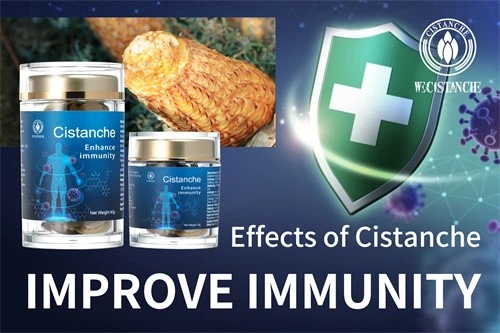
Desert ginseng-Improve immunity
Moistening intestines and promoting defecation: It increases intestinal moisture, promotes intestinal secretion, and regulates peristalsis, making it suitable for intestinal dryness constipation in the elderly, postpartum women, and chronic illness patients, without the harshness of stimulant laxatives.
Antioxidant and neuroprotection: Echinacoside and verbascoside have demonstrated free radical scavenging, anti-lipid peroxidation, and cognitive improvement in laboratory studies, with related extracts already investigated for vascular dementia.
In clinical terms, Cistanche does not create "false excitement" but gradually rebuilds depleted foundations.
Thus, it is "not harsh"-unlike Fu Zi's thunderous rescue of Yang collapse, Ma Huang's drastic diaphoresis, Da Huang's violent purging, or Lu Rong's heavy warming of extraordinary meridians. It is a mild, slow, and moistening tonic.

Superman herb cistanche- improves kidney function
Who Are the "Modern Deficient" That Benefit from It?
Many contemporary patients are not purely Yang-deficient but present with "deficiency intertwined with dryness, weak Yang and depleted Yin": late nights deplete essence, prolonged sitting causes Qi stagnation, stress disturbs the spirit, rich diet generates dampness, and advancing age naturally reduces kidney essence. Common manifestations include:
Sore waist and weak legs without high fever or irritability
Cold hands and feet but restless sleep at night
Dry stools like sheep pellets, especially in the elderly
Low energy, reduced libido, slow recovery
Pale or light-red tongue, thin white coating, deficient and thin pulse
Seen in postpartum, post-illness, post-surgery, menopause, and premature aging states
Such individuals find Lu Rong too heavy, Xian Mao too harsh, Da Huang too damaging, and Shu Di Huang too cloying. Cistanche fits perfectly in between: warming the kidney without dryness, benefiting essence without stagnation, moistening the intestines without diarrhea.
Common combinations reflect this thinking:
With Dang Gui, Niu Xi, Ze Xie: for kidney deficiency and fluid depletion constipation, as in Ji Chuan Jian
With Tu Si Zi, Du Zhong, Ba Ji Tian: for cold sore waist, low energy
With Shu Di, Shan Zhu Yu: "seeking Yang within Yin" for overwork, premature aging, hair loss
With Huang Qi, Bai Zhu: for Qi deficiency with kidney depletion and weak defecation (caution in diarrhea)
Cistanche porridge (Cistanche, rice, small amount of mutton): winter warm-nourishing regulation
Note: wine-processed Cistanche (steamed with wine) has enhanced warming and dredging properties, suitable for impotence, low back pain, and cold uterus. However, wine processing combined with alcohol makes it more heating; those prone to fire should avoid soaking it in high-proof liquor for heavy consumption.
Boundaries: Even Moistening Warmth Has Contraindications
Although Cistanche is mild, it is not for everyone.
Contraindicated in Yin deficiency with effulgent fire: red tongue with little coating, night sweats, vexing heat in chest, palms and soles, dry mouth and throat-warming tonics will aggravate deficient fire.Contraindicated in damp-heat internal accumulation: bitter sticky mouth, yellow greasy coating, foul stools, yellow urine-warming herbs will promote dampness and heat. Contraindicated in excess heat constipation: abdominal distension, foul breath, red tongue with yellow coating, dry stools with tenderness-this is heat bind, not intestinal dryness. Use with caution in spleen deficiency with loose stools: Cistanche moistens the intestines; those with diarrhea, borborygmus, or watery stools may experience worsening. Not suitable for effulgent ministerial fire: easy erection, spermatorrhea-further warming will cause disorder.

Cistanche tubulosa- improves kidney function
Standard decoction dosage is 6–15 g; excessive doses may cause nausea, bloating, or diarrhea. Food therapy cannot replace individualized prescription. Pregnant women, breastfeeding mothers, children, and patients with chronic diseases should consult a TCM practitioner.
What Cistanche Teaches About "Advanced Yang Tonification"
The lesson from Cistanche extends beyond a single herb.
Low-level tonification: stuff when deficient, bake when Yang is low, force when tired.Advanced tonification: first assess whether essence and blood are sufficient, fluids moist enough, intestines open, deficient fire genuine, and consider age and recovery capacity.
Cistanche represents the latter: not relying on dryness to force Yang, not using heavy flavors to stagnate, not seeking quick results through purging. It is like a calm old minister-first nourish essence, then warm Yang; first moisten intestines, then dredge collaterals; first consolidate the root, then promote function.
Ben Cao Hui Yan summarized it in two words: Cong Rong (calm and unhurried). The highest level of Yang tonification in TCM is precisely these two words: not hasty, not harsh, not biased, not exhausting.
"Tonifying Yang does not equal generating fire." A physician who truly understands Yang tonification is not afraid of fire, nor does he pursue drastic effects. He knows: Yang is not burned out but nurtured; fire should not be excessively vigorous but warmed when appropriate and subdued when necessary; tonifying Yang is not throwing matches into the body but slowly filling the lamp of Mingmen with oil.
Cistanche is called the "ginseng of the desert" not because it is the most potent, but because amid barrenness and deficiency, it can warm, moisten, tonify, dredge, and be taken long-term. Fu Zi rescues collapse; Cistanche nourishes life. Understanding Cistanche means understanding the measured restraint of "tonifying Yang without assisting fire" in Chinese medicine.
References
Chinese Pharmacopoeia Commission. Pharmacopoeia of the People's Republic of China. Cistanche entry.
Li Shizhen. Ben Cao Gang Mu (Compendium of Materia Medica).
Ni Zhumo. Ben Cao Hui Yan (Collected Words on Materia Medica).
Zhang Jingyue. Jing Yue Quan Shu, formula discussion on Ji Chuan Jian.
China Academy of Chinese Medical Sciences, Institute of Chinese Materia Medica. Research reviews on Cistanche phenylethanoid glycosides.
Beijing University of Chinese Medicine, Modern Research Center for TCM. Studies on echinacoside and verbascoside.