Total Cistanche Glycosides Can Relieve Functional Constipation By Regulating Bile Acid Metabolism
Dec 18, 2023
Functional constipation (FC) is a type of chronic constipation with no organic cause, no structural abnormalities or metabolic disorders, and the patient has hard stool, difficulty defecating, poor bowel feeling and reduced stool frequency. In addition to having a serious impact on the patient's physiological function, it can also cause psychological stress. However, there are currently limited clinical treatment options for FC.

Click to constipation treatment
Cistanche deserticola is a kind of traditional Chinese medicine with functions of moistening bowel and soothing intestine. Its main active extract is total sugar alcohol extract (CTAE). However, further research is needed on the production of CTAE, its overall efficacy, and the potential mechanisms for treating FC.
Recently, One was titled "Total alditols fromCistanche deserticola attenuate functional constipation by regulating bile acid metabolism. The paper reveals the overall efficacy and potential mechanism of action of CTAE in FC rats, providing a basis for the development and clinical application of novel CATE drugs.
Effects of body weight, stool and intestinal transmission in rats
The researchers first made a drug model through compound difenoxate tablets to establish a constipation model. Then 12 healthy rats and 72 model rats were selected and re-divided into 7 groups, namely blank control group (BC group), constipation model group (CM group), Moxapride positive control group MA group, Ma Ren pill group MP group, cistanche che total sugar alcohol extract high-dose group CTAE-H group. Cistanche total sugar alcohol extract medium dose group CTAE-M group and Cistanche total sugar alcohol extract low dose group CTAE-L group.
After 32 days of drug treatment (10 mL/kg gavage), the stool became softer, larger, and shiny (brown), and the wet weight and water content of the stool increased significantly in the CTAE-H, CTAE-M, MA, and MP groups (Figures 2B and D). Compared with BC group, the colonic EMG amplitude increased significantly, the colonic EMG frequency decreased significantly, and the propulsive length and rate of toner decreased significantly (E\F\G\H) in CM group. CTAE-H and CTAE-M, on the other hand, increase the advance length and advance rate (G and H) of the toner. The MA and MP groups were also shown to be able to mitigate FC-induced changes in EMG and toner progression in the colon.
In addition, the researchers added that in the CM group, the colonic tissue of rats showed necrosis of lymphocytes, macrophages, plasma cells, etc., while CATE-H\M, MA, and MP all alleviated FC-induced inflammation of the colonic tissue. All in all, the reason why CTAE can effectively improve constipation is inseparable from the effects of "increasing fecal humidity", "enhancing intestinal motility" and "reducing inflammation".
Study on the influence of serum and colonic tissue biochemical indexes in rats
Compared with BC group, the serum levels of NO, NOS and SS in CM group were increased, while the levels of GAS (serum gastrin), MTL (motilin), Na+-K+ -ATPase and 5-HT were decreased. However, after drug treatment, the relevant biochemical indexes of CTAE in different dose groups changed significantly:
CTAE-H group showed lower levels of NO and NOS, and significantly increased levels of GAS, MTL, Na+-K+ -ATPase and 5-HT.
In the CTAE-M group, the levels of GAS, MTL, Na+-K+ -ATPase and 5-HT were significantly increased.
In CTAE-L group, SS level decreased and Na+-K+ -ATPase level increased.
In addition, the levels of NO in MA and MP groups decreased significantly, while the levels of AS and MTL increased. Among them, NOS and SS in MA group also decreased, and Na+-K+ -ATPase and 5-HT levels showed an increasing trend.
In colon tissues, SS levels in CTAE-H and CTAE-M groups decreased compared with MC group, while GAS, MTL and Na+-K+ -ATPase levels increased. In contrast, the researchers only observed an increase in MTL levels in the CTAE-L group. The changes of MA and MP were reflected in the levels of GAS and MTL, which showed an increasing trend. In addition, the levels of Na+-K+ -ATPase and 5-HT in MA group also increased.
In conclusion, CTAE regulates the balance of neurotransmitters in FC rats, increasing excitatory neurotransmitters and decreasing inhibitory neurotransmitters, providing a new perspective for the treatment of intestinal motor dysfunction.

CTAE can relieve metabolic disorders caused by FC
The researchers used the UPLC-QTOF-MS/MS technique to analyze metabolites in plasma samples and found that BC, CM and CTAE-H were clearly separated. Comparing the BC and CM groups, the researchers identified a total of 39 positive ion and 47 negative ion differential metabolites. Of these, 21 were FC-related differential metabolites, 14 were induced and 7 were inhibited, while CTAE could correct 19 of them and 8 had significant changes. This includes reversing five of the six metabolites in the primary bile acid biosynthesis pathway, thereby interfering with FC metabolism. This is enough to prove that CTAE can regulate bile acid metabolism disorders to treat constipation.
Effect of CTAE on BA (bile acid) level in FC rats
The target metabolome analysis of plasma samples from different groups was performed by UPLC-TSQ-MS to detect bile acid changes. The results showed extensive changes in bile acids in the BC, CM, and CTAE-H groups compared to healthy rats. Specifically, 13 bile acids in the BC group were significantly upregulated, while 3 bile acids in the CM group were upregulated. However, 13 FC-affected bile acids were corrected after CTAE treatment, of which 8 were significantly down-regulated.
In addition, the researchers were surprised to find that both total and unbound bile acids in CM were higher than those in BC group (P<0.01). However, in the CTAE-H group, compared with the CM group, both total and unbound bile acids were significantly reduced (P<0.01). In addition, there was a significant change in the primary/secondary bile acid ratio in the CM group compared to the BC group, but no remission trend in the CTAE-H group. The proportion of non-12α-Oh /12α-OH in CM group was significantly increased, but decreased after CTAE-H treatment. All these indicate that CTAE has a clear ability to interfere with bile acids.
CTAE adjust CYP8B1 SLC10A2 / FGF15 TGR5 / FXR expression to improve BA metabolic disorders
To further explore the mechanism by which CTAE interferes with BA, we examined the expression of proteins related to BA metabolism in liver tissue, including SLC10A2, FGF15, CYP7A1, CYP8B1, TGR5, and FXR.
The results showed that compared with BC group, the expression levels of SLC10A2, FGF15, CYP7A1, CYP8B1 and TGR5 in CM group were significantly decreased (P<0.01 or 0.05). The expression levels of FGF15, CYP8B1 and FXR in CTAE-H group were significantly up-regulated (P<0.01 or 0.05).
This further confirms that CTAE attenuates BA metabolism by regulating the expression of CYP8B1, SLC10A2, FGF15, TGR5, and FXR, and treats FC by improving BA metabolic disorders.
Correlation analysis of BAs, protein and pharmacodynamic indexes

According to Spearman correlation analysis, these proteins were negatively correlated with most bile acids (Figure 7A). In addition, network analysis showed that UDCA and CA were not only associated with the proteins CYP7A1 and CYP8B1 (Figure 7B), but also with the pharmacodynamic indicators serotonin (5-HT) and NO (Figure 7C). These data further confirm that CTAE treats FC by regulating the expression of CYP8B1, TGR5, FGF15, and FXR, thereby regulating BA metabolic disorders.
conclusion
By enhancing intestinal transport, modulating neurotransmitters, increasing ICC levels, and reducing intestinal inflammation, CTAE can effectively relieve FC. The main pharmacological mechanism involves the regulation of CYP8B1, TGR5, FGF15 and FXR expression, which further regulates bile acid synthesis and EHC. These findings provide a solid pharmacological basis for the clinical application of CTAE in the treatment of gastrointestinal heat accumulation, bloating, and constipation.
Natural Herbal Medicine For Relieving Constipation-Cistanche
Cistanche is a genus of parasitic plants that belongs to the family Orobanchaceae. These plants are known for their medicinal properties and have been used in Traditional Chinese Medicine (TCM) for centuries. Cistanche species are predominantly found in arid and desert regions of China, Mongolia, and other parts of Central Asia. Cistanche plants are characterized by their fleshy, yellowish stems and are highly valued for their potential health benefits. In TCM, Cistanche is believed to have tonic properties and is commonly used to nourish the kidney, enhance vitality, and support sexual function. It is also used to address issues related to aging, fatigue, and overall well-being. While Cistanche has a long history of use in traditional medicine, scientific research on its efficacy and safety is ongoing and limited. However, it is known to contain various bioactive compounds such as phenylethanoid glycosides, iridoids, lignans, and polysaccharides, which may contribute to its medicinal effects.

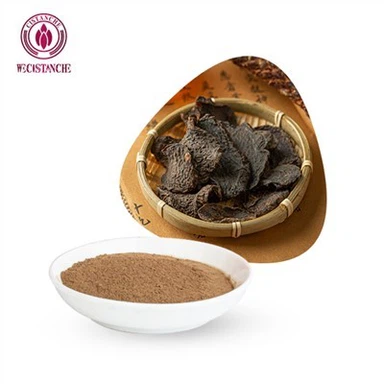
Wecistanche's cistanche powder, cistanche tablets, cistanche capsules, and other products are developed using desert cistanche as raw materials, all of which have a good effect on relieving constipation. The specific mechanism is as follows: Cistanche is believed to have potential benefits for relieving constipation based on its traditional use and certain compounds it contains. While scientific research specifically on Cistanche's effect on constipation is limited, it is thought to have multiple mechanisms that may contribute to its potential to relieve constipation. Laxative Effect: Cistanche has long been used in Traditional Chinese Medicine as a remedy for constipation. It is believed to have a mild laxative effect, which can help promote bowel movements and induce constipation. This effect may be attributed to various compounds found in Cistanche, such as phenylethanoid glycosides and polysaccharides. Moistening the Intestines: Based on traditional use, Cistanche is considered to have moisturizing properties, specifically targeting the Intestines. Promoting hydration and lubrication of the Intestines, it may help soften tools and facilitate easier passage, thereby relieving constipation. Anti-inflammatory Effect: Constipation can sometimes be associated with inflammation in the digestive tract. Cistanche contains certain compounds, including phenylethanoid glycosides and lignans, that are believed to have anti-inflammatory properties. By reducing inflammation in the intestines, it may help improve bowel movement regularity and relieve constipation.