Traditional Chinese Medicine Recommends A Bowl Of Soup To Nourish Yin, Relieve Heat, Moisten The Intestines, And Improve Constipation.
Dec 29, 2023
Diabetes is a common chronic disease. As the time of illness increases, many patients cannot control their blood sugar very well, and their bodies are often complicated by other adverse symptoms. Constipation is the most common one.

Click to constipation treatment
Recently, many diabetic patients have reported to me that they can't hold in their feces. They haven't pooped for several days, but it is still stuck in their stomachs. They feel very uncomfortable. When they touch their abdomen with their hands, they can still feel hard. Blocky.
The patient told me that sometimes he couldn't hold it in any longer, so he would take some laxatives, but he still had diarrhea and felt that it was too damaging to the gastrointestinal tract. His relatives recommended various methods for laxatives, but they didn't work. It's of no use.
Later, the patient came to me and wanted to try traditional Chinese medicine, so he found me.
After a detailed investigation, the patient was also severely thirsty, drank a lot of water every day, urinated a lot, and had a strong appetite.
At that time, I looked at the patient's tongue. The patient's tongue was thin, red, and had thin, yellow, and dry tongue coating.

The patient's tongue is red and the tongue coating is yellow and dry, indicating that there is fire in the body, and there is severe internal heat due to yin deficiency. The large intestine and the lungs are externally and internally intertwined. The large intestine is severely dry and hot, and dry stool accumulates in the body, which is reflected in the lungs and is severe thirst.
For this situation, the effect of nourishing yin is not obvious, and it will recur if it is stopped. Therefore, if we want to completely solve the problem, we must first expel the dry feces and purge the heat, and then use the method of nourishing yin to replenish the burned body fluids.
So I gave him a prescription: Rehmannia glutinosa, Scrophulariaceae, Ophiopogon japonicus, Yu Liren, rhubarb, and Glauber's salt.
At the same time, patients are advised to eat less spicy and greasy food and try to avoid raw and cold food.
After the patient went back to use it for three days, he reported to me that he had vomited a lot of feces and the smell was very smelly. When the patient touched his abdomen, he found that the lump was not as big as before.
The patient then continued to take it for 7 days. The patient reported that the lump in the abdomen disappeared and continued to use the formula. The patient's blood sugar was stable. The patient continued to consolidate the conditioning for 1 month. There was no recurrence during the 1-year follow-up.
At that time, the patient was told that although his blood sugar had stabilized, he should not take it lightly. He should still maintain healthy living habits, avoid overeating, eat a heavy oil and salt diet, and maintain a moderate amount of exercise so that his blood sugar could be stable for a long time and constipation would not reoccur.
What should diabetics do if they suffer from frequent constipation?
1. Control blood sugar
If diabetic patients are often constipated, the most important thing is to control their blood sugar. According to traditional Chinese medicine, diabetes is caused by yin deficiency. The more severe the yin deficiency, the higher the blood sugar and the more serious the constipation.

According to Western medicine, persistent high blood sugar will change the osmotic pressure, leading to a decrease in water in the gastrointestinal tract, thus causing constipation;
On the other hand, persistent high blood sugar can lead to intestinal autonomic nervous system disorders, reduced gastrointestinal motility, and constipation.
Therefore, if diabetic patients are often constipated, they must first lower their blood sugar.
2. Adjust your diet
If diabetic patients suffer from constipation, they can eat some foods rich in dietary fiber, such as green leafy vegetables, black rice, oats, yams, beans, etc. These foods can not only increase the feeling of fullness, and delay postprandial blood sugar, but also It can promote gastrointestinal motility and relieve constipation.
3. Massage the abdomen
First of all, we rub our hands together and massage them clockwise with the navel as the center, which can promote gastrointestinal motility and relieve constipation.
However, when massaging, don't use too much force. Each massage should last for about 15 minutes. When massaging your abdomen in winter, you must keep warm to avoid catching cold.
4. Develop the habit of regular bowel movements
If diabetic patients are often constipated, try to develop the habit of regular defecation. Choose a fixed time and squat even if you don't feel the need to defecate. This will help develop the habit of regular defecation. In addition, do not play with your mobile phone during defecation to avoid going to the toilet. If the time is too long, it will lead to insufficient blood supply to the brain, resulting in dizziness.
If diabetic patients often suffer from constipation, they can try the above 4 methods first. If there is no improvement, please go to a regular hospital for medical treatment in time.
Natural Herbal Medicine For Relieving Constipation-Cistanche
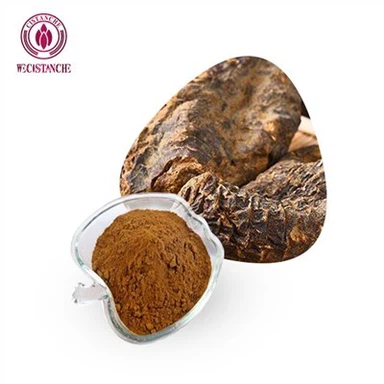
Cistanche is a genus of parasitic plants that belongs to the family Orobanchaceae. These plants are known for their medicinal properties and have been used in Traditional Chinese Medicine (TCM) for centuries. Cistanche species are predominantly found in arid and desert regions of China, Mongolia, and other parts of Central Asia. Cistanche plants are characterized by their fleshy, yellowish stems and are highly valued for their potential health benefits. In TCM, Cistanche is believed to have tonic properties and is commonly used to nourish the kidney, enhance vitality, and support sexual function. It is also used to address issues related to aging, fatigue, and overall well-being. While Cistanche has a long history of use in traditional medicine, scientific research on its efficacy and safety is ongoing and limited. However, it is known to contain various bioactive compounds such as phenylethanoid glycosides, iridoids, lignans, and polysaccharides, which may contribute to its medicinal effects.

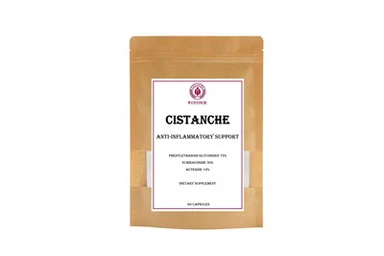
Wecistanche's cistanche powder, cistanche tablets, cistanche capsules, and other products are developed using desert cistanche as raw materials, all of which have a good effect on relieving constipation. The specific mechanism is as follows: Cistanche is believed to have potential benefits for relieving constipation based on its traditional use and certain compounds it contains. While scientific research on Cistanche's effect on constipation is limited, it is thought to have multiple mechanisms that may contribute to its potential to relieve constipation. Laxative Effect: Cistanche has long been used in Traditional Chinese Medicine as a remedy for constipation. It is believed to have a mild laxative effect, which can help promote bowel movements and induce constipation. This effect may be attributed to various compounds found in Cistanche, such as phenylethanoid glycosides and polysaccharides. Moistening the Intestines: Based on traditional use, Cistanche is considered to have moisturizing properties, specifically targeting the Intestines. Promoting hydration and lubrication of the Intestines may help soften tools and facilitate easier passage, thereby relieving constipation. Anti-inflammatory Effect: Constipation can sometimes be associated with inflammation in the digestive tract. Cistanche contains certain compounds, including phenylethanoid glycosides and lignans, that are believed to have anti-inflammatory properties. By reducing inflammation in the intestines, it may help improve bowel movement regularity and relieve constipation.