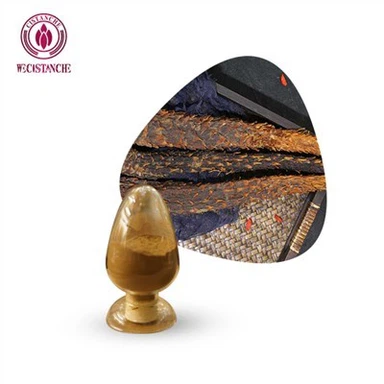
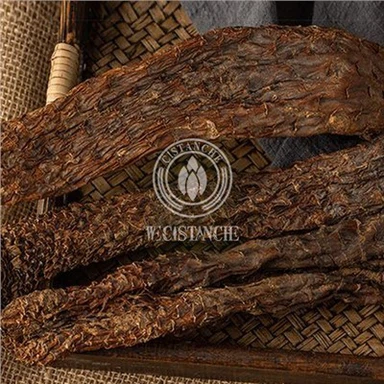
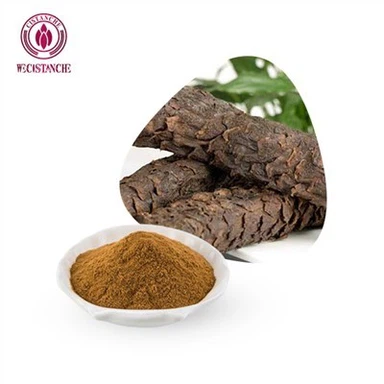
Traditional Chinese Medicine (TCM) Insights For Men’s Vitality: A Practical Guide For Developing Cistanche (Rou Cong Rong) Supplements
Sep 07, 2026
Disclaimer: This article is for educational and product-development discussion only. It does not provide medical advice, diagnosis, or treatment. Dietary supplements are not intended to diagnose, treat, cure, or prevent any disease. Always consult qualified healthcare professionals, and follow the regulations in your target market.
Why Western brands are looking at TCM for men's vitality
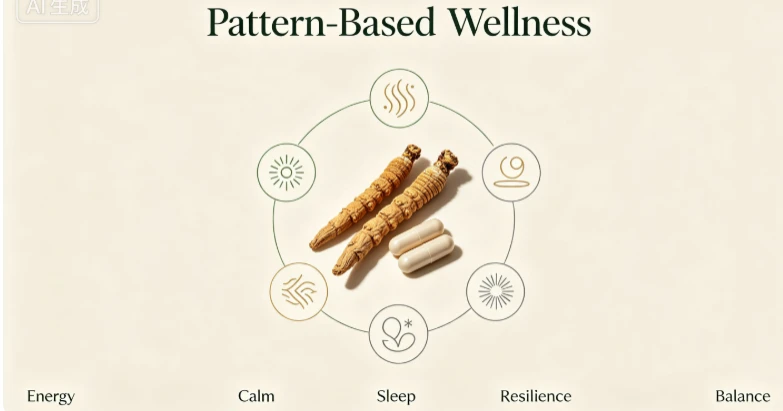
In the West, conversations around sexual performance, stamina, and confidence often focus on single targets (for example, circulation, hormones, stress, or mood). TCM approaches the same concerns differently: it emphasizes patterns-clusters of signs and symptoms-and aims to restore balance through a combination of tonification, regulation, and lifestyle support.
For natural product developers, this "pattern thinking" can be a powerful framework for:
segmenting users more precisely,
designing multi-ingredient formulas,
and building compliant "structure/function" messaging (e.g., "supports stamina," "supports sexual health," "supports stress resilience") rather than disease claims.

From "one symptom" to "patterns": a TCM way to understand common complaints
In TCM, issues such as low libido, low stamina, or reduced performance may be associated with different patterns. Two people can share the same complaint but require different approaches.
Below are common TCM patterns often discussed in classical and modern practice (simplified for R&D audiences):

1) Heart–Spleen deficiency (stress + overthinking + fatigue)
Typical pattern features (TCM language): worry, poor sleep, low appetite, fatigue, palpitations, poor focus.
Modern product framing: stress-related performance issues; "mind-body depletion."
TCM strategy: support digestion/energy ("Spleen"), nourish the "Heart," calm the mind.
R&D idea: a "calm + vitality" men's formula pairing an adaptogenic or calming stack with gentle tonics.
2) Yin deficiency with internal heat (restlessness, night sweating, dryness)
Pattern features: insomnia, irritability, dry mouth/throat, warm sensation at night, night sweats.
Modern product framing: overtraining/overwork burnout; sleep disturbance affecting performance.
TCM strategy: nourish Yin, clear "deficiency heat," stabilize.
R&D idea: nighttime formula focusing on sleep quality and recovery, using conservative claims such as "supports restful sleep" and "supports recovery."
3) Kidney deficiency patterns (the "core battery" model)
In TCM, the "Kidney" system is often described as the foundation of vitality, growth, and reproductive function. This doesn't map 1:1 to the anatomical kidney; it's a functional model that includes endocrine-like and reproductive aspects.
Modern product framing: foundational vitality, stamina, and aging-related support.
TCM strategy: tonify Kidney (Yin or Yang depending on pattern), support essence, improve resilience.
Where Cistanche (Rou Cong Rong) fits:
Rou Cong Rong is traditionally used as a Kidney tonic, often positioned for vitality and stamina support, particularly when fatigue and "cold" signs are present.

Rou Cong Rong (Cistanche): what makes it attractive for supplement development
From an ingredient-development perspective, Rou Cong Rong stands out because it supports a story that resonates both in TCM and modern wellness:
Traditional positioning: tonifies Kidney Yang, supports vitality and endurance; also known historically for supporting bowel regularity (a "moistening" tonic in some contexts).
Modern research direction (non-claim): interest in antioxidant activity, fatigue-related markers, and neuroendocrine resilience-areas that may connect to "stamina and performance" narratives without disease claims.
Compliant claim examples (US-style structure/function):
"Supports male vitality and stamina"
"Supports energy and endurance"
"Supports healthy sexual function"
"Supports stress resilience and recovery"
(Always validate wording with regulatory counsel for your market.)
Moving from classical formulas to modern product design (a safe, practical approach)
The Chinese text you provided lists multiple classical-style decoctions and pill concepts with different TCM strategies (e.g., nourishing Yin, calming the mind, supporting essence). Instead of copying those prescriptions, supplement developers can extract functional product concepts:
Concept A: "Daytime Vitality" formula (foundation + stamina)
Goal: energy, stamina, confidence.
Possible positioning: active men, busy professionals, healthy aging.
Ingredient logic: Rou Cong Rong extract as the hero + supportive botanicals that match the desired profile (e.g., adaptogens, circulation-support, or "tonic" herbs-chosen based on safety and regulatory feasibility).
Concept B: "Night Recovery" formula (sleep + calm + recovery)
Goal: rest, calm, recovery-supporting performance indirectly.
Ingredient logic: calming + restorative components; avoid strong sedative or drug-like claims.
Concept C: "Stress-Linked Performance" formula (mind-body balance)
Goal: stress resilience + mood + focus.
Ingredient logic: combine "calm mind" tradition with modern stress-support ingredients.
What NOT to do in Western markets (common pitfalls)
To protect your brand and your customers, avoid:
"Cures erectile dysfunction" / "treats premature ejaculation"
"Works in 10 days"
"Guaranteed results" or "no relapse"
Publishing "prescription-style dosage" directions that resemble medical treatment plans
Using patient "case stories" that imply treatment of a disease condition
Instead, focus on:
quality, standardization, and transparency,
responsible, non-disease claims,
and clear safety labeling.
Manufacturing & quality: what buyers should ask a Cistanche extract factory
For B2B buyers, credibility comes from evidence and consistency:
1) Botanical identity & traceability
botanical name and plant part,
origin and harvest season,
supplier qualification,
batch traceability.
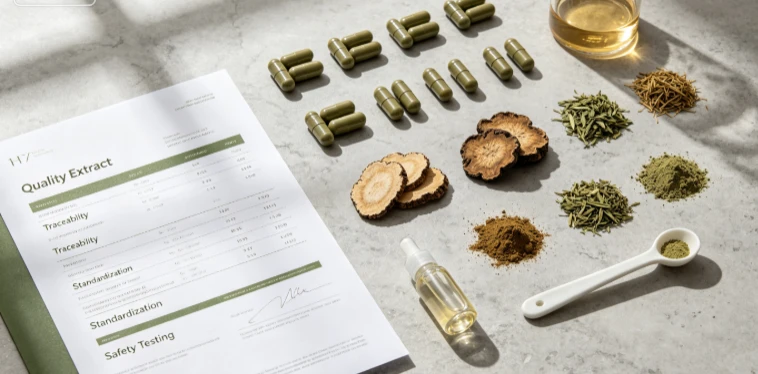
2) Standardization strategy
Common approaches include standardizing to key marker compounds (depending on your spec), such as:
echinacoside,
acteoside (verbascoside),
total phenylethanoid glycosides.
(Exact target specs depend on product goal and regulatory constraints.)
3) Safety & compliance testing (typical)
heavy metals,
pesticides,
microbiology,
solvents (if applicable),
adulteration screening.
4) Formulation support
Offer customers:
solubility and taste profile data,
recommended inclusion ranges (as "typical use levels," not therapeutic doses),
stability guidance for capsules, tablets, gummies, and liquids.
A realistic pathway to develop natural & clean men's vitality products
If you're developing a supplement line aimed at men's vitality with Rou Cong Rong as a core ingredient, a stepwise plan is:
Define target user (healthy aging vs. sports performance vs. stress-linked vitality).
Choose claim boundaries (structure/function only; no disease claims).
Select extract spec (marker compounds + solvent method + sensory constraints).
Design a formula concept (day vs. night vs. stress).
Build substantiation (literature review + safety + quality documentation).
Pilot batches + stability (real-world shelf-life and compatibility testing).
Conclusion
TCM offers a valuable "pattern-based" framework for designing men's vitality supplements without falling into the trap of oversimplified, high-risk medical claims. Rou Cong Rong (Cistanche) extract is a strong candidate for brands seeking a traditional story with modern wellness relevance-when paired with rigorous quality control and compliant communication.