Master Of Traditional Chinese Medicine Zhang Qi’s Clinical Experience In Treating Benign Prostatic Hyperplasia
Sep 04, 2026
Benign prostatic hyperplasia, often abbreviated as BPH, is one of the most common urinary problems among older men. Typical symptoms include difficulty urinating, a weak urinary stream, dribbling, incomplete emptying of the bladder, frequent urination, and in severe cases, urinary retention.
In Traditional Chinese Medicine, this condition is generally categorized under "Long Bi", which refers to difficult, obstructed, or blocked urination.
The following article introduces the clinical experience of Professor Zhang Qi, one of the first nationally recognized Masters of Traditional Chinese Medicine in China. Professor Zhang was a professor and doctoral supervisor at Heilongjiang University of Chinese Medicine and one of the first national mentors for inheriting the academic experience of senior TCM experts.
His approach to BPH focuses on a key principle:
Supporting kidney function while promoting blood circulation and removing obstruction.
This method offers valuable inspiration for men looking for a gentler, holistic way to support prostate and urinary health.
Understanding BPH from a Traditional Chinese Medicine Perspective
According to Professor Zhang Qi, BPH is particularly common in older men because it is closely related to age-associated decline in kidney qi.
In Traditional Chinese Medicine, the kidney is not viewed only as an anatomical organ. It represents a broader functional system related to aging, vitality, reproductive health, urination, fluid metabolism, bones, and lower-body strength.
Classical Chinese medical texts describe the aging process in men as follows:
As men age, kidney essence gradually declines, reproductive vitality weakens, and the body's overall functional strength decreases.
In TCM theory, the kidneys "govern water" and regulate the two lower orifices. When kidney qi becomes weak, the bladder's ability to transform and move fluids becomes impaired. Over time, damp-heat, blood stasis, and obstruction may accumulate in the lower urinary tract.
As a result, urination becomes difficult, slow, painful, incomplete, or blocked.
Therefore, Professor Zhang emphasized that the treatment of BPH should not focus only on clearing obstruction. It should address both:
The root deficiency - mainly kidney weakness associated with aging
The branch excess - damp-heat, blood stasis, and local obstruction
Only by treating both root and branch can long-term improvement be achieved.
Professor Zhang Qi's Main Therapeutic Principle
Professor Zhang commonly used the method of:
Tonifying the kidney and activating blood circulation
In Chinese, this is called Yi Shen Huo Xue Fa.
This approach aims to:
Support kidney yin and kidney yang
Improve bladder qi transformation
Promote healthy urination
Reduce stagnation and obstruction
Clear damp-heat when present
Improve circulation in the lower pelvic region
Support long-term urinary and prostate health
Professor Zhang often used a classical formula known as Zishen Tongguan Wan, also called Tongguan Wan or Zishen Wan, as the foundation of treatment.
Classical Formula: Zishen Tongguan Wan
Zishen Tongguan Wan originates from the classical Chinese medical text Lan Shi Mi Cang. The original text describes it as a formula for:
"Urinary blockage without thirst, caused by heat in the blood aspect of the lower burner."
The original formula contains three herbs:
Anemarrhena rhizome
Phellodendron bark
Cinnamon bark
From a TCM perspective, each herb has a specific role.
1. Phellodendron Bark
Phellodendron is used to clear heat and drain dampness from the lower burner. In BPH patients with symptoms such as burning urination, yellow urine, pelvic discomfort, or inflammation-like sensations, this type of herb is traditionally used to reduce damp-heat obstruction.
2. Anemarrhena Rhizome
Anemarrhena nourishes kidney yin and clears deficiency heat. In older men, yin deficiency may contribute to dryness, heat, irritation, and poor urinary regulation.
3. Cinnamon Bark
Although the condition may involve heat, cinnamon is added in a small amount to support yang transformation. TCM theory holds that:
Without yang, yin cannot be generated; without yin, yang cannot be transformed.
In simple terms, nourishing fluids alone is not enough. The body also needs functional warmth and movement to transform and discharge fluids properly. Cinnamon helps activate bladder qi transformation, allowing urination to become smoother.
Why Kidney Yin and Yang Are Both Important in BPH
Professor Zhang observed that many cases of BPH involve a combination of kidney yin and kidney yang deficiency.
This means that the body may show signs of both depletion and reduced functional activity. In urinary health, this can appear as:
Weak urinary stream
Frequent nighttime urination
Incomplete urination
Cold lower back or knees
Fatigue
Reduced sexual function
Dribbling after urination
Pelvic heaviness
Slow urinary flow
Therefore, Professor Zhang often combined Zishen Tongguan Wan with Ba Wei Di Huang Wan, also known as the Eight-Ingredient Rehmannia Pill, to regulate both kidney yin and yang.
He then added herbs that promote blood circulation and soften masses, such as:
Sparganium rhizome
Curcuma rhizome
Peach kernel
Red peony root
Together, these herbs were used to address stagnation, blood stasis, and prostate enlargement-related obstruction.
Treatment Strategy for Damp-Heat Symptoms
When patients had obvious lower-burner damp-heat symptoms, Professor Zhang modified the formula by adding herbs that clear heat, promote urination, and detoxify.
Typical symptoms included:
Dark yellow or reddish urine
Burning pain during urination
Urethral discomfort
Thick yellow greasy coating at the root of the tongue
Wiry, slippery, and rapid pulse
In such cases, he added herbs such as:
Dianthus herb
Polygonum aviculare
Dandelion
Hedyotis diffusa
These herbs were traditionally used to clear heat, drain dampness, support urinary flow, and relieve toxin accumulation.
Clinical Case 1
Patient Information
A male patient, 60 years old.
First Visit
Date: October 29, 1989
The patient had experienced difficult urination for more than one week. His symptoms included:
Unsmooth urination
Difficulty passing urine
Painful and hesitant urination
Distending pain in the perineal region
Erectile dysfunction for more than six months
A Western medical examination had diagnosed him with benign prostatic hyperplasia.
His tongue was dark purple, and his pulse was deep, especially weak at the chi position.
Professor Zhang diagnosed the condition as:
Deficiency of both kidney yin and kidney yang, internal obstruction by stasis and turbidity, and impaired bladder qi transformation.
The treatment principle was:
Tonify the kidney, nourish yin, support yang, and activate blood circulation.
Herbal Prescription
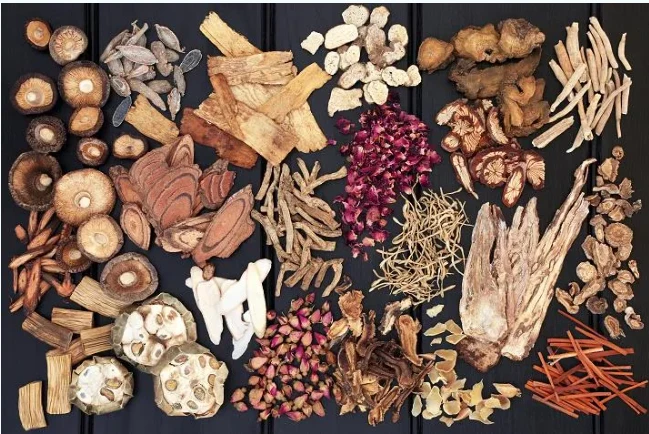
The prescription included:
Anemarrhena rhizome - 15 g
Phellodendron bark - 15 g
Cinnamon bark - 10 g
Prepared rehmannia root - 20 g
Goji berry - 15 g
Chinese yam - 15 g
Poria - 15 g
Moutan bark - 15 g
Alisma rhizome - 15 g
Aconite - 10 g
Sparganium rhizome - 15 g
Peach kernel - 15 g
Red peony root - 15 g
The herbs were decocted in water and taken orally.
Follow-Up
After taking 12 doses, the patient's urination became smooth and uninterrupted. Most symptoms disappeared, although erectile dysfunction remained.
The prescription was then modified by removing:
Sparganium rhizome
Peach kernel
Red peony root
And adding:
Epimedium leaf - 15 g
Cuscuta seed - 20 g
Ligustrum fruit - 15 g
Cistanche - 15 g
Licorice root - 10 g
After another 12 doses, all symptoms disappeared. During a six-month follow-up, there was no recurrence.
Clinical Case 2
Patient Information
A male patient, 57 years old.
First Visit
Date: December 7, 1989
The patient had the following symptoms:
Difficulty urinating
Thin urinary stream
Heaviness and dragging sensation in the perineum
Burning pain in the urethra
Lower abdominal distension
Dribbling after urination
A hospital examination diagnosed him with benign prostatic hyperplasia and recommended surgery. The patient declined surgery and came to Professor Zhang's clinic for treatment.
His pulse was deep and slippery. His tongue was dark, with a thin yellow greasy coating.
Professor Zhang diagnosed the condition as:
Deficiency of both kidney yin and kidney yang, with internal obstruction by damp-heat and blood stasis.
The treatment principle was:
Tonify the kidney, nourish yin, support yang, activate blood circulation, and clear damp-heat.

Herbal Prescription
The prescription included:
Anemarrhena rhizome - 15 g
Phellodendron bark - 15 g
Cinnamon bark - 10 g
Aconite - 10 g
Prepared rehmannia root - 25 g
Cornus fruit - 15 g
Chinese yam - 15 g
Poria - 15 g
Moutan bark - 15 g
Alisma rhizome - 15 g
Sparganium rhizome - 15 g
Curcuma rhizome - 15 g
Peach kernel - 15 g
Ground beetle - 5 g
Dianthus herb - 20 g
Polygonum aviculare - 20 g
Dandelion - 30 g
The herbs were decocted in water and taken orally.
Follow-Up
The patient returned for eight follow-up visits and took more than 60 doses of the formula. His symptoms resolved, urination returned to normal, and prostate examination showed that the prostate had become smaller and softer. The patient was considered clinically recovered.
Why This Approach May Be Meaningful for Modern Men with BPH
Professor Zhang's method was developed based on both the aging characteristics of men and the pathological mechanism of prostate enlargement.
In his view, BPH is not simply a local prostate problem. It reflects a deeper pattern involving:
Decline of kidney energy
Impaired bladder function
Poor fluid transformation
Damp-heat accumulation
Blood stasis
Pelvic obstruction
This is why his approach combined tonification and circulation support rather than simply attempting to "unblock" urination.
Interestingly, Professor Zhang also noted that even some patients without obvious kidney deficiency symptoms responded well to the kidney-tonifying and blood-activating method.
The Role of Cistanche in Men's Prostate and Urinary Health
In the first clinical case, Professor Zhang added Cistanche, traditionally known in Chinese as Rou Cong Rong, after the patient's urination improved but sexual function remained weak.
Cistanche is one of the most valued kidney-tonifying herbs in Traditional Chinese Medicine. It has traditionally been used to support:
Kidney yang
Male vitality
Healthy aging
Lower back and knee strength
Bowel regularity
Sexual wellness
Urinary and reproductive system function
For older men dealing with BPH-related discomfort, Cistanche may be especially relevant because BPH often occurs together with signs of age-related kidney deficiency, such as fatigue, low libido, weak urination, and reduced vitality.
Modern Cistanche extract products are often developed to provide a more standardized and convenient form of this traditional herb.
A Holistic Guideline for Men Concerned About BPH
Based on Professor Zhang Qi's experience, a natural prostate-support strategy may include the following principles:
1. Support Kidney Energy
In TCM, kidney deficiency is considered a major root factor in aging-related urinary problems. Herbs such as Cistanche, rehmannia, goji berry, cornus fruit, Chinese yam, cuscuta seed, and epimedium are traditionally used to support kidney function and male vitality.
2. Promote Healthy Circulation
Blood stasis may contribute to chronic pelvic congestion and obstruction. Traditional blood-activating herbs were used by Professor Zhang to help improve flow and reduce stagnation.
3. Clear Damp-Heat When Present
Men with burning urination, yellow urine, pelvic discomfort, or urethral irritation may have signs of damp-heat. In these cases, heat-clearing and dampness-draining herbs may be considered under professional guidance.
4. Support Bladder Qi Transformation
Smooth urination depends not only on reducing obstruction but also on restoring the bladder's functional ability to move and discharge fluids.
5. Personalize the Formula
Professor Zhang's cases show that treatment was adjusted according to each patient's symptoms. For example, one patient needed more kidney-yang and sexual vitality support, while another needed stronger damp-heat and blood-stasis clearing.
Important Safety Note
Although many men are interested in natural approaches for prostate health, BPH can sometimes cause serious complications, including urinary retention, urinary tract infection, bladder stones, kidney damage, or severe obstruction.
If you have symptoms such as inability to urinate, severe pain, blood in urine, fever, or rapidly worsening urinary obstruction, seek medical care immediately.
Herbal formulas should be used under the guidance of a qualified healthcare provider, especially if you are taking medications, have kidney disease, heart disease, liver disease, high blood pressure, or are preparing for surgery.
This article is for educational and wellness-support purposes only. It does not replace medical diagnosis or treatment.
Conclusion
Professor Zhang Qi's experience in treating benign prostatic hyperplasia highlights a balanced Traditional Chinese Medicine strategy:
Tonify the kidney, support bladder function, activate blood circulation, clear damp-heat, and remove obstruction.
For modern men troubled by BPH symptoms, this approach provides a thoughtful, holistic framework that goes beyond symptom suppression. It also helps explain why kidney-tonifying herbs such as Cistanche extract may have a meaningful place in men's aging, vitality, urinary, and prostate health support.
For companies specializing in Cistanche extract, this traditional clinical experience offers a valuable educational perspective for helping global consumers better understand the connection between healthy aging, kidney vitality, and prostate wellness.