Unlock The Secret Recipe For Drip Irrigation Planting Of Red Willow Tube Flower And Cistanche Deserticola, And Embark On A New Chapter Of Wealth Creation in The Desert
Dec 09, 2025
Red Willow Pipe Flower and Cistanche: A Mysterious Treasure in the Desert
Benefits of Cistanche tubulosa
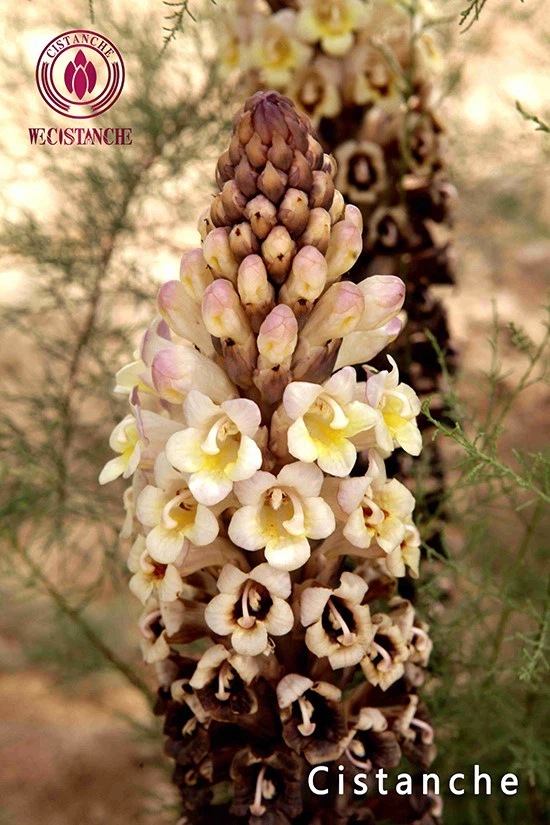
In the vast and boundless desert area, there grows a scarce plant - the Red Willow Pipe Flower Cistanche. It is like a mysterious treasure in the desert, shrouded in a veil of mystery for thousands of years. Red willow tube flower, Cistanch, mainly parasitizes the roots of red willow, relying on the water and nutrients extracted by red willow from the deep desert for survival. And the red willow, a plant with tenacious vitality, fosters a unique symbiotic relationship between the two by preventing wind and stabilizing sand in the desert, thereby providing a "breeding ground" for the survival of Cistanche deserticola.
As a precious traditional Chinese medicine, the red willow tube flower Cistanche occupies an important position in traditional medicine and is known as the "desert ginseng". It has a sweet and salty taste, a warm nature, and is beneficial to the kidneys and large intestine meridians. It has the effects of tonifying kidney yang, nourishing essence and blood, moisturizing the intestines, and promoting bowel movements. It has a significant regulatory effect on symptoms such as insufficient kidney yang, deficiency of essence and blood, impotence and infertility, soreness and weakness of the waist and knees, muscle and bone weakness, intestinal dryness and constipation. Modern medical research has also found that Cistanche deserticola is rich in various active ingredients such as phenylethanoid glycosides, cyclohexene terpenes, lignans, etc. It has antioxidant, anti-aging, immune-regulating, and sexual function-improving effects, and has many benefits for human health.
With the increasing emphasis on health and the growing demand for traditional Chinese medicine, the market value of red willow tube flower and Cistanche deserticola is becoming increasingly prominent. However, due to limited wild resources and excessive excavation, the ecological environment has been damaged, resulting in a sharp decrease in the number of wild red willow tubeflowers, Cistanche deserticola, which has been listed as a national second-class protected plant. In order to meet market demand and protect the ecological environment, artificial cultivation of red willow tube flower and Cistanche deserticola has become an inevitable trend. The emergence of drip irrigation planting technology has brought new opportunities for the artificial planting of red willow tube flower and Cistanche deserticola.

Cistanche deserticola
The dilemma of traditional planting and the rise of drip irrigation technology
Before the emergence of drip irrigation technology, the artificial cultivation of Cistanche deserticola mainly used the traditional flood irrigation method. This approach is like a bold and unrestrained man who does not exercise restraint when irrigating. Although flood irrigation can meet the water needs of plants to a certain extent, it has many drawbacks.
From the perspective of water resource utilization, flood irrigation can be described as the 'king of waste'. In arid desert areas, water resources are already extremely precious, with every drop of water appearing even more precious. However, flood irrigation causes a large amount of water to evaporate and leak during the irrigation process, and only a small portion of the water is truly absorbed and utilized by red willows and Cistanche deserticola. This not only causes huge waste of water resources, but also increases the planting cost, making the cultivation of Cistanche deserticola face severe challenges in terms of water resources. Moreover, due to the poor water retention of soil in desert areas, water will quickly be lost after flood irrigation, resulting in uneven distribution of soil moisture. Part of the soil is too moist, which can easily lead to root rot and other diseases, affecting the growth of Salix and Cistanc.e The other part of the soil has insufficient moisture to meet the growth needs of plants, resulting in slow and weak plant growth and low yield.
From the perspective of yield, the yield of red willow tube flower and Cistanche deserticola under traditional planting methods is not ideal. In addition to the poor growth caused by water issues mentioned earlier, traditional planting methods also have shortcomings in management aspects, such as fertilization. Due to the lack of precise fertilization techniques, the utilization rate of fertilizers is low, and some fertilizers are wasted while others cannot be effectively absorbed by plants, whic,h to some exte,nt limits the yield and quality of Cistanche deserticola.

cistanche benefits
With the continuous advancement of technology, drip irrigation technology has gradually entered people's field of vision and has been widely applied in the cultivation of red willow tube flower and Cistanche deserticola. Drip irrigation technology is like a thoughtful steward, able to accurately provide the appropriate amount of water and nutrients for each red willow and Cistanche deserticola plant according to their needs. It slowly delivers water and fertilizer drop by drop to the roots of plants through drip irrigation pipes and drip heads laid on the ground or underground, greatly improving the utilization of water resources and fertilizers. This precise irrigation method not only avoids water waste and uneven distribution of soil moisture but also creates a more stable and suitable environment for the growth of Cistanche deserticola, effectively improving its yield and quality. It can be said that the emergence of drip irrigation technology has brought a revolutionary change to the artificial cultivation of Cistanche deserticola, ushering in a new dawn of ecological protection and economic benefits for the cultivation of Cistanche deserticola.
Complete Analysis of Drip Irrigation Planting Technology
(1) Preparation: Everything is ready except for the east wind
Before planting red willow, flower, and Cistanche deserticola, preliminary preparation work is crucial, just like laying a solid foundation before building high-rise buildings.

Local villagers grow Cistanche deserticola
Land is the foundation for the growth of Cistanche deserticola, and we need to choose an ideal 'home' for it. Priority should be given to sandy soil with flat terrain and good drainage, which has strong air permeability and is conducive to the growth of red willow roots and the parasitism of Cistanche deserticola. At the same time, it is necessary to ensure that the pH value of the soil is between n 7-and 9 weakly alkaline, which is the most suitable soil environment for their growth. For example, in some desert-edge areas of Xinjiang, the sandy soil and alkaline environment provide unique conditions for the cultivation of Cistanche deserticola. After selecting the land, it is necessary to conduct deep plowing treatment, usually at a depth of about 30-40 centimeters, to break the soil compaction and increase the soil's aeration and permeability. After deep plowing, let the land be exposed to sunlight for a period of time for natural disinfection to reduce pests and diseases in the soil.
The selection of red willow seedlings cannot be ignored, and high-quality seedlings are one of the keys to successful planting. To select red willow seedlings that are robust, free from pests and diseases, and have developed root systems, a height of 50-80 centimeters is generally recommended. For example, when purchasing seedlings from a professional seedling breeding base, it is necessary to carefully inspect the appearance of the seedlings to ensure that they meet the standards. After purchasing, it is important to plant the seedlings in a timely manner to avoid prolonged storage that may cause dehydration and dryness.
Drip irrigation equipment is the core tool of drip irrigation planting technology, and its quality and performance directly affect the irrigation effect. Complete drip irrigation equipment usually includes a head hub, a water pipeline network, and drip heads. The head hub is mainly composed of water pumps, filters, fertilizing devices, etc. It is like the "brain" of the drip irrigation system, responsible for providing pressure, filtering water sources, and adding fertilizers. When selecting a water pump, the flow rate and head of the pump should be reasonably determined based on the planting area and water source conditions to ensure that it can meet the irrigation needs. The filter is an important component to ensure the normal operation of the drip irrigation system. It can filter out impurities in the water and prevent clogging of the drip head. Common filters include sand and gravel filters, mesh filters, and laminated filters. It is important to choose the appropriate filter based on the water quality of the source. Polyethylene (PE) pipes are generally used in water supply networks, which have the advantages of corrosion resistance, aging resistance, and good flexibility. When laying the water pipeline network, attention should be paid to the slope and direction of the pipeline to ensure that water can be smoothly transported to each drip head. The dripping head is a component that directly drips water and fertilizer onto the roots of plants, and its flow rate and spacing should be reasonably set according to the growth needs of Salix and Cistanche.
(2) Sowing and Vaccination: Embarking on a Journey of Life
Sowing and inoculation are key steps in the cultivation process of Cistanche deserticola, which is like starting a journey of growth for new life.
The choice of sowing time is very important, as it directly affects the germination rate of seeds and the growth of seedlings. Generally speaking, spring and autumn are suitable sowing seasons. In spring, when the soil temperature stabilizes at around 10 ℃ -15 ℃, sowing can begin; In autumn, sowing should be done 1-2 months before the soil freezes. Taking Xinjiang as an example, spring is generally sown from mid-April to early May, and autumn is sown from late September to mid-October.
There are two main sowing methods, namely strip sowing and hole sowing. Striped sowing is the process of digging trenches on well-prepared land at a certain row spacing, evenly sowing seeds in the trenches, and then covering them with soil for compaction. Hole sowing is to dig holes according to a certain spacing between plants, sow 3-5 seeds per hole, and then cover with soil and water. Regardless of the sowing method used, the sowing depth should be controlled at around 2-3 centimeters. If it is too deep, the seeds will lack oxygen and be difficult to germinate, while if it is too shallow, the seeds will easily lose water and dry, affecting the germination rate.

Cultivation of Cistanche deserticola
Cistanche deserticola is a parasitic plant that must establish a parasitic relationship with willow to grow and develop. Therefore, vaccination techniques are crucial. When the root system of red willow is well-developed in the second to third year after planting, inoculation can be carried out. When inoculating, first dig a circular ditch around the red willow plant, with a depth of 30-40 centimeters, to expose the red willow root system. Then mix the seeds of Cistanche deserticola with an appropriate amount of nutrient soil, sprinkle around the root system of the red willow, and fill the ditch with soil. To improve the success rate of parasitism, substances that promote rooting and germination, such as rooting powder and gibberellin, can be added to the seeds. Meanwhile, it is important to maintain the moisture and temperature of the inoculation site to create favorable conditions for seed germination and parasitism.
(3) Drip irrigation system construction: the core of precise irrigation
The construction of a drip irrigation system is the core of achieving precise irrigation. It is like creating a dedicated "water supply station" for the red willow tube flower and Cistanche deserticola, which can accurately provide water and nutrients according to their needs.
The drip irrigation system mainly consists of four parts: water source, head hub, water supply and distribution network, and drip head. The water source can be well water, river water, reservoir water, etc., as long as the water quality meets the irrigation requirements. In addition to the water pump, filter, and fertilizer applicator mentioned earlier, the head hub also includes control equipment such as pressure gauges and valves, which work together to ensure that the water entering the drip irrigation system has appropriate pressure, flow rate, and water quality. The water supply and distribution network transports the treated water from the head hub to various corners of the field, generally divided into three levels: main pipes, branch pipes, and capillary pipes. The main pipe is the backbone of the drip irrigation system, usually using larger diameter PE pipes to transport water from the head hub to various irrigation areas; Branch pipes are branch pipelines that connect main pipes and capillary pipes, with relatively small diameters; A capillary is the closest pipe to a plant, equipped with drip heads that drip water drop by drop to the roots of the plant. There are various types of droppers, including pressure-compensated droppers, non-pressure-compensated droppers, and droppers. It is important to choose the appropriate dropper based on the terrain, soil, and crop needs of the planting area.
When installing drip irrigation systems, it is necessary to strictly follow the design requirements for operation. Firstly, it is necessary to ensure that all equipment in the head hub is installed firmly and connected tightly to avoid problems such as water leakage and air leakage. The installation position of the filter should be reasonable, easy to clean, and maintain. The installing the fertilizer applicator should pay attention to the connection sequence with the filter to prevent fertilizer from clogging the filter. The laying of the water supply and distribution network should pay attention to the burial depth and slope of the pipelines. Generally, the main and branch pipes should be buried 30-50 centimeters underground to avoid mechanical damage and temperature changes; The capillary tube can be laid on the ground or buried 5-10 centimeters underground. When lying, it should be kept flat to avoid twisting, bending, and other situations. The installation of the dropper should be firm, and the connection with the capillary tube should be tight to prevent detachment and water leakage.
Setting irrigation parameters based on the growth needs of Cistanche deserticola is crucial for the operation of drip irrigation systems. In the early stage of growth of Cistanche deserticola, the plants are smaller and require less water, so the irrigation frequency can be lower. Generally, irrigation is carried out every 3-5 days, and the appropriate amount of irrigation each time should reach a soil moisture depth of 30-40 centimeters. With the growth of Cistanche deserticola, the water demand gradually increases, and the irrigation frequency can be appropriately increased. Irrigation should be done every 2-3 days, and the amount of irrigation should also increase accordingly to meet the needs of plant growth. During the irrigation process, irrigation parameters should be adjusted promptly according to weather conditions, soil moisture, and plant growth status to ensure that Cistanche deserticola is always in a suitable water environment. At the same time, it can also be combined with fertilization by dissolving fertilizers in water and delivering them together to plant roots through drip irrigation systems, achieving integrated water and fertilizer management and improving fertilizer utilization efficiency.
(4) Field Management: Careful Care on the Path of Growth
Field management is an indispensable part of the growth process of red willow tube flower and Cistanche deserticola, just like the careful care of parents for their children, which is related to their healthy growth.

Harvest of Cistanche deserticola
Click here to view Cistanche Enhance Immunity products
【Ask for more】 Email:cindy.xue@wecistanche.com / WhatsApp: 0086 18599088692 / Wechat: 18599088692
Fertilization is one of the important tasks in field management. The growth of Cistanche deserticola requires sufficient nutrients, and reasonable fertilization can improve yield and quality. When fertilizing, organic fertilizers should be the main source, such as composted farmyard manure, compost, green manure, etc. These organic fertilizers not only contain abundant elements such as nitrogen, phosphorus, and potassium, but also contain various trace elements and organic matter, which can improve soil structure and enhance soil fertility. Generally, before planting, 2000-3000 kilograms of organic fertilizer are applied per mu as base fertilizer. During the growth period of Cistanche deserticola, appropriate amounts of fertilizers such as urea, diammonium phosphate, potassium sulfate, etc. should be applied according to the growth status of the plant. When fertilizing, the fertilizer can be dissolved in water and applied through a drip irrigation system to achieve water fertilizer integration, which is both convenient and can improve fertilizer utilization efficiency.
Weeding is also a daily task in field management. Weeds compete with Salix and Cistanche for water, nutrients, and sunlight, affecting their growth. Therefore, it is necessary to promptly remove weeds from the fields. There are two main weed control methods: manual weed control and chemical weed control. Although manual weeding is labor-intensive, it does not pollute the environment and will not harm the roots of Salix and Cistanche. Chemical weed control is more efficient, but it is important to choose the appropriate herbicide and strictly follow the instructions to avoid causing pesticide damage to crops. When using chemical herbicides, choose windless weather and spray the herbicide evenly on the weeds, not on the plants of Salix and Cistanche.
Disease and pest control is a key task in field management. Common pests and diseases of Cistanche deserticola include powdery mildew, root rot, aphids, red spider mites, etc. For the prevention and control of pests and diseases, we must adhere to the principle of "prevention first, comprehensive prevention and control". Firstly, it is necessary to strengthen field management, maintain good ventilation and light transmission in the field, apply fertilizers and water reasonably, and enhance the disease and insect resistance of plants. Secondly, regular inspections of the fields should be conducted to promptly detect signs of disease and pest occurrence, achieving early detection and prevention. For powdery mildew, it can be sprayed with triadimefon, carbendazim, and other fungicides at the initial stage of the disease; Root rot disease requires timely removal of diseased plants and root irrigation treatment with pesticides such as methylthiophanate and oxytetracycline; aphids and spiders can be sprayed with imidacloprid, abamectin, and other insecticides. When preventing and controlling pests and diseases, attention should be paid to alternating the use of pesticides to avoid the development of drug resistance. At the same time, it is necessary to strictly follow the dosage and safe interval of pesticide use to ensure the quality and safety of agricultural products.

Harvest of Cistanche deserticola
The infinite possibilities of the sand sea oasis
The technology of drip irrigation planting red willow, tube flowers, and Cistanche deserticola is a shining pearl in the field of desert agriculture, bringing us unprecedented opportunities and hope. It not only solves the problems of water resource waste and low yield in traditional planting methods, but also opens up new paths for improving the desert ecological environment and increasing farmers' income and wealth.
From an ecological perspective, with the promotion of drip irrigation planting technology, more and more desert areas will be covered by red willows and Cistanche deserticola. The powerful wind and sand fixation ability of red willow can effectively curb the process of desertification, reduce the occurrence of natural disasters such as sandstorms, and make great contributions to the restoration and maintenance of ecological balance. In the future, we may see the once desert gradually transform into a vibrant oasis, where various flora and fauna thrive and form a stable and harmonious ecosystem.
At the economic level, as a high-value traditional Chinese medicine, the market demand for red willow tube flower and Cistanche deserticola continues to grow. The high yield and high quality brought by drip irrigation planting technology will further enhance its economic benefits and bring abundant returns to growers. This can not only promote the optimization and upgrading of the local agricultural industry structure, but also drive the development of related industries such as traditional Chinese medicine processing, sales, logistics, etc., forming a complete industrial chain, creating more employment opportunities, and promoting the prosperity and development of the local economy.
Looking ahead to the future, there is still great potential and room for development in drip irrigation technology for planting red willow tube flower and Cistanche deserticola. We can further strengthen technological innovation, develop more efficient and intelligent drip irrigation equipment and planting management technology, reduce planting costs, and improve yield and quality; Strengthen cooperation with scientific research institutions and enterprises, carry out deep processing research, develop more high value-added products, and broaden market channels; Intensify training and support for farmers, improve their planting techniques and management skills, and enable more people to benefit from this technology.
The desert is not a forbidden zone for life, but a land full of hope. Let's work together to actively promote and apply drip irrigation technology for planting red willow tube flower and Cistanche deserticola, sow green seeds in the desert, harvest both ecological and economic harvests, and create a better future together!