Using Traditional Chinese Medicine To Intervene in Smoking Cessation
Sep 12, 2022
According to the website of the National Health and Medical Commission on August 3, in order to implement the "Opinions of the State Council on Implementing the Healthy China Action" and promote the implementation of the "Healthy China Action (2019-2030)" tobacco control action. It is mentioned that: It is necessary to give full play to the characteristics and advantages of traditional Chinese medicine, use traditional Chinese medicine technology and methods, and promote smoking cessation intervention services and the diagnosis and treatment of tobacco dependence diseases.
According to the "2015 China Adul
Smoking cessation in traditional Chinese medicine from the perspective of the theory of drug cessation during the Opium War
During the Opium War, the Qing Dynasty physician He Qiwei responded to Lin Zexu's demand for smoking cessation, and after practice and exploration, he wrote the first step of quitting smoking monograph "Rescue the Lost Mystery", which is a complete set of smoking cessation theoretical system for opium addiction and how to quit.
The book pointed out: "The viscera depends on the smoke and then becomes fast, the spirit depends on the smoke and then refreshes, and the ears, eyes and hands and feet depend on the smoke and then feel at ease."
In the treatment law, a progressive smoking cessation method is proposed, and it is proposed that a firm determination is required to cure addiction. The most representative pill is "Ji Suan Pill", and the auxiliary pill is "Repair Pill".

Jisuan Pills are similar to the current tobacco substitutes. At the beginning, only Jisuan Pills are taken. For every 1 Jisuan Pills, 2 Correction Pills are added, and gradually reduced until the Suanyan Pills are not taken and only the Correction Pills are taken, the drug can be stopped. .
Later generations added 3 flavors to the 15 flavors of the original recipe, which were called "Lin Wenzhong Gong Quit Smoking Pills", or "Lin Shiba", which was widely circulated.

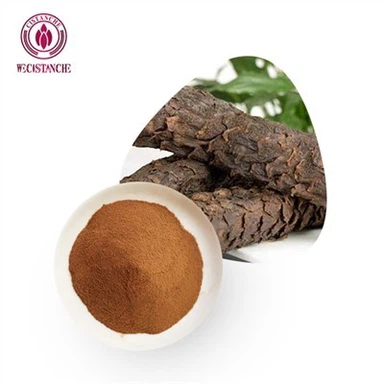
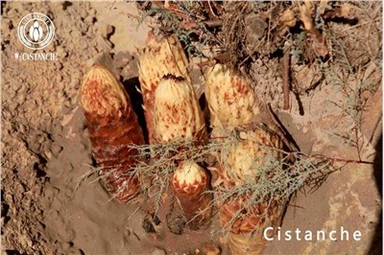
Get a Cistanche Product Of Tradtional Chinese Medicine for Quiting Smoking
During the Opium War, another well-known physician, Cao Renbo, refined "smoking cessation pills", ground them with twelve herbs, and added two cents and five cents of net smoke cream to make them the size of mung bean. If you usually need to eat a penny of cigarettes, take 10 capsules, and eat one cent, take 1 capsule. After taking it for six or seven days, subtract one or half a capsule, and gradually reduce it and it will heal.
From these experiences, it can be seen that whether it is quitting smoking or opium, it is best to do it gradually and not to rush.
Research on smoking cessation in modern traditional Chinese medicine
t Tobacco Report" released by the National Center for Disease Control and Prevention, the smoking rate of people over 15 years old in China is 27.7%, of which male smoking rate is 52.1%, the total number is as high as 316 million, and 740 million people are exposed to second-hand smoke. .
Exposure to tobacco smoke can damage many organs and tissues such as the human respiratory system, cardiovascular system, neuromuscular system, endocrine system, and digestive system. Smoking can lead to disease and even death.
Quit smoking without delay!
How can Chinese medicine help to intervene in smoking cessation?
Nicotine in tobacco can imitate the function of the human body's central neurotransmitter acetylcholine and bind to acetylcholine receptors, which can stimulate the secretion of dopamine, make people feel happy and satisfied, and become addicted.
Nicotine has certain negative effects on the central nervous system, circulatory system, respiratory system, immune system, endocrine system, reproductive system, etc.
According to traditional Chinese medicine, tobacco dependence can be divided into five syndromes: dryness toxin injuring the lung, liver stagnation and qi stagnation, damp toxin accumulation, phlegm and blood stasis, and qi and yin deficiency.
Targeted drugs can be selected from patchouli, mint, calamus, houttuynia cordata, earthworm, etc. that have detoxification effects; Gastrodia elata, silkworm and chuanxiong are used together. In severe cases, centipede is added to attack poison and relieve pain.
Among the many selected drugs, it can be seen that most of them are aromatizing turbid drugs, so such drugs are the key to the treatment of this disease. For long-term smokers, the smoke toxins accumulate in the body and are difficult to remove. Those who only have the aroma of the medicine can remove the toxins and remove the turbidity, slowly and then dispel it. Therefore, no matter what type of syndrome, it should be selected according to the syndrome, so that it can detoxify the smoke. The effect runs through the beginning and end of the treatment.

In recent years, for the convenience of use, the dosage forms of traditional Chinese medicine smoking cessation prescriptions have been innovated in clinical practice. For example, using Cordyceps sinensis, Yizhiren, Pearl, Cistanche, Astragalus, Codonopsis, Ophiopogon japonicus, Lycium barbarum and other main medicines to prepare smoking cessation tea, 4 times a day, boiled water to brew tea instead, 7d is a course of treatment, the total effective rate of smoking cessation is 95 %. There are also researcher's self-made smoking cessation compound with tangerine peel, Zhuru, Zhuli, Chuan Fritillaria, almond, lily, Baibu, Platycodon, melon, aloe, loofah, and Longjing tea as the main components, and prepared by adding water and distillation. The concentrate was used for smoking cessation with a total effective rate of 93.3%.

Cistanche, Astragalus Tea
The use of acupuncture for the treatment of tobacco dependence is not clearly documented in ancient Chinese medicine books, and its curative effect on smoking cessation has not been discovered and applied until recent years. In the 1980s, American doctor Olms first discovered that the midpoint of the connection between Lieque and Yangxi acupoints on the back of the wrist has the effect of smoking cessation, and used this stimulation point as the special acupoint for smoking cessation to treat smokers with laser irradiation, with a success rate of up to 100%. More than 90%, thus opening the clinical application and research of acupuncture and moxibustion for smoking cessation.
Clinical data show that Baihui, Lieque, Hegu, Zusanli, Sanyinjiao, and Taichong were selected for the treatment of tobacco dependence with the acupuncture method of leveling, replenishing and reducing Acupuncture at meridian points can achieve the same smoking cessation effect as nicotine replacement therapy. In addition to acupuncture therapy, acupoint thread embedding, auricular point sticking and auricular acupuncture are also commonly used effective ways to quit smoking in acupuncture therapy, and auricular point sticking is the most commonly used and has the highest success rate of smoking cessation.
Compared with the smoking cessation mode of western medicine, which is mainly based on drug therapy, the intervention methods of traditional Chinese medicine are more diverse, and whether it is traditional Chinese medicine or acupuncture treatment, the compatibility of drug use and acupoint selection is based on syndrome differentiation and treatment, and the individual is more targeted.

In addition, the nicotine replacement method in western medicine therapy is potentially addictive, and drugs such as bupropion and varenicline often cause adverse reactions in the body, and there are potential safety hazards in long-term use.
The safety of traditional Chinese medicine for smoking cessation is even better. Most of the commonly used traditional Chinese medicines are of the same origin as medicine and food, with mild nature and taste, and basically have no toxic and side effects; while the acupuncture points selected for smoking cessation avoid important organs, and the stimulation method is mild and safe. Sex is stronger.
If you have any question, please send us Email: wallencesuen@wecistanche.com