What Are The Consequences Of Using Laxatives For Long-term Constipation? What Are Some Ways To Relieve Constipation?
Nov 28, 2023
Many people think of taking laxatives when they are constipated. This situation is very common. Therefore, it is necessary to talk about this issue carefully.
Generally speaking, if it is short-term constipation, taking laxatives once or twice occasionally will have an immediate effect and can improve the constipation situation in a short period; however, for patients with long-term constipation, long-term use of laxatives is generally not recommended.

Click to natural remedies for constipation
Long-term use of laxatives can only temporarily relieve symptoms and is not beneficial to the improvement of intestinal function; on the contrary, as the patient's condition develops, the dosage of laxatives becomes larger and larger, which can also cause strong dependence in people, leading to serious side effects.
Side effects of long-term use of laxatives
1. Cause malnutrition
Long-term use of laxatives will affect the intestinal absorption of nutrients. As a result, the body lacks sufficient nutrients which may easily lead to malnutrition.
2. Gastrointestinal dysfunction
If the intestines are repeatedly stimulated by laxatives for a long time, it is very easy to develop drug dependence. In this way, it is easy to cause gastrointestinal dysfunction, and the ability of colonic peristalsis will be weakened accordingly, which can easily lead to the loss of colonic peristalsis function.
3. Intestinal wall melanosis
Long-term use of laxatives can easily damage the nerve plexus cells in the intestinal wall, thereby causing constipation. After long-term use, it can also easily cause diseases such as melanosis of the intestinal wall. In severe cases, it may become cancerous and lead to intestinal cancer.

4. Dehydration and electrolyte imbalance
Although laxatives can improve constipation symptoms in a short period, they will take away a large amount of water during the excretion process. If the water is not replenished in time, it will cause severe dehydration of the human body, thereby inducing symptoms such as electrolyte imbalance and mineral deficiency.
How to relieve constipation?
1. Do not rely on laxatives
Many people take laxatives when symptoms of constipation occur. This approach is not advisable and unhealthy.
It is recommended that patients with constipation, especially those with long-term constipation, use laxatives with caution, and it is best to use drugs other than laxatives in compliance with medical advice. In terms of safety, you can try some Chinese patent medicines, which have relatively few side effects.
2. Supplement dietary fiber
The most important thing to relieve constipation is that patients with constipation should start from their daily lives, especially in diet, and should supplement enough dietary fiber;
Dietary fiber can enhance gastrointestinal motility, accelerate the transportation and excretion of food residues in the intestine, and significantly improve constipation symptoms.

3. Add enough water
For patients with constipation, water is like sailing on water. Without water, the boat will have no power to move forward and will stagnate;
In the same way, if food residues lack sufficient water transportation, they will precipitate and cause constipation. Therefore, patients with constipation must drink more water to maintain sufficient water in the body.
4. Drug treatment
There are many laxatives. Most of the constipation medicines in Western medicine are mainly for laxatives. They can be used temporarily to help defecation during constipation.
According to the theory of traditional Chinese medicine, long-term and chronic constipation is mostly constipation due to deficiency syndrome. It should not only be diarrhea, but also tonic, harmonizing the internal organs, and allowing various organs to function normally to solve the constipation problem.
In terms of drug selection, you can choose some traditional Chinese medicines with a reasonable combination of laxative and tonic herbs in the formula.
For example, the formula is based on aloe vera, cassia seeds, etc., and adds ginseng, donkey-hide gelatin, wolfberry, and other medicinal materials to nourish qi and yin. This can achieve the effect of tonic and diarrhea, and treat constipation. Only by starting from the root cause of constipation can the constipation be cured. Help the intestines restore their autonomous defecation function.
Natural Herbal Medicine For Relieving Constipation-Cistanche
Cistanche is a genus of parasitic plants that belongs to the family Orobanchaceae. These plants are known for their medicinal properties and have been used in Traditional Chinese Medicine (TCM) for centuries. Cistanche species are predominantly found in arid and desert regions of China, Mongolia, and other parts of Central Asia. Cistanche plants are characterized by their fleshy, yellowish stems and are highly valued for their potential health benefits. In TCM, Cistanche is believed to have tonic properties and is commonly used to nourish the kidney, enhance vitality, and support sexual function. It is also used to address issues related to aging, fatigue, and overall well-being. While Cistanche has a long history of use in traditional medicine, scientific research on its efficacy and safety is ongoing and limited. However, it is known to contain various bioactive compounds such as phenylethanoid glycosides, iridoids, lignans, and polysaccharides, which may contribute to its medicinal effects.

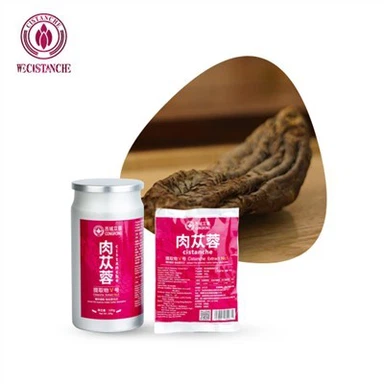
Wecistanche's cistanche powder, cistanche tablets, cistanche capsules, and other products are developed using desert cistanche as raw materials, all of which have a good effect on relieving constipation. The specific mechanism is as follows: Cistanche is believed to have potential benefits for relieving constipation based on its traditional use and certain compounds it contains. While scientific research specifically on Cistanche's effect on constipation is limited, it is thought to have multiple mechanisms that may contribute to its potential to relieve constipation. Laxative Effect: Cistanche has long been used in Traditional Chinese Medicine as a remedy for constipation. It is believed to have a mild laxative effect, which can help promote bowel movements and induce constipation. This effect may be attributed to various compounds in Cistanche, such as phenylethanoid glycosides and polysaccharides. Moistening the Intestines: Based on traditional use, Cistanche is considered to have moisturizing properties, specifically targeting the Intestines. Promoting hydration and lubrication of the Intestines, may help soften tools and facilitate easier passage, thereby relieving constipation. Anti-inflammatory Effect: Constipation can sometimes be associated with inflammation in the digestive tract. Cistanche contains certain compounds, including phenylethanoid glycosides and lignans, that are believed to have anti-inflammatory properties. By reducing inflammation in the intestines, it may help improve bowel movement regularity and relieve constipation.